Showing posts with label slave ship. Show all posts

Thursday, May 31, 2012

THE WANDERER: THE LAST AMERICAN SLAVE SHIP


THE WANDERER: THE LAST AMERICAN SLAVE SHIP AND THE CONSPIRACY THAT SET ITS SAILS , By Erik Calonius, REVIEWED BY KIMBERLY PALMER

From the  The Washington Times -- On July 4, 1858, a ship called the Wanderer left Charleston, S.C., and set sail for the Congo. Disguised as a luxury cruise ship, the Wanderer had first raised suspicion when it docked in Long Island and loaded far more supplies than usual for a casual cruise. Officials surmised (correctly, as it turned out) that the ship was a slave ship.

In “The Wanderer,” Erik Calonius brings to light the tale of the last known ship that brought slaves to the United States from Africa. Using newspaper accounts, letters and legal documents, Mr. Calonius, formerly a London correspondent for the Wall Street Journal and Miami bureau chief for Newsweek, reconstructs the journey in painstaking detail.

Where little or no evidence remains of the Wanderer’s voyage — including the brief excursion into Africa and the slave market where the ship’s crew purchased the slaves — Mr. Calonius writes that he used eyewitness accounts of the slave trade to describe what the slaves and the crew of the Wanderer likely experienced.


The result is a compelling and heartrending record of a journey that helped push the nation to the brink of the Civil War.

Transporting slaves from Africa was outlawed in 1820, but nearly four decades later, the practice — profitable but risky — continued. The Wanderer’s crew eluded the law by charming officials who were not all that interested in enforcing it.

When the ship reached the 3,000-mile long African shoreline, patrolled by 28 British and American ships, one of the British patrol ships spotted it. The Wanderer’s captain — William C. Corrie, a well-connected Southerner — invited the crew aboard. “After months of tedious Africa duty, the British were more than happy to explore this luxury yacht,” writes Mr. Calonius.


Corrie invited the crew to stay for dinner as well as after-dinner champagne and cigars on the deck. The British patrollers said goodbye after deciding the Wanderer was simply a cruise ship and not a slaver.

Soon after that meeting, the crew rolled up the ship’s luxury carpets and put away its library books in preparation for nearly 500 slaves. Each one was given a space that measured just 12 inches in width, 18 inches in height, and less than five feet in length — smaller than a typical slave ship.

Corrie purchased the slaves from a dealer and had them branded with a hot iron. During the return voyage, 80 slaves perished because of the harsh conditions below deck. Those that survived were unloaded in Georgia. After the Africans were spotted by locals, federal prosecutors started to build a case against the Wanderer’s owners.


Prosecutors soon found themselves up against the powerful, pro-slavery networks of Georgia. One of the ship’s owners, Charles Lamar, a wealthy Savannah resident, reminded witnesses that he could make life miserable for anyone who testified against him. Lamar was a “fire-eater” who wanted the slave trade to flourish and who hoped that the South would eventually split from the North. The nationally publicized trials of those implicated in the Wanderer scheme helped cause that rift.

“If they fail to hang the men,” wrote the New York Times of the South, “if their officials are so lax, or their juries so perjured, as to permit this trade to be carried on with impunity, in face of all our laws against it — they will suffer all the consequences of an actual complicity in the proceeding itself… . the entire population of the North will wage upon [the South] a relentless war of extermination.”

As Mr. Calonius notes, that prediction proved prophetic indeed. The defendants in the Wanderer trials were found not guilty, the abolitionist John Brown was hanged not long after and war soon broke out.

The threat of the Civil War looms throughout the narrative. In the 1850s, the South had not yet embraced the industrial revolution. Agricultural life, which depended on the labor of slaves, was idealized for its slow pace and comfortable lifestyle. At the same time, the South’s economy was slipping further and further behind the more industrialized North.


By 1860, New England was manufacturing three times as many goods as the South. In the meantime, the South, which had grown dependent on the cheap labor of slaves, had to deal with the reality that as fewer slaves were shipped from Africa, the cost of owning slaves increased. Few businesses, Mr. Calonius writes, were more profitable than the illegal transportation of slaves from Africa to the United States.

Mr. Calonius challenges the popular belief that most Southerners rallied to fight for slavery. According to him, the South seceded because a few powerful men wanted to keep slavery alive, and they persuaded many others to support their fight against what they saw as Northern interference.

Most farmers and merchants, he writes, had no stake in slavery whatsoever and even less interest in breaking up the country over it. In Savannah, the vast majority of residents did not own slaves. To garner support for slavery, the rich plantation owners who needed slaves to maintain their wealth started a campaign to convince people that if slaves were freed, they would plunder and steal throughout the region.

“It was not the first time in history that a group of radicals had overwhelmed the will of a weak and unfocused majority, nor would it be the last,” writes the author.


For most of the book, Mr. Calonius focuses on the saga of the ship and not the slaves themselves. But one of the most compelling tales comes at the end, when he recounts what happened to Cilucangy, a slave brought over on the Wanderer as a boy.

After the Civil War, Cilucangy worked in Georgia as a basket weaver. Despite his desire to return to Africa as an adult, he failed to amass the necessary funds. He started a family in Georgia, and his descendants include lawyers and teachers.

Margret Higgins, Cilucangy’s great-granddaughter, lives near the Uniondale exit of the Long Island Expressway. Her grandson was named Alexander Cilucangy Valenti, in honor of the courage and resiliency of his forebear. (source: The Washington Times)

Monday, May 28, 2012

Georgia's Last Slave Ship The Slave Ship Wanderer


 Jekyll Island

From Golden Isles Georgia, "The Wanderer: Georgia's Last Slave Ship" -- The vessel Wanderer, built as a racing schooner in 1857, instead achieved a notorious record in the brutal and illegal transport of slaves to America.

At 114 feet in length and 234 tons, the Wanderer was built for speed, winning its first regatta off the coast of Brunswick in 1858. Soon after, the vessel was sold to William Corrie of Charleston, SC, who, seeing a profit to be made in the outlawed slave trade, outfitted it for human cargo.

The Wanderer, Georgia's Last Slave Ship

In September of 1858, aided by its owner's trickery and deceit, the Wanderer sailed to the west coast of Africa and took on board some 490 slaves. With the speed to elude capture, the Wanderer reached American waters off Georgia's Cumberland Island and on November 28, 1858, the slave ship sailed into the St. Andrews Sound south of Jekyll Island. On board were roughly 400 enslaved Africans who were illegally imported to the United States in one of the most sensational and controversial moments in Jekyll Island history – and brought the island into the middle of the most heated moment in our country’s history. The captives aboard the slave ship Wanderer, which landed on the south end of Jekyll Island, GA in 1858, were one of the last known groups of enslaved Africans sold into captivity in America. From Jekyll Island, many were sold to South Carolina. Having received a large payment for the slaves (perhaps as much as $600 each), Corrie totally refurbished the vessel and outfitted it as a pleasure craft.

The Wanderer subsequently changed hands; first to Charles Lamar and then to David Martin, both of whom sought to profit by returning the craft to illegal slave-trading. However, the outbreak of the Civil War saw the Wanderer seized by the Union Army and outfitted with deck guns. Her huge fresh water tanks and remarkable speed, once so important to success in transporting slaves, were now used to supply blockade ships and for dispatching urgent messages. After the war, the Wanderer was briefly used in the West Indian fruit trade until she crashed against the rocks of Cape Maisi in Cuba in 1871 and sank.

Today, you can visit The Wanderer Memorial at St. Andrews Picnic Area on the south end of Jekyll Island. This memorial is dedicated to the roughly 400 enslaved Africans who were illegally imported upon the Wanderer to the United States in one of the most controversial moments in Jekyll Island history. (source:  Golden Isles Georgia)


The Slave Ship Wanderer by Tom Jefferson Wells

On November 28, 1858, the Wanderer sailed into the St. Andrews Sound south of Jekyll Island. On board were roughly 400 enslaved Africans who were illegally imported to the United States in one of the most sensational and controversial moments in Jekyll Island history – and brought the island into the middle of the most heated moment in our country’s history.

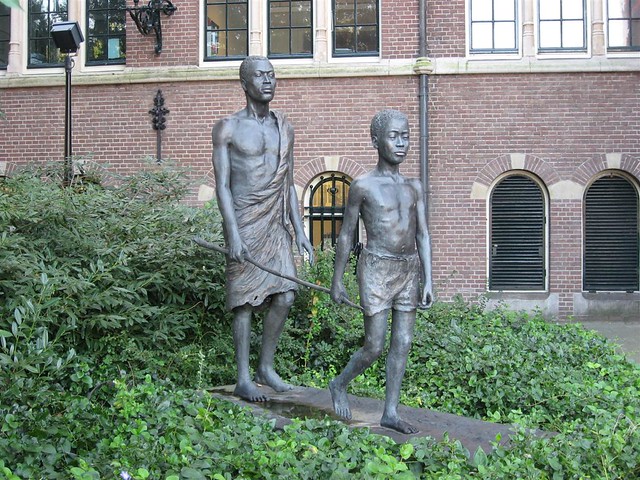
The Wanderer Memorial includes a sculpture by artist Mario Schambon and three text panels describing this event, the sensational trial of the slave runners, and the fate and legacy of many of the enslaved Africans.

The Wanderer Memorial is located on the southern end of Jekyll Island in the St. Andrews Picnic area. It was dedicated on the 150th Anniversary of the ships landing in 2008. The Wanderer Memorial is made possible by the Jekyll Island Authority and the generosity of the Friends of Historic Jekyll Island. (source: Jekyll Island)

Sunday, May 13, 2012

James Island, Gambia


James Island is an island on the River Gambia. It is the site where European established a settlement as early as the 16th century. The earliest settlers were Baltic Germans who named it St Andrews Island. The settlers erected a fort which they named after Fort James, after James Kettler, Duke of Courland.

When the British took over the island in 1664, they renamed Fort James as well as James Island after James, the Duke of York, who later ascended the throne of England as King James II. In the subsequent centuries the fort changed hands between the British and the French. It served as an important trading post for African slaves until its abandonment in 1870. (source: World Heritage Site)

Wednesday, May 9, 2012

Saint Peter Claver's Ministry to African Slaves


"Saint Peter Claver's Ministry to African Slaves"

The capture and transport of Africans to work in the "new world" of the Americas as slaves is a tragic story of exploitation. Yet amidst tragedy, there are opportunities for heroism. One Christian hero in the sordid story of black slavery is St. Peter Claver. Born in Catalonia, Spain, he joined the Jesuits in 1605 in Barcelona, and came to work in the missions in 1610, landing in Cartagena, Colombia, the center of the slave trade in the new world. Appalled at the dehumanization of the whole dirty business of slave trading, he took a new vow in addition to those he made in his religious profession--until his death, he was to be advocate and servant of those sons and daughters of God whom others regarded as little more than advanced animals. He insisted that Black slaves were truly equal in worth and dignity to the Europeans and baptized and instructed over 300,000 of them before he died in 1654. During his lifetime, he was regarded as dangerous by many and even sacrilegious by others, who thought he profaned the sacraments by administering them to beasts. Nevertheless, his memory was honored and he was finally canonized by Pope Leo XIII in 1888. This excerpt from a letter of St. Peter Claver is used in the Roman Office of Readings for his feast day on September 9.

St. Peter Claver

Yesterday, May 30, 1627, on the feast of the Most Holy Trinity, numerous blacks, brought from the rivers of Africa, disembarked from a large ship. Carrying two baskets of oranges, lemons, sweet biscuits, and I know not what else, we hurried toward them. When we approached their quarters, we thought we were entering another Guinea. We had to force our way through the crowd until we reached the sick. Large numbers of the sick were lying on wet ground or rather in puddles of mud. To prevent excessive dampness, someone had thought of building up a mound with a mixture of tiles and broken pieces of bricks. This, then, was their couch, a very uncomfortable one not only for that reason, but especially because they were naked, without any clothing to protect them.


We lad aside our cloaks, therefore, and brought from a warehouse whatever was handy to build a platform. In that way we covered a space to which we at last transferred the sick, by forcing a passage through bands of slaves. Then we divided the sick into two groups: one group my companion approached with an interpreter, while I addressed the other group. There were two blacks, nearer death than life, already cold, whose pulse could scarcely be detected. With the help of a tile we pulled some live coals together and placed them in the middle near the dying men. Into this fire we tossed aromatics. Of these we had two wallets full, and we used them all up on this occasion. Then, using our own cloaks, for they had nothing of this sort, and to ask the owners for others would have been a waste of words, we provided for them a smoke treatment, by which they seemed to recover their warmth and the breath of life. The joy in their eyes as they looked at us was something to see.


This was how we spoke to them, not with words but with our hands and our actions. And in fact, convinced as they were that they had been brought here to be eaten, any other language would have proved utterly useless. Then we sat, or rather knelt, beside them and bathed their faces and bodies with wine. We made every effort to encourage them with friendly gestures and displayed in their presence the emotions which somehow naturally tend to hearten the sick.


After this we began an elementary instruction about baptism, that is, the wonderful effects of the sacrament on body and soul. When by their answers to our questions they showed that they had sufficiently understood this, we went on to a more extensive instruction, namely, about the one God, who rewards and punishes each one according to his merit, and the rest. We asked them to make an act of contrition and to manifest their detestation of their sins. Finally, when they appeared sufficiently prepared, we declared to them the mysteries of the Trinity, the Incarnation and the Passion. Showing them Christ fastened to the cross, as he is depicted on the baptismal font on which streams of blood flow down from his wounds, we led them in reciting an act of contrition in their own language.
[http://www.crossroadsinitiative.com/library_article/979/saint_peter_claver_s_ministry_to_slaves.html]

Monday, March 26, 2012

The Netherlands (Holland and Dutch) Slavers


Netherlands--The Netherlands despite being a small country, lacking in natural resources, was able in the 17th Century to become the centre for European overseas trade, including the trade in human beings. This 'Dutch Miracle' was a product of numerous innovations in navigation, manufacturing and finance, which allowed for slaves and slave produce to be transported at greater capacity and at lower cost. The first recorded trader sold 20 Africans to the colony of Virginia in North America in 1619, but the Dutch trade only really took off in response to labour shortage in the newly conquered sugar plantations of Northern Brazil in 1630. Wars with Portugal (1620-1655) left the Dutch in control of many of the slave depots on the West African coast, centred on modern Ghana, which by 1650 had dispatched 30,000 slaves to Brazil alone. After the return of the Brazilian colonies to Portugal in 1654, the Dutch traders were able to draw upon their network of forts to supply other European powers, dominating the supply to Spain until the 1690s. However the near constant warfare the Netherlands were waged in with other European nations, such as Spain, France and Britain, by Imperial Spain, did eventually sap its strength, and Dutch involvement in the trade declined in the 18th Century, and effectively ceased in 1795. When the final abolition of the trade and institution of slavery formally occurred in 1863, Dutch agents had brought 540,000 Africans to the Americas and cast the spectre of slavery east, from the Cape of Good Hope to the Indonesian archipelago.

Elmina Castle was erected by the Portuguese in 1482 as São Jorge da Mina

The Dutch-Portuguese Wars --Between 1620 and 1655 the Netherlands and Portugal were at war, a struggle that became increasingly dictated by the needs of the slave trade. The Dutch were late comers to Africa, and their attempts to establish trading posts inevitably led to confrontation with the Portuguese. The Dutch were initially chasing African gold, but after they captured the sugar plantations in northern Brazil, they turned to slavery to help realize its full potential. Plans made to conquer the Portuguese headquarters on the gold coast, São Jorge da Mina, to ensure a steady flow of slaves, were successful and it fell in 1637. The newly renamed Elmina, proved disappointing, but it drove them on to Angola, and the island depot of São Tomé, and gave Dutch slavers a taste of the profit had at the expense of human beings. When Brazil fell in 1654 the trade continued at a pace, with colonies like Curacou emerging as vast slave markets open to the whole Caribbean.


Amsterdam -- Amsterdam was the capital of the Holland, the largest and most important of the Seven Provinces that comprised the Netherlands. The city was already prosperous, but when the southern city of Antwerp fell to the Spanish in 1585, it benefited from a stream of enterprising merchants and wealthy refugees. By the mid 1600s it was the most important trading center in the world, providing a vital supporting role to Caribbean slavery.


West-Indisch Huis (West Indies House) in the centre of Amsterdam was the former headquarters of the Dutch West-Indische Compagnie (West India Company or WIC), which was probably the largest single slave trader in history. The company was chartered in 1621, and provided with a monopoly on the African slave trade that lasted until 1730. This building was occupied from 1621-1647, a period which saw the first of 30,000 slaves arriving in Dutch Brazil, arranged through the WIC.

Runaway black slaves are attacked by dogs by Louise.  Sculpture in carramarmer (to a plaster model of 1869), Nov sculptor Louis Samain. Original model in 1894 by the Belgian State acquired and donated to city of Brussels. In 1895, also date of signature, placed on Avenue Louise. Natural stone octagonal plinth walls with vaulted arch November E. Le Graive. The poignant scene - a black slave with his child being attacked by two watchdogs - is inspired by the famous novel Uncle Tom's Cabin by Harriet Beecher-Stowe (1851).
The slave routes required bulk warehousing and transportation for slave produce once it arrived back in the 'Old World', and Amsterdam developed accordingly. Its historic centre retains many of the original tall, narrow and deep warehouses that as part of the colonial boom once bulged with sugar, cotton and tobacco.


In the 17th Century most traded commodities passed through Amsterdam's canals and rested in its warehouses before being traded on. The Commodity Exchange (Beurs, pictured below) was built from 1608-1613 with this fact in mind, becoming so influential that merchants came from all over Europe to set their prices, and to speculate on the goods newly arrived from the Caribbean. These prices would in turn help shape the demand for bonded labour in the various sectors of the slave economy.


Amsterdam ranks as a European capital of slavery. While its mills processed almost all the sugar from the Portuguese colonies, its financiers bankrolled the Danish, Swedish and Brandenburg slave trade, and in turn Scandinavian and German sailors made up half its slaving crews. As home to the world's most sophisticated banking and insurance system, it was the natural home for the expensive and potentially risky business of slaving, and for this reason alone as many as 10,000 vessels were associated with the port.


The Dutch Golden Age--The17th Century has been widely described as the Netherlands' 'Golden Age.' The period saw the flowering of the arts and sciences. The average Dutchman was wealthier than his counterparts in any other country in the world and lived in a relatively tolerant country. This progress was achieved in part at an appalling human cost, and several of era's great advances helped tighten the noose around the African continent.


Amsterdam's Town Hall is perhaps the most significant building from this period, built from 1648-65 and by design the most ambitious and indeed the largest home to any city government in Europe.

The elaborate freeze on the western façade depicts the basis of Amsterdam's wealth. The female personification of the city reaches out for the treasures of Europe (on the left), Asia (on the right), America (far right) and Africa (far left). A cargo ship is shown bring this bounty to the port, the centre of the world, and above the statue of Atlas makes the nation's claim to carrying the world on it shoulders. The Golden Age was the high water mark of Dutch influence, its power and culture a product of these patterns of exploitation.

Zeeland --The ports of Vlissingen and Middleburg in the south-western State of Zeeland became dependent on the slave trade to an unparalleled degree, beating even Amsterdam as the main departure point for slavers. Ships from Zeeland made 672 journeys to Africa, transporting 278,476 people into a life of slavery, compared to the 173 recorded voyages from Amsterdam, carrying 73,476. The two ports were practically slaving communities, and official reports indicated that by 1750 the only significant commercial activity in Vlissingen was the slave trade. 

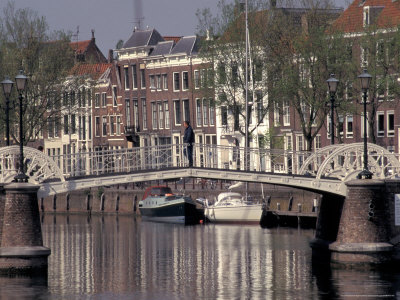
Middleburg Drawbridge 

This marked quite a transformation for the province, which in 1596 had steadfastly rejected the opening of a slave market in Middleburg, on the basis that Dutch law did not countenance slavery. The momentum that drove slavery brought on a transformation in attitudes within the area, and saw Middleburg ... become host to the largest independent slaving company in the Netherlands. The Middleburg Commercial Company (MCC) transported 31,095 Africans to the Americas between 1732 and 1803, of whom 27,344 survived the crossing. This period map of Middleburg shows the familiar network of canals and docks that marked it out as an efficient and prolific slave port.

In the movie "Pirates of the Caribbean," the Flying Dutchman was a fluyt.

The Fluyt -- Dutch innovation transformed shipbuilding. The Netherlands had to import almost all of its wood from abroad, and to save money found ways of making fast and efficient ships from cheap materials. The Fluyt or 'fly boat' was one such design, based on low quality wood and easily pre fabricated parts, and requiring a much smaller crew than the ships of foreign competitors. This ship became a familiar site throughout Europe, Africa and the Caribbean, and its vast cargo hold and shallow draft made it ideally suited for slave voyages. The nation's talent for shipbuilding encouraged countries across the continent to either borrow Dutch designs, or simply commission fleets to be constructed in Dutch ports. Thanks to vessels like the Fluyt come 1670 the Netherlands had more ships than England, France, Germany, Portugal, Spain and Scotland put together, boasting the most 'efficient' slave ships afloat.


Maroons of Suriname


The Dutch captured the British colony of Suriname during the Second Anglo-Dutch War(1667), and under the WIC it was developed as a plantation slave society. It was a primary destination for the Dutch slave trade, yet unusually it never experienced a general slave rebellion. The regime was one of extreme and deliberate brutality, even by the standards of the time. Mortality was so high that although 300,000 slaves were imported between 1668 and 1823, the ravaged population was never able to grow beyond a figure of 50,000. 'Maroonage' emerged as the main method of resistance. 


Fugitive slaves, 'Maroons' fled inland, and formed permanent communities. There is nothing unusual about this in any slave society, except for its scope. The Suriname Maroons numbered between 25-47 thousand in the 18th and 19th Centuries, and engaged the Dutch in over 50 years of gureilla warfare. The resistance proved so strong that the colonial government acknowlged their virtual independence in the 1760s. The Scottish-Dutch soldier John Gabriel Stedman witnessed the oppression of the slaves during a campaign against the maroons in 1774. His book a Narrative of a Five Years Expedition Against the Revolted Negroes of Surinam, with vivid illustrations by William Blake and Francesco Bartolozzi was taken to heart by abolitionists, through Stedman's real sympathies are thought to have been with reform rather than abolition.

Armed Maroon, Surinam, 1770s, from Narrative of a Five Years Expedition Against the Revolted Negroes of Surinam © The Atlantic Slave Trade and Slave Life in the Americas: A Visual Record

Coffy

The domestic slave Coffy led a rebellion in the Dutch Colony of Berbice (now British Guyana) in February 1763. An outbreak of yellow fever had left the white slave owners weakened and vulnerable, and the slaves saw a chance to rise. Taking arms, they almost succeeded in their first aim of driving all whites from the colony. Coffy had opted for peaceful coexistence with the former slave masters, and planned to broker a treaty with the authorities like the maroons of Surinam. He fell out with his fellow rebel leaders and committed suicide three months into the rebellion, but his followers continued fighting Dutch forces until April 1764.

New Netherlands (New Netherlands is present day New Jersey and New Holland is present day New York)

In 1623 the WIC were granted permission to establish the province of New Netherland in North America. The Dutch were largely unwilling to become settlers (thanks in part to their relatively comfortable position at home), and the colony developed with large numbers of European workers, particularly from England, Germany and what is now Belgium. The shortage inevitably led the colonists to turn to the slave trade, and in 1625 the first group of 11 African males arrived on Manhattan Island at fort New Amsterdam (now New York). The WIC pinned its hopes on the New Netherland after the loss of Brazil in 1654, and shipments markedly increased. By the 1660s the company was the largest single slave owner in New Amsterdam, forcing their 'property' to build roads, houses and defences. The large wooden perimeter wall they constructed has long since disappeared, but the American financial district 'Wall Street' takes its name and location from these slave craftsmen.


With large numbers of white migrants already working the fields, the demand for slaves came largely from the rapidly urbanising townships. The system was light compared to the extremes of the plantations, and skilled slaves were able to exploit the labour shortage to achieve more freedom. Many had already been specialists in Caribbean colonies, and veterans were able to achieve a state of 'half-freedom' in return for payment to the WIC. This suited the authorities, who were quite happy not to have to clothe and feed the half slaves themselves, but more than prepared to demand their work when they needed them. Because of this relaxed arrangement slaves were more easily assimilated into the colonial culture than elsewhere, but still they preserved and adapted many rituals originating in West Africa. The annual Festival of 'Pinkster' (the Dutch word for Pentecost) blended African and Christian traditions to celebrate the coming of the spring. It was a rare holiday for slaves, an opportunity for African music, dance and storytelling, but also for mockery, as the crowds would mimic the European manners of their masters and elect a king for a day.

Sojourner Truth was enslaved by the Dutch in New York.

The province of New Netherland was captured by Britain in 1664, its slaves having laid the foundations for settlements that would emerge as great cities: New York (New Amstersdam), Philadelphia (Fort Beversrede) and New Jersey (Fort Nassau).


Cape Colony -- The Dutch East India Company (Vereenigde Oostindische Compagnie, or VOC) was set up in 1602 to trade with Asia, and became the world's most powerful company over the 17th Century. It fed an insatiable European demand for spices, textiles and porcelain, and developed trading posts from throughout Asia, including Japan, China, Iran, India, and Indonesia, again frequently at the expense of the Portugese. It was not directly involved in the transatlantic slave routes (the West India Company's monopoly), but it did own large numbers of slaves. The company's regional headquarters in Batavia (now Jakarta) and Colombo (in Sri Lanka) had about a thousand slaves, mainly from the bay of Bengal. 

Chinese, Indian and European traders provided most of the VOCs bonded labour, but occasionally it organised its own voyages to the East African island of Madagascar for slave raids. The voyage to Asia usually headed around the African coast, and VOC established a refreshment station at the Cape of Good Hope to supply these crews. In 1652 a group under Jan van Riebeeck established the Cape Colony at Table Bay, near Table Mountain in modern South Africa. The VOC were anxious to keep the local Khoi and San populations on friendly terms, and in a matter of weeks van Riebeeck requested slave labour. The administrator favoured Angolans, but the rival WIC made it clear that West Africa and its population was its prize, so the VOC turned east. Slave expeditions left Cape Town for Madagascar and Mozambique, but most headed for Asia, particularly to the Indian coast, Sumatra, Java, the Celebes, Ternate and Timor.

The Castle of Good Hope is the oldest surviving building in South Africa, and was built and used to occupy slaves from 1666 onwards.


VOC slaves sometimes retained a version of their original names (usually with spelling errors by company clerks), but surnames were regularly changed to indicate the country of origin. Hence names like Lisbeth van Bengelen (Lisbeth of Bengal), and Abraham van Batavia, the first slave in South Africa, who was taken from the VOC headquarters. Subsequent generations would bear the name Van de Kaap, 'of the Cape.'


The VOC commissioned a Slave Lodge in 1679 to house around 600 of its slaves, who were forced to share the building with prisoners and the mentally ill. The tree that stood outside the lodge was thought to have been the sight where people from across Africa and Asia were sold into a life of slavery, and a small section of it has been preserved. It is unlikely that this 'Slave Tree' was ever home to a slave market, and some even doubt the remains of the tree are genuine, but it remains a potent symbol. The city of Cape Town planted a new tree in its place in 2002 as a mark of remembrance. (source: Old Anti-Slavery)


Tuesday, August 30, 2011

Thumbscrew Torture Device

Thumbscrew

Now, people know what this contraption is? These are thumb screws. Thumbscrews are basically an instrument of torture.
They would be used on a slave ship in the aftermath, especially of an uprising, and insurrection in which the ring leaders would have their thumbs placed under the metal loops, the key turned producing a kind of pain that is almost indescribable from what I can learn of it.

Leaving a man in that condition for hours if not days and after which the thumb might have to be amputated. In his parliamentary testimony, John Newton said, “I have known slave ship captains to use thumbscrews that produce the most excruciating pain among the enslaved”.
I dare say he did know it because he himself had used them as he describes in his journal, and moreover folks, he used them on children on one occasion because he thought they had passed tools to the men through the gratings which they then used to get out of their irons and to try to rise up and capture the ship. (Talk given by Marcus Rediker in November 2007 at Merseyside Maritime Museum, Liverpool Museum)

The thumbscrews or pilliwinks is a torture instrument which was first used in medieval Europe. It is a simple vice, sometimes with protruding studs on the interior surfaces. The victim's thumbs or fingers were placed in the vice and slowly crushed. The thumbscrew was also applied to crush prisoners' big toes. The crushing bars were sometimes lined with sharp metal points to puncture the nails and inflict greater pain in the nail beds. Larger, heavier devices based on the same design principle were applied to crush knees and elbows.

Richard Oswald: Slave trader, merchant

Richard Oswald: Slave trader, merchant and diplomat

Richard Oswald was the son of a Presbyterian minister. He was apprenticed to his cousins in Glasgow who had a successful trade in tobacco and he traveled to the Caribbean and the southern colonies of British North America on their behalf. In 1746 he moved to London and began his own business, initially supplying the army and Royal Navy as well as trading tobacco, but moving quickly into slaves and sugar. He augmented his business interests by marrying Mary Ramsay, the daughter of a wealthy Jamaican merchant. In 1747, he and several associates bought Bance (also Bunce or Bence) Island in the Sierra Leone river, one of the most active slave trading posts on the West African coast. Oswald built a golf course there for the benefit of white slave traders.
Bance (also Bunce or Bence) Island in the Sierra Leone river, one of the most active slave trading posts on the West African coast.
Oswald also acquired shares in slave ships, and plantations in the Caribbean, Florida and South Carolina. His ships could then carry slaves from Bance Island to plantations in the Americas and return to England with cargoes of sugar and tobacco. He was part of a group of Scottish merchants based in London who assisted each other financially, sharing their investments to spread the risk and ensure more reliable and consistent profits. Capital gained from investments in slavery financed investments in related products, such as tobacco and sugar production.

On July 25, 1782, official negotiations began. The preliminary articles were signed by Oswald for Great Britain, and John Adams, Benjamin Franklin, John Jay, and Henry Laurens for the United States on November 30, 1782. With almost no alterations, these articles were made into a treaty on September 3, 1783.

Most of the slaves Oswald traded were shipped to the southern colonies of British North America. One of his most important business associates there was the South Carolina planter and slave owner Henry Laurens. In 1781, Oswald lobbied successfully for Laurens' release after he was captured by the Royal Navy when he was returning from negotiating Dutch support for the American War of Independence. The following year, Oswald became an adviser to the British prime minister, Lord Shelburne. His knowledge of North America resulted in his appointment as one of the British negotiators at the 1783 Paris peace conference with the American colonies. Laurens was on the American team. The two sides agreed that the British should not take 'Negroes or other Property' from Americans when they withdrew from the American colonies.

Auchincruive House. Richard Oswald (a merchant from London, and a commissioner in Paris for peace negotiations with the Americans) bought the estate in 1764.
Oswald's London base was at Philpot Lane in the City of London, but his vast fortune enabled him to buy Auchincruive - an estate in Scotland where the Adam brothers built him a large house - as well as an extensive library and art collection. (BBC Business of Enslavement)

HOME

HOME
Click here to return to the US Slave Home Page