Showing posts with label reconstruction. Show all posts

Thursday, April 5, 2012

'Schoolhouse': Rosenwald Schools In The South

'Schoolhouse': Rosenwald Schools In The South

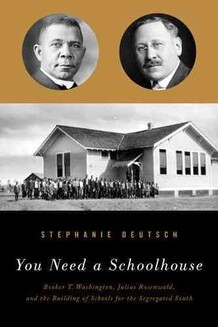
From NPR on March 11, 2012 -- Julius Rosenwald and Booker T. Washington came from vastly different backgrounds.

Rosenwald, president of Sears, Roebuck and Co., was one of the richest men in America; Washington rose out of slavery to become a civil rights leader. But their meeting led eventually to the construction of thousands of schools for black children in the segregated South.

Stephanie Deutsch tells the story of their friendship in her new book You Need a Schoolhouse: Booker T. Washington, Julius Rosenwald, and the Building of Schools for the Segregated South.


Author Stephanie Deutsch

When Rosenwald decided to start giving his money away, he started within the Jewish community — funding schools and hospitals. But Deutsch tells Guy Raz, host of weekends on All Things Considered, that a 1908 race riot in Rosenwald's hometown of Springfield, Ill., made him think twice about the treatment of African-Americans in the United States.

"In one of his speeches, he said, 'We like to look down on the Russians because of the way they treat the Jews, and yet we turn around, and the way we treat our African-Americans is not much better,'" Deutsch says.
Julius Rosenwald and Booker T. Washington

After they met, Washington suggested to Rosenwald the idea of constructing the new schools, Deutsch says.

"His big belief was that education was the building block on which people would build better lives and stronger lives," she says.

Beyond serving students, the schools became civic centers for the communities they served. Deutsch says they were built to be flexible.

"At a time when blacks were excluded from public libraries, public playgrounds, and many other public facilities, the Rosenwald school was really theirs," she says.

You Need a Schoolhouse

Building the schools was a joint effort.

"The idea of partnering with the community was very much in keeping with Rosenwald's thinking," Deutsch says.

Many of the communities served by the schoolhouses were already trying to get schools for their children, she says. So, they often contributed labor and materials.

Deutsch says when segregation ended, the consolidated school was usually placed in the formerly whites-only building. She says many of the schools were boarded up or left to fall apart. One even became the county dump. But Deutsch says there has been interest in recent years in renovating and restoring the schools.

"Alumni are looking at their schools and saying, I want to preserve that school that was such an important part of my life," Deutsch says. (source: NPR)

** Read more about the Rosenwald Schools on the US Slave Blog **

TCB - Stephanie Deutsch, Author - You Need a Schoolhouse - Segment 1


Tuesday, March 13, 2012

The Great Charleston Earthquake, 1886

Charleston City Paper's article, "Tracing discriminatory laws to the earthquake of 1886: The Birth of Jim Crow," by Will Moredock--We've seen it before: When disaster strikes, people pull together as friends and neighbors in a common cause — at least for a while. Then the old rivalries and social fissures reappear, more virulent than ever.

This was the pattern when Hurricane Katrina drowned New Orleans in 2005. A brief surge of unity and good will prevailed, then the old racial and class divisions reasserted themselves. Susan Millar Williams saw it in her McClellanville community in the wake of Hurricane Hugo in 1989. When relief goods started arriving, blacks and whites quarreled over who should receive them.


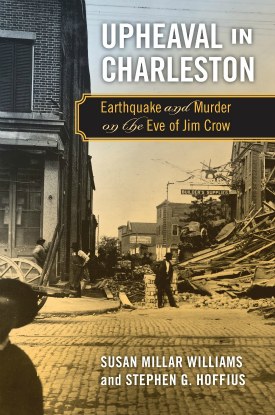
With this experience and what she had read about the 1886 Charleston earthquake in mind, Williams set out with fellow historian Stephen G. Hoffius to explore the social and political ramifications of that long-ago disaster. The recently released Upheaval in Charleston: Earthquake and Murder on the Eve of Jim Crow is the product of their 12 years of work, and the picture they paint of the Holy City is not flattering.

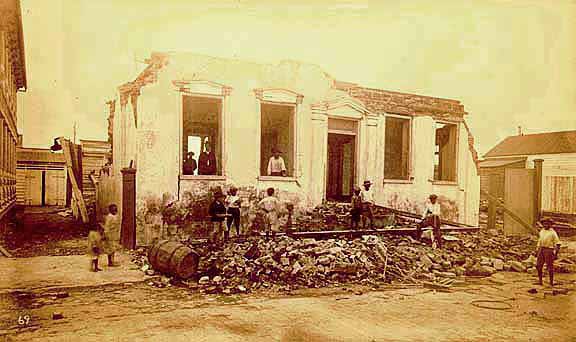
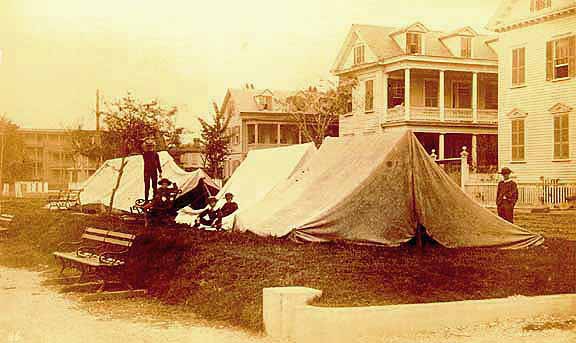
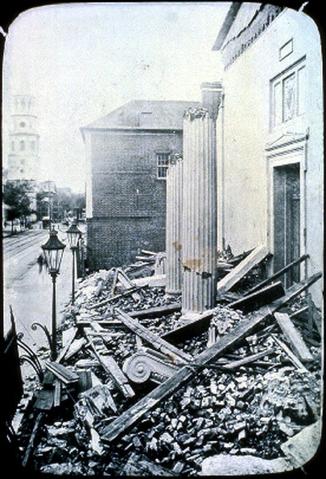
When buildings started swaying and toppling in the early evening of Aug. 31, 1886, the people of Charleston rushed into the streets, wailing and screaming, as fires broke out around the city. They headed instinctively toward Marion Square, where they would be safe from fire and falling buildings.


Blacks and whites set up camps on opposite sides of the square, Williams told me recently. "That first night ... blacks and whites joined in singing and praying together. It lasted about 24 hours."

In the immediate aftermath of the quake, Charlestonians sought to make sense of what had befallen them. Many middle-class and upper-class whites were happy to accept a rational explanation for the catastrophe, if only because it let them off the hook for any metaphysical responsibility. On the other hand, poor whites and blacks, steeped in their primitive religiosity, were eager to believe that this was God's punishment on a wicked city.

1886 Charleston, SC Earthquake Photo

But what sins had so outraged the Almighty? A white Methodist minister intoned to his congregation: "Ice cream gardens, music, and dancing are the popular amusements for the Sabbath afternoons in Charleston." Excursionists, he said, sailed about the harbor on Sundays in "gay and frivolous" abandon.

A white woman told a newspaperman that her sins had brought on her sudden homelessness. "Yes," she said. "I was very worldly. I loved fine dresses and dancing and good living, and this is my punishment."

Blacks, who at the time made up 60 percent of Charleston's population, had a very different understanding of God's wrath. They saw the destruction of this proud old city as its reward for centuries of slavery and oppression. Street preachers sang out and shouted warnings through the night. This quake was the harbinger of apocalypse and judgment. The world would soon be destroyed and Revelation fulfilled.

"The sounds of blacks preaching and singing could be extremely disconcerting to whites," the authors write. "Deprived of other ways to communicate freely, black men and women had long used worship services as a way to register protest ... Now, as the voices of freedmen and their descendants rang out across the city in 1886, whites looked for ways to silence them."


Believers sang and writhed on the ground, as preachers exhorted, "Oh, Gabriel, turn that horn to the land of Egypt on the miserable sinners and not on we."

Williams and Hoffius add, "For whites who couldn't escape such speeches day in and day out, it didn't take too much imagination to suspect that the 'miserable sinners' in question might not be Egyptian."

White citizens and police soon intimidated the preachers and singers into silence.

sc1
The damaged portico of Hibernian Hall, 105 Meeting St. - Charleston Library Society
(J. B. Macelwane archives, Saint Louis University)

There were other stresses to the fragile social fabric. As relief poured into the city from around the country, "Affluent whites insisted that providing free food and shelter to the poor would lead to moral breakdown," the authors write. And with the rebuilding of the city, black artisans and craftsmen were able to command high wages, acquiring wealth and status and threatening the social order. As Williams says, "Charlestonians wanted to preserve the status quo above all else. They did not want anyone to get ahead."

In fact, the authors argue in Upheaval in Charleston that the earthquake of 1886 ultimately helped bring out the Jim Crow laws a decade later.

"The earthquake stripped away the edifice of society. It hardened people's hearts," Williams says. "By the end of 1886, any hope of racial conciliation was over." (source:Charleston City Paper )

"Earthquake, August 31st, 1886. No. 634. Aiken and Vicinity. Wrecked at Langley." - Photographed by J.A. Palmer, Aiken, S.C.

The South Carolina Railway company train was washed from the track by a four-foot high wall of water when the earthquake burst the mill-dam at Langley Pond near Aiken, SC. The train's black fireman, a Mr. Ivie, died in the wreck. Another train owned by the same company was washed from the track near Horse Creek in Aiken County closer to Augusta, GA., when a mill-dam there also fractured because of the earthquake and sent an eight-foot-high wave of water surging against the locomotive, tender, and its train cars. (South Caroliniana Library Archives)

Charleston: "Upheaval in Charleston" Authors Susan Millar and Stephen Hoffius

British Tourist Visits The Low Country of Savannah and Charleston


From the UK Telegraph Travel section, by Nigel Richardson, on 27 August 2008: "American south: A black and white story: Behind the elegant facades of Savannah and Charleston lies the ugliness of slavery. Nigel Richardson hears a neglected view of history."

It was raining so hard in Savannah, Georgia, that the patrolmen of the Chatham County Sheriff’s Department wore plastic covers on their wide-brimmed hats. Noisy cones of white water geysered from sawn-off drainpipes, turning trousers into litmus paper, and the horse-drawn carriages remained stabled all day.

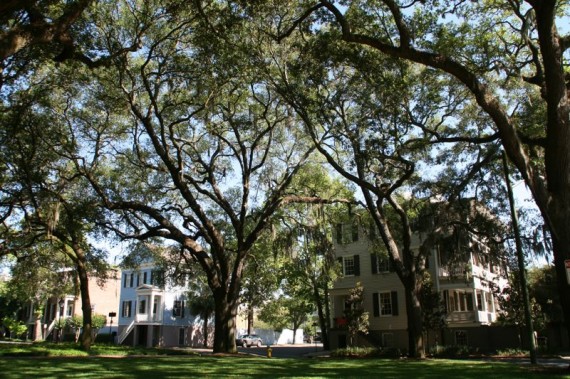
With its 18th-century squares and disconcerting air of England — an England twice filtered, through time and climate, into a tropical Georgiana — Savannah is one of the finest American cities to walk round. Finest cities anywhere to see on foot, come to that. But not today. Today was for indoors.

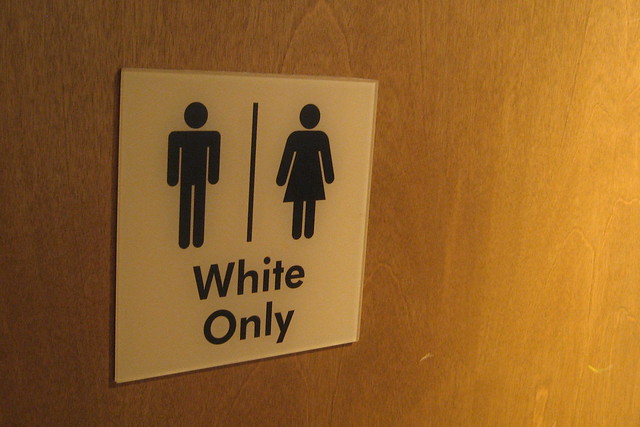
Off Martin Luther King Jr Boulevard, we stumbled into the Ralph Mark Gilbert Civil Rights Museum, shook down our raincoats and requested the restrooms (all that rain). But the WCs weren’t marked “Men” and “Women”. The signs on the doors said “White only” and “Coloured only”, which left us, two white-faced Europeans, red-faced and dumbfounded. This was the intended effect.


The history of black America — for white people at least — has always run on parallel, all-but-invisible tracks to the history promulgated in guidebooks and mainstream museums. Sure, we've heard of Dr King. But when white people come to beautiful Savannah and its Grace Kelly-like sister, Charleston, across the state line in South Carolina, they look for, and are fed, the history of white people.

These are embodied in the architecture, older and better preserved than that of most British cities. Savannah and Charleston are two of the oldest settlements in the United States, founded in 1733 and 1670 respectively. The adventurers who made fortunes here — in many cases on the back of slavery — built big and bold, borrowing from Europe and sticking knobs on: sweeping steps, deep porches, wrought-iron scrollwork and pillars like the Parthenon. There are knot gardens — the one at the Davenport House in Savannah was designed by Penelope Hobhouse — and magnolias, and climate completes the heady effect by draping swooning arms of Spanish moss from branch and balcony.


We loved walking in Savannah and Charleston, spotting, through tropical tangle, the ghostly cousins of a Chelsea mews or a Brighton seafront terrace, reading heritage plaques on reconditioned façades and visitors’ books in hallways that smelled of floor polish. (In the Eighties, at the Green-Meldrin House in Savannah, Mrs Thatcher had signed herself, with uncharacteristic wit, “A representative of the former colonial power”.)

It’s just that in a part of America with a significant black population, and in a year when the American people may just elect their first African-American as president, it felt timely to discover some neglected narratives and points of view. In the institutionally racist days of the Deep South, for example, when every aspect of life was segregated, from shops to drinking fountains, Savannah had “one of the most significant and effective civil rights movements in the US,” according to the curator in the civil rights museum, Heru Iman.


“It was the youth here in the Sixties who integrated Savannah — sitting in at the lunch counters, demonstrating, kneeling outside white churches praying to be let in,” he told us. Activists fanned out from the basement of the First African Baptist Church in Montgomery Street carrying out “wade-ins” at whites-only beaches and boycotting racist stores. The civil rights museum features a re-creation of the lunch counter at Levy’s department store — a particular target for protesters — in which a white waitress advises a black customer, “We don’t serve your kind here”.

The nerve centre of these protests, the First African Baptist Church, claims to have the oldest black congregation in North America, dating from 1775. The present church was completed in 1859 (having been built at night because during the day the men had to work in the cotton plantations).


Our “conductor” on a tour was a shy and proud young man called Johnnie McDonald. “Martin Luther King, Jesse Jackson and Coretta Scott King [Dr King’s widow] have all preached in that pulpit,” he said. In the balcony he pointed out scratch marks on the ends of some pews that were built by slaves in the late 1700s. For many years these marks were a puzzle, but it is now thought they may be cursive Hebrew. “The slaves who came from [West] Africa knew that language,” said Johnnie.


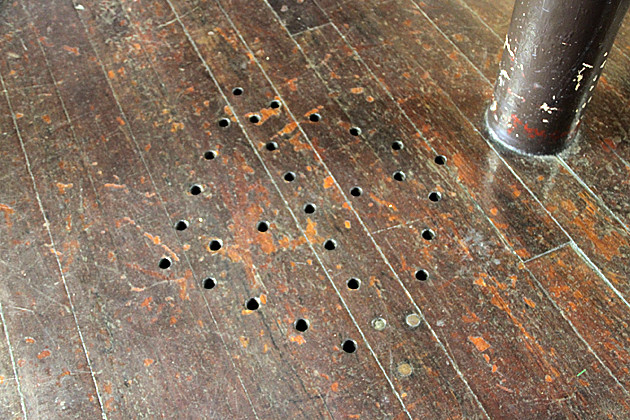
In the basement of the church he indicated a series of holes in the wooden floor and explained that they were part of the “underground railroad”, the network of routes by which runaway slaves were spirited to freedom. “These are air holes, so they could breathe,” he said. “There’s only four feet of crawling space. You’d crawl from here and exit by the Savannah River [a quarter of a mile away].”


There are 36 sets of these holes and they are configured in the same pattern, a combination of cross and diamond which Johnnie described as a “Congo cosmogram” — another link with the West African ancestry of Savannah’s slaves.

That ancestry has survived to a surprising extent in the marshy maze of islands and causeways known as the Lowcountry, which separates Savannah from Charleston, 100 miles up the coast. Here many descendants of West African slaves and plantation labourers continue to speak Gullah, which is a mixture of English and West African words (the word Gullah is also used to mean the culture of the people who speak it).


On St Helena Island, in the heart of the Lowcountry, is the Penn Centre Historic District, a campus of former school buildings where freed slaves once studied and which Martin Luther King used as a retreat in the Sixties. Nearby we ate lunch in a plain shack called Gullah Grub, which serves authentic Lowcountry food — catfish, crab, shrimp — using old African-influenced recipes.

Shrimp gumbo — knocked back with ”swampwater”, homemade lemonade served in jam jars — hit the spot and we were soon back on Highway 17 and barrelling into the antique Manhattan that is the Charleston historic district, squeezed between the Cooper and Ashley Rivers. The rain had passed, leaving bright sunshine on stucco facades and weatherboard porches. The suits of wedding revellers — there were many — left mothball whiffs on the humid air.


It is beautiful and affluent even now, but in the 1700s Charleston was the richest city in the United States. It was also the country’s biggest slave port and the city’s wealthy white merchants used their slaves to ape the imagined lifestyles of English aristocrats.

One of the architectural highlights of Charleston is the Aiken-Rhett House, a vast antebellum confection of pillared porches that was once the home of William Aiken, a rice planter. The house has scarcely changed since 1858, which means that the slave quarters, a handful of cubicle rooms situated above kitchen and stables, are intact.


The family owned 800 slaves, of whom between 10 and 20 worked and lived in the house (these included one Dorcas Richardson, her husband and five children). In the vast living rooms of the house, there were ciphers of bygone ways of thinking and behaving: a set of Sir Walter Scott’s Waverley novels in the library; a harp standing in the middle of the old ballroom, whose red fabric wallpaper had faded to the colour of dried blood.

These southern ways were not to last. “Blacks knew that once the [civil] war started, they were on their way to freedom,” said Al Miller into the microphone of his minibus. Al, smartly turned out in checked linen trousers and white shirt, runs Sites and Insights Tours around the Charleston area, acquainting black visitors with the often invisible history of their people. As the only whites on his minibus tour, we were swept up in this different perspective.


First, he drove us south-west, off the peninsula, to James Island. “During slavery there were over 20 plantations here,” he said. We passed the Macleod Plantation where the wooden, white-painted slave quarters, standing on brick stilts, have been preserved. Here slaves grew sea-island cotton, indigo, okra and sweet potatoes and lived on grits, shrimp and gravy.

“It was the black people’s dish, the poor people’s dish,” said Al. “You ever paid an arm and a leg for it?” The rest of the bus shook their heads and laughed in agreement.

In the early 1930s George Gershwin spent time on James Island, absorbing a history and atmosphere that inspired him to write Porgy and Bess. His folk opera, including Summertime and It Ain’t Necessarily So, was based on the novel Porgy by the Charleston writer, DuBose Heyward. Driving past the old plantations — avenues of live oak trees mark where the driveways were — Al got the bus rocking and clapping by enacting the Porgy and Bess story in a kind of baritone rap: “Here comes Bess/ a slut in a red dress/ She was selling holy dust which was like cocaine/ She kept it in her girdle, she kept her money in her bosom/ She was not well liked...”


We got off the bus at James Island Presbyterian Church, where there are two cemeteries — one for black folk, one for white — separated by shrubbery. “It’s like day and night,” said Al. In the black section is the grave of Samuel Smalls, “the goat man”, upon whom DuBose Heyward based the character of Porgy. In honour of Gershwin’s Jewishness, visitors had placed stones on the top of Smalls’s headstone.

“A lot of Gullah cheechee [people] are superstitious when it comes to cemeteries,” said Al. “If you point your finger at a tombstone, it will rot off. Don’t bring cemetery dirt into your car on your shoes. Where did these things come from? Africa.”

James Island Presbyterian Church - James Island, South Carolina
James Island Presbyterian Church

Back on the historic peninsula, we cruised the golden streets. But Al screened out the antebellum and Greek revival mansions, the city’s architectural setpieces, pointing out instead the alleys, lanes and courts once lived in by poor blacks. We passed 78 Church St, where Heyward was living when he wrote Porgy, and Catfish Row, which features in the novel and opera and would now fit seamlessly into a discreet corner of Knightsbridge. “Once this was a rundown slum area,” said Al. “Catfish Row was a black tenement. Especially when Porgy was written. Not any more.”

As he drove, Al told us things that white people would rather not think about. “The average black man sold for between 800 and 1,200 dollars, which was a lot of money,” he said. “Women were made to have 10 or 15 children. They were made to have sex blindfold by the slave owners and had multiple partners.”
Jenkins Orphan Band

One of our last ports of call was in Franklin Street where we paused outside the site of the Jenkins Orphanage. Here, in the 1920s, the resident band drew on Gullah rhythms and dance steps to invent the tune and dance craze that became known as The Charleston. A plaque marks the site of the orphanage but doesn’t mention The Charleston, let alone make Al Miller’s point that “they started it here. The white folk just stole it from us.” (source: UK Telegraph)


Thursday, March 1, 2012

Reconstruction. The Second Civil War


NARRATOR: April 11th, 1865, two days after the end of the Civil War. In the White House, President Abraham Lincoln agonized over his first speech since the defeat of the South. The jubilant crowd outside expected a celebration of the Union victory. Instead, the president warned that "Reconstruction," as he called it, would be "fraught with great difficulty."

EDWARD AYERS, HISTORIAN: The war has spiraled far beyond the worst imaginings of anyone. Over six hundred thousand people had died in the last four years. The largest slave system in the modern world is in shambles and no one knows what is going to replace it. People just can't imagine how they're going to put the country back together again.

DAVID BLIGHT, HISTORIAN: It is a revolutionary, chaotic situation, and the responsibility now was to come up with a plan to restore this society. But you also had to do it with this deep and abiding division over race.

NARRATOR: Three days later, the statesman who led the Union through the Civil War was assassinated. Suddenly, the extraordinary challenge of reconstructing the nation was in the hands of ordinary men and women. A Yankee officer would venture to the most violent corner of Louisiana to try to impose order. A plantation mistress whose slaves were now free would struggle to reclaim her place in the world. A fiery black minister would mount a pitched battle with white landowners. And a new President would force a dramatic showdown with Congress.

ERIC FONER, HISTORIAN: An old order, an old social order has been destroyed; and everything is up for grabs.

CLARENCE WALKER, HISTORIAN: The violence in the South was a way to reestablish white Supremacy. This was a war of terror.

NARRATOR: After four bloody years of Civil War, Americans, North and South would continue to fight over the meaning of freedom, the meaning of citizenship, and the survival of the nation itself.


Reconstruction. The Second Civil War PT1

Congressional Resolution Freeing the Families of Black Soldiers


A Resolution to encourage Enlistments and to promote the Efficiency of the military Forces of the United States.

Resolved by the Senate and House of Representatives of the United States of America in Congress assembled, That, for the purpose of encouraging enlistments and promoting the efficiency of the military and naval forces of the United States, it is hereby enacted that the wife and children, if any he have, of any person that has been, or may be, mustered into the military or naval service of the United States, shall, from and after the passage of this act, be forever free, any law, usage, or custom whatsoever to the contrary notwithstanding; and in determining who is or was the wife and who are the children of the enlisted person herein mentioned, evidence that he and the woman claimed to be his wife have cohabited together, or associated as husband and wife, and so continued to cohabit or associate at the time of the enlistment, or evidence that a form or ceremony of marriage, whether such marriage was or was not authorized or recognized by law, has been entered into or celebrated by them, and that the parties thereto thereafter lived together, or associated or cohabited as husband and wife, and so continued to live, cohabit, or associate at the time of the enlistment, shall be deemed sufficient proof of marriage for the purposes of this act, and the children born of any such marriage shall be deemed and taken to be the children embraced within the provisions of this act, whether such marriage shall or shall not have been dissolved at the time of such enlistment.

APPROVED, March 3, 1865.

U.S., Statutes at Large, Treaties, and Proclamations of the United States of America, vol. 13 (Boston, 1866), p. 571.

Freedmen's Bureau Marriage Records


Freedmen's Bureau Marriage Records

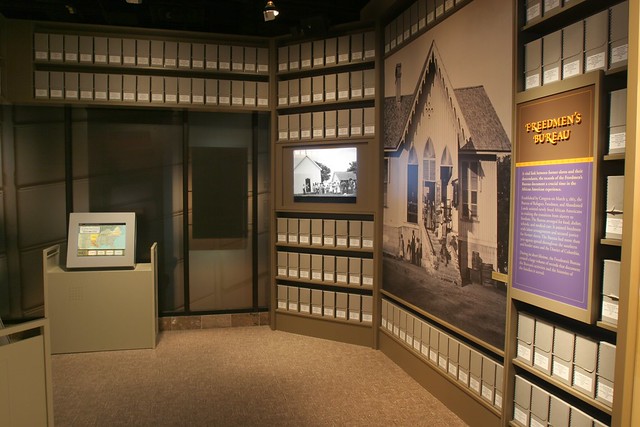
This microfilm series contains hundreds of marriage records of newly liberated African Americans in the post-Civil War era collected from 1861 through 1869 first by the Union Army and then the Freedmen's Bureau in its field offices in the Southern States and the District of Columbia, and sent to the Washington, DC, headquarters. Record types include unbound marriage certificates, marriage licenses, monthly reports of marriages, and other proofs of marriages. Record type and quantity varies with each state. (source: National Archives)

Freedmen’s Bureau Project

Installed in the Public Vault, “We the People,” this interactive lets the documents tell the story of the Bureau of Refugees, Freedmen, and Abandoned Lands—also known as the Freedmen’s Bureau. Visitors can select records grouped according to states or themes including labor, marriage, education, and land. The “Enhanced Record Viewer” lets visitors review every detail of the documents, turn pages, transcribe handwriting, and reveal interpretive hot spots that explain important elements and passages.


How to Order Microfilm Rolls

  • Online: Go to the National Archives online ordering.
  • Telephone: Credit card orders call toll free 1-800-234-8861 (301-837-2000 in the Washington, DC, metropolitan area), 8 a.m. - 4:30 p.m. EST. Visa, MasterCard, American Express, and Discover are accepted.
  • Fax: Fax your order to 301-837-3191.
  • Mail: Mail checks or money orders to the National Archives Trust Fund, P.O. Box 100793, Atlanta, GA 30384-0793. Include daytime telephone number with order.

Please identify the microfilm publication number (e.g., M1875) and the specific roll number(s) you are interested in.

Let No Man Put Asunder: Freedmen's Bureau Marriage Records

Friday, February 24, 2012

Albion Tourgee: Citizenship Rights For ALL!


From North Carolina's News and Record's Opinion Page, "THE SIT-INS: Albion Tourgee a pioneer for rights," on 31 January 2010, by Professor Frank Woods:

After much hesitation and anticipation, the International Civil Rights Center & Museum will soon open its doors. A broad spotlight will be cast on Greensboro in recognition of its activist spirit in the quest for equality, one that reaches deep into the past and beyond the transformative day of Feb. 1, 1960.

Woolworth's Luncheon Counter located at the International Civil Rights Center & Museum (Greensboro, NC)


The city’s history is, in fact, steeped with courageous individuals who have lobbied intensely for positive change in the midst of racial injustice and, sometimes, sacrificed body and soul to secure for all the precious guarantees found in the 14th and 15th amendments of the U.S. Constitution.

Across the street from the museum, is an informational marker that honors a former resident of Greensboro who made it his primary mission to secure basic rights of freedom for newly emancipated slaves and to see that when the new state constitution was framed, it was favorable to black advancement.

Albion Winegar Tourgee

The same man is also honored by a historical marker on Lee Street near the ramp leading up to Martin Luther King Jr. Drive, citing the location where his home once stood. Obviously, he left a mark on the city but the city hardly knows of him today. His name was Albion Winegar Tourgee, the most “infamous” carpetbagger to set foot in North Carolina.

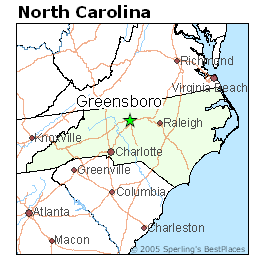
Map of Greensboro, North Carolina, U.S.A.

Born in Williamsfield, Ohio, in 1838, Tourgee grew up in Kingsfield, Ohio, an area of strong abolitionist sentiment. He later joined the Union army at the outbreak of the Civil War and sustained a severe wound to his spine. After the war, Tourgee’s injury left him in poor health. In an attempt to recoup his strength, he decided to try the warmer climate of the South, and Greensboro was his destination.


Tourgee’s early years in the city during Reconstruction were filled with righteous outrage as he continually witnessed the mistreatment of “freedmen.” He soon drifted into a personal crusade for social justice and became increasingly vocal on behalf of African American rights. This, in turn, caused him to be vilified and ostracized by whites in the state who wished to see the old social and political order preserved.

Tourgee took an active part in the N.C. State Constitutional Convention held in Raleigh in 1868, and served as one of the chief framers on the new constitution. He pushed for a progressive document that called for the inclusion of blacks in the creation of a “New South.” For his efforts, Tourgee was branded a derisive figure in North Carolina politics and a “contemptible friend of the Negro.”

North Carolina Ku Klux Klansmen, 1870

Wearing that label like a badge of honor, Tourgee continued to be an outspoken champion of African American rights and liberties. He was elected a judge of the Superior Court, Seventh Judicial District of North Carolina — a position that gave him the authority to enforce his ideals throughout the Piedmont. Judge Tourgee continued to lobby against those who opposed African American progress, even though his life was threatened by the newly formed Ku Klux Klan.


Undaunted, Tourgee attacked that organization with a scathing expose titled “The Invisible Empire.” This material was later incorporated into a best-selling novel, “A Fool’s Errand” (1879).

Tourgee left the state in the waning years of Reconstruction as the “Old South” was being redeemed.

Living outside of the South did not dampen Tourgee’s efforts at racial redemption. He continued to write and speak on matters of race.

More importantly, he founded a national civil rights group in 1891, the National Citizens’ Rights Association, to deal with mounting racial injustices throughout the country caused by restrictive “Jim Crow” laws and lynchings.

Homer Plessy, the man who set the standard for the American Apartheid system called "Jim Crow," was only 1/8 African American and 7/8 white. In 1896 Homer Plessy became the standard bearer of how black is black, hence the "one drop rule" has been in full effect in the United States since 1896.

But Tourgee’s greatest battle against the forces of oppression came in a showdown before the Supreme Court in 1896 as the chief counsel for Homer Plessy in his case against the Louisiana railroad company that forced him into a segregated car (Plessy v. Ferguson). Unfortunately, Tourgee’s eloquence and fervor were not enough to sway a majority of the high court justices and the floodgates of discrimination were thrown open in America. Now that he was a beaten man, Tourgee’s activism shortly ground to a halt.


As local, state and national officials, along with the curious public, descend on the new civil rights museum, many will walk the same street that Tourgee trod long ago. In a way, they will follow in his footsteps to a “sacred place” in the struggle for equal rights. Had Judge Tourgee been alive on Feb. 1, 1960, there is little doubt that he would have been at the Woolworth building, lending his support to the Greensboro Four as they accelerated the cause he championed. (source: Professor Frank Woods, UNCG, published in The News & Record).

Tuesday, September 20, 2011

North Carolina KKK Murder Senator John W. Stephens


The Caswell County courthouse in Yanceyville was the scene of a brutal Ku Klux Klan murder in 1870.

Raleigh, N. C., Feb. 25 — …Mr. Bowman, Republican… related from the sworn evidence of one of the parties present the particulars of the murder of Senator John W. Stephens, of Caswell, which occurred in June, 1870; and that warrants had been issued for the guilty parties. He stated that a public Democratic meeting was in progress in the court-house at Yanceyville, the county seat of Caswell; that Stephens was in attendance on that meeting; that a prominent Democrat of Caswell approached Stephens with a smile, and asked him to go down-stairs with him.

Senator John W. Stephens
Stephens assented, and they went into a room formerly occupied by the Clerk of the Court of Equity; that as soon as they entered the room the door was locked; that there were in the room eight white men and one negro. Stephens was surprised to find the room full of men, and was struck with horror when a rope, fixed as a lasso, was thrown over his neck from behind, and he was told by the spokesman of the Kuklux crowd that he must renounce his Republican principles;
kkk

That he believed they were right, and that the Republic would prosper if they were carried out; that he could not leave the country and State, because his all was there; that the colored people looked upon him as a leader, that they depended on him, and that he could not desert them. Stephens was then told that he must die. He then asked to be allowed to take a last look from the window of the office, at his home and any of his family that might be in view.

The request was granted, and when Stephens stepped to the window he beheld his little home and his two little children playing in front of his house. He was then thrown down on a table, two of the Kuklux holding his arms. The rope was ordered to be drawn tighter, and the negro was ordered to get a bucket to catch the blood. This done, one of the crowd severed the jugular vein, the negro caught the blood in the bucket, and Stephens was dead.
woodpile
His body was laid on a pile of wood in the room, and the murderers went up-stairs, took part in the meeting, and stamped and applauded Democratic speeches.
John W. Stephens Pistol (1870) The Richmond-Miles History Museum in Yanceyville, Caswell County, North Carolina, is this "Pocket" Colt pistol that was taken from Senator John W. Stephens (1834-1870) before he was murdered by the Ku Klux Klan in the Caswell County Courthouse May 21, 1870. The weapon is owned by Earl J. Smith, Jr., who inherited it from his father.
John Walter “Chicken” Stephens was a Republican state senator and justice of the peace from Caswell County. Stephens worked to encourage blacks to vote for the Republican Party, which infuriated many of his white neighbors, who considered him a scalawag — a traitor to the South.

On Sunday morning, May 22, 1870, Stephens was found in a storeroom of the county courthouse, brutally murdered. It was assumed that the Klan had been responsible for the murder, and several Klansmen were arrested by state militia, questioned, and then released.
Amnesty for the Klan

In 1871, Democrats again controlled the General Assembly, and they impeached Governor Holden and removed him from office. In 1872 and 1873 they passed amnesty laws that pardoned anyone who had committed any violation of state law, excepting only rape, in his duties as a member of a secret political organization such as the Ku Klux Klan. Some men who had been convicted of crimes were released, and Stephens’ murderers were never brought to justice.
The article on this page was printed in the New York Times after the State Senate passed an amnesty bill in 1873. The article reminded readers of the brutal nature of Stephens’ murder, and asked, “Shall his assassins be amnestied?”

Ku Klux Klan Captain John Lea's confession

One of the men arrested after Stephens’ murder, former Confederate Captain John Lea, was asked repeatedly in later years about his involvement. He supposedly answered each time, “You all can wait until I die.” In 1919, Lea gave three state officials a statement about the murder, insisting that they pledge not to open the statement until Lea died.

When Lea finally died in 1935, the statement was made public. In it Lea had written that “Stephens had been tried for arson, and extortion, found guilty and sentenced to death by the KKK.” Lea described the murder, named the twelve men responsible, and concluded that “Stephens had a fair trial before the jury of twelve men.” Lea, like many members of the Ku Klux Klan, considered the Klan to be the rightful government of North Carolina during Republican rule in Reconstruction. And Lea, certainly, never regretted his actions.

HOME

HOME
Click here to return to the US Slave Home Page