Showing posts with label Rice slavery. Show all posts

Monday, June 4, 2012

The Lords Proprietors Voyage to Carolina

The Lords Proprietors of Carolina


King Charles II  --  On March 24, 1663, Charles II granted to the Lords Proprietors a slice of North America running from the Atlantic to the Pacific, lying between 36 degrees north latitude on the north and 31 degrees on the south. This huge section of continent was granted absolutely to the following men, to be financed by them, and for them to profit by, and to rule, with the help or interference of such a local government as they might permit. Above them was only the King. In the order named in Charles' charter they were: the Earl of Clarendon, the Duke of Albemarle, Lord Craven, Lord Berkeley, Lord Ashley, Sir George Carteret, Sir William Berkeley, and Sir John Colleton. The most important of these was Lord Ashley (Anthony Ashley Cooper), who specified the street plan for the new city and whose secretary, the philosopher John Locke, wrote the Fundamental Constitution of Carolina.


Two years later, the charter was amended to raise the north line 30 minutes and the south line by two degrees. In other words, the huge slice of North America that was Carolina included: the present states of North and South Carolina, Georgia, Tennessee, Alabama, Mississippi, Louisiana and Arkansas, a small part of Missouri, most of Oklahoma, Texas, New Mexico and Arizona, the southern half of California, the southern tip of Nevada, the north part of Florida, and a slice of northern Mexico.

  1. Edward Hyde, Earl of Clarendon
  2. George Monck, Duke of Albemarle
  3. William, Lord Craven (Earl of Craven)
  4. John Berkeley, Baron of Stratton
  5. Anthony Ashley Cooper, Earl of Shaftesbury
  6. Sir George Carteret
  7. Sir William Berkeley
  8. Sir John Colleton

King Charles II of England

English colonies have proliferated along the Atlantic coast, some formed by those fleeing religious persecution, others are seeking fortune in the New World. The growth has caused a shortage of good land around Jamestown and with the Virginia governor on the wrong side in the coup that costs Charles I his head, Virginia's ports are ordered blockaded by Oliver Cromwell... leaving the only route south into the rich lands of Carolina a swampy wilderness that borders Virginia. [Lindley Butler ]

But the lands of Carolina are populated by the Tuscarora, a successful people with both an agrarian and a hunter society, as well as a trading culture that carries them as far as the Great Lakes. And they are a tribe of warriors not to be taken lightly.

The Virginian English find cleared land theirs for the taking, at least in their perspective, as many of the Indians have died from diseases brought by the Europeans and town sites as well as cleared agricultural sites abound along the riverbanks. Still, expansion southward is slow, and only a few hundred settlers homestead among the Indians during the next decade.


George Monck, Duke of Albemarle 

Civil war in England comes to an end in 1660 and Charles II is placed on the throne. He rewards eight of the men who helped him with huge land grants in Carolina and they become the Lords Proprietors. They quickly insist that their charter include the settled areas north of the Albemarle Sound. And suddenly, the people who thought of themselves as Virginians are now under new rulers, with the prospect of government and taxes a reality.
Edward Hyde, Earl of Clarendon

The Fundamental Constitutions of the Carolinas  --  The Fundamental Constitutions of Carolina, a complicated document combining the old feudal land laws with liberal political notions, is handed down to the displeased settlers. Taxes will be collected, but an effort is made to give the landholders a voice in their own government. And religious freedom is confirmed in the new laws.

The Quakers are the first to establish a church in Carolina. And in this promising political environment, an effort is made to encourage fair treatment of the natives as well. [Clara Sue Kidwell ]

Anthony Ashley Cooper, Earl of Shaftesbury

Agitated colonists  --  The efforts of the Lords Proprietors are not well-received in the Carolina colony. The colonists are an especially independent lot, self-sustaining and disdainful of outside government meddling. And there is more than just the rebellious spirit of the settlers that stands in the way of success for the Proprietors--the colony's lack of a deep-water port drives up the costs for shipping and there is general stagnation in the economy. [William Price ]

By 1670, there are really two colonies in Carolina, the one north of the Albemarle Sound and the second far to the south around the growing port of Charleston. The deepwater port there creates tremendous economic activity and the Proprietors begin to concentrate their efforts on the winning settlement, bringing still more wealth to the region.


Sugar slaves  --  The Charleston area sees the emergence of a new cash crop, rice, and with it the need for labor. This need intensifies in Virginia as well, with the clearing of land and expanding tobacco plantations.

Slavery is already present in the Americas, brought by the Spanish, and soon the English colonists who can afford it turn to African slaves as a source of labor.

Indian slave being loaded onto boat

Slavery is legal in Carolina and there were slaves available, but the colony was, for the most part, not as wealthy as its neighbors to the south and north. Lack of ports meant less trade and, consequently, less money, holding the rise of slavery back in what is now North Carolina. But with the expansion of the colonies, the English settlers encourage their Indian trade partners to bring their captured neighbors to them as slaves, and many of the tribes seem more than eager to oblige.

Many of the enslaved Indians are destined, not for the plantations of Carolina, but to other colonies or to the Caribbean, and so they are taken from their native lands to faraway places, never to return.


Lawson surveying in woods  --  Englishman John Lawson would have an impact on the colony's growth, following his arrival and early explorations in 1701. Lawson was a surveyor and a writer with a keen interest in the people, flora and fauna of this New World and he would write of his travels and observations in a successful publication called A New Voyage to Carolina.

John Berkeley, Baron of Stratton

After his journey, he settles on the Neuse River near the native village of Chattoka and he writes glowingly of his Indian neighbors, describing them as a kindly and considerate people. [John Lawson ]
Lawson helps to establish the town of Bath, North Carolina's first, and more settlers are attracted to the region, drawn both by his book and the availability of building lots on the Pamlico River.

Portrait of Baron de Graffenried

He convinces a Swiss Baron, Christopher de Graffenried, to settle a group of Palatines, German Protestants fleeing religious persecution, in the new Carolina colony. Lawson arranges a purchase of land at the point where the Trent and Neuse rivers join, and De Graffenried names the new settlement New Bern, after the capitol of Switzerland. The Baron would later accuse Lawson of selling land that belonged to the Tuscarora, but De Graffenried would be the only one around to tell the story. [source: http://www.unctv.org/birthofacolony/act4.php]


Tuesday, March 13, 2012

British Tourist Visits The Low Country of Savannah and Charleston


From the UK Telegraph Travel section, by Nigel Richardson, on 27 August 2008: "American south: A black and white story: Behind the elegant facades of Savannah and Charleston lies the ugliness of slavery. Nigel Richardson hears a neglected view of history."

It was raining so hard in Savannah, Georgia, that the patrolmen of the Chatham County Sheriff’s Department wore plastic covers on their wide-brimmed hats. Noisy cones of white water geysered from sawn-off drainpipes, turning trousers into litmus paper, and the horse-drawn carriages remained stabled all day.

With its 18th-century squares and disconcerting air of England — an England twice filtered, through time and climate, into a tropical Georgiana — Savannah is one of the finest American cities to walk round. Finest cities anywhere to see on foot, come to that. But not today. Today was for indoors.

Off Martin Luther King Jr Boulevard, we stumbled into the Ralph Mark Gilbert Civil Rights Museum, shook down our raincoats and requested the restrooms (all that rain). But the WCs weren’t marked “Men” and “Women”. The signs on the doors said “White only” and “Coloured only”, which left us, two white-faced Europeans, red-faced and dumbfounded. This was the intended effect.


The history of black America — for white people at least — has always run on parallel, all-but-invisible tracks to the history promulgated in guidebooks and mainstream museums. Sure, we've heard of Dr King. But when white people come to beautiful Savannah and its Grace Kelly-like sister, Charleston, across the state line in South Carolina, they look for, and are fed, the history of white people.

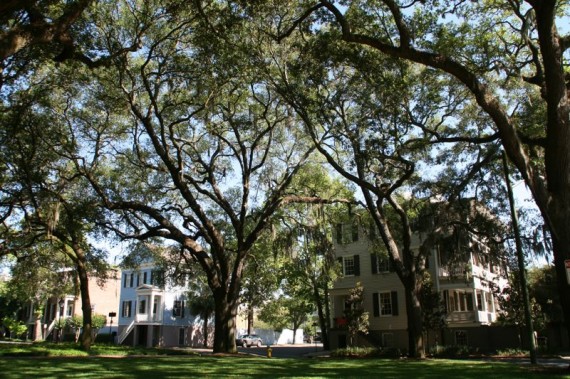
These are embodied in the architecture, older and better preserved than that of most British cities. Savannah and Charleston are two of the oldest settlements in the United States, founded in 1733 and 1670 respectively. The adventurers who made fortunes here — in many cases on the back of slavery — built big and bold, borrowing from Europe and sticking knobs on: sweeping steps, deep porches, wrought-iron scrollwork and pillars like the Parthenon. There are knot gardens — the one at the Davenport House in Savannah was designed by Penelope Hobhouse — and magnolias, and climate completes the heady effect by draping swooning arms of Spanish moss from branch and balcony.


We loved walking in Savannah and Charleston, spotting, through tropical tangle, the ghostly cousins of a Chelsea mews or a Brighton seafront terrace, reading heritage plaques on reconditioned façades and visitors’ books in hallways that smelled of floor polish. (In the Eighties, at the Green-Meldrin House in Savannah, Mrs Thatcher had signed herself, with uncharacteristic wit, “A representative of the former colonial power”.)

It’s just that in a part of America with a significant black population, and in a year when the American people may just elect their first African-American as president, it felt timely to discover some neglected narratives and points of view. In the institutionally racist days of the Deep South, for example, when every aspect of life was segregated, from shops to drinking fountains, Savannah had “one of the most significant and effective civil rights movements in the US,” according to the curator in the civil rights museum, Heru Iman.


“It was the youth here in the Sixties who integrated Savannah — sitting in at the lunch counters, demonstrating, kneeling outside white churches praying to be let in,” he told us. Activists fanned out from the basement of the First African Baptist Church in Montgomery Street carrying out “wade-ins” at whites-only beaches and boycotting racist stores. The civil rights museum features a re-creation of the lunch counter at Levy’s department store — a particular target for protesters — in which a white waitress advises a black customer, “We don’t serve your kind here”.

The nerve centre of these protests, the First African Baptist Church, claims to have the oldest black congregation in North America, dating from 1775. The present church was completed in 1859 (having been built at night because during the day the men had to work in the cotton plantations).


Our “conductor” on a tour was a shy and proud young man called Johnnie McDonald. “Martin Luther King, Jesse Jackson and Coretta Scott King [Dr King’s widow] have all preached in that pulpit,” he said. In the balcony he pointed out scratch marks on the ends of some pews that were built by slaves in the late 1700s. For many years these marks were a puzzle, but it is now thought they may be cursive Hebrew. “The slaves who came from [West] Africa knew that language,” said Johnnie.


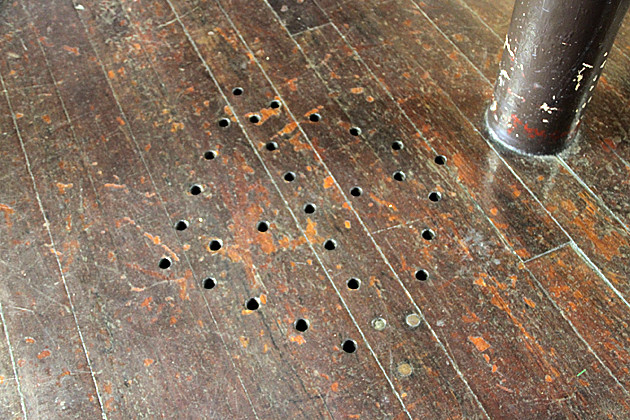
In the basement of the church he indicated a series of holes in the wooden floor and explained that they were part of the “underground railroad”, the network of routes by which runaway slaves were spirited to freedom. “These are air holes, so they could breathe,” he said. “There’s only four feet of crawling space. You’d crawl from here and exit by the Savannah River [a quarter of a mile away].”


There are 36 sets of these holes and they are configured in the same pattern, a combination of cross and diamond which Johnnie described as a “Congo cosmogram” — another link with the West African ancestry of Savannah’s slaves.

That ancestry has survived to a surprising extent in the marshy maze of islands and causeways known as the Lowcountry, which separates Savannah from Charleston, 100 miles up the coast. Here many descendants of West African slaves and plantation labourers continue to speak Gullah, which is a mixture of English and West African words (the word Gullah is also used to mean the culture of the people who speak it).


On St Helena Island, in the heart of the Lowcountry, is the Penn Centre Historic District, a campus of former school buildings where freed slaves once studied and which Martin Luther King used as a retreat in the Sixties. Nearby we ate lunch in a plain shack called Gullah Grub, which serves authentic Lowcountry food — catfish, crab, shrimp — using old African-influenced recipes.

Shrimp gumbo — knocked back with ”swampwater”, homemade lemonade served in jam jars — hit the spot and we were soon back on Highway 17 and barrelling into the antique Manhattan that is the Charleston historic district, squeezed between the Cooper and Ashley Rivers. The rain had passed, leaving bright sunshine on stucco facades and weatherboard porches. The suits of wedding revellers — there were many — left mothball whiffs on the humid air.


It is beautiful and affluent even now, but in the 1700s Charleston was the richest city in the United States. It was also the country’s biggest slave port and the city’s wealthy white merchants used their slaves to ape the imagined lifestyles of English aristocrats.

One of the architectural highlights of Charleston is the Aiken-Rhett House, a vast antebellum confection of pillared porches that was once the home of William Aiken, a rice planter. The house has scarcely changed since 1858, which means that the slave quarters, a handful of cubicle rooms situated above kitchen and stables, are intact.


The family owned 800 slaves, of whom between 10 and 20 worked and lived in the house (these included one Dorcas Richardson, her husband and five children). In the vast living rooms of the house, there were ciphers of bygone ways of thinking and behaving: a set of Sir Walter Scott’s Waverley novels in the library; a harp standing in the middle of the old ballroom, whose red fabric wallpaper had faded to the colour of dried blood.

These southern ways were not to last. “Blacks knew that once the [civil] war started, they were on their way to freedom,” said Al Miller into the microphone of his minibus. Al, smartly turned out in checked linen trousers and white shirt, runs Sites and Insights Tours around the Charleston area, acquainting black visitors with the often invisible history of their people. As the only whites on his minibus tour, we were swept up in this different perspective.


First, he drove us south-west, off the peninsula, to James Island. “During slavery there were over 20 plantations here,” he said. We passed the Macleod Plantation where the wooden, white-painted slave quarters, standing on brick stilts, have been preserved. Here slaves grew sea-island cotton, indigo, okra and sweet potatoes and lived on grits, shrimp and gravy.

“It was the black people’s dish, the poor people’s dish,” said Al. “You ever paid an arm and a leg for it?” The rest of the bus shook their heads and laughed in agreement.

In the early 1930s George Gershwin spent time on James Island, absorbing a history and atmosphere that inspired him to write Porgy and Bess. His folk opera, including Summertime and It Ain’t Necessarily So, was based on the novel Porgy by the Charleston writer, DuBose Heyward. Driving past the old plantations — avenues of live oak trees mark where the driveways were — Al got the bus rocking and clapping by enacting the Porgy and Bess story in a kind of baritone rap: “Here comes Bess/ a slut in a red dress/ She was selling holy dust which was like cocaine/ She kept it in her girdle, she kept her money in her bosom/ She was not well liked...”


We got off the bus at James Island Presbyterian Church, where there are two cemeteries — one for black folk, one for white — separated by shrubbery. “It’s like day and night,” said Al. In the black section is the grave of Samuel Smalls, “the goat man”, upon whom DuBose Heyward based the character of Porgy. In honour of Gershwin’s Jewishness, visitors had placed stones on the top of Smalls’s headstone.

“A lot of Gullah cheechee [people] are superstitious when it comes to cemeteries,” said Al. “If you point your finger at a tombstone, it will rot off. Don’t bring cemetery dirt into your car on your shoes. Where did these things come from? Africa.”

James Island Presbyterian Church - James Island, South Carolina
James Island Presbyterian Church

Back on the historic peninsula, we cruised the golden streets. But Al screened out the antebellum and Greek revival mansions, the city’s architectural setpieces, pointing out instead the alleys, lanes and courts once lived in by poor blacks. We passed 78 Church St, where Heyward was living when he wrote Porgy, and Catfish Row, which features in the novel and opera and would now fit seamlessly into a discreet corner of Knightsbridge. “Once this was a rundown slum area,” said Al. “Catfish Row was a black tenement. Especially when Porgy was written. Not any more.”

As he drove, Al told us things that white people would rather not think about. “The average black man sold for between 800 and 1,200 dollars, which was a lot of money,” he said. “Women were made to have 10 or 15 children. They were made to have sex blindfold by the slave owners and had multiple partners.”
Jenkins Orphan Band

One of our last ports of call was in Franklin Street where we paused outside the site of the Jenkins Orphanage. Here, in the 1920s, the resident band drew on Gullah rhythms and dance steps to invent the tune and dance craze that became known as The Charleston. A plaque marks the site of the orphanage but doesn’t mention The Charleston, let alone make Al Miller’s point that “they started it here. The white folk just stole it from us.” (source: UK Telegraph)


Tuesday, February 21, 2012

Low Country Rice Fields: A Feat as Great as Building the Pyramids


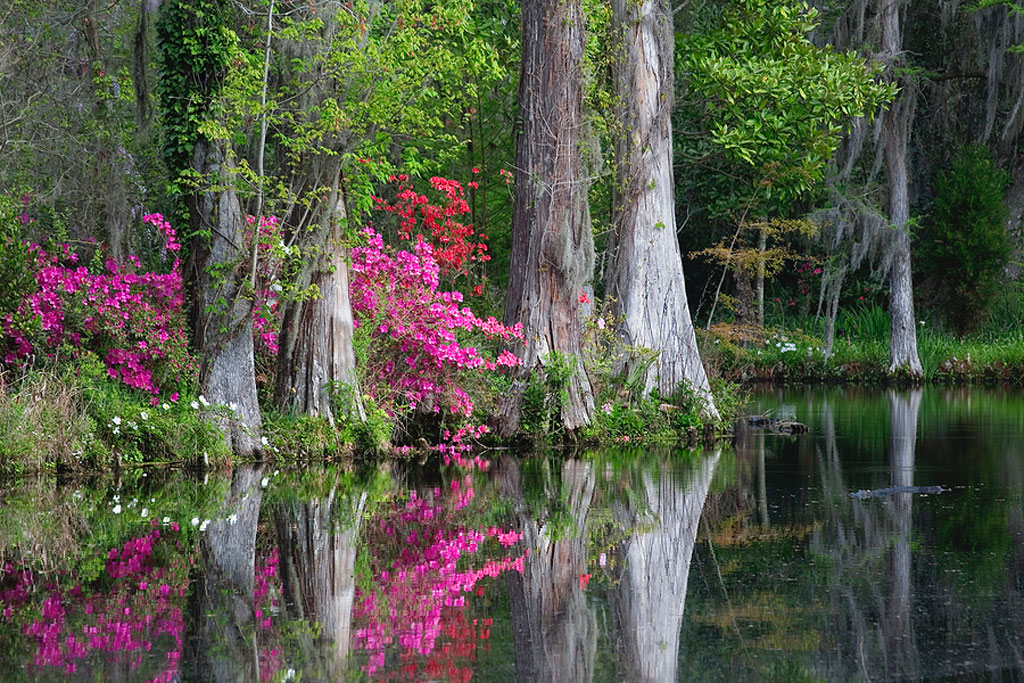
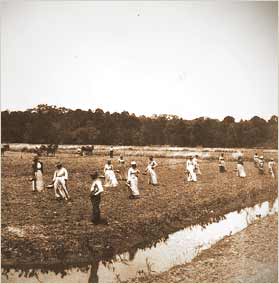
The black swamp, lily pads and cypress trees on a one time rice plantation.

A Feat as Great as Building the Pyramids

Rice cultivation is dirty, hard, dangerous work. Contemporaries compared the work of converting 150,000 acres of virgin land into tidal plantations as an undertaking comparable to building the Pyramids or re-channeling the Euphrates River.

An acre of mud flats would be measured into a rectangular field. Slaves would clear the land, chopping down and burning or removing any trees. Oxen were the only draft animals that might be used to assist, but they had to wear a special boot or else they would sink in the muck. Using only picks and shovels, slaves excavated a five-by-five foot ditch through the clearing that would serve both as the canal that brought tidal waters to the field and its main drain. The slaves used the muddy soil they had excavated to form a levee as high as six feet tall around the field. Slaves constructed sluice gates (first of cypress plug trunks and later hanging floodgates) to drain the water from the field for sowing and flood it for cultivation. Typically the following season, the field would be divided into four ¼-acre sections. Slaves added quarter drains (secondary canals) and cleared stumps. With the extra weight of water-laden soil, the danger of snakes and alligators that had been stranded behind the levee, mosquitoes and hot summer temperatures, the slave's work was dangerous and exhausting.


The cultivation of the rice began in late spring, around April, with the seed being sown. Ploughs were dragged through the wet soil to create furrows about three inches deep spaced 18 inches apart. Then, the slaves planted the rice in rows called drills. Slaves' daily work included operating the sluice gates with the tides. They flooded the fields following their planting of the seeds to the time of sprouting. After three weeks, they weeded and flooded the plants to cover the top of the young plant, gradually draining it halfway down the stem after a few days. The fields were drained and weeded, and the ground around the plants "hilled up" (hoed). Around mid-June or early July, the plants were gradually flooded and remained underwater for two months. Slaves freshened the water in the fields to keep it from stagnating. Tidal water is where fresh, inland water meets the salt water of the ocean. Fresh water rises on top of salt water, so the rice fields would be sown below the level of the high tide. A slave would open a sluice gate to skim off the fresh water floating on the top of the tidal waters to irrigate the crop, shutting it off before the salt water could intrude and kill the plants. At low tide, the gates were reopened to drain the fresh water out. A slave would be expected to weed a 105 foot square plot (¼-acre) in one day. Charles Ball, a runaway slave reported:


Watering and weeding the rice is considered one of the most unhealthy occupations on a southern plantation, as the people are obliged to live for several weeks in the mud and water, subject to all the unwholesome vapours that arise from stagnant pools, under the rays of a summer sun, as well as the chilly autumnal dews of night.

At harvest time, slaves with iron sickles reaped the rice stalks, bound them into sheaves (bundles), and stacked them in mule-drawn wagons. The slaves would unload the sheaves on a piece of hard ground or a barn's threshing floor and allow it to dry before threshing it with flails. (Treading the grain with mules was easier but resulted in more damage to the rice, so slave labor was used rather than animal labor.)

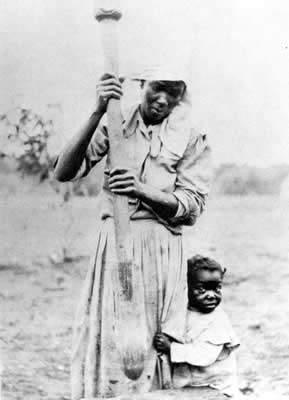
Rice must be processed to be the familiar white grain we see at the grocery store. The seed shell has to be removed, and then the brown coat of bran polished off the grain. Slaves used wooden mortars and pestles to mill the rice, separating the hulls from the grain with hand-sewn black rush winnowing baskets. An account from 1775 reported, "When winnowed it is ground, to free the rice from the husk; this is winnowed again, and put into a mortar large enough to hold half a bushel, in which it is beat with a pestle by negroes to free it from its thick skin; this is very laborious work." Following the pounding, the grain was sifted to remove the flour and dust produced in the process, and finally the rice was run through a market sieve, which separated the whole grains from the broken grains. Grains that were damaged in the process were called "little rice" and brought a lower price than whole grains. When the rice was clean, it would be placed in barrels that held roughly 600 pounds each. Rice mills appeared in the late 19th century, first operated by oxen, then by water (Jonathan Lucas, 1787), and finally tide-operated (1792). Although much of the work was back-breaking, unskilled labor, skilled slave artisans, such as carpenters, coopers, millwrights, and surveyors, contributed a great deal to the engineering, construction, and maintenance of the rice plantations.


Rather than the "gang system," where overseers or drivers directly supervised a group of workers, most rice plantations used the "task system," a specific amount of work that an average hard-working slave could complete in ten hours. When the slave completed the work to the driver's satisfaction, he or she could use the remaining hours of the day for their own purposes. Typically work began at dawn to avoid the worst heat of the day.

On rice plantations, a daily task might be the excavation of 24 linear feet of main drain excavation (the ditch dug five-by-five feet for each linear foot) or 133 feet of quarter-drain excavation (three feet by 18 inches). Sam Polite, a freedman, explained:


Every slave have task to do, sometime one task, sometime two, and sometime three. You have for work till task through. Have to cut cord of marsh grass maybe. Task of marsh been eight feet long and four feet high...If slave don't do task, they get licking with lash on naked back.

Fugitive slave Charles Ball reported one overseer's method of controlling slaves:

I gave them a hundred lashes more than a dozen times; but they never quit running away, till I chained them together, with iron collars round their necks, and chained them to spades, and made them do nothing but dig ditches to drain the rice swamps. They could not run away then, unless they went together, and carried their chains and spades with them. I kept them in this way two years....


Deadly Work

The mortality of slaves working in the rice fields was extremely high. One 18th-century writer declared:

If a work could be imagined peculiarly unwholesome and even fatal to health, it must be that of standing like the negroes, ankle and mid-leg deep in water which floats an ouzy mud, and exposed all the while to a burning sun which makes the air they breathe hotter than the human blood; these poor wretches are then in a furness of stinking putrid effluvia.


Up to a third of Low Country slaves died within a year of their arrival. Records from Somerset Place Plantation in North Carolina indicate that 80 Africans were brought to the site in June 1786 to transform the land into a rice plantation. By 1803, only 15 of the original 80 slaves were still alive. At Gowrie Plantation in South Carolina during an eight-year period between 1846 and 1854, 92 more slaves died than were born; 90 percent of the infants who survived birth died before they were 16 years old.


Part of the problem was poor health. The environment in which rice is cultivated is the perfect breeding ground for mosquitoes. Both malaria and yellow fever may have been introduced from Africa to the rice cultivation regions by the slave trade. Slaves suffering from malaria may have brought the disease to the New World, where it infected Anopheles mosquitoes. Yellow fever victims would not have survived the Middle Passage, but Aedes (Stegiomyia) aegypti mosquitoes could have bred in the slave ships' open-water barrels. A sickle cell genetic defect provided protection from malaria to some slaves, while yellow fever survivors had a lifelong immunity to the disease. Nonetheless, malaria and yellow fever claimed the lives of many slaves working the rice plantations. Zamba, an African king brought as a slave to South Carolina, reported, "Under the influence of a powerful sun, this practice naturally produces what is called marsh miasma, which engenders fevers of a dangerous nature: fatal, indeed to white men in most cases; and even negroes, in some seasons, suffer greatly from it."


Slaves' nutrition, clothing, and shelter typically were poor. A pint of boiled rice, a pint of cornmeal, and either a couple of pounds of butter or fat rendered from bacon were a slave's typical daily ration, supplemented by salt and molasses. Those slaves who completed task work might grow vegetable gardens with beans or yams or fish, if near the water, to improve their diet. Although high in carbohydrates, it was a low-protein, low-calorie diet for persons involved in heavy physical labor, and the resulting malnutrition contributed to slaves' early deaths. Slave quarters consisted of wooden frame buildings in which a family or a group of individuals lived. They were inexpensive to build, Johann Bolzius explained, because "One buys only a few nails for them." They were also flimsy and prone to fire. Most plantation owners provided their slaves with five yards of heavy, coarse cloth from which to make winter clothing each year and a pair of shoes. Slaves might spin their own summer clothing, although some provided linen pants or skirts, and a cap or kerchief for head cover. Some plantations had sick rooms or slave hospitals, but since doctors didn't know the cause of fevers and resorted to blood-letting and purging medicines, slaves may have fared as well (or as poorly) remaining in the slave quarters and taking home remedies.

Working in the kitchen at the old rice plantation

As rice plantations expanded, the demand on slaves and their labor increased. Modern economists have noted that, unlike virtually every other slave-produced commodity, the output per slave in the rice industry grew from 2,250 pounds around 1750 to over 3,000 pounds by 1800. In human terms, this represented an enormous amount of physical hardship and arduous labor.


Gold Mines of Grain

The cultivation of rice required not only a large initial investment of labor, but also required money. In the late 18th century, it cost £2,500 to establish a 200-acre rice plantation. Most of the money was required for the purchase of slaves (an estimated cost of £1,800). In 1710, Thomas Nairne estimated that it was necessary to have 30 slaves to start a rice plantation; contemporaries calculated that a field hand should produce a ton (2,000 pounds) of rice each year working on two to three acres of old rice fields or five acres of new rice fields.


Based on average prices for rice between 1768 and 1772, the average slave generated five-six barrels of rice worth £15 ($975). Between 1722 and 1770, slave prices averaged around $150; from 1780-1809 they were substantially higher, averaging $305 per slave. By 1850, prices averaged $480 per slave. In the 1760s and 1770s, prices for women slaves grew more quickly than for men and sometimes exceeded them. Since African women (rather than men) milled rice on a daily basis and broke less grain than inexperienced male slaves, this may have been a case of price responding to demand for an important skill. A contemporary remarked, "Rice is raised so as to buy more Negroes, and Negroes are bought so as to get more rice."

Consequently, rice plantations could produce profits of up to 26 percent, prompting one Savannah River planter to describe his rice fields as "gold mines." For example a Charles Manigault invested $49,500 in Gowrie Plantation in 1833, and, by 1861, the plantation was worth $266,000.

Thursday, May 5, 2011

In First Lady Michelle Obama’s Roots, a Complex Path From Slavery

The New York Times article, "In First Lady’s Roots, a Complex Path From Slavery, " by Rachel L. Swarns and Jodi Kantor, reports: "In 1850, the elderly master of a South Carolina estate took pen in hand and painstakingly divided up his possessions. Among the spinning wheels, scythes, tablecloths and cattle that he bequeathed to his far-flung heirs was a 6-year-old slave girl valued soon afterward at $475."


In his will, she is described simply as the “negro girl Melvinia.” After his death, she was torn away from the people and places she knew and shipped to Georgia. While she was still a teenager, a white man would father her first-born son under circumstances lost in the passage of time.

In the annals of American slavery, this painful story would be utterly unremarkable, save for one reason: This union, consummated some two years before the Civil War, represents the origins of a family line that would extend from rural Georgia, to Birmingham, Ala., to Chicago and, finally, to the White House.


Melvinia Shields, the enslaved and illiterate young girl, and the unknown white man who impregnated her are the great-great-great-grandparents of Michelle Obama, the first lady.


Viewed by many as a powerful symbol of black advancement, Mrs. Obama grew up with only a vague sense of her ancestry, aides and relatives said. During the presidential campaign, the family learned about one paternal great-great-grandfather, a former slave from South Carolina, but the rest of Mrs. Obama’s roots were a mystery.


Now the more complete map of Mrs. Obama’s ancestors — including the slave mother, white father and their biracial son, Dolphus T. Shields — for the first time fully connects the first African-American first lady to the history of slavery, tracing their five-generation journey from bondage to a front-row seat to the presidency.

The findings — uncovered by Megan Smolenyak, a genealogist, and The New York Times — substantiate what Mrs. Obama has called longstanding family rumors about a white forebear.
While President Obama’s biracial background has drawn considerable attention, his wife’s pedigree, which includes American Indian strands, highlights the complicated history of racial intermingling, sometimes born of violence or coercion, that lingers in the bloodlines of many African-Americans. Mrs. Obama and her family declined to comment for this article, aides said, in part because of the personal nature of the subject.

“She is representative of how we have evolved and who we are,” said Edward Ball, a historian who discovered that he had black relatives, the descendants of his white slave-owning ancestors, when he researched his memoir, “Slaves in the Family.”

“We are not separate tribes of Latinos and whites and blacks in America,” Mr. Ball said. “We’ve all mingled, and we have done so for generations.”


The outlines of Mrs. Obama’s family history unfolded from 19th century probate records, yellowing marriage licenses, fading photographs and the recollections of elderly women who remember the family. Ms. Smolenyak, who has traced the ancestry of many prominent figures, began studying the first lady’s roots in earnest after conducting some preliminary research into Mrs. Obama’s ancestry for an article published in The New York Times earlier this year.

Of the dozens of relatives she identified, Ms. Smolenyak said, it was the slave girl who seemed to call out most clearly.

“Out of all Michelle’s roots, it’s Melvinia who is screaming to be found,” she said.

When her owner, David Patterson, died in 1852, Melvinia soon found herself on a 200-acre farm with new masters, Mr. Patterson’s daughter and son-in law, Christianne and Henry Shields. It was a strange and unfamiliar world.

In South Carolina, she had lived on an estate with 21 slaves. In Georgia, she was one of only three slaves on property that is now part of a neat subdivision in Rex, near Atlanta.


Whether Melvinia labored in the house or in the fields, there was no shortage of work: wheat, corn, sweet potatoes and cotton to plant and harvest, and 3 horses, 5 cows, 17 pigs and 20 sheep to care for, according to an 1860 agricultural survey.

It is difficult to say who might have impregnated Melvinia, who gave birth to Dolphus around 1859, when she was perhaps as young as 15. At the time, Henry Shields was in his late 40s and had four sons ages 19 to 24, but other men may have spent time on the farm.


“No one should be surprised anymore to hear about the number of rapes and the amount of sexual exploitation that took place under slavery; it was an everyday experience, “ said Jason A. Gillmer, a law professor at Texas Wesleyan University, who has researched liaisons between slave owners and slaves. “But we do find that some of these relationships can be very complex.”

In 1870, three of Melvinia’s four children, including Dolphus, were listed on the census as mulatto. One was born four years after emancipation, suggesting that the liaison that produced those children endured after slavery. She gave her children the Shields name, which may have hinted at their paternity or simply been the custom of former slaves taking their master’s surnames.


Even after she was freed, Melvinia stayed put, working as a farm laborer on land adjacent to that of Charles Shields, one of Henry’s sons.

But sometime in her 30s or 40s, census records show, Melvinia broke away and managed to reunite with former slaves from her childhood on the Patterson estate: Mariah and Bolus Easley, who settled with Melvinia in Bartow County, near the Alabama border. Dolphus married one of the Easleys’ daughters, Alice, who is Mrs. Obama’s great-great-grandmother.
A community “that had been ripped apart was somehow pulling itself back together,” Ms. Smolenyak said of the group in Bartow County.


Still, Melvinia appears to have lived with the unresolved legacy of her childhood in slavery until the very end. Her 1938 death certificate, signed by a relative, says “don’t know” in the space for the names of her parents, suggesting that Melvinia, then in her 90s, may never have known herself.

Sometime before 1888, Dolphus and Alice Shields continued the migration, heading to Birmingham, a boomtown with a rumbling railroad, an iron and steel industry and factories that attracted former slaves and their children from across the South.


Dolphus Shields was in his 30s and very light skinned — some say he looked like a white man — a church-going carpenter who could read, write and advance in an industrializing town. By 1900, he owned his own home, census records show. By 1911, he had opened his own carpentry and tool sharpening business.

A co-founder of First Ebenezer Baptist Church and Trinity Baptist Church, which later became active in the civil rights movement, he supervised Sunday schools at both churches, which still exist today, and at Regular Missionary Baptist Church.

“He was the dean of the deacons in Birmingham,” said Helen Heath, 88, who attended church with him. “He was a serious man. He was about business.”


He carried his family into the working-class, moving into a segregated neighborhood of striving black homeowners and renters. In his home, there was no smoking, no cursing, no gum chewing, no lipstick or trousers for ladies and absolutely no blues on the radio, which was reserved for hymns, remembered Bobbie Holt, 73, who was raised by Mr. Shields and his fourth wife, Lucy. She said the family went to church “every night of the week, it seemed like.”

He carried peppermints for neighborhood children, Mrs. Holt said, and told funny stories about his escapades as a boy. But his family struggled.

His first wife, Alice Easley Shields, moved around after they split up, working as a seamstress and a maid, and two of their sons stumbled.


Robert Lee Shields, Mrs. Obama’s great-grandfather, married Annie Lawson in 1906 and worked as a laborer and a railroad porter but disappeared from the public record sometime around his 32nd birthday.

Willie Arthur Shields, an inventor who obtained patents for improving dry cleaning operations, ended up working as a maintenance man, Mrs. Holt said.

As for his ancestry, Dolphus Shields didn’t talk about it.


“We got to the place where we didn’t want anybody to know we knew slaves; people didn’t want to talk about that,” said Mrs. Heath, who said she assumed he had white relatives because his skin color and hair texture “told you he had to be near white.”

At a time when blacks despaired at the intransigence and violence of whites who barred them from voting, from most city jobs, from whites-only restaurants and from owning property in white neighborhoods, Dolphus Shields served as a rare link between the deeply divided communities.

His carpentry shop stood in the white section of town, and he mixed easily and often with whites. “They would come to his shop and sit and talk,” Mrs. Holt said.

Dolphus Shields firmly believed race relations would improve. “It’s going to come together one day,” he often said, Mrs. Holt recalled.

By the time he died in 1950 at age 91, change was on the way. On June 9, 1950, the day that his obituary appeared on the front page of The Birmingham World, the black newspaper also ran a banner headline that read, “U.S. Court Bans Segregation in Diners and Higher Education.” The Supreme Court had outlawed separate but equal accommodations on railway cars and in universities in Texas and Oklahoma.


Up North, his grandson, a painter named Purnell Shields, Mrs. Obama’s grandfather, was positioning his family to seize the widening opportunities in Chicago.

But as his descendants moved forward, they lost touch with the past. Today, Dolphus Shields lies in a neglected black cemetery, where patches of grass grow knee-high and many tombstones have toppled.
Mrs. Holt, a retired nursing assistant, said he came to her in a dream last month. She dug up his photograph, never guessing that she would soon learn that Dolphus Shields was a great-great-grandfather of the first lady.

“Oh, my God,” said Mrs. Holt, gasping at the news. “I always looked up to him, but I would never have imagined something like this. Praise God, we’ve come a long way.”

(source: New York Times. Jim Sherling contributed reporting from Rex, Ga. Kitty Bennett contributed research.)

HOME

HOME
Click here to return to the US Slave Home Page