
New York Times Article, "Litigating the Legacy of Slavery," by Charles J. Ogletree Jr, on 31 March 2002 -- Last Tuesday, a group of lawyers filed a federal class-action lawsuit in New York on behalf of all African-American descendants of slaves. The lawsuit seeks compensation from a number of defendants for profits earned through slave labor and the slave trade.
This lawsuit is limited to FleetBoston, Aetna, CSX and other to-be-named companies. The broader reparations movement seeks to explore the historical role that other private institutions and government played during slavery and the era of legal racial discrimination that followed. The goal of these historical investigations is to bring American society to a new reckoning with how our past affects the current conditions of African-Americans and to make America a better place by helping the truly disadvantaged.
The Reparations Coordinating Committee, of which I am a co-chairman, will proceed with its own plans to file wide-ranging reparations lawsuits late this autumn. The committee is a group of lawyers, academics, public officials and activists that has conducted extensive research and begun to identify parties to sue and claims to be raised.

The shape of a reparations strategy can already be seen. Among private defendants, corporations will be prominent, as last week's lawsuit shows. Other private institutions -- Brown University, Yale University and Harvard Law School -- have made headlines recently as the beneficiaries of grants and endowments traced back to slavery and are probable targets. Naming the government as a defendant is also central to any reparations strategy; public officials guaranteed the viability of slavery and the segregation that followed it.
A number of recent examples illustrate the possibilities for making reparations claims nationally and internationally. In South Africa, reparations have been part of the work of the Truth and Reconciliation Commission, which seeks to compensate people with clear material needs who suffered under apartheid because of their race. It was also in South Africa that, in the final documents of a racism conference sponsored by the United Nations, slavery was defined as a ''crime against humanity,'' a legal determination that may enable the reparations movement to extend its reach to international forums.
In the United States, just three years ago the federal government reached a consent decree with a class of over 20,000 black farmers to compensate for years of discrimination by the Department of Agriculture. The case represents the largest civil-rights settlement by the government ever, with a likely payout of about $2 billion. Previously, the government also approved significant compensation for Japanese-Americans interned during World War II and paid reparations to black survivors of the Rosewood, Fla., race riots.

Although these precedents differ from a slavery-based reparations claim in that they involved classes of individuals who were both alive and easily identified, they nonetheless indicate government willingness to acknowledge past wrongs and remedy them. It is important that in each case the government waived its immunity from suit, thereby lifting the ordinary bar that prevents lawsuits against a sovereign.
Bring the government into litigation will also generate a public debate on slavery and the role its legacy continues to play in our society. The opportunity to use expert witnesses and conduct extensive discovery, to get facts and documentation, makes the courtroom an ideal venue for this debate.
A full and deep conversation on slavery and its legacy has never taken place in America; reparations litigation will show what slavery meant, how it was profitable and how it has continued to affect the opportunities of millions of black Americans.
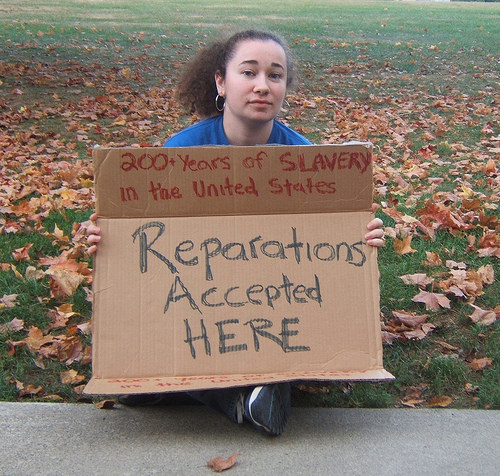
A full and deep conversation on slavery and its legacy has never taken place in America; reparations litigation will show what slavery meant, how it was profitable and how it has continued to affect the opportunities of millions of black Americans.
Litigation is required to promote this discussion because political accountability has not been forthcoming. In each Congressional session since 1989, Representative John Conyers has introduced a bill to study slavery reparations and it has quickly died each time.
Though claims for slavery reparations have moved near the front of national and international policy discussions in the past few years, the movement has deep historical roots. Those roots go back at least as far as the unkept promise in 1864 of ''40 acres and a mule'' to freed slaves, which acknowledged our country's debt to the newly emancipated.

Indeed, the civil rights movement has long been organized, in part, around the notion that slavery and the century of legal discrimination that followed have had enduring and detrimental effects on American minorities.
The reparations movement should not, I believe, focus on payments to individuals. The damage has been done to a group -- African-American slaves and their descendants -- but it has not been done equally within the group. The reparations movement must aim at undoing the damage where that damage has been most severe and where the history of race in America has left its most telling evidence. The legacy of slavery and racial discrimination in America is seen in well-documented racial disparities in access to education, health care, housing, insurance, employment and other social goods. The reparations movement must therefore focus on the poorest of the poor -- it must finance social recovery for the bottom-stuck, providing an opportunity to address comprehensively the problems of those who have not substantially benefited from integration or affirmative action.
The root of ''reparations'' is ''to repair.'' This litigation strategy could give us an opportunity to fully address the legacy of slavery in a spirit of repair. [source: New York Times; Copyright 2013 The New York Times]


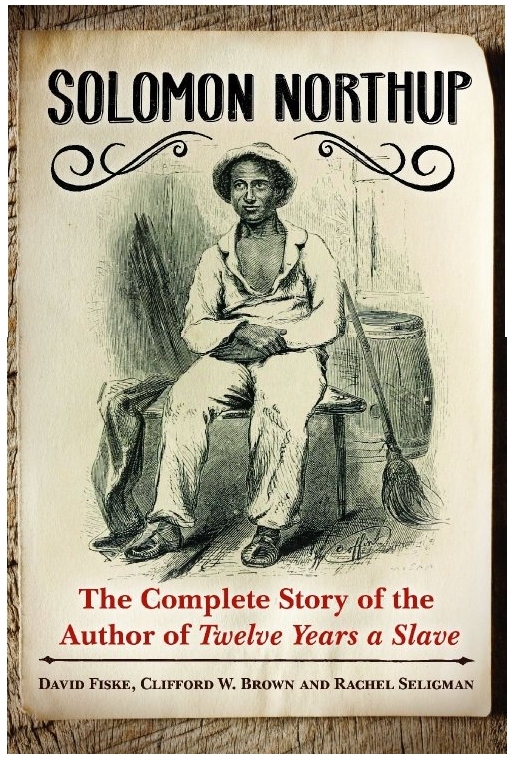
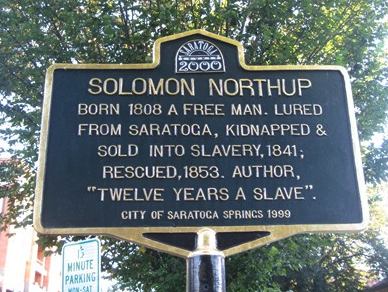





 The original version of The Strange Career of Jim Crow, published in 1955, ended with some glimmers of hope for change on the horizon - Unlike "the man on the cliff" (South Africa), the American South had recently witnessed significant cracks develop in the Jim Crow system. President Truman had desegregated the military, and the Supreme Court was doing the same for public education in Brown v. Board of Education. Later editions of the book cover the profound accomplishments of the civil rights movement and the later rise of black nationalism, which suggests for Woodward that African-Americans themselves must choose the extent and means of integration into white society. For "after the legal end of Jim Crow, the emancipated were expected to shed not only such distinctions as they abhorred but those distinctions they cherished as essential to their identity. They found that they were unable to rid themselves fully of the former and unable wholly to abandon the latter."(220) Thus, amid these competing desires for integration and separation that define modern race relations, argues Woodward in his now-pessimistic close, the strange career of Jim Crow looked to get somewhat stranger before it came to its final retirement.


 Philip Reid, a thirty-nine-year-old slave from South Carolina, cast and helped to save the model of the Statue of Freedom that sits atop the Capitol Dome.


