Cornerstone Speech by Alexander H. Stephens
Savannah, Georgia, March 21, 1861
When perfect quiet is restored, I shall proceed. I cannot speak so long as there is any noise or confusion. I shall take my time I feel quite prepared to spend the night with you if necessary. I very much regret that everyone who desires cannot hear what I have to say. Not that I have any display to make, or anything very entertaining to present, but such views as I have to give, I wish all, not only in this city, but in this State, and throughout our Confederate Republic, could hear, who have a desire to hear them.
I was remarking that we are passing through one of the greatest revolutions in the annals of the world. Seven States have within the last three months thrown off an old government and formed a new. This revolution has been signally marked, up to this time, by the fact of its having been accomplished without the loss of a single drop of blood.
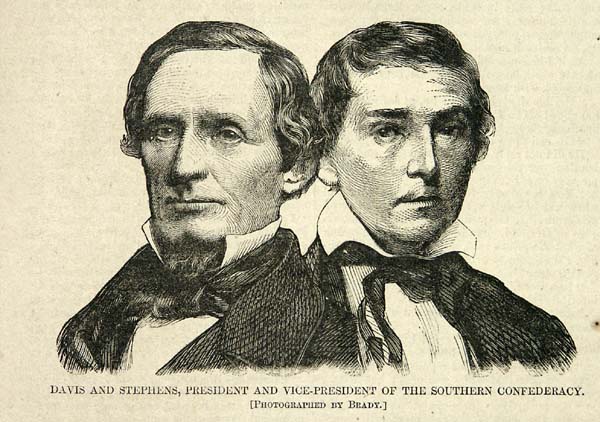
Alexander Hamilton Stephens (February 11, 1812 – March 4, 1883) was an American politician from Georgia. He was Vice President of the Confederate States of America during the American Civil War.
This new constitution. or form of government, constitutes the subject to which your attention will be partly invited. In reference to it, I make this first general remark: it amply secures all our ancient rights, franchises, and liberties. All the great principles of Magna Charta are retained in it. No citizen is deprived of life, liberty, or property, but by the judgment of his peers under the laws of the land. The great principle of religious liberty, which was the honor and pride of the old constitution, is still maintained and secured. All the essentials of the old constitution, which have endeared it to the hearts of the American people, have been preserved and perpetuated. Some changes have been made. Some of these I should have preferred not to have seen made; but other important changes do meet my cordial approbation. They form great improvements upon the old constitution. So, taking the whole new constitution, I have no hesitancy in giving it as my judgment that it is decidedly better than the old.

Stephens County, Georgia, bears his name, as does A. H. Stephens Historic Park, a state park near Crawfordville.
Allow me briefly to allude to some of these improvements. The question of building up class interests, or fostering one branch of industry to the prejudice of another under the exercise of the revenue power, which gave us so much trouble under the old constitution, is put at rest forever under the new. We allow the imposition of no duty with a view of giving advantage to one class of persons, in any trade or business, over those of another. All, under our system, stand upon the same broad principles of perfect equality. Honest labor and enterprise are left free and unrestricted in whatever pursuit they may be engaged. This old thorn of the tariff, which was the cause of so much irritation in the old body politic, is removed forever from the new.

Again, the subject of internal improvements, under the power of Congress to regulate commerce, is put at rest under our system. The power, claimed by construction under the old constitution, was at least a doubtful one; it rested solely upon construction. We of the South, generally apart from considerations of constitutional principles, opposed its exercise upon grounds of its inexpediency and injustice. Notwithstanding this opposition, millions of money, from the common treasury had been drawn for such purposes. Our opposition sprang from no hostility to commerce, or to all necessary aids for facilitating it. With us it was simply a question upon whom the burden should fall. In Georgia, for instance, we have done as much for the cause of internal improvements as any other portion of the country, according to population and means. We have stretched out lines of railroads from the seaboard to the mountains; dug down the hills, and filled up the valleys at a cost of not less than $25,000,000. All this was done to open an outlet for our products of the interior, and those to the west of us, to reach the marts of the world. No State was in greater need of such facilities than Georgia, but we did not ask that these works should be made by appropriations out of the common treasury. The cost of the grading, the superstructure, and the equipment of our roads was borne by those who had entered into the enterprise. Nay, more not only the cost of the iron no small item in the aggregate cost was borne in the same way, but we were compelled to pay into the common treasury several millions of dollars for the privilege of importing the iron, after the price was paid for it abroad. What justice was there in taking this money, which our people paid into the common treasury on the importation of our iron, and applying it to the improvement of rivers and harbors elsewhere? The true principle is to subject the commerce of every locality, to whatever burdens may be necessary to facilitate it. If Charleston harbor needs improvement, let the commerce of Charleston bear the burden. If the mouth of the Savannah river has to be cleared out, let the sea-going navigation which is benefited by it, bear the burden. So with the mouths of the Alabama and Mississippi river. Just as the products of the interior, our cotton, wheat, corn, and other articles, have to bear the necessary rates of freight over our railroads to reach the seas. This is again the broad principle of perfect equality and justice, and it is especially set forth and established in our new constitution.

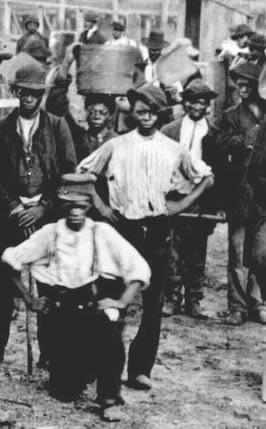
A portrait of one of Alexander Stephens' slaves
Another feature to which I will allude is that the new constitution provides that cabinet ministers and heads of departments may have the privilege of seats upon the floor of the Senate and House of Representatives and may have the right to participate in the debates and discussions upon the various subjects of administration. I should have preferred that this provision should have gone further, and required the President to select his constitutional advisers from the Senate and House of Representatives. That would have conformed entirely to the practice in the British Parliament, which, in my judgment, is one of the wisest provisions in the British constitution. It is the only feature that saves that government. It is that which gives it stability in its facility to change its administration. Ours, as it is, is a great approximation to the right principle.
A portrait of Alexander Stephens' female slaves.
Under the old constitution, a secretary of the treasury for instance, had no opportunity, save by his annual reports, of presenting any scheme or plan of finance or other matter. He had no opportunity of explaining, expounding, enforcing, or defending his views of policy; his only resort was through the medium of an organ. In the British parliament, the premier brings in his budget and stands before the nation responsible for its every item. If it is indefensible, he falls before the attacks upon it, as he ought to. This will now be the case to a limited extent under our system. In the new constitution, provision has been made by which our heads of departments can speak for themselves and the administration, in behalf of its entire policy, without resorting to the indirect and highly objectionable medium of a newspaper. It is to be greatly hoped that under our system we shall never have what is known as a government organ.

Another change in the constitution relates to the length of the tenure of the presidential office. In the new constitution it is six years instead of four, and the President rendered ineligible for a re-election. This is certainly a decidedly conservative change. It will remove from the incumbent all temptation to use his office or exert the powers confided to him for any objects of personal ambition. The only incentive to that higher ambition which should move and actuate one holding such high trusts in his hands, will be the good of the people, the advancement, prosperity, happiness, safety, honor, and true glory of the confederacy.
Alexander Stephens' Family "Servants" or Family Slaves
But not to be tedious in enumerating the numerous changes for the better, allow me to allude to one other though last, not least. The new constitution has put at rest, forever, all the agitating questions relating to our peculiar institution African slavery as it exists amongst us the proper status of the negro in our form of civilization. This was the immediate cause of the late rupture and present revolution. Jefferson in his forecast, had anticipated this, as the "rock upon which the old Union would split." He was right. What was conjecture with him, is now a realized fact. But whether he fully comprehended the great truth upon which that rock stood and stands, may be doubted. The prevailing ideas entertained by him and most of the leading statesmen at the time of the formation of the old constitution, were that the enslavement of the African was in violation of the laws of nature; that it was wrong in principle, socially, morally, and politically. It was an evil they knew not well how to deal with, but the general opinion of the men of that day was that, somehow or other in the order of Providence, the institution would be evanescent and pass away. This idea, though not incorporated in the constitution, was the prevailing idea at that time. The constitution, it is true, secured every essential guarantee to the institution while it should last, and hence no argument can be justly urged against the constitutional guarantees thus secured, because of the common sentiment of the day. Those ideas, however, were fundamentally wrong. They rested upon the assumption of the equality of races. This was an error. It was a sandy foundation, and the government built upon it fell when the "storm came and the wind blew."

Our new government is founded upon exactly the opposite idea; its foundations are laid, its corner- stone rests, upon the great truth that the negro is not equal to the white man; that slavery subordination to the superior race is his natural and normal condition. This, our new government, is the first, in the history of the world, based upon this great physical, philosophical, and moral truth. This truth has been slow in the process of its development, like all other truths in the various departments of science. It has been so even amongst us. Many who hear me, perhaps, can recollect well, that this truth was not generally admitted, even within their day. The errors of the past generation still clung to many as late as twenty years ago. Those at the North, who still cling to these errors, with a zeal above knowledge, we justly denominate fanatics. All fanaticism springs from an aberration of the mind from a defect in reasoning. It is a species of insanity. One of the most striking characteristics of insanity, in many instances, is forming correct conclusions from fancied or erroneous premises; so with the anti-slavery fanatics. Their conclusions are right if their premises were. They assume that the negro is equal, and hence conclude that he is entitled to equal privileges and rights with the white man. If their premises were correct, their conclusions would be logical and just but their premise being wrong, their whole argument fails. I recollect once of having heard a gentleman from one of the northern States, of great power and ability, announce in the House of Representatives, with imposing effect, that we of the South would be compelled, ultimately, to yield upon this subject of slavery, that it was as impossible to war successfully against a principle in politics, as it was in physics or mechanics. That the principle would ultimately prevail. That we, in maintaining slavery as it exists with us, were warring against a principle, a principle founded in nature, the principle of the equality of men. The reply I made to him was, that upon his own grounds, we should, ultimately, succeed, and that he and his associates, in this crusade against our institutions, would ultimately fail. The truth announced, that it was as impossible to war successfully against a principle in politics as it was in physics and mechanics, I admitted; but told him that it was he, and those acting with him, who were warring against a principle. They were attempting to make things equal which the Creator had made unequal.

In the conflict thus far, success has been on our side, complete throughout the length and breadth of the Confederate States. It is upon this, as I have stated, our social fabric is firmly planted; and I cannot permit myself to doubt the ultimate success of a full recognition of this principle throughout the civilized and enlightened world.
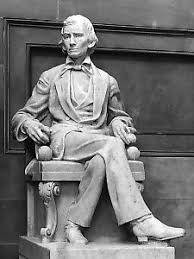
Alexander H. Stephens (1812-1883)
As I have stated, the truth of this principle may be slow in development, as all truths are and ever have been, in the various branches of science. It was so with the principles announced by Galileo it was so with Adam Smith and his principles of political economy. It was so with Harvey, and his theory of the circulation of the blood. It is stated that not a single one of the medical profession, living at the time of the announcement of the truths made by him, admitted them. Now, they are universally acknowledged. May we not, therefore, look with confidence to the ultimate universal acknowledgment of the truths upon which our system rests? It is the first government ever instituted upon the principles in strict conformity to nature, and the ordination of Providence, in furnishing the materials of human society. Many governments have been founded upon the principle of the subordination and serfdom of certain classes of the same race; such were and are in violation of the laws of nature. Our system commits no such violation of nature's laws. With us, all of the white race, however high or low, rich or poor, are equal in the eye of the law. Not so with the negro. Subordination is his place. He, by nature, or by the curse against Canaan, is fitted for that condition which he occupies in our system. The architect, in the construction of buildings, lays the foundation with the proper material-the granite; then comes the brick or the marble. The substratum of our society is made of the material fitted by nature for it, and by experience we know that it is best, not only for the superior, but for the inferior race, that it should be so. It is, indeed, in conformity with the ordinance of the Creator. It is not for us to inquire into the wisdom of His ordinances, or to question them. For His own purposes, He has made one race to differ from another, as He has made "one star to differ from another star in glory." The great objects of humanity are best attained when there is conformity to His laws and decrees, in the formation of governments as well as in all things else. Our confederacy is founded upon principles in strict conformity with these laws. This stone which was rejected by the first builders "is become the chief of the corner" the real "corner-stone" in our new edifice. I have been asked, what of the future? It has been apprehended by some that we would have arrayed against us the civilized world. I care not who or how many they may be against us, when we stand upon the eternal principles of truth, if we are true to ourselves and the principles for which we contend, we are obliged to, and must triumph.
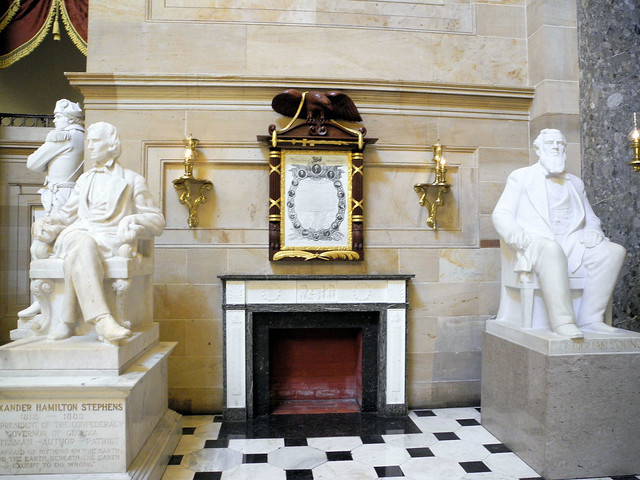
Alexander Hamilton Stephens (Georgia - 1927) and Brigham Young (Utah - 1950)at US Capitol National Statuary Hall, Washington DC
Thousands of people who begin to understand these truths are not yet completely out of the shell; they do not see them in their length and breadth. We hear much of the civilization and Christianization of the barbarous tribes of Africa. In my judgment, those ends will never be attained, but by first teaching them the lesson taught to Adam, that "in the sweat of his brow he should eat his bread," and teaching them to work, and feed, and clothe themselves.
But to pass on: Some have propounded the inquiry whether it is practicable for us to go on with the confederacy without further accessions? Have we the means and ability to maintain nationality among the powers of the earth? On this point I would barely say, that as anxiously as we all have been, and are, for the border States, with institutions similar to ours, to join us, still we are abundantly able to maintain our position, even if they should ultimately make up their minds not to cast their destiny with us. That they ultimately will join us be compelled to do it is my confident belief; but we can get on very well without them, even if they should not.

We have all the essential elements of a high national career. The idea has been given out at the North, and even in the border States, that we are too small and too weak to maintain a separate nationality. This is a great mistake. In extent of territory we embrace five hundred and sixty-four thousand square miles and upward. This is upward of two hundred thousand square miles more than was included within the limits of the original thirteen States. It is an area of country more than double the territory of France or the Austrian empire. France, in round numbers, has but two hundred and twelve thousand square miles. Austria, in round numbers, has two hundred and forty-eight thousand square miles. Ours is greater than both combined. It is greater than all France, Spain, Portugal, and Great Britain, including England, Ireland, and Scotland, together. In population we have upward of five millions, according to the census of 1860; this includes white and black. The entire population, including white and black, of the original thirteen States, was less than four millions in 1790, and still less in 76, when the independence of our fathers was achieved. If they, with a less population, dared maintain their independence against the greatest power on earth, shall we have any apprehension of maintaining ours now?
In point of material wealth and resources, we are greatly in advance of them. The taxable property of the Confederate States cannot be less than twenty-two hundred millions of dollars! This, I think I venture but little in saying, may be considered as five times more than the colonies possessed at the time they achieved their independence. Georgia, alone, possessed last year, according to the report of our comptroller-general, six hundred and seventy-two millions of taxable property. The debts of the seven confederate States sum up in the aggregate less than eighteen millions, while the existing debts of the other of the late United States sum up in the aggregate the enormous amount of one hundred and seventy-four millions of dollars. This is without taking into account the heavy city debts, corporation debts, and railroad debts, which press, and will continue to press, as a heavy incubus upon the resources of those States. These debts, added to others, make a sum total not much under five hundred millions of dollars. With such an area of territory as we have-with such an amount of population-with a climate and soil unsurpassed by any on the face of the earth-with such resources already at our command-with productions which control the commerce of the world-who can entertain any apprehensions as to our ability to succeed, whether others join us or not?
It is true, I believe I state but the common sentiment, when I declare my earnest desire that the border States should join us. The differences of opinion that existed among us anterior to secession, related more to the policy in securing that result by co-operation than from any difference upon the ultimate security we all looked to in common.
These differences of opinion were more in reference to policy than principle, and as Mr. Jefferson said in his inaugural, in 1801, after the heated contest preceding his election, that there might be differences of opinion without differences on principle, and that all, to some extent, had been Federalists and all Republicans; so it may now be said of us, that whatever differences of opinion as to the best policy in having a co-operation with our border sister slave States, if the worst came to the worst, that as we were all co-operationists, we are now all for independence, whether they come or not.

In this connection I take this occasion to state, that I was not without grave and serious apprehensions, that if the worst came to the worst, and cutting loose from the old government should be the only remedy for our safety and security, it would be attended with much more serious ills than it has been as yet. Thus far we have seen none of those incidents which usually attend revolutions. No such material as such convulsions usually throw up has been seen. Wisdom, prudence, and patriotism, have marked every step of our progress thus far. This augurs well for the future, and it is a matter of sincere gratification to me, that I am enabled to make the declaration. Of the men I met in the Congress at Montgomery, I may be pardoned for saying this, an abler, wiser, a more conservative, deliberate, determined, resolute, and patriotic body of men, I never met in my life. Their works speak for them; the provisional government speaks for them; the constitution of the permanent government will be a lasting monument of their worth, merit, and statesmanship.

But to return to the question of the future. What is to be the result of this revolution?
Will every thing, commenced so well, continue as it has begun? In reply to this anxious inquiry, I can only say it all depends upon ourselves. A young man starting out in life on his majority, with health, talent, and ability, under a favoring Providence, may be said to be the architect of his own fortunes. His destinies are in his own hands. He may make for himself a name, of honor or dishonor, according to his own acts. If he plants himself upon truth, integrity, honor and uprightness, with industry, patience and energy, he cannot fail of success. So it is with us. We are a young republic, just entering upon the arena of nations; we will be the architects of our own fortunes. Our destiny, under Providence, is in our own hands. With wisdom, prudence, and statesmanship on the part of our public men, and intelligence, virtue and patriotism on the part of the people, success, to the full measures of our most sanguine hopes, may be looked for. But if unwise counsels prevail if we become divided if schisms arise if dissentions spring up if factions are engendered if party spirit, nourished by unholy personal ambition shall rear its hydra head, I have no good to prophesy for you. Without intelligence, virtue, integrity, and patriotism on the part of the people, no republic or representative government can be durable or stable.

We have intelligence, and virtue, and patriotism. All that is required is to cultivate and perpetuate these. Intelligence will not do without virtue. France was a nation of philosophers. These philosophers become Jacobins. They lacked that virtue, that devotion to moral principle, and that patriotism which is essential to good government Organized upon principles of perfect justice and right-seeking amity and friendship with all other powers-I see no obstacle in the way of our upward and onward progress. Our growth, by accessions from other States, will depend greatly upon whether we present to the world, as I trust we shall, a better government than that to which neighboring States belong. If we do this, North Carolina, Tennessee, and Arkansas cannot hesitate long; neither can Virginia, Kentucky, and Missouri. They will necessarily gravitate to us by an imperious law. We made ample provision in our constitution for the admission of other States; it is more guarded, and wisely so, I think, than the old constitution on the same subject, but not too guarded to receive them as fast as it may be proper. Looking to the distant future, and, perhaps, not very far distant either, it is not beyond the range of possibility, and even probability, that all the great States of the north-west will gravitate this way, as well as Tennessee, Kentucky, Missouri, Arkansas, etc. Should they do so, our doors are wide enough to receive them, but not until they are ready to assimilate with us in principle.

The process of disintegration in the old Union may be expected to go on with almost absolute certainty if we pursue the right course. We are now the nucleus of a growing power which, if we are true to ourselves, our destiny, and high mission, will become the controlling power on this continent. To what extent accessions will go on in the process of time, or where it will end, the future will determine. So far as it concerns States of the old Union, this process will be upon no such principles of reconstruction as now spoken of, but upon reorganization and new assimilation. Such are some of the glimpses of the future as I catch them.
But at first we must necessarily meet with the inconveniences and difficulties and embarrassments incident to all changes of government. These will be felt in our postal affairs and changes in the channel of trade. These inconveniences, it is to be hoped, will be but temporary, and must be borne with patience and forbearance.
As to whether we shall have war with our late confederates, or whether all matters of differences between us shall be amicably settled, I can only say that the prospect for a peaceful adjustment is better, so far as I am informed, than it has been. The prospect of war is, at least, not so threatening as it has been. The idea of coercion, shadowed forth in President Lincoln's inaugural, seems not to be followed up thus far so vigorously as was expected. Fort Sumter, it is believed, will soon be evacuated. What course will be pursued toward Fort Pickens, and the other forts on the gulf, is not so well understood. It is to be greatly desired that all of them should be surrendered. Our object is peace, not only with the North, but with the world. All matters relating to the public property, public liabilities of the Union when we were members of it, we are ready and willing to adjust and settle upon the principles of right, equity, and good faith. War can be of no more benefit to the North than to us. Whether the intention of evacuating Fort Sumter is to be received as an evidence of a desire for a peaceful solution of our difficulties with the United States, or the result of necessity, I will not undertake to say. I would feign hope the former. Rumors are afloat, however, that it is the result of necessity. All I can say to you, therefore, on that point is, keep your armor bright and your powder dry.
The original Confederate Cabinet. L-R: Judah P. Benjamin, Stephen Mallory, Christopher Memminger, Alexander Stephens, LeRoy Pope Walker, Jefferson Davis, John H. Reagan and Robert Toombs.
The surest way to secure peace, is to show your ability to maintain your rights. The principles and position of the present administration of the United States the republican party present some puzzling questions. While it is a fixed principle with them never to allow the increase of a foot of slave territory, they seem to be equally determined not to part with an inch "of the accursed soil." Notwithstanding their clamor against the institution, they seemed to be equally opposed to getting more, or letting go what they have got. They were ready to fight on the accession of Texas, and are equally ready to fight now on her secession. Why is this? How can this strange paradox be accounted for? There seems to be but one rational solution and that is, notwithstanding their professions of humanity, they are disinclined to give up the benefits they derive from slave labor. Their philanthropy yields to their interest. The idea of enforcing the laws, has but one object, and that is a collection of the taxes, raised by slave labor to swell the fund necessary to meet their heavy appropriations. The spoils is what they are after though they come from the labor of the slave

That as the admission of States by Congress under the constitution was an act of legislation, and in the nature of a contract or compact between the States admitted and the others admitting, why should not this contract or compact be regarded as of like character with all other civil contracts liable to be rescinded by mutual agreement of both parties? The seceding States have rescinded it on their part, they have resumed their sovereignty. Why cannot the whole question be settled, if the north desire peace, simply by the Congress, in both branches, with the concurrence of the President, giving their consent to the separation, and a recognition of our independence?Source: Henry Cleveland, Alexander H. Stephens, in Public and Private: With Letters and Speeches, Before, During, and Since the War (Philadelphia, 1886), pp. 717-729.







 As a fair sample of this system, on January 6, 1887, 204 convicts were leased to McDonald up to June 6, 1887, and during this six months 20 died, and 19 were discharged and escaped and 23 were returned to the walls disabled and sick, many of whom have since died."


 “What’s interesting to me is how the memory of this got lost,” Blight said. “It is, in effect, the first Memorial Day and it was primarily led by former slaves in Charleston.”