Showing posts with label Black Codes. Show all posts

Tuesday, June 12, 2012

Alabama: Rights of Property of Slaves


Rights of Property of Slaves

On November 19, 1824, a slave belonging to Thomas and William Brandon found $2,190 in notes issued by the Planters' and Merchants' Bank of Huntsville. A third party took the notes from the slave and returned them to the bank before the Brandons could intervene. The Brandons sued to recover the notes, arguing that anything acquired by a slave belonged to the master. The bank argued that the principles of common law applied: a lord must seize property from a villein before he could claim it. The plaintiffs argued that Roman law, rather than common law, applied. Under the former, the master had absolute right to all that a slave possessed. In his opinion, Judge Saffold noted that neither counsel nor court had discovered any American decisions directly to the point, but concluded that, with respect to "found property," the finder (and if a slave the master) had a contingent title. In other words, he ruled for the Brandons. Judge Crenshaw added American slaves were "in absolute bondage." Whatever they lawfully acquired immediately became the property of the master. Contrary to the bank's common law analogy, seizure was unnecessary. Brandon v Planters' and Merchants' Bank, 1 Stewart 320 (1828).

Farmer's and Merchant's Bank, Huntsville, Alabama

Moses belonged to Mrs. Owen, who allowed him to retain a portion of the wages he earned. Moses used this money to purchase a lot in Mobile County. A free black named Shanklin served as his agent in this transaction. At some undetermined point, Moses sold the lot. Eventually, Moses came into the possession of Johnson. At the time Johnson owned Moses, Shanklin approached the latter, requesting a loan to purchase his daughter. Moses loaned Shanklin the money acquired through the sale of the lot. Johnson learned of the transaction and sued to recover. Judge Collier ruled in Johnson's favor. A slave could certainly retain and dispose of money with his master's permission. Furthermore, an agent could use such money to acquire real estate for the slave's benefit. In such cases, neither the original master nor subsequent owners could claim the property because it was legally in the name of the agent. But when the money had been counted and loaned to Shanklin in Moses' presence, Johnson acquired a claim. Shanklin v Johnson, 9 Alabama 271 (1846).


James Kelly permitted Wash to retain half of the money he earned as a cab driver in Mobile. Wash funneled his earnings to John Webb, who apparently had agreed to help the slave purchase his freedom. A sale was executed, but Kelly sued Webb after learning he had been defrauded. Judge Stone ruled in Kelly's favor. Whatever property a slave accrued belonged to the master (1 Stewart 320 and 20 Alabama 488). If a slave acquired property with his master's consent and transferred it likewise, the master could not recover (9 Alabama 271 and 28 Alabama 514). But in this case the person who received the property did not receive it in his own right, but as a "custodian for the benefit of the slave." The purchase had been made with money furnished by Wash without Kelly's permission. Webb v Kelly, 37 Alabama 333 (1861). [source: http://www.lib.auburn.edu/archive/aghy/slaves.htm#rights]
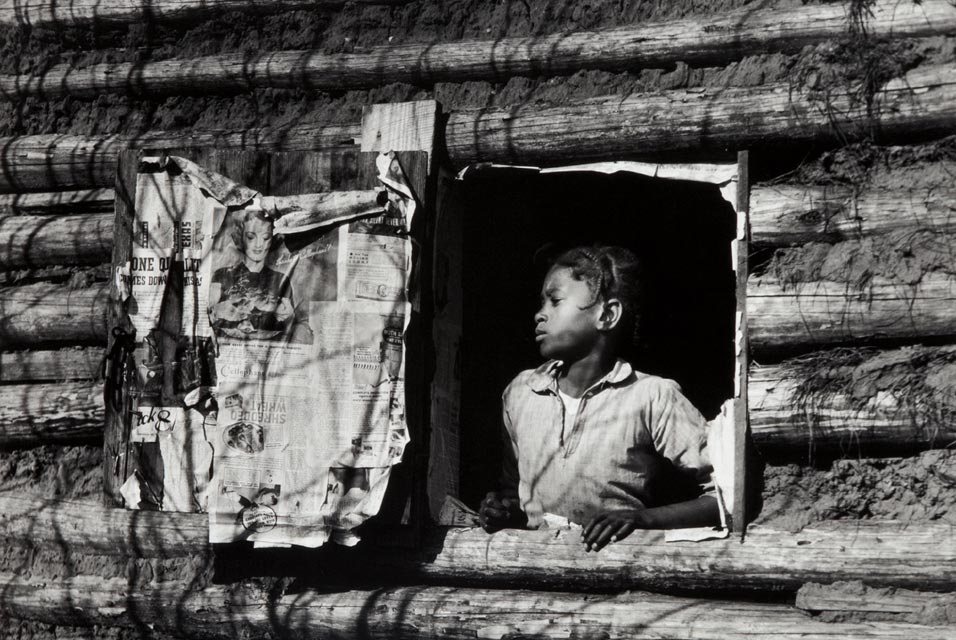
Alabama's Slave Laws Relating to Speech and Assembly

Literacy

From the Alabama Slavery Code of 1833 S31. Any person who shall attempt to teach any free person of color, or slave, to spell, read or write, shall, upon conviction thereof by indictment, be fined in a sum not less than two hundred fifty dollars [$6,800 dollars in 2012], nor more than five hundred dollars [$13,634 dollars in 2012]. 

S10. If any white person, free negro, or mulatto, shall at any time be found in company with slaves, at any unlawful meeting, such person being thereof convicted before any justice of the peace, shall forfeit and pay twenty dollars for any such offence, to the informer, recoverable with costs before such justice.

Freedom of Assembly

S35. If any free negro or person of color shall be found in company with any slaves in any kitchen, out-house, or negro-quarter, without a written permission from the owner, master, or overseer of said slaves, said free negro or person of color shall, for the first offence, receive fifteen lashes, and for every subsequent offence, thirty-nine lashes, on his or her bare back, which may be inflicted by said master, owner, or overseer, or by any officer or member of any patrol company who may find said free negro or person of color, in any kitchen, out-house, or negro-quarter, associating with slaves without such written permission.

S36. If any slave, without a written permission from the owner, master, or overseer of said slave, shall be found in company with a free negro or person of color, in the dwelling-house or outhouse of said free negro or person of color, said free negro or person of color shall receive the same punishment, in the same manner, as is proscribed by the provisions of the fifteenth section of this act.


S37. It shall not be lawful for more than five male slaves, either with or without passes, to assemble together at any place off the proper plantation to which they belong; and if any slaves do so assemble together, the same shall be deemed an unlawful assembly.

S42. If any slave or free person of color shall preach to, exhort, or harangue any slave or slaves, or free persons of color, unless in the presence of five respectable slave-holders, any such slave or free person of color so offending, shall, on conviction before any justice of the peace, receive, by order of said justice of the peace, thirty-nine lashes for the first offence, and fifty lashes for every offence thereafter; and any person may arrest any such slave or free person of color, and take him before a justice of the peace for trial: Provided, That the negroes so haranguing or preaching, shall be licensed thereto, by some regular body of professing Christians immediately in the neighborhood, and to whose society or church such negro shall properly belong.

Freedom of Assembly

S4. No slave shall be admitted a witness against any person, in any matter, cause, or thing whatsoever, civil or criminal, except in criminal cases, in which the evidence of one slave shall be admitted for or against the evidence of another slave. Legal Personhood  [ A Digest of the Laws of the State of Alabama - 1833, Alabama Department of Archives and History, Montgomery, Alabama.  Online Source: Alabama Department of Archives and History. Teacher Resources. 4 Sep. 2001. .]


Pupils at lunch, Tinela, Ala.
Freedom of Assembly

Tuesday, September 20, 2011

North Carolina: “Kirk-Holden War”

On June 6, 1870, Governor William Woods Holden, a Republican from Wake County, issued a five-hundred-dollar reward for the arrest or information leading to the capture of individuals involved in the deaths of John W. “Chicken” Stephens, Wyatt Outlaw, and several other North Carolinians. The proclamation, which also detailed various other acts of violence against African Americans and white Republicans, attributed the crimes to the Ku Klux Klan and was one of the many events leading to the “Kirk-Holden War.”


Following its formation in the aftermath of the Civil War, the Klan quickly spread across the South. In North Carolina, the Klan was not a monolithic organization; rather, it was a loose conglomeration of secret societies, which used terror and vigilante tactics in an attempt to reverse Republican electoral success and maintain white supremacy. While Klan activity occurred throughout North Carolina, it was particularly active in the Piedmont counties of Alamance and Caswell. Governor Holden attempted to use local authorities to control the violence, but in many cases county and community leaders were members of the Klan or sympathetic to its activities.

As events began to spiral out of control, the North Carolina General Assembly passed the “Shoffner Act,” introduced by Alamance County Republican senator T. M. Shoffner. The law enabled the governor to declare a county “to be in a state of insurrection, and to call into active service the militia of the state to such an extent as may become necessary to suppress such insurrection” if the local officials were incapable — or unwilling — to do so. Holden declared martial law in Alamance County on March 7, 1870, and in Caswell County on July 8.


Holden selected former Union colonel and cavalry leader George W. Kirk, who was born and raised in Greene County, Tennessee, to lead the state militia troops. Kirk’s infamy and reputation as a Union “bushwhacker,” whose Federal units terrorized Southern mountain communities, resonated deeply throughout the state. The newly constituted force of state militia, predominately consisting of men from eastern Tennessee and western North Carolina, arrived in Alamance and Caswell Counties in July and arrested over 100 individuals, mostly without incident. The prisoners were jailed in Caswell County, while awaiting trial before a special military court. Holden and Kirk ignored writs of habeas corpus that were issued by a state judge, and the defendants and their supporters turned to the federal judiciary for assistance. Support for the governor’s controversial measures faltered, and President Ulysses S. Grant warned Holden that the national government would no longer support his actions. The suspected Klan leaders and members were released in late August, and, in November, Alamance and Caswell Counties were declared to no longer be in a state of insurrection.


The events of the “Kirk-Holden War,” as it came to be called by those opposed to Governor Holden’s actions, and the subsequent electoral collapse of the state Republican Party in 1870 were substantial factors in the December 1870 impeachment and March 1871 conviction of Holden.

Monday, May 16, 2011

Connecticut's "Black Law" (1833)


Lacking no legal means to prevent Prudence Crandall from opening her school, Andrew Judson, a local politician, pushed legislation through the Connecticut Assembly outlawing the establishment of schools "for the instruction of colored persons belonging to other states and countries." But the tide of abolitionism was turning, for five years later, in 1838, Connecticut's Black Law was repealed. Phillip Pearl, the chairman of the committee that had passed the Black Law, led the movement for its repeal, telling a friend, "I could weep tears of blood for the part I took in that matter--I now regard that law as utterly abominable." (Yale)

Connecticut's "Black Law" (1833)
An act in addition to an Act entitled "An Act for the admission and settlement of Inhabitants of Towns."
WHEREAS, attempts have been made to establish literary institutions in this State for the instruction of colored persons belonging to other states and countries, which would tend to the great increase of the colored population of the State, and thereby to the injury of the people: Therefore,

Sec. 1. Be it enacted by the Senate and House of Representatives, in General Assembly convened, That no person shall set up or establish in this State, any school, academy, or literary institution, for the instruction or education of colored persons who are not inhabitants of this State, nor instruct or teach in any school, academy, or literary Institution whatsoever in this State, or harbor. or board, for the purpose of attending or being taught or instructed in any such school, academy or literary institution, any colored person who is not an inhabitant of any town in this state, without the consent, in writing, first obtained of a majority of the civil authority, and also of the select men of the town in which such school, academy, or literary institution is situated; and each and every person who shall knowingly do any act forbidden as aforesaid, or shall be aiding or assisting therein; shall, for the first offence, forfeit and pay to the treasurer of state, a fine of one hundred dollars, and for the second offence shall forfeit and pay a fine of two hundred dollars, and so double for every offence of which he or she shall be convicted. And all informing officers are required to make due presentment of all breaches of this act. Provided, That nothing in this act shall extend to any district school established in any school society, under the laws of this state, or to any incorporated academy or incorporated school for instruction in this state.

Sec. 2. Be it further enacted, That any colored person, not an inhabitant of this state, who shall reside in any town therein for the purpose of being instructed as aforesaid, may be removed in the manner prescribed in the sixth and seventh sections of the act to which this is in addition.

Sec. 3. Be it further enacted, That any person, not an inhabitant of this state, who shall reside in any town therein, for the purpose of being instructed as aforesaid, shall be an admissible witness in all prosecutions under the first section of this act, and may be compelled to give testimony therein, notwithstanding any thing contained in this act, or the act last aforesaid.

Sec. 4. Be it further enacted, That so much of the seventh section of the act to which this is an addition, as may provide for the infliction of corporeal punishment, be, and the same is hereby repealed.

SAMUEL INGHAM, Speaker of the House of Representatives.
EBENEZER STODDARD, President of the Senate.
Approved, May 24, 1833.

(source: Yale)

HOME

HOME
Click here to return to the US Slave Home Page