Showing posts with label housing. Show all posts

Friday, September 30, 2011

Bigotry Shaped a Great Baltimore City: Antero Pietila


From the Baltimore Sun, "Book review: 'Not In My Neighborhood' Ex-Sun author traces bigotry's role in shaping Baltimore," by Diane Scharper, 21 March 2010  --  Builder James W. Rouse is remembered as a visionary because of his shopping malls and new towns, like Columbia - promoted as free of racial discrimination. But Rouse had another, less egalitarian side, according to Antero Pietila, a former Baltimore Sun reporter and editorial writer. That side had shown itself a few years earlier in 1951 when, as vice president of the Northwood Co., Rouse looked the other way as blacks and Jews were excluded from the Northwood community.


Rouse is just one of the movers and shakers spotlighted in "Not In My Neighborhood," Pietila's eye-opening account of bigotry in Baltimore. The book spans about 100 years but focuses primarily on the years from World War II to the passage of the 1968 Civil Rights Act, the time when race relations reached a boiling point.

With its sensitive subject, this groundbreaking book is a monumental effort. Pietila spent seven years researching the people and stories in this account, which contains nearly 40 pages of notes. With facts, maps and charts, the book seems heavy at times. But Pietila hooks readers with anecdotes and arresting details. His description of Jack Goldenson during the 1968 riots on the roof of his delicatessen with a gray machine gun aimed at a surging mob is riveting.


As Pietila sees it, Baltimore's racial problems were exacerbated in 1910 when an African-American lawyer set up an office on McCulloh Street in a house he had bought from a white woman. Soon afterward, Baltimore enacted the first law in U.S. history to prohibit African-Americans from moving to white residential blocks and vice versa. Segregation existed in many Northern cities, Pietila explains. Baltimore, though, used the force of law to "achieve systemic, citywide separation." Numerous other cities, including Richmond, Va., Birmingham, Ala., and Atlanta, followed suit.

When the U.S. Supreme Court struck down the 1910 segregation law seven years later, Baltimore leaders weren't fazed. Covenants and other private agreements were used to bar blacks and Jews from certain neighborhoods. After the Supreme Court declared those unenforceable in 1948, Baltimore became a pioneer in blockbusting.

A 1937 map from the Federal Home Owners Loan Corporation

Most U.S. cities had separate housing markets for whites and blacks. But Baltimore, Pietila explains, had a three-tiered market: one for gentiles, one for Jews and one for blacks. It worked like a racially charged game of musical chairs. Gentiles moved out when Jews moved in. When Jewish housing demand weakened, houses went to blacks. The migration of Jews and blacks proceeded north and northwest from the harbor to Ashburton, to Windsor Hills, to Gwynn Oak and Woodlawn. Later, Jews moved to Pikesville and the Reisterstown Road corridor up to Owings Mills and Reisterstown. Gentiles moved east toward York Road or north toward Carroll County.
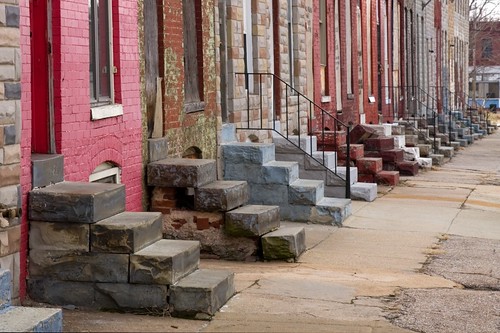

The bottom line is this: Gentiles excluded Jews and blacks from their neighborhoods using both legal and illegal means. Unscrupulous speculators took advantage of home sellers and buyers. Mortgage companies redlined neighborhoods where people could not get a regular mortgage, forcing them to rely on unscrupulous rent-to-buy schemes. With blockbusting techniques, flipping, and subprime mortgages, Baltimore neighborhoods and bank accounts were destroyed - to say nothing of people's souls.

Pietilla blames Baltimore's racial troubles on many people, including blockbuster Manuel Bernstein. But some, like Dale Anderson, former Baltimore County executive, deserve more blame than others, Pietilla writes.


Pietila says Anderson tried to push blacks from Towson by building a thoroughfare through the heart of an African-American neighborhood, thereby effectively eliminating it. In Catonsville, Anderson and the Baltimore County Council replaced blacks' homes with snack shacks and gas stations. Throughout the county, they decimated at least 20 old African-American settlements.

Race relations in the city were also troubling. In 1966, the Baltimore City Council considered a bill outlawing racial discrimination in housing. When an interfaith group testified in support of the bill, the members were spat upon, accused of moral blackmail and threatened with death. The bill was defeated, 13-8. After the Rev. Martin Luther King Jr. was assassinated, Baltimore, like other cities, exploded. To prevent an all-out race war, President Lyndon B. Johnson signed the Civil Rights Act of 1968 on April 11, which included provisions for fair housing. But by then, as Pietila vividly describes it, Baltimore - with its ugly racial and ethnic prejudices - had shown itself to be anything but Charm City. (source: Baltimore Sun)

Monday, July 11, 2011

"The Housing Crisis and African-American Wealth"


"The Drive for Economic Equality…Stuck in Neutral," by Christian Dorsey and James Lin:

The 40th anniversary of Dr. Martin Luther King’s assassination has caused many to ponder our progress in achieving his vision of economic equality. While income inequality between whites and blacks is a commonly referenced statistic, it tells an incomplete story. Wealth, or net worth, serves as a better indicator of a family’s ability to achieve economic security and upward economic mobility. When seen in this light, the gap between black and white is incredibly wide.


In 2004, blacks held $11,800 in net worth, or about 10% of the $118,300 held by whites (see Chart). When home equity is subtracted, blacks held, at the median, only $300 in net financial assets, or less than 1% of the $36,100 held by whites. Contrary to conventional wisdom, the picture has not improved in recent years. The wealth gap was narrowest in 1992, and even then, median total wealth for blacks was a mere 16% of their white counterparts.

It is unclear how the housing crisis will affect the wealth gap. However, with most black wealth concentrated in home equity, and with the disproportionate number of foreclosures in black households,1 the wealth divide may continue to widen. Four decades after Dr. King’s death, African Americans will have achieved little in the way of shared and equitable prosperity.
Policy makers can develop policies aimed at building wealth in low-wealth households to guard against income shortfalls and provide them with the means to invest in education and appreciating assets—keys to economic growth. Addressing the wealth gap directly will not only alleviate an acute symptom of racial inequality, it will better position the U.S. economy to reach its full potential. (Economic Policy Institute)


The importance of saving America's middle class has become part of the nation's dialogue, but as you point out, there isn't "one" middle class.

Oliver: People have talked about this a lot. There's a hollowing out of the middle of the class stratum in American society. There are more people who are doing quite well, and there are more people who are doing quite worse. There are fewer people in the middle than before. And it is this middle that keeps society going.

What characterizes a third-world country is extremes of rich and poor. America has always been a country with a strong middle class, and we're seeing that diminution. The black middle class has always been a very vulnerable group and when I talk about the three legged stool -- income, wealth and transfer payments -- they're not doing that well now. They didn't have a lot of wealth, and that's close to being gone. (source: Saint Louis Beacon)


From Oliver and Shapiro’s acclaimed book: Black Wealth, White Wealth: The relationship between residential segregation and the gross differential in Black Wealth and White Wealth.(Remember: Net Worth included all assets minus debts, including house you own and car, Net Financial Asset is the same without house and car)


"The Housing Crisis and African-American Wealth"

Sunday, June 26, 2011

Andrés Duany: Haitian Housing

Karen Cilento of Arch Daily writes: In just a short period of time since the earthquake hit Haiti, designers have been proposing possible housing solutions for the country. ... The first proposal is designed by Andres Duany, a Miami architect. Duany, with the help of sociologists and anthropologists, has designed four different versions of a temporary structure to relieve the urgent need for housing in Haiti. The differences in the homes respond to the varying ways Haitians live, so that each home is tailored to their specific needs.

Innovida, a composite panel manufacturer, has teamed with Duany, and has announced that they will donate 1000 of these homes to Haiti. Innovida imagines that factory to build such houses could be located near Port-au-Prince-providing work for close to 1000 Haitians. With $15 million in investment capital, the proposed factory should produce 10,000 houses per year.


One of the models, entitled Le Cabanon homes, is a simple structures that can sleep 8 people in an open floor plan with bunk beds. The construction would only take a few days, and the structure is earthquake proof and will withstand 155mph winds. The units do not have a bathroom, as it is expected that water will not be available in many areas to use for a toilet.

A shared feature of the four designs is their insulating panel system which would be made from materials commonly found in the aviation and windmill industries. The load bearing systems will have structural skins made of high-strength E-Glass fiber fabrics impregnated with a fire-resistant polymeric epoxy resin and a core made of a construction foam material and would be good for the conditions in Haiti, because they resist moisture, mold, and insects.
It is interesting that the initial idea of the homes was just to serve as a temporary structure. If the materials, especially the panel system, is so well suited for the conditions in Haiti, why not make the structures permanent? If we learned anything from the most recent disaster in Chile, we should take away the fact that the strict building codes of the country truly saved people’s lives. With that in mind, shouldn’t we be trying to design such structures for Haiti that will serve as a long term solution?

While the government has not yet made any decision about the proposals from Innovida, or from the other companies offering shelter options, hopefully by pooling these ideas together we can find the best solution. (source: Arch Daily, March 2, 2010)


Shelter for Haiti / Andres Duany

Wednesday, May 11, 2011

Why They Built the Pruitt-Igoe Project

Why They Built the Pruitt-Igoe Project
Alexander von Hoffman
Joint Center for Housing Studies, Harvard University.

St. Louis's Pruitt-Igoe housing project is arguably the most infamous public housing project ever built in the United States. A product of the postwar federal public-housing program, this mammoth high-rise development was completed in 1956.

Only a few years later, disrepair, vandalism, and crime plagued Pruitt-Igoe. The project's recreational galleries and skip-stop elevators, once heralded as architectural innovations, had become nuisances and danger zones. Large numbers of vacancies indicated that even poor people preferred to live anywhere but Pruitt-Igoe. In 1972, after spending more than $5 million in vain to cure the problems at Pruitt-Igoe, the St. Louis Housing Authority, in a highly publicized event, demolished three of the high-rise buildings. A year later, in concert with the U.S. Department of Housing and Urban Development, it declared Pruitt-Igoe unsalvageable and razed the remaining buildings.

Pruitt-Igoe has lived on symbolically as an icon of failure. Liberals perceive it as exemplifying the government's appalling treatment of the poor. Architectural critics cite it as proof of the failure of high-rise public housing for families with children. One critic even asserted that its destruction signaled the end of the modern style of architecture.

Yet for all the criticisms, little is known about why Pruitt-Igoe was designed as a massive high-rise project in the first place. One popular theory blames the Swiss architect, Le Corbusier, and his influential conception of a modernist city of high rises. Another points to segregationist policies aimed at confining African-American residential areas to the inner city. Perhaps the most widely accepted theory holds that the federal Public Housing Administration's (PHA) restrictive cost guidelines for public-housing construction required the construction of a megalithic high-rise project.

An examination of what really happened in St. Louis, however, reveals that the essential concept of Pruitt-Igoe arose from the desperation of civic leaders to save their city by rebuilding it, a bricks-and-mortar type mayor who sang "I'll take Manhattan," and an ambitious young architect with no place to go but up.
As they surveyed their city at the end of World War II, St. Louis's business and political leaders had reason to be anxious. The city was one of only four in the United States to have lost population in the 1930s. In 1947 the City Plan Commission devised a comprehensive physical plan to bring people back to St. Louis. The plan designated the DeSoto-Carr neighborhood, the eventual site of Pruitt-Igoe, as "extremely obsolete" and provided detailed site plans for its reconstruction. The commission proposed clearing the area and constructing "two- or three-story row type apartment buildings" and a large public park.

The election of Joseph Darst as mayor transformed these plans. Elected in 1949, Darst typified the new breed of big-city mayors who came to power in the postwar period. These mayors distanced themselves from the old-style political bosses and looked for support from downtown business interests. They campaigned for the revival of their aging cities and promoted large-scale physical building programs that included highways, airports, and especially downtown and neighborhood redevelopment. Darst, in particular, considered the low-rise projects built by his predecessors to be ugly. Instead, he greatly admired the new high-rise public housing projects that New York mayor William O'Dwyer had shown him on a visit to that city.


Under pressure from Darst to move forward, in January 1950 the St. Louis Housing Authority revived the City Plan Commission's redevelopment scheme for the DeSoto-Carr neighborhood. Meanwhile architects George Hellmuth and Minoru Yamasaki -- who had been hired at Darst's insistence -- persuaded the authority to adopt modernist-style high-rise designs for public housing. The first of these was Cochran Gardens, which later won architectural awards. This was followed by a much larger-scale plan for Pruitt-Igoe which, when completed, contained 2,870 dwelling units in 33 eleven-story buildings.

These structures were no anomaly. Instead, the Pruitt-Igoe project was the product of a larger vision of St. Louis government and business leaders who wanted to rebuild their city into a Manhattan on the Mississippi. Other redevelopment schemes of the time, for example, placed middle- and high-income residents in buildings that actually rivaled Pruitt-Igoe in height and scale.

There is, moreover, no evidence that redevelopment plans intended to make an all-black, all-poor enclave at DeSoto Carr, which had been a poor area housing both whites and blacks before it was razed. An early scheme would have produced a majority of middle-income black residents. The final plan designated the Igoe apartments for whites and the Pruitt apartments for blacks. Whites were unwilling to move in, however, so the entire Pruitt-Igoe project soon had only black residents.

Nor is there any truth in claims that PHA cost limits forced the authority to increase the project's scale. On the contrary, building contractors inflated their bids to the point that public-housing construction costs in St. Louis were 60 percent above the national average. When the PHA would not raise its unit cost ceilings to accommodate the contractor bids, the city responded by raising densities, reducing room sizes, and removing amenities.

Ultimately, the massive, destructive, and expensive effort at redevelopment that produced Pruitt- Igoe failed to stem or even noticeably slow the city's decline. From 1950 to 1970, the city's population fell by 234,000 people, and its share of the St. Louis metropolitan area's population plummeted from 51 percent to 26 percent. This sad fact adds what may be the largest failure to the formidable list of failures associated with Pruitt-Igoe: even if it had been built as proposed, Pruitt-Igoe, the child of a grandiose vision that failed, probably would have failed anyway.


Alexander von Hoffman is an urban historian. This piece is excerpted from his working paper, "Why They Built Pruitt-Igoe." For information on how to order the paper, visit the Taubman Center Publications Page.


Monday, March 7, 2011

III. HOUSES: Slave Quarters

III. HOUSES.


The huts of the slaves are mostly of the poorest kind. They are not as good as those temporary shanties which are thrown up beside railroads. They are erected with posts and crotches, with but little or no frame-work about them.


They have no stoves or chimneys; some of them have something like a fireplace at one end, and a board or two off at that side, or on the roof, to let off the smoke. Others have nothing like a fireplace in them; in these the fire is sometimes made in the middle of the hut.


These buildings have but one apartment in them; the places where they pass in and out, serve both for doors and windows; the sides and roofs are covered with coarse, and in many instances with refuse boards.

Greenhill, Virginia Slave Quarters

In warm weather, especially in the spring, the slaves keep up a smoke, or fire and smoke, all night, to drive away the gnats and musketoes, which are very troublesome in all the low country of the south; so much so that the whites sleep under frames with nets over them, knit so fine that the musketoes cannot fly through them.

Greenhill, Virginia DUCK BARN (ducks have better housing than enslaved human beings)

Some of the slaves have rugs to cover them in the coldest weather, but I should think more have not. During driving storms they frequently have to run from one hut to another for shelter. In the coldest weather, where they can get wood or stumps, they keep up fires all night in their huts, and lay around them, with their feet towards the blaze.


Men, women and children all lie down together, in most instances. There may be exceptions to the above statements in regard to their houses, but so far as my observations have extended, I have given a fair description, and I have been on a large number of plantations in Georgia and South Carolina up and down the Savannah river.
Slave Quarters at the San Francisco Plantation - the most Opulent Plantation on the Great River Road of Louisiana

Their huts are generally built compactly on the plantations, forming villages of huts, their size proportioned to the number of slaves on them. In these miserable huts the poor blacks are herded at night like swine, without any conveniences of bedsteads, tables or chairs.


O misery to the full! to see the aged sire beating off the swarms of gnats and musketoes in the warm weather, and shivering in the straw, or bending over a few coals in the winter, clothed in rags. I should think males and females, both lie down at night with their working clothes on them.
God alone knows how much the poor slaves suffer for the want of convenient houses to secure them from the piercing winds and howling storms of winter, especially the aged, sick and dying. Although it is much warmer there than here, yet I suffered for a number of weeks in the winter, almost as much in Georgia as I do in Massachusetts.


The slave quarter described above likely appeared similar to the one pictured in this photograph of a late 19th century freedman's home near Richmond, Virginia.


source: "NARRATIVE AND TESTIMONY OF REV. HORACE MOULTON, MR. MOULTON is an esteemed minister of the Methodist Episcopal Church, in Marlborough, Mass. He spent five years in Georgia, between 1817 and 1824. The following communication has been recently received from him. MARLBOROUGH, MASS., Feb. 18, 1839."

HOME

HOME
Click here to return to the US Slave Home Page