Showing posts with label University Slavery. Show all posts

Tuesday, January 31, 2012

Slavery at South Carolina College


Slavery at South Carolina College, 1801–1865:
The Foundations of the University of South Carolina
Students Engaging Slavery

Points of Interaction
In the years before emancipation, South Carolina College students interacted with slaves every day: at meals in Stewards Hall, in the tenements (their dormitories), and on the grounds. Between 1801 and 1860, the South Carolina College campus was small and close-knit. In 1808, for example, enrollment was 100 students, and there were only three professors and a tutor. There were 142 students by 1836 and 221 in 1848.

The young male students, many the sons of wealthy plantation-owning families, sang and recited poetry in the dormitories together, sometimes skipped chapel, classes, and recitations, and fought over food in Stewards Hall. Extending their misdeeds into town, they drank at taverns, sometimes to excess, and stole townspeople’s turkeys. To try to keep the students on campus, the college erected a brick wall, which still surrounds today’s Horseshoe. This did not solve the problem.

Students and Slaves in the Tenements

During the first few years, students could bring family slaves to campus to serve them, but the college forbade the practice after 1808. The college owned and hired slaves, and each student paid a servant fee each year. During their studies and social interaction in their rooms, the young men would have watched and sometimes spoken with the slaves who made their beds and swept their floors.

Slaves also washed students’ clothes; records document the hiring of a slave named Anna in 1846 who was a washerwoman. Sometimes slaves caught students disobeying college rules in their rooms. A Charleston senior named Frederick Belser beat a slave on one occasion because he believed the slave had told a professor about a card game in his room. Belser met with the faculty but was not punished for the misdemeanor because he apologized.


Student and Slave Interaction at Meals

Students spent a great deal of time in Stewards Hall, where they met daily at 8:00 a.m., 1:00 p.m., and 7:00 p.m. for required meals. The food was frequently below the students’ expectations: meat was salted rather than fresh, there was very little chicken or beef, few fresh vegetables, and the biscuits had vermin. Considering the fare, perhaps it is not surprising that two young men fought a duel over a dish of trout.

Students sometimes threatened the steward in person and bombarded him with letters demanding more wholesome food. Students complained that slaves who attended the dining hall were poor waiters and that there were not enough to take care of their needs. The young men grew angry with the slaves and, on occasion, threatened and hit the slaves who were serving the food. Although the college forbade such behavior, students generally went unpunished.


Students and Slaves in the Classroom

Students spent much of the day in lectures or recitations in one or two buildings. In the early days, Rutledge College was the single classroom building. Subjects included mathematics, moral philosophy, chemistry, history, political economy, logic, geology, mineralogy, Greek literature, and Latin literature. Eight to ten professors and three or four tutors instructed the students. Although many professors were loved and respected, such as Thomas Cooper and Francis Lieber, others were not, and students were regularly brought before the faculty to be disciplined for insulting professors.

Slaves cleaned the college classrooms, and one slave named Jack aided in the chemistry laboratory and in mathematics classes. Jack also hired himself out as a tutor to struggling math and chemistry students. After Jack’s death two slaves, both named Jim, were hired to assist in the chemistry department and in the mathematics and natural philosophy department. Gradually, new buildings and new subjects were added as the student body grew, but South Carolina College remained small, boasting only a few hundred students. (http://library.sc.edu/digital/slaveryscc/campus-slaves--slavery.html)


Slavery and the Origins of the University of South Carolina Welcome from Center for Digital Humanities at on Vimeo.

Friday, December 23, 2011

University of Alabama’s Slavery Apology

Alabama Governor George Wallace

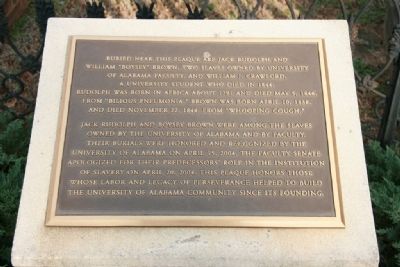
Inscription. Buried near this plaque are Jack Rudolph and William “Boysey” Brown, two slaves owned by University of Alabama faculty, and William J. Crawford, a University student who died in 1844.

Rudolph was born in Africa about 1791 and died May 5, 1846, from “Bilious Pneumonia.” Brown was born April 10, 1838, and died November 22, 1844, from “Whooping Cough.”

University of Alabama’s Slavery Apology Marker Photo, Click for full size

Jack Rudolph and Boysey Brown were among the slaves owned by the University of Alabama and by faculty. Their burials were honored and recognized by the University of Alabama on April 15, 2004. The Faculty Senate apologized for their predecessors’ role in the institution of slavery on April 20, 2004. This plaque honors those whose labor and legacy of perseverance helped to build the University of Alabama Community since its founding.


According to the Alabama Law Review, "Professor Wants UA Apology for Slavery: Alfred Brophy will present proposal for university to consider reparations to slave descendants," on 16 March 2004, by Jeff Amy: A University of Alabama law professor wants the school to apologize for its pre-Civil War ownership and use of slaves, and to consider a commission to study the history of slave use at the school and the possibility of reparations to slave descendants.

Alfred Brophy, who studies the legal history of slavery, plans to present his proposal at today's Faculty Senate meeting. The faculty body isn't scheduled to vote on Brophy's resolution until April.

Brophy, who is white, said Monday that he has discovered numerous links between slavery and the Tuscaloosa school, established in 1831. The school owned a handful of slaves for much of its early existence, and rented others, according to Brophy's research. Professors, students and at least two university presidents owned slaves, he said.

Slaves cleaned buildings, planted trees, served students and aided professors, according to records Brophy has found. Though the professor hasn't found any direct evidence yet, he believes slaves helped build at least some of the seven surviving buildings that escaped destruction by Union troops in 1865.

But Brophy believes what UA really needs to atone for is the intellectual defense of slavery made by many of its leaders. Brophy points particularly to two university presidents and a Mobilian who founded the forerunner of the university's medical school. All three were prominent public defenders of slavery and the idea that blacks were naturally inferior. All three have buildings on the Tuscaloosa campus named for them.

So far, the resolution has caused little stir on the 20,000-student campus. Cathy Andreen, a university spokeswoman, declined comment on behalf of administrators.

"At this point, we're not ready to comment on it, because we haven't seen it," Andreen said.

Robert Turner, a senior from Tuskegee, said he had heard about some of Brophy's work, and said he hoped university leaders would support further inquiry.

"It should be something we look into, discovering the role the university played," Turner said.

Turner, who is black, is the outgoing executive chief of staff for Alabama's Student Government Association.

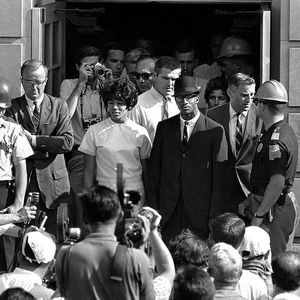
Vivian Malone attends class in 1963 after her admission to the University of Alabama despite Gov. George Wallace's "Stand in the Schoolhouse Door."

Success in race relations:

The University of Alabama, though famous for George Wallace's 1963 attempt to prevent integration, known as the "Stand in the Schoolhouse Door," is in some ways a success in today's race relations. The school's student body is more than 13 percent black, a higher share than Auburn University or some other Southeastern Conference schools.

Even if the Faculty Senate adopts Brophy's proposal, UA President Robert Witt or University of Alabama System trustees would have to take a similar position for the faculty action to mean anything. For example, student and faculty resolutions last fall calling for the university to condemn discrimination against gays and lesbians have so far garnered little public recognition from top UA leaders.

Among campus structures that survived the Union Army destruction are outbuildings of the 1841 President's Mansion that have been identified in the past as slave quarters. Today, they appear on university maps under names like "President's storage."

At least six buildings on the campus are named for people who owned slaves or advocated slavery, according to Brophy. He notes that Basil Manly, university president from 1837 to 1855 and Landon Garland, president from 1855 to 1865, both owned large numbers of slaves who worked the presidents' personal plantations. Manly and Garland encouraged their students to believe that slavery was part of the natural order ordained by God, according to their surviving papers and other accounts.

Brophy also points to Josiah Nott, a physician in Mobile who founded the forerunner of the University of Alabama Medical School in 1858. Nott wrote and lectured about claims that blacks were genetically inferior, based partly on skull measurements he made in his medical practice. Slavery suited black people, Nott said, because the race could never hope to achieve the level of accomplishment and civilization that whites had reached.


Vivian Malone and James Hood. Vivian Malone became the first African-American to graduate from the university.
The question of whether universities profited from slavery, and what they should do to make up for it, has been a prominent subplot in a larger national debate about reparations in the last 15 years. Up until now, most attention has focused on Ivy League universities -- Brown, Harvard, Princeton and Yale.

Most recently, Ruth Simmons, the first black president of Rhode Island's Brown, appointed a committee to examine the school's ties to slavery, teach students about that history, and consider whether Brown should do something to compensate for that past.

Some black leaders have called for economic payments -- typically called reparations -- as a way for the nation to erase some of the damage caused by slavery, and share the economic gains that slave owners enjoyed. They point to reparations paid to citizens of Japanese descent whom the American government imprisoned during World War II. They also note payments by Germany and German companies to Holocaust victims.

But opponents say that idea is logistically difficult at best, and an ideological travesty at worst. Those against reparations say its unfair to tax people for the sins of previous generations. A federal judge in Chicago recently dismissed a lawsuit seeking reparations, in part because there are no slave owners or slaves still alive.

A 2002 Mobile Register-University of South Alabama poll found the state's citizens racially polarized over the question of reparations. While 67 percent of black respondents favored the federal government making cash payments to slave descendants, only 5 percent of white respondents agreed. Pollsters said some white people became so upset that they had trouble finishing telephone interviews for the poll.


Vivian Malone and James Hood register for classes at the University of Alabama despite Alabama Gov. George Wallace's "Stand in the Schoolhouse Door" protesting racial integration of the institution.
Favors reparations:

For his part, Brophy has favored reparations. As a law professor in Oklahoma, he counseled black residents of Tulsa in their efforts to gain compensation for a 1921 race riot that left numerous blocks of a black business district in ruins and may have killed 300 people.

He thinks it might be possible to track down descendants of slaves owned by the university and its early professors, to offer them scholarships or some sort of symbolic payment. He acknowledged, however, that such an effort would provoke widespread opposition.

"I'm not going to fall on a sword for reparations," Brophy said.

He said other measures, such as an open debate about UA's slave past, headstones for unmarked slave graves, a university apology, and maybe a museum in one of the former slave quarters, would all be healthy for the school

"It's not like we don't have the buildings built with slave labor," Brophy said. "Having benefited from that labor, this institution has a moral duty to make amends." (source: Alabama Law Review)


Thursday, November 17, 2011

Slavery and Its Legacies at Emory University

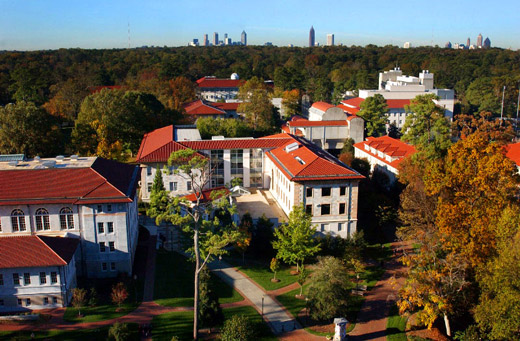
Emory University

On the eve of Emory University's 175th anniversary year, the executive committee of the Board of Trustees has adopted a formal statement of regret over the history of the school's involvement with slavery.

Emory was founded in 1836 by a group of enterprising Methodists in a small town they dubbed Oxford after the famous seat of higher learning in England. The college itself was named for John Emory, a Maryland bishop who owned slaves, and a growing body of research has revealed the important role of slaves in helping to build and support the young institution.


The founders and early leaders of Emory were, by and large, supporters of slavery who were influential in bringing about a North-South schism in the Methodist Episcopal Church as the Civil War neared.

By consensus vote at the board's Jan. 13 meeting, the trustees' committee adopted a resolution declaring that:

Emory acknowledges its entwinement with the institution of slavery throughout the College's early history. Emory regrets both this undeniable wrong and the University's decades of delay in acknowledging slavery's harmful legacy. As Emory University looks forward, it seeks the wisdom always to discern what is right and the courage to abide by its mission of using knowledge to serve humanity.

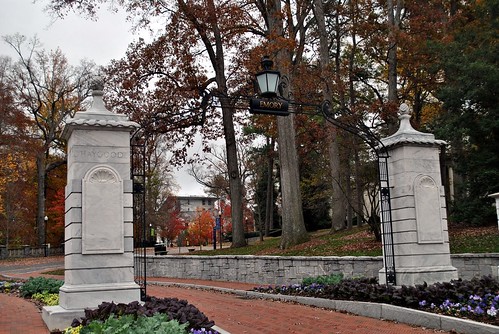
The main entrance to Emory's campus

President Jim Wagner and Board Chairman Ben F. Johnson III described the committee's statement of regret as the culmination of several independent factors. They include:

• A five-year, Ford Foundation-funded initiative known as the Transforming Community Project (TCP). Regarded as a national model for how academic communities can productively discuss complex racial and ethnic issues, the faculty-led initiative involved more than 1,000 faculty, staff and students in small-group meetings and larger conferences over the course of its existence. The TCP is widely credited with producing a new level of understanding of Emory's complex heritage around race and slavery, dating to antebellum days.

• The approach of Founders Week, kicking off a year-long commemoration and celebration of Emory's 175th anniversary, along with heightened attention to many of the University's historical milestones and accomplishments.

• A planned national scholarly conference entitled "Slavery and the University: Histories and Legacies." Scheduled to be held at Emory in early February, the conference will include a Feb. 3 keynote address by President Ruth Simmons of Brown University.

• Key questions about the role of slavery in the history of the institution raised by faculty, student and staff members of the President's Commission on Race and Ethnicity (PCORE).

"We at Emory resolved years ago in our community's vision statement to be an 'inquiry-driven' university distinguished for our courageous leadership," says Wagner. "Honestly acknowledging some of the conditions of our early founding that we find painful today is a step that we feel required to take as we live out the values expressed in that vision. I wish to acknowledge the important leadership role played by PCORE as well as that of the leadership of TCP in bringing us to this important juncture."


Johnson's father, Ben F. Johnson, Jr., was dean of Emory Law School and represented Emory in a successful 1962 lawsuit to allow private institutions to retain tax-exempt status while admitting African American students. "Emory has always been a place that seeks to act on the basis of ethical understanding," says Johnson. "The statement issued by the Executive Committee seeks to address and fulfill that aspiration."

Wagner and Johnson say they expect the explorations of Emory's racial and ethnic heritage to continue as part of the ongoing life of the University, in accordance with the University's vision statement and also with an ongoing strategic initiative studying various dimensions of race and difference. (source: Emory Report)

Slavery and Its Legacies at Emory University: Reflections on History and Accountability

Wednesday, July 13, 2011

Slavery at the South Carolina College in Columbia

Urban Slavery in Columbia, sc
DeSaussure College (1809) is the second-oldest building on campus, formerly the North Building and later Old North Building. Named for Carolina chancellor Henry William DeSaussure, it survived an earthquake in 1811 and a fire in 1851.
In the early 1800s, South Carolina College was a significant institution in the growing city of Columbia. In order to understand slavery on campus, it is necessary to examine the role of slaves in Columbia during this era. Contrary to popular belief, not all slaves lived on plantations. In some ways, urban slaves, such as those in Columbia, inhabited a very different world than their rural counterparts.
One major difference between urban and rural slavery was the high concentration of slaves in cities. Whereas great distances often separated small communities of rural slaves, urban slaves typically lived and worked in close proximity with one another. In 1830, approximately 1,500 slaves lived and worked in Columbia; this population grew to 3,300 by 1860. Some members of this large enslaved population worked in their masters’ households. Masters also frequently hired out slaves to Columbia residents and institutions, including South Carolina College. Hired-out slaves sometimes returned to their owner’s home daily; others boarded with their temporary masters.

The movement of slaves throughout Columbia fostered ample opportunities for interaction among blacks in public and private spaces. These relationships permitted communication among slaves and the city’s small community of free blacks. Legislators developed state and local statues to restrict the movement of urban slaves in hopes of preventing rebellion. Although various decrees established curfews and prohibited slaves from meeting and from learning to read and write, such rulings were difficult to enforce. Several prewar accounts note that many Columbia slaves were literate; some slaves even conducted classes to teach others to read and write. In spite of white efforts to prevent blacks from congregating, slaves and free blacks persevered to build a strong community of their own in Columbia.

Urban slaves also participated in white organizations throughout the city, though in limited roles. Many slaves attended services at local Baptist, Presbyterian, and Methodist churches, yet some struggled to obtain membership in these institutions. Jack, a college slave, applied for membership in the First Presbyterian Church in April 1820. Church leaders postponed this decision for nearly two years and consulted the college’s board of trustees regarding Jack’s character. Jack did not obtain membership before his death in 1822. Jack’s story reveals the close ties between campus slaves and their urban environment. It also provides evidence of whites’ utter disregard for the contributions of slaves throughout this period.

(source: http://slaveryatusc.weebly.com/urban-slavery-in-columbia.html)

Sunday, June 19, 2011

Slavery at Princeton


Princeton University, in the words of colonial historian Jeff Looney, cannot be said to have had a "glowing history in opposing slavery." He and fellow historian John Murrin both state that John Witherspoon, president of the College of New Jersey from 1768-1794, owned slaves. Indeed, Varnum Lansing Collins notes that the inventory of Witherspoon's possessions taken at his death included "two slaves . . . valued at a hundred dollars each." Neither Murrin or Looney have any reason to believe that the College itself owned slaves, though individual trustees did.

Israel Read, for example, who served as a trustee from 1761 to 1793 and was the first Princeton graduate to become a member of the synod of the Presbyterian church, disposed of three slaves upon his death, two to his children and one to a life of freedom (see Princetonians: 1748-1768). Jeremiah Halsey of the Class of 1752, a trustee from 1770 to 1780 and Clerk of the Board beginning in 1772, as well as the College's longest serving 18th-century tutor, also owned a slave (see Princetonians: 1748-1768). Richard Stockton of the Class of 1779, a trustee from 1791 to 1828 and the first citizen of Princeton, reputedly owned several slaves, freeing one in 1823 (Princetonians: 1776-1783). On the other hand, Joseph Bloomfield, a trustee from 1793 to 1801 and 1819 to 1823, was a prominent abolitionist, serving as president of the New Jersey Society for the Abolition of Slavery. As Governor of New Jersey from 1801 to 1812, Bloomfield presided over legislation enacted in 1804 that provided for the gradual abolition (over a twenty-year period) of slavery in the state.

Looney noted that the College offered a congenial home for Southerners since it numbered many "colonizationists" among its faculty, including John Maclean, president of the College of New Jersey from 1854 to 1868, who was a member of the American Colonization Society, which sought to repatriate blacks to Africa. Princeton attracted more Southerners than Harvard and Yale, and during the 1840s, there was only one year in which the percentage of Southern students at Princeton fell below 40%, and in 1848, it stood at 51.5% (see "Answering 'The Trumpet to Discord': Southerners at the College of New Jersey, 1820-1860, and Their Careers," a senior thesis by Ronald D. Kerridge). Gradualism was the order of the day at Princeton in the first half of the 19th-century, and the same could be said of New Jersey as a whole. As Kerridge puts it, "New Jersey was very conservative on the slavery question as free states went, and Mercer County and the town of Princeton were no exceptions. David A. Hillstrom's thorough study of the colonization and abolition movements in New Jersey (also a senior thesis) reveals strong support for the former but little backing for the more aggressive anti-slavery position." (source: Princeton University)

Slavery at William & Mary College

CNN reported: Last March, a crowd of nearly 100 gathered in Williamsburg, Virginia, for an all-day symposium about slavery and reconciliation. The event, put on by the College of William & Mary, wasn't a broad, rhetorical discussion of the past.

It was personal.

In 2009, the school acknowledged that it, "owned and exploited slave labor from its founding to the Civil War."
In response, it created The Lemon Project, named after a college-owned slave, to understand the role of race at the university.

Kimberely Phillips, an associate professor of history and American studies and Lemon Project co-chairwoman, said it's not just about slavery, "but about the lingering past with segregation."

Wren Chapel built by slave labor

On that spring Saturday, students, faculty and Williamsburg residents gathered to discuss research into the history of slavery at the school and how to move forward.

It's a conversation taking place on campuses around the country as they, too, discover and come to terms with their past ties to slavery. It's a history shared by Brown University in Providence, Rhode Island; Emory University in Atlanta and Harvard University, the oldest institution of higher learning in the United States. All admit they benefited from their relationships with slavery.

Some, like Emory, were physically built by the manual labor of slaves. Early university presidents and leaders at Harvard were slave owners. Still other schools were built with money made from the slave trade.

Historian said universities are typically focused on the present, and a history tied to slavery is seen as an embarrassment. Only within the last decade have historians pieced together this past, which some institutions had previously ignored or denied.

"Universities like to represent their abolitionist, anti-slave history and not talk about their connection to slavery [because] universities became battlegrounds for people opposed to slavery versus people in favor of it," said anthropologist Mark Auslander, who teaches history at Brandeis University.

In 2003, Brown University became one of the first colleges to acknowledge its history with slavery. University President Ruth Simmons, the first African-American to lead an Ivy League school, appointed a Steering Committee on Slavery and Justice to investigate ties between the New England slave trade and the university. (source: CNN)

Another View - The Lemon Project

HOME

HOME
Click here to return to the US Slave Home Page