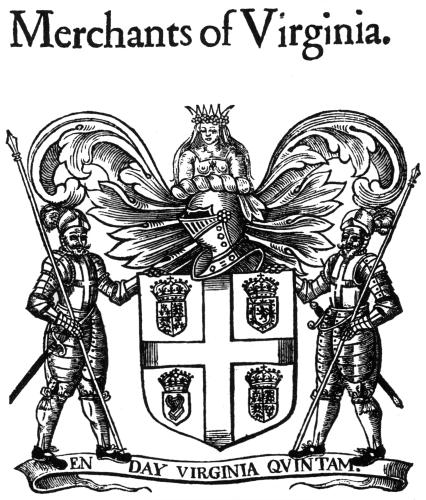
From the PBS series Africans in America: The goal of the Virginia Company was clear enough: establish a permanent colony in America that would make a profit for the Company. The company, chartered by King James I in April, 1606, was comprised of two divisions. The Plymouth Company would establish a short-lived colony at the mouth of the Kennebec River near what is now Phippsburg, Maine. The London Company would establish Jamestown in Virginia, England's first permanent settlement in the New World.
There were two ways to become a member of the London Company. If you had money to buy shares in the Company but were inclined to remain safe and snug in England, you could invest as an "Adventurer." If you really were adventurous and didn't mind travelling to the new colony, you could become a member of the Company as a "Planter."

Planters were required to work for the Company for a set number of years. In exchange for this work -- or, more precisely, servitude -- the company provided housing, clothing, and food. At the end of the servitude the planter would be granted a piece of land and be free of obligations to the company. In addition, the planter would be entitled to a share of the profits made by the company. (The company also recruited indentured servants, who would work for a set number of years, typically seven, in exchange for passage to the colony.)
Sounds like a good deal, doesn't it? It really wasn't. The lives of these colonists were difficult and unpleasant, to say the least.

The planters were really servants of the company. They had no real freedom and were kept by force in the company. They had no choice but to accept any changes that the Governor or company decided to make, including an extension of their contracts. (Three-year contracts were sometimes extended to ten years.) Any letters sent to or received from England were destroyed if they contained any disparaging remarks about the company. Relatively minor offences could result in severe punishments. According to some colonists' accounts, there were continual whippings, as well as punishments such as hanging, shooting, breaking on the wheel, and even being burnt alive.
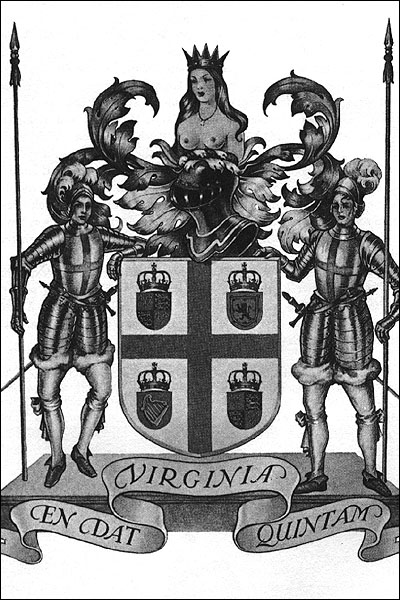
The Virginia Company was dissolved in 1624. Virginia then became a royal colony. (source: PBS)


 Slavery and its close cousin, indentured servitude, were accepted conditions in New England and the other colonies in the 17th century. Slaves and servants were both bought and sold on the open market. The difference was that slavery usually was permanent. Indentured servitude was supposed to have a time limit. That became an issue with Philip Welch and William Downing, two Irish immigrants.Downing and Welch had been kidnapped by shipmaster George Dell, brought to Boston in 1654, and sold to Samuel Symonds, a magistrate and judge. Downing was about 11, Welch 14. Indenture usually was set at five to seven years, but because of their youth, Mr. Dell signed over William to nine years and Philip for 11.
 The two toiled away on Judge Symonds’ Ipswich farm for the next seven years. But then, in act of remarkable rebellion, they said they would work for him no longer and demanded their freedom. The outraged judge had them arrested and brought to trial. Testimony from other Irish witnesses described how English soldiers stole Irish lads from their beds at night and sold them into servitude. The jurors on the county court in Salem sympathized with the lads and said they should go free “unless the contract between Captain Dell and Judge Symonds was legal.” That issue was resolved by a panel of four judges — including Judge Symonds. They found that the contract was legal. Judge Symonds argued that if the panel found otherwise, it would threaten “the Bargains of so many others in the Country.” Plenty of landowners then had indentured servants. After the Battle of Worcester in 1651, where Oliver Cromwell’s army defeated the Scots, dozens and perhaps hundreds of Scottish prisoners were packed off to the New World as indentured servants. That sort of forced labor was part of the system.


