Showing posts with label Virginia Slave Law. Show all posts

Tuesday, May 1, 2012

The Heminges Of Monticello


From the New York Times on October 3, 2008,  "The Master and the Mistress," by Eric Foner, review of  Annette Gordon-Reed's book The Heminges Of Monticello: An American Family -- Sometime around 1800, an anonymous American artist produced an arresting painting entitled “Virginian Luxuries.” It depicts a slave owner exercising two kinds of power over his human property. On the right, a white man raises his arm to whip a black man’s bare back. On the left, he lasciviously caresses a black woman. The artist’s identification of these “luxuries” with the state that produced four of our first five presidents underscores the contradiction between ­ideals and reality in the early Republic.

No one embodied this contradiction more strikingly than Thomas Jefferson. In 1776, when he wrote of mankind’s inalienable right to liberty, Jefferson owned more than 100 slaves. He hated slavery but thought blacks inferior in “body and mind” to whites. If freed, he believed, they should be sent to Africa; otherwise, abolition would result in racial warfare or, even worse, racial “mixture.” Yet in his own lifetime, reports circulated that Jefferson practiced such mixture with his slave ­Sally Hemings.


In 1997, Annette Gordon-Reed, who teaches at New York Law School and in the history department of Rutgers University, published “Thomas Jefferson and Sally Hemings: An American Controversy.” Reviewing the evidence, she concluded it was likely that Jefferson had fathered Hemings’s children. But her main argument was that generations of Jefferson scholars had misused historical sources to defend the great man’s reputation. For example, they had dismissed as worthless the recollections of Madison Hemings, Sally Hemings’s son, who described his mother’s relationship with Jefferson to a journalist in 1873, while accepting at face value the denials of Jefferson’s white descendants that such a relationship existed. The book caused a sensation in the sedate world of Jefferson scholarship. Shortly after it appeared, DNA testing established a genetic link between a male Jefferson and Eston Hemings, Madison’s brother. Today, Monticello’s Web site discusses the controversy in a way that leaves the distinct impression of Thomas Jefferson’s paternity.

Gordon-Reed has now turned her attention to an even more ambitious pro­ject. In “The Hemingses of Monticello,” a work based on prodigious research in the voluminous Jefferson papers and other ­sources, she traces the experiences of this slave family over three generations. Engrossing and suggestive, it is also repetitive (we are frequently reminded that the law does not necessarily reflect social reality) and filled with unnecessary pronouncements about human nature (e.g., “Youth in females has attracted men in all eras across all cultures”). Readers will find it absorbing, but many will wish it had been a shorter, more focused book.


Gordon-Reed’s account begins with Elizabeth Hemings, born in 1735 as the daughter of an African woman and a white sea captain; she bore at least 12 children, half with an unknown black man, half (including Sally) with her owner, John Wayles, Jefferson’s father-in-law. (This made Sally Hemings the half sister of Jefferson’s wife, Martha Wayles, who died in 1782, after which he never remarried.) The Hemings family went to Monticello as part of Martha’s inheritance. Individual members eventually found their way to Paris, New York, Philadelphia and Richmond, allowing Gordon-Reed to pre­sent a revealing portrait of the varieties of black life in Jefferson’s era.

When she died in 1807 at 72, Elizabeth Hemings left behind 8 living children, more than 30 grandchildren and at least 4 great-grandchildren. The most fascinating parts of Gordon-Reed’s book deal not with Sally Hemings herself but with other all but unknown members of her extended family. Initially because they were related to Jefferson’s wife and later because of his own connection with Sally Hemings, the family was treated quite differently from other slaves at Monticello. The women worked as house servants, never in the fields, the men as valets, cooks and skilled craftsmen. Jefferson paid some of them wages and allowed a few to live in Charlottesville or Richmond and keep their earnings. Because of their independent incomes, her sons were able to provide Elizabeth Hemings with goods unavailable to most slaves. As Gordon-Reed relates, archaeological excavations have revealed among her possessions pieces of Chinese porcelain, wineglasses and other products of the era’s consumer revolution.


Their status as a “caste apart” from the other slaves did not diminish the Hemingses’ desire for greater freedom. In 1792, at her own request, Jefferson sold Sally’s older sister Mary to Thomas Bell, a local merchant, who lived openly with her and treated their children as his legal family. Three years later, Jefferson allowed their brother Robert to work out an arrangement with a white resident of Richmond to purchase and free him.

Less happy was the fate of Sally’s brother James Hemings, who accompanied Jefferson to Paris, where he studied cuisine. During the 1790s, James asked for his freedom and Jefferson agreed, so long as he trained his successor as chef at Monticello. A few years later, James Hemings committed suicide. Gordon-Reed sensitively traces the career of this restless, solitary man, acknowledging that “we simply cannot retrieve” his inner world or why he took his own life. Unfortunately, when it comes to the core of the book, the ­relationship between Jefferson and Sally Hemings, she is less circumspect.


In 1787, at the age of 14, Sally Hemings accompanied Jefferson’s daughter Polly from Virginia to Paris, where Jefferson was serving as American minister. According to Madison Hemings’s account, at some point she became Jefferson’s “concubine.” When Jefferson was about to return to America in 1789, according to Madison, Sally Hemings, pregnant and aware that slavery had no legal standing in France, announced that she was going to remain in Paris. To persuade her to accompany him home, Jefferson agreed to a “treaty” whereby he would free her children when they reached adulthood.

Most scholars are likely to agree with Gordon-Reed’s conclusion that Jefferson fathered Hemings’s seven children (of whom three died in infancy). But as to the precise nature of their relationship, the historical record is silent. Was it rape, psychological coercion, a sexual bargain or a long-term loving connection? ­Gordon-Reed acknowledges that it is almost impossible to probe the feelings of a man and a woman neither of whom left any historical evidence about their relationship. Madison Hemings’s use of the words “concubine” and “treaty” hardly suggests a romance. But Gordon-Reed is determined to prove that theirs was a consensual relationship based on love.


Sometimes even the most skilled researcher comes up empty. At that point, the better part of valor may be simply to state that a question is unanswerable. Gordon-Reed’s portrait of an enduring romance between Hemings and Jefferson is one possible reading of the limited evidence. Others are equally plausible. ­Gordon-Reed, however, refuses to acknowledge this possibility. She sets up a series of straw men and proceeds to demolish them — those who believe that in the context of slavery, love between black and white people was impossible; that black female sexuality was “inherently degraded” and thus Jefferson could not have had genuine feelings for Hemings; that any black woman who consented to sex with a white man during slavery was a “traitor” to her people. She cites no current historians who hold these views, but is adamant in criticizing anyone who, given the vast gap in age (30 years) and power between them, views the Jefferson-Hemings connection as sexual exploitation.

As a black female scholar, Gordon-Reed is undoubtedly more sensitive than many other academics to the subtleties of language regarding race. But to question the likelihood of a long-term romantic attachment between Jefferson and Hemings is hardly to collaborate in what she calls “the erasure of individual black lives” from history. Gordon-Reed even suggests that “opponents of racism” who emphasize the prevalence of rape in the Old South occupy “common ground” with racists who despise black women, because both see sex with female slaves as “degraded.” This, quite simply, is ­outrageous.


After this rather strident discussion, which occupies the best part of four chapters, Gordon-Reed returns to her narrative. She relates how in 1802 the Richmond journalist James Callender named Hemings as Jefferson’s paramour and how throughout his presidency news­papers carried exposés, cartoons and bawdy ­poems about his relationship with “Yellow Sally.” Gordon-Reed makes the telling point that while Callender called Hemings a “slut as common as the pavement,” she was hardly promiscuous. She gave birth only at times when Jefferson could have been the father.

Neither Jefferson nor Hemings responded to these attacks. But whatever his precise feelings about the relationship, Jefferson certainly took a special interest in their children. Gordon-Reed notes that while other Hemings offspring were named after relatives, Sally Hemings’s sons bore names significant for Jefferson — Thomas Eston Hemings (after his cousin) and James Madison and William Beverley Hemings (after important ­Virginians).


In the end, Jefferson fulfilled the “treaty” he had agreed to in Paris and freed Sally Hemings’s surviving children. He allowed their daughter Harriet and son Beverley (ages 21 and 24) to leave Monticello in 1822. Very light-skinned, they chose to live out their lives as white people. Jefferson’s will freed Madison and Eston Hemings as well as three of their relatives. The will did not mention Sally Hemings, but Jefferson’s daughter allowed her to move to Char­lottesville, where she lived with her sons as a free person until dying in 1835. For the other slaves at Monticello, Jefferson’s death in 1826 was a catastrophe. To settle his enormous debts, his estate, including well over 100 slaves, was auctioned, destroying the families he had long tried to keep intact.

“The Hemingses of Monticello” ends at this point. Only in an earlier aside do we learn that Madison Hemings’s sons fought in the Union Army during the Civil War. One was among the 13,000 soldiers who perished at the infamous Andersonville prison camp in Georgia. I am glad to hear that Gordon-Reed is at work on a second volume tracing the further history of this remarkable family.

Enjoying Monticello's West Lawn

[source: The New York Times, Eric Foner is the DeWitt Clinton professor of history at Columbia University and the editor of “Our Lincoln: New Perspectives on Lincoln and His World,” which has just been published.]

Monday, February 27, 2012

Virginia's First Africans In 1619

Mystery of Va.'s first slaves is unlocked: New scholarship shows how group of '20 and odd' came to America by bjtindle

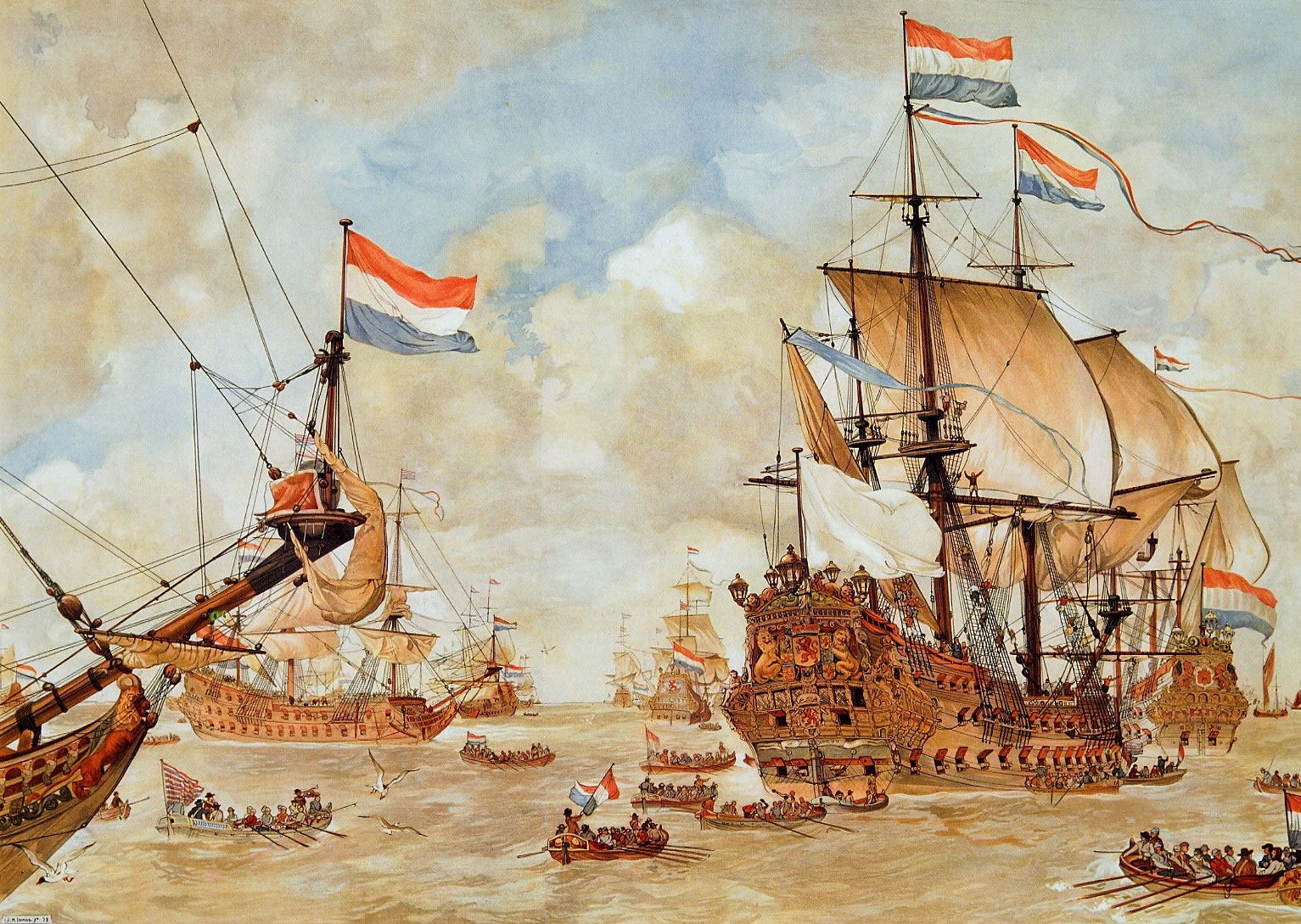
From the Washington Post, "Mystery of Va.'s First Slaves Is Unlocked 400 Years Later," by Lisa Rein, on 3 September 2006--JAMESTOWN -- They were known as the "20 and odd," the first African slaves to set foot in North America at the English colony settled in 1607.


For nearly 400 years, historians believed they were transported to Virginia from the West Indies on a Dutch warship. Little else was known of the Africans, who left no trace.


Now, new scholarship and transatlantic detective work have solved the puzzle of who they were and where their forced journey across the Atlantic Ocean began.


The slaves were herded onto a Portuguese slave ship in Angola, in Southwest Africa. The ship was seized by British pirates on the high seas -- not brought to Virginia after a period of time in the Caribbean. The slaves represented one ethnic group, not many, as historians first believed.


The discovery has tapped a rich vein of history that will go on public view next month at the Jamestown Settlement. The museum and living history program will commemorate the 400th anniversary of Jamestown's founding by revamping the exhibits and artifacts -- as well as the story of the settlement itself.


Although historians have thoroughly documented the direct slave trade from Africa starting in the 1700s, far less was known of the first blacks who arrived in Virginia and other colonies a century earlier. A story of memory and cultural connections between Africa and the early New World is being unearthed in a state whose plantation economy set the course for the Civil War.


"We went entirely back to the drawing board," said Tom Davidson, senior curator of the Jamestown-Yorktown Foundation. "The problem has always been that all of the things that make for a human story [of the Africans] were missing. . . . Now we can talk about the Africans with the same richness we talk about the English and the Powhatans."


Behind him, an Angolan man was depicted stripping bark from a baobab tree in a re-created village featured in the museum's new 30,000-square-foot gallery, which will open Oct. 16. It's double the space of the previous one, to cover a long span of the 17th century and the African story, which was barely featured before.


How the story of the charter generation of Africans in Virginia has come to life in a new $25 million museum wing is a tale of two scholars who helped connect two coasts of the Atlantic Ocean.


The early 1600s was a time of war and empire-building in Southwest Africa; Portuguese traders under the rule of the king of Spain had established the colony of Angola. The exporting of slaves to the Spanish New World was a profitable enterprise. The Portuguese waged war against the kingdoms of Ndongo and Kongo to the north, capturing and deporting thousands of men and women. They passed through a slave fortress at the port city of Luanda, still Angola's capital.


At Jamestown, tobacco was on the verge of a boom after the British had failed at several industries. Indentured servants from England were common in the settlement, now close to 1,000 people strong.


John Rolfe, Virginia's first tobacco planter and husband of the Indian princess Pocahontas, wrote the widely held account of the African landing in a letter to the Virginia Company of London. The captain of a Dutch warship that arrived in Jamestown in August 1619 "brought not any thing but 20 and odd Negroes, wch the Governor and Cape Marchant bought for victuale . . . at the best and easyest rate they could." Rolfe explained that the ship and another called the Treasurer had embarked from the West Indies.


A retired University of California at Berkeley historian, Engel Sluiter, made a startling discovery in the Spanish national archives in the late 1990s as he did research for a book on Spanish America. A colonial shipping document he uncovered in an account book identified a Portuguese slave ship called the San Juan Bautista. About 350 slaves were bound for Veracruz, on the east coast of modern-day Mexico, when the ship was robbed of its human cargo off the coast of Mexico in 1619 by two unidentified pirate ships, the record said.


Sluiter, who died in 2001, published his discovery in the William and Mary Quarterly. It caught the eye of John Thornton, an expert on the Portuguese colonies in Africa in the 16th and 17th centuries.


The outlines of the other half of the story took shape.


"I said, 'I can figure out how these people were enslaved,' " said Thornton, a Boston University professor who, with his wife, historian Linda Heywood, is publishing a book on the slave trade between Angola and the North American colonies. Previous scholarship has documented the slave trade from Ghana, Senegal and other parts of West Africa. "We know Angola was a big exporter of slaves to Brazil and the Spanish colonies, but now we know that they showed up here," Thornton said.


Through records of a legal dispute between the pirate ships, Thornton identified the British vessels as the Treasurer and the White Lion, which was flying a Dutch flag. Each took 20 to 30 slaves before the San Juan Bautista continued to Veracruz. They landed at Jamestown within four days of each other and traded the Africans for provisions. The Treasurer then sailed to Bermuda, dropping off more slaves, and returned to Virginia a few months later, trading the final nine or 10 more.

Many Angolans followed -- not just to Virginia, but to New York and New England, say Thornton and Heywood, who are consultants to the Jamestown Settlement. Their research draws a portrait of the first Africans as urban people connected by common languages, who had had contact with Europeans for many years.


Virginia's first Africans spoke Bantu languages called Kimbundu and Kikongo. Their homelands were the kingdoms of Ndongo and Kongo, regions of modern-day Angola and coastal regions of Congo. Both were conquered by the Portuguese in the 1500s. The Africans mined tar and rock salt, used shells as money and highly valued their children, holding initiation ceremonies to prepare them for adulthood.

And they most likely had been baptized as Christians, because the kingdom of Ndongo converted to Christianity in 1490. Many were literate. This background may be one reason some of Virginia's first Africans won their freedom after years as indentured servants, the historians said.


The Portuguese and Catholic roots figure prominently on a glass wall in the new gallery at the Jamestown Settlement. Mareo, Christian, Nando, Acquera, Palmena, Cuba, Salvo -- they are among 400 African names engraved on the wall, one for each anniversary year.


One is Angelo, whose name appears on a 1624 census of the colony discovered in the past decade. She is listed as a "Negro woman" who came on the Treasurer and worked as a servant in the home of Capt. William Pierce and his wife, June. Historians assume the slave's name was Angela.


It is Angela, played by a young Angolan actress, who stars in the introductory film visitors will see as they watch the new story of Jamestown unfold. The 23-minute movie was filmed on a beach in Luanda in 2004.


The film will replace a 15-year-old version that gives the first Africans only a passing mention. Now visitors will be transported to a Portuguese cathedral in Luanda, where a Jesuit priest breaks bread with the captains of the San Juan Bautista. They discuss the souls to be saved and riches to be made from the continued shipment of slaves from Massangano, an inland city. The film cuts to a hut on the shore of the Kwanza River, where Angela, a young woman in her twenties, pounds grain and smiles. Then she and thousands of others are captured and taken to a beach at Luanda. A Jesuit priest asks her if she has been baptized, and she answers yes.


"Then she is a child of God. When she dies, she will go to heaven," the priest says. And the slave ship sets sail against the evening sun. (source: The Washington Post)

Thursday, February 9, 2012

Virginia Slave Database

Girl

From CNN, "Long-lost identities of slaves uncovered in old Virginia papers," by Michael Martinez and Athena Jones, 6 February 2012 -- Richmond, Virginia (CNN) -- A historical society in Virginia, where slavery began in the American colonies in 1619, has discovered the identities of 3,200 slaves from unpublished private documents, providing new information for today's descendants in a first-of-its-kind online database, society officials say.


Many of the slaves had been forgotten to the world until the Virginia Historical Society received a $100,000 grant to pore over some of its 8 million unpublished manuscripts -- letters, diaries, ledgers, books and farm documents from Virginians dating to the 1600s -- and began discovering the long-lost identities of the slaves, said society president and CEO Paul Levengood.


The private, nonprofit historical society, the fourth-oldest in the nation, is assembling a growing roster of slaves' names and other information, such as the slaves' occupations, locations and plantation owners' names, said Levengood.

The free, public website also provides a high-resolution copy of the antique documents that identify the slave.

The database, which went online last September with 1,500 names, sets itself apart from the few other existing slave databases -- which limit themselves to specific plantations or to ship manifests that list the captives by their native African names, society officials said.


The "Unknown No Longer: A Database of Virginia Slave Names" website is the first online resource listing slaves' names across all of slaveholding Virginia, the nation's oldest state which had the largest enslaved population, numbering a half million people, at the outbreak of the Civil War in 1861, society officials said.
"Most slaves were by their owners' design and eventually by law forbidden to learn how to read and write, so they didn't leave us material that so many figures in the past did," Levengood said. "That's when you have to be creative."

So using a $100,000 corporate grant from Dominion, one of the nation's largest producers and transporters of energy, society researchers began examining some of its 8 million manuscripts that Virginia residents have been giving to the historical society since its founding in 1831.


Those Virginia families found the old, handwritten papers in attics, basements or desk drawers, Levengood said. The society stores the documents in an archive spanning thousands of square feet, he said.

The antique papers turned out to mention slaves.

"Often they appeared in the records of the owners who owned slaves as human property, which to us sounds so obscene and alien," said Levengood, who's also a historian. "But these people were writing down their inventory as if you would for insurance purposes. That's the kind of things that owners did with slaves. This was the most valuable property they owned, and they wanted to make sure it was recorded.

"Often there was a human connection, and they grew up with these people, and they recorded their birth dates and deaths. It's an incredibly complicated and tragic institution that we're just beginning to understand the dimensions of," Levengood said.


Documents citing slaves go back to the 1690s: "That's when slavery starts to grow fast in Virginia and other English colonies," Levengood said.

"Sometimes it's a real detective work. You have to read between the lines: Oh, they mention Amy in a letter, and then you have to read another letter in the collection to realize that Amy is a slave and not a family member," Levengood said.


The society Saturday held the first of four community workshops on how to use the online database at the organization's headquarters in Richmond, Virginia. While the online website is intuitive on how to use, the workshops are being held for users who need more guidance, Levengood said.

Some 80 people came to Saturday's workshop, including Gale Carter, a high school history teacher who flew in from East Chicago, Indiana for the event.


Carter said the original documents digitized on the site will help her uncover more of her own family's history in Virginia, as well as help her students learn about the era.

"I'm going to use this not only personally, but professionally," she said. "This is terrific. It's a model and I hope the rest of the states catch up real quickly."

Amateur genealogist Crasty Johnson of Richmond said she hopes the sites will help her trace her roots back to the 1800s.

"I need to know my history," she said, adding the site may help her prove or disprove many of the things she's heard about her family's past. "I wanted to really know. I wanted to be able to see and connect the dots."

When the United States banned the importation of slaves after 1807, Virginia became the largest provider in the nation's internal slave trade, Levengood said. Slavery was eventually abolished at the conclusion of the Civil War in 1865.


That means many American families with slave ancestors could have roots in Virginia, Levengood said.
"Slavery in Virginia is not just a Virginia story. It reaches across all of the slave South," Levengood said. "So you may not know you have Virginia ancestors, but you could."

The database features a public message board, filled with notes posted by users searching for ancestors who may have been slaves. The advanced search fields include the slave's first name or last name; gender; occupation; owner's last name; date range; and record type.

One user named "Treebranch02" wrote last September: "Well, I think I found the slave owner that owned my great, great, great grandfather but that is as far as I got. Nothing on my great grandfather and great grandmother who lived in Manquin, VA. This was good for me, however. Got me excited. Wonderful site."
Elsewhere in the database is a stark description of the sale of slaves and goods in a February 11, 1858, typed letter from slaveholder William Daniel Cabell of "Benvenue" in Nelson County, Virginia, to his wife, Elizabeth Nicholas Cabell.


"The corn we sold yesterday brought 3.15$ per barrel. We sold all the negros 43 in number at astonishingly large prices -- the whole amounting to $32016. Nearly every one of the negros were satisfied as they were bought by people in the country mostly, going ahead of the prices given by the traders," Cabell wrote his wife.

The letter continued: "Jane and three children brought $2795. and Mimy and three children $2505. My father gave $25. to Mr. Agee and then allowed Mr. Turner to take Mimy as he owned her husband. Old Mr. S. Turner bought Jane and children. Jane's husband exclaimed just as she was knocked out to his master "Glory to God on high, peace and good will to men on earth" and it seemed to pop from his very soul. Betsy brought $1400. and was bought for Miss Perking of Buckingham."

Robert Payne, who attended Saturday's workshop, said he's been researching his family for the past 15 years, but finding information about his ancestors wasn't easy. He's hoping his 12 grandchildren can benefit from his work.

"Researching black folk is difficult, so anytime you can find a new resource it's always good to investigate," he said. "It's a database for the ones that are coming up. They'll be able to take it and grow from that."


Wednesday, February 1, 2012

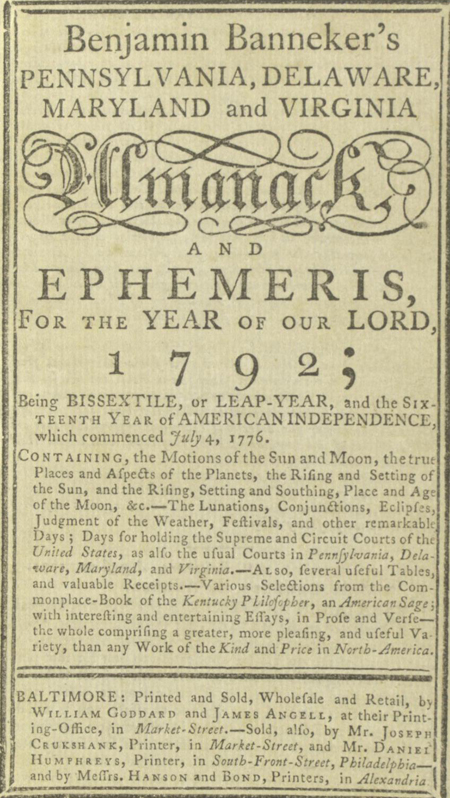
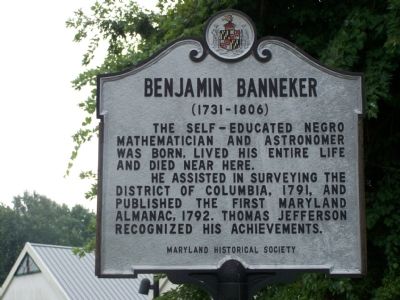
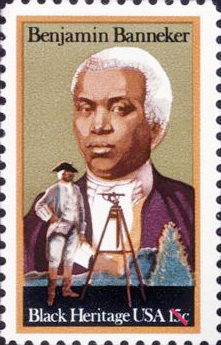
Benjamin Banneker's letter to Thomas Jefferson

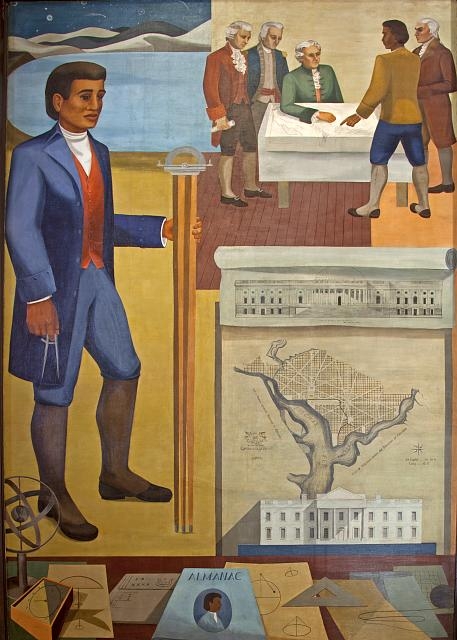
Mural of Benjamin Banneker and his achievements as surveyor, inventor, and astronomer (Library of Congress)

Benjamin Banneker to Thomas Jefferson


SIR,

I AM fully sensible of the greatness of that freedom, which I take with you on the present occasion; a liberty which seemed to me scarcely allowable, when I reflected on that distinguished and dignified station in which you stand, and the almost general prejudice and prepossession, which is so prevalent in the world against those of my complexion.

I suppose it is a truth too well attested to you, to need a proof here, that we are a race of beings, who have long labored under the abuse and censure of the world; that we have long been looked upon with an eye of contempt; and that we have long been considered rather as brutish than human, and scarcely capable of mental endowments.


Sir, I hope I may safely admit, in consequence of that report which hath reached me, that you are a man far less inflexible in sentiments of this nature, than many others; that you are measurably friendly, and well disposed towards us; and that you are willing and ready to lend your aid and assistance to our relief, from those many distresses, and numerous calamities, to which we are reduced. Now Sir, if this is founded in truth, I apprehend you will embrace every opportunity, to eradicate that train of absurd and false ideas and opinions, which so generally prevails with respect to us; and that your sentiments are concurrent with mine, which are, that one universal Father hath given being to us all; and that he hath not only made us all of one flesh, but that he hath also, without partiality, afforded us all the same sensations and endowed us all with the same faculties; and that however variable we may be in society or religion, however diversified in situation or color, we are all of the same family, and stand in the same relation to him.

Sir, if these are sentiments of which you are fully persuaded, I hope you cannot but acknowledge, that it is the indispensable duty of those, who maintain for themselves the rights of human nature, and who possess the obligations of Christianity, to extend their power and influence to the relief of every part of the human race, from whatever burden or oppression they may unjustly labor under; and this, I apprehend, a full conviction of the truth and obligation of these principles should lead all to. Sir, I have long been convinced, that if your love for yourselves, and for those inestimable laws, which preserved to you the rights of human nature, was founded on sincerity, you could not but be solicitous, that every individual, of whatever rank or distinction, might with you equally enjoy the blessings thereof; neither could you rest satisfied short of the most active effusion of your exertions, in order to their promotion from any state of degradation, to which the unjustifiable cruelty and barbarism of men may have reduced them.

Sir, I freely and cheerfully acknowledge, that I am of the African race, and in that color which is natural to them of the deepest dye; and it is under a sense of the most profound gratitude to the Supreme Ruler of the Universe, that I now confess to you, that I am not under that state of tyrannical thraldom, and inhuman captivity, to which too many of my brethren are doomed, but that I have abundantly tasted of the fruition of those blessings, which proceed from that free and unequaled liberty with which you are favored; and which, I hope, you will willingly allow you have mercifully received, from the immediate hand of that Being, from whom proceedeth every good and perfect Gift.


Sir, suffer me to recall to your mind that time, in which the arms and tyranny of the British crown were exerted, with every powerful effort, in order to reduce you to a state of servitude : look back, I entreat you, on the variety of dangers to which you were exposed; reflect on that time, in which every human aid appeared unavailable, and in which even hope and fortitude wore the aspect of inability to the conflict, and you cannot but be led to a serious and grateful sense of your miraculous and providential preservation; you cannot but acknowledge, that the present freedom and tranquility which you enjoy you have mercifully received, and that it is the peculiar blessing of Heaven.

This, Sir, was a time when you clearly saw into the injustice of a state of slavery, and in which you had just apprehensions of the horrors of its condition. It was now that your abhorrence thereof was so excited, that you publicly held forth this true and invaluable doctrine, which is worthy to be recorded and remembered in all succeeding ages : ``We hold these truths to be self-evident, that all men are created equal; that they are endowed by their Creator with certain unalienable rights, and that among these are, life, liberty, and the pursuit of happiness.'' Here was a time, in which your tender feelings for yourselves had engaged you thus to declare, you were then impressed with proper ideas of the great violation of liberty, and the free possession of those blessings, to which you were entitled by nature; but, Sir, how pitiable is it to reflect, that although you were so fully convinced of the benevolence of the Father of Mankind, and of his equal and impartial distribution of these rights and privileges, which he hath conferred upon them, that you should at the same time counteract his mercies, in detaining by fraud and violence so numerous a part of my brethren, under groaning captivity and cruel oppression, that you should at the same time be found guilty of that most criminal act, which you professedly detested in others, with respect to yourselves.


I suppose that your knowledge of the situation of my brethren, is too extensive to need a recital here; neither shall I presume to prescribe methods by which they may be relieved, otherwise than by recommending to you and all others, to wean yourselves from those narrow prejudices which you have imbibed with respect to them, and as Job proposed to his friends, ``put your soul in their souls' stead;'' thus shall your hearts be enlarged with kindness and benevolence towards them; and thus shall you need neither the direction of myself or others, in what manner to proceed herein. And now, Sir, although my sympathy and affection for my brethren hath caused my enlargement thus far, I ardently hope, that your candor and generosity will plead with you in my behalf, when I make known to you, that it was not originally my design; but having taken up my pen in order to direct to you, as a present, a copy of an Almanac, which I have calculated for the succeeding year, I was unexpectedly and unavoidably led thereto.

This calculation is the production of my arduous study, in this my advanced stage of life; for having long had unbounded desires to become acquainted with the secrets of nature, I have had to gratify my curiosity herein, through my own assiduous application to Astronomical Study, in which I need not recount to you the many difficulties and disadvantages, which I have had to encounter.


And although I had almost declined to make my calculation for the ensuing year, in consequence of that time which I had allotted therefor, being taken up at the Federal Territory, by the request of Mr. Andrew Ellicott, yet finding myself under several engagements to Printers of this state, to whom I had communicated my design, on my return to my place of residence, I industriously applied myself thereto, which I hope I have accomplished with correctness and accuracy; a copy of which I have taken the liberty to direct to you, and which I humbly request you will favorably receive; and although you may have the opportunity of perusing it after its publication, yet I choose to send it to you in manuscript previous thereto, that thereby you might not only have an earlier inspection, but that you might also view it in my own hand writing.

And now, Sir, I shall conclude, and subscribe myself, with the most profound respect, Your most obedient humble servant,

BENJAMIN BANNEKER [1791]


********************************************************

Thomas Jefferson to Benjamin Banneker

Philadelphia Aug. 30. 1791.


Sir,

I thank you sincerely for your letter of the 19th. instant and for the Almanac it contained. no body wishes more than I do to see such proofs as you exhibit, that nature has given to our black brethren, talents equal to those of the other colours of men, & that the appearance of a want of them is owing merely to the degraded condition of their existence both in Africa & America. I can add with truth that no body wishes more ardently to see a good system commenced for raising the condition both of their body & mind to what it ought to be, as fast as the imbecillity of their present existence, and other circumstance which cannot be neglected, will admit. I have taken the liberty of sending your almanac to Monsieur de Condorcet, Secretary of the Academy of sciences at Paris, and member of the Philanthropic society because I considered it as a document to which your whole colour had a right for their justification against the doubts which have been entertained of them.

I am with great esteem, Sir,

Your most obedient. humble servant.

Thomas Jefferson

Monday, December 5, 2011

The First Emancipator: The Forgotten Story Of Robert Carter, The Founding Father Who Freed His Slaves

The First Emancipator: The Forgotten Story Of Robert Carter, The Founding Father Who Freed His Slaves

Robert Carter was born February 9, 1728, son of Robert Carter and Priscilla Churchill Carter. Both of his grandfathers, the land baron Robert “King” Carter and William Churchhill served on the governor’s Council.

In 1737, he entered the grammar school of the College of William and Mary. Little else is known about his youth until February 1749, when he received his patrimony and sailed to London’s Inner Temple to study law. He returned to Virginia in June 1751 without being admitted to the bar. Several of his contemporaries commented on his lack of learning and social grace.

Emancipation of 500 slaves

Although Carter inherited and owned hundreds of slaves, his growing opposition to the institution echoed the antislavery sentiments of many Baptists in the 1780s. On August 1, 1791 he executed a deed of emancipation for more than 500 of his enslaved African Americans. It was probably the largest emancipation by an individual person in the United States before 1860. Because of Virginia’s restrictive laws, the emancipation was gradual, and the young slaves received their freedom when they reached adulthood. Carter spent his remaining years working out the details and schedule, an effort that occupied his agents and executors well into the nineteenth century.


Establishment at Nomony Hall

Carter moved into Nomony Hall – also spelled “Nomini” or “Nominy” – the Westmoreland County mansion he inherited from his father. He learned the business of tobacco planting and exported as many as 100 hogsheads of the leaf to England each year. On April 2, 1754, Carter married Frances Tasker, daughter of Benjamin Tasker, longtime president of the Council of Maryland. Of their 13 daughters and four sons, eight daughters and all four sons reached adulthood.


Andrew Levy talked about his book The First Emancipator: The Forgotten Story of Robert Carter, the Founding Father Who Freed His Slaves, published by Random House. In 1791, Virginian Robert Carter III submitted a deed of gift to the Northumberland District Courthouse that freed his slaves from his plantation. He endured hardships and persecution as a result of his stance against slavery. In the book, Mr. Levy explains the religious and political ideals that prompted the emancipation and explains why he feels historians have forgotten Robert Carter. After his presentation he answered questions from members of the audience. The event was at Williamsburg Booksellers in the Colonial Williamsburg Visitor Center.

Watch Author Andrew Levy discuss his book "The First Emancipator" on C-Span here.

Tuesday, November 29, 2011

Slavery and Indentured Servants


Before the Civil War, slaves and indentured servants were considered personal property, and they or their descendants could be sold or inherited like any other personalty. Like other property, human chattel was governed largely by laws of individual states. Generally, these laws concerning indentured servants and slaves did not differentiate between the sexes. Some, however, addressed only women. Regardless of their country of origin, many early immigrants were indentured servants, people who sold their labor in exchange for passage to the New World and housing on their arrival. Initially, most laws passed concerned indentured servants, but around the middle of the seventeenth century, colonial laws began to reflect differences between indentured servants and slaves. More important, the laws began to differentiate between races: the association of “servitude for natural life” with people of African descent became common. Re Negro John Punch (1640) was one of the early cases that made a racial distinction among indentured servants.35


Virginia was one of the first states to acknowledge slavery in its laws, initially enacting such a law in 1661.36 The following year, Virginia passed two laws that pertained solely to women who were slaves or indentured servants and to their illegitimate children. Women servants who produced children by their masters could be punished by having to do two years of servitude with the churchwardens after the expiration of the term with their masters. The law reads, “that each woman servant gott with child by her master shall after her time by indenture or custome is expired be by the churchwardens of the parish where she lived when she was brought to bed of such bastard, sold for two years. . . .”37

The second law, which concerned the birthright of children born of “Negro” or mulatto women, would have a profound effect on the continuance of slavery, especially after the slave trade was abolished—and on the future descendants of these women. Great Britain had a very structured primogeniture system, under which children always claimed lineage through the father, even those born without the legitimacy of marriage. Virginia was one of the first colonies to legislate a change:


Act XII

Negro womens children to serve according to the condition of the mother.

WHEREAS some doubts have arrisen whether children got by any Englishman upon a Negro woman should be slave or free, Be it therefore enacted and declared by this present grand assembly, that all children borne in this country shalbe held bond or free only according to the condition of the mother, And that if any christian shall committ ffornication with a Negro man or woman, hee or shee soe offending shall pay double the ffines imposed by the former act.38

Most slave colonies or states enacted similar laws. After the slave trade officially ended, many slave owners tried to ensure that sufficient numbers of slaves were available to work their plantations. Slave women of childbearing age became more valuable. There are a number of court cases concerning slave women who either killed their masters who forced them to have sexual relations or killed the children rather than have the children enslaved.39

Miscegenation laws, forbidding marriage between races, were prevalent in the South and the West. Because English masters had had little regard for indentured servants of non-Anglo ethnic groups, they allowed and sometimes encouraged commingling of their servants. Being seen in public or bringing legitimacy to these relations, however, was not lawful. This is evinced by a court decision from 1630, the first court decision in which a Negro woman and a white man figured prominently. Re Davis (1630) concerned sexual relations between them, the decision stating, “Hugh Davis to be soundly whipt . . . for abusing himself to the dishonor of God and shame of Christianity by defiling his body in lying with a Negro, which fault he is to actk. next sabbath day.”40


Virginia passed its first miscegenation law in 1691 as part of “An act for suppressing outlying Slaves.”

And for prevention of that abominable mixture and spurious issue which hereafter may encrease in this dominion, as well by negroes, mulattoes, and Indians intermarrying with English, or other white women, as by their unlawfull accompanying with one another, Be it enacted by the authoritie aforesaid, and it is hereby enacted, that for the time to come, whatsoever English or other white man or woman being free shall intermarry with a negroe, mulatto, or Indian man or woman bond or free shall within three months after such marriage be banished and removed from this dominion forever. . . .41

Another section of the law closed the loophole created by the 1662 birthright law, which mandated that children born of a free white mother and Negro father were technically free. This amendment stated that a free white woman who had a bastard child by a Negro or mulatto man had to pay fifteen pounds sterling within one month of the birth. If she could not pay, she would become an indentured servant for five years. Whether or not the fine was paid, however, the child would be bound in service for thirty years.


The laws that restricted slaves or indentured servants generally addressed the owners and penalized them for breaking the law. Laws governing slaves allowed masters to beat or kill them under certain circumstances. Nor could they go to court to seek redress. A person of color was not permitted to testify against a white Christian, as illustrated by the 1717 Maryland law:

II. Be it Therefore Enacted, by the right honourable the Lord Proprietary, by and with the advice and consent of his Lordship's Governor, and the Upper and Lower Houses of Assembly, and by the authority of the same, That from and after the end of this present session of assembly, no Negro or mulatto slave, free Negro, or mulatto born of a white woman, during his time of servitude by law, or any Indian slave, or free Indian natives, of this or the neighbouring provinces, be admitted and received as good and valid evidence in law, in any matter or thing whatsoever depending before any court of record, or before any magistrate within this province, wherein any christian white person is concerned.42

Against these overwhelming restrictions, there were a number of court cases in which slaves filed suit seeking their freedom or freed Negroes claimed property that had been inherited from their former owners. Elizabeth Freeman (1732/ 34-1829), a slave, presented her case for freedom in a Massachusetts court pro se in 1783 and won.43 In addition there were cases where the slave or freed person was the defendant; Celia, a Slave is a narrative account of such a trial in Missouri in 1855.44

White women were often involved in litigation concerning slaves through the workings of the dower laws. In some states women could inherit personalty but could only receive a life estate in real property.45 This situation created many problems, particularly if slaves were needed to make profits from the land. For example, if a woman chose to free her inherited personalty at death, her descendants would have no one to work the land unless they farmed it with paid workers or purchased new slaves. Frequently, wills or contracts that granted freedom or conveyed realty or personalty as dower were contested in court.


The laws and resulting court cases that involved slavery and indentured servants have had a major impact on America, its men and women alike, in both the past and the present. Through the years, the laws that the states passed became steadily more restrictive toward slaves, mulattoes, and freed Negroes. In 1850, the federal government's involvement deepened with the passage of the Fugitive Slave Act, responding to strong lobbying efforts by slaveholders wanting to counteract abolitionist forces.46 In the face of these all-encompassing laws, women with extraordinary courage fought for a better life. For example, Harriet Tubman (ca. 1821-1913) returned to the South nineteen times to bring more than three hundred fugitives to freedom, and Charlotte Forten (1837-1914), a free black woman from Philadelphia, went to South Carolina during the early Civil War to teach “the contrabands of war” (slaves who had escaped to Union lines).47


In 1865, the Thirteenth Amendment to the United States Constitution ended slavery and involuntary servitude. Nevertheless, many laws and judicial precedents that had been established before that date would not be changed until the mid- or late-twentieth century.

HOME

HOME
Click here to return to the US Slave Home Page