Showing posts with label Slave Food. Show all posts

Saturday, February 4, 2012

Slave Food: Okra


Okra is low in Saturated Fat and Sodium, and very low in Cholesterol. It is also a good source of Protein, Riboflavin, Niacin, Phosphorus, Potassium, Zinc and Copper, and a very good source of Dietary Fiber, Vitamin A, Vitamin C, Vitamin K, Thiamin, Vitamin B6, Folate, Calcium, Magnesium and Manganese. (source: Nutritional Data)
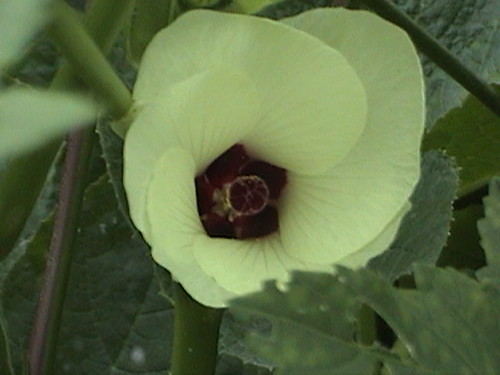
Okra (botanical name: Abelmoschus esculentus).

Okra: Abelmoschus esculentus, also called guibo and guimyombo, originated in what geo-botanists call the Abyssinian (Ethiopian) center of human food zones. It is still cultivated in present-day Ethiopia on the plateau portions of Eritrea, and in parts of the Sudan. It also became the essential ingredient of Louisiana gumbo.Food scholar Jessica Harris asserts that okra is “the one vegetable absolutely emblematic of the African presence in the New World.”

Indeed, its shape, texture and thickening abilities are predominantly associated with southern cooking, and most especially in southern Louisiana where it has been utilized for centuries to not only thicken but give a name to the state’s most iconic food: gumbo.

The apocryphal story of okra’s journey to the New World is that slaves brought the seeds with them. But as Harris wryly notes, given the horrors of being abducted from one’s home and sold into slavery, it is unlikely one had time to pack even the seeds of a treasured vegetable. Instead, like breadfruit, okra was probably brought over to be cultivated as a cheap foodstuff to feed the burgeoning slave population. While okra is often savored alone, it is most renowned for its thickening abilities, specifically in gumbo. (http://sofab.wikia.com/wiki/Okra)
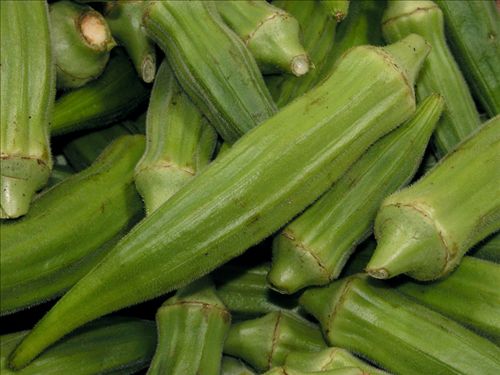

Okra or gumbo, as it is called in Africa, was especially favoured in French and Spanish Louisiana during the colonial era, when European and Native American cuisine came together with African cooking to produce the unique Creole cuisine of New Orleans. Gumbo is a popular stew or soup, made up of vegetables mixed with chicken, pork, shrimp, or crawfish with okra as the main ingredient. The stew is thickened with powder from sassafras leaves (gumbo file).

Slaves in South Carolina commonly prepared the seeds of the Okra plant as a coffee substitute. Its leaves were also used medicinally as a softening ingredient in making a poultice, which is a warm mixture of bread or clay that can be applied to aching or inflamed parts of the body. Enslaved women sometimes used okra to achieve abortions by lubricating the uterine passage of pregnant women with the plant’s slimy pods. In West Africa, women today still use okra to induce an abortion, employing much the same method. (source: Slavery in America)


Monday, June 27, 2011

Slave Food: Breadfruit

Breadfruit

Despite many setbacks, Jamaica continued to grow as an agricultural colony. However, its troubles in war were not yet over. The American Revolution spurred a revolution in France, and the effects of this second revolt were also felt in the Caribbean.

Tough Times
Breadfruit

Jamaica, like many of the Caribbean islands, experienced tough times during the war. Much needed supplies from North America were no longer shipped to the British colonies, so Jamaica was forced to trade with Canada and Britain, getting fewer supplies with less frequency.

Hurricanes also caused a great deal of damage to Jamaica, with these strong storms hitting in 1780, 1781, 1784, 1785, and 1786. The destruction of crops each of these years caused famine, and by 1787 more than 15,000 slaves had died - mainly of starvation. The subsequent search for food to feed the labor force led to the importation of many new plants.

Agricultural Expansion

Ackee

Plants were being imported throughout the years, but an important plant that landed during the American Revolution was ackee. Transplanted from West Africa, the slips were purchased from the captain of a slaver.

Mango was accidentally imported four years later in 1782. Admiral Lord Rodney captured a French government ship bound for French Caribbean islands and carrying mangoes. Rodney saw the value in the mango seeds and sent them to Jamaica for cultivation.
Mango

In 1793, during the French Revolution, British Captain William Bligh returned from a six year journey to Tahiti, where he had sought an alternative form of food for Jamaica's slaves. History had proven a need for better crop production. Despite a mutiny, he returned to the island with breadfruit, among other items. However, the slaves refused to eat breadfruit, and for half a century this food was given to pigs. Breadfruit is now a staple of Jamaican dining.

Bringing Back Trade

The American Revolution gave the new nation new status in regards to trade, as well. This meant that the previously favored position that Jamaica and other British islands had held in trade with the American mainland was no longer so favorable, and Britain was unwilling to negotiate similar trade agreements.

Conditions of trade were harsh. Exports of items including sugar, rum, molasses, coffee, and pimento were treated as though they were going to any other British colony. Imported goods, particularly flour, bread, grain, livestock, and wood could only be carried in on British ships. Meat and fish from the U.S. could not be imported at all.

Higher prices for importation from Canada, Nova Scotia, Newfoundland, and England were harsh on the British West Indies. However, prices eventually dropped on these imported goods. Fortunately, the governors of the West Indian islands, including Jamaica, were allowed to create rules as necessary to preserve their colonies. Jamaica's government made use of these provisions after a series of three hurricanes that devastated the island in the mid 1780s.

These were just a few of the events that took place between the close of the American Revolution in Caribbean waters and the outbreak of the French Revolution. In the Caribbean, the French Revolution found perhaps more support than the American Revolution had. (source: Jamaica Guide)

Sir Joseph Banks, who sailed on HMS Endeavour with Captain Cook to Tahiti in 1769, recognized the potential of breadfruit as a food crop for other tropical areas. He proposed to King George III that a special expedition be commissioned to transport breadfruit plants from Tahiti to the Caribbean. This set the stage for one of the grandest sailing adventures of all time. The ill-fated voyage of HMS Bounty in 1787, under the command of Captain William Bligh, is an extraordinary tale of mutiny, deceit, courage, and sailing skill. Unfortunately, the hundreds of breadfruit plants were all tossed overboard by the mutineers. (source: National Tropical Botanical Gardens)

Captain Bligh was ordered in the 1770s to bring nutritious and valuable breadfruit back to Jamaica from Tahiti, where it grew naturally. Bligh almost accomplished his mission, except for a single snag—The Mutiny on the Bounty, which actually took place in the Tonga Islands.


Origin of Slave Food Breadfruit in the Caribbean

Slave Food: Watermelon

What Watermelons Have to Offer

Besides tasting great and being low in calories because watermelon is mostly water, it is an excellent source of Vitamin C, which a major antioxidant. It has a high beta carotene concentration, thus offering a fair amount of vitamin A as well. Both beta carotene with vitamin A help support good eyesight and prevent glaucoma. [Glaucoma is the leading cause of blindness in African Americans. African Americans ages 45-65 are 14 to 17 times more likely to go blind from glaucoma than Caucasians with glaucoma in the same age group.]

High intakes of combined beta-carotene and vitamin C have demonstrated, through clinical and scientific studies:
  • Warding off various cancers: [African Americans have the highest mortality rate of any racial and ethnic group for all cancers ]
  • Warding off heart disease: [African American adults are more likely to be diagnosed with coronary heart disease, and they are more likely to die from heart disease];
  • Reducing arthritis symptoms:[Arthritis is the most common cause of disability in the United States, causing handicap to nearly 19 million adults aged 18 years and older.]
  • Minimizing asthmatic breathing problems [African American Women have the highest asthma mortality rate].

A surprise nutrient is vitamin B, especially B1(thiamine)and B6(pyridoxine). Thiamine is important for maintaining electrolytes and nervous system signal transmissions throughout the body. Pyridoxine is essential for enzymatic functions that convert food into cellular energy.

The meat or pulp of watermelons is usually pink or red. Those colors indicate the highest content oflycopene, an antioxidant lauded for its ability to greatly minimize cancer risks . From theWorlds' Healthiest Foods website , "... lycopene has been repeatedly studied in humans and found to be protective against a growing list of cancers. These cancers now include prostate cancer, breast cancer, endometrial cancer, lung cancer and colorectal cancers."

Then there are the minerals of potassium and magnesium, which watermelons also offer abundantly. Potassium is important for cardiovascular health and brain health and helps the kidneys eliminate kidney stone forming calcium as well as assists with the body's fluid retention.
Magnesium is considered the master mineral. It is involved with over 300 cellular metabolic functions. It happens to be lacking in our diets because of our depleted topsoils. Magnesium deficiencies are directly or indirectly related to most of our population's poor health issues. Obvious symptoms are irritability, tension, sleep disorders, and muscular cramping. After that, it's heart attacks and other serious illnesses.

(Learn more:http://www.naturalnews.com/029157_watermelon_nutrition.html#ixzz1QUtWWfqt)

HOME

HOME
Click here to return to the US Slave Home Page