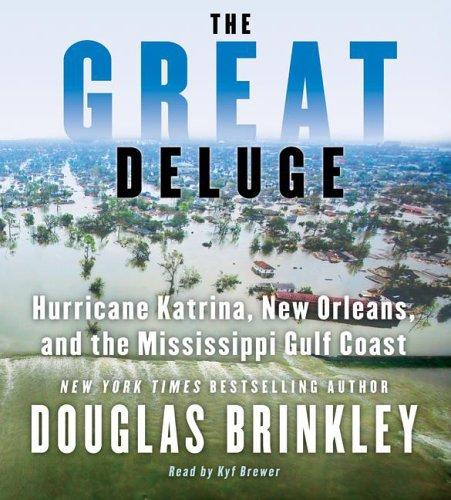
From Monthly Review, "Hurricane Katrina: The Race and Class Debate," by Kristen Lavelle and Joe Feagin -- Following Hurricane Katrina, many people sought to answer the question of whether its social effects and the government response to the country’s biggest natural disaster had more to do with race or with class. Media images broadcast from the Big Easy showed nearly all those left behind to suffer and die were black Americans—it looked like race. However, those families most able to afford homes in safer flood-protected areas and that had resources to evacuate easily suffered much less than poorer families, which seemed to make it more a class issue. There was no denying that those left behind were mostly poor and black. As public debate escalated amidst increasing allegations of lawlessness among the evacuees, white and conservative Americans vehemently fought the idea that racism had caused the extreme levels of black impoverishment and slowed the government response.

Much public and progressive discourse sought to contribute to the “race or class” question. Some arguing the debate’s class side asserted that what became apparent in Katrina’s aftermath was basically a class dynamic: “Sure they’re black, but the reason they didn’t get out in time is because they’re poor, not skin color.” Political scientist Adolph Reed, Jr. argued that for liberals to blame racism for the Katrina disaster was a terrible political strategy. Although acknowledging discrimination historically, Reed asserted that those citing contemporary racism do so to feel righteous. Because the current government is not moved by accusations of racism, addressing the response to Katrina as a race issue is useless.1 Others, like Michael Dyson, said that the argument for class over race was used by many only to deflect attention away from race and thus discourage a deeper discussion about the ways race and class intertwine.2
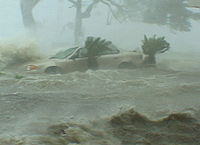
To represent well the structure of New Orleans, or any urban area, one must look at the development of race and class there from past to present. We argue that race and class have always been used as tools by the white elite and have usually been supported by the white citizenry, first and foremost, to maintain white supremacy and white privilege. We view race and class as inextricably intertwined categories because of this country’s centuries of racial oppression.3 The reason the Katrina disaster seemed like a race issue was because it was. The reason it seemed like a class issue was because it was. In reality, race and class are deeply intertwined in New Orleans primarily because of a long history of well-institutionalized racism.

In a nationally-televised address from post-Katrina New Orleans, even President George W. Bush admitted that “deep, persistent poverty” in the area “has roots in a history of racial discrimination, which cut off generations from the opportunity of America” and acknowledged a “duty to confront this poverty with bold action.”4 Although Bush administration policies have not shown a commitment to ameliorate discrimination, Bush’s comment was here on target. To illustrate this, we now discuss the historical structuring of New Orleans around race and class from the antebellum city of slavery to the contemporary city hard hit by Katrina.

Slave Trade and Slave Labor
One central historical question is: Why are there so many African Americans in southern Louisiana? The clear answer is that in the late 1700s and early 1800s many powerful white slaveholders, including the brutal slaveholding President Andrew Jackson, intentionally sought to make the Gulf Coast a major region for profitable slave plantations. The descendants of those enslaved African Americans forced to move to the Gulf Coast by powerful white oppressors are many of those who bore the brunt of Hurricane Katrina. Race was the characteristic chosen by whites to differentiate the labor that has brought great wealth to whites in the region—from slavery times, to the legal segregation era, to the present day.
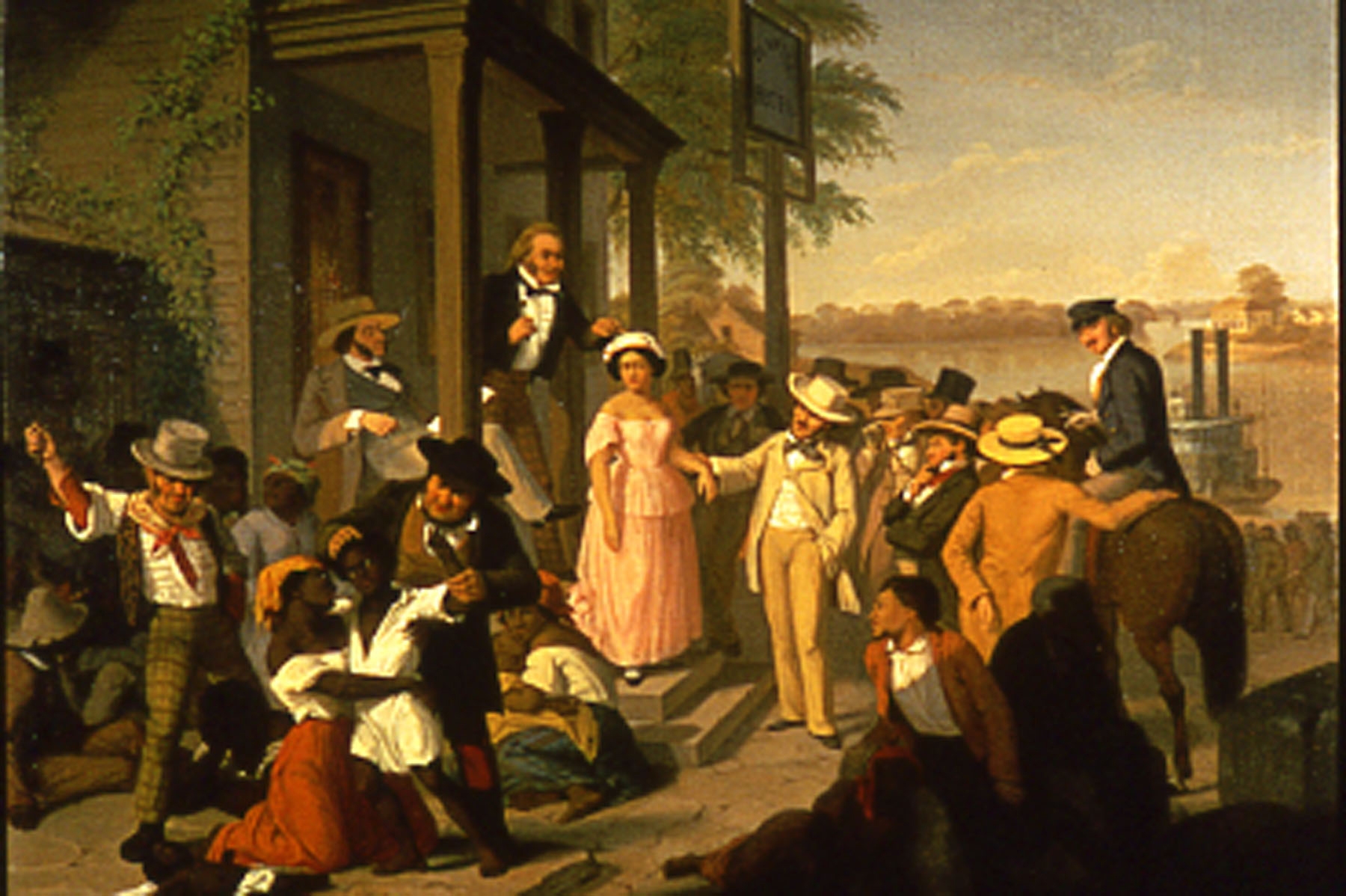
Sugar plantations, commercial shipping, and enslaved labor distinguished the economy of lower Louisiana during the antebellum period. The sugar boom of the 1700s and 1800s increased demand for slave labor and turned New Orleans into the principal slave market for North America.5 During the antebellum period tens of millions of dollars were pumped into the southern economy through the slave trade. Purchase and sale of slaves linked New Orleans tightly to the larger southern economy. Each year thousands from across the South passed through New Orleans slave pens, arriving and departing via boat or driven on foot, in chains.6 Slave trading was a daily, bloody, highly visible public affair of New Orleans life.

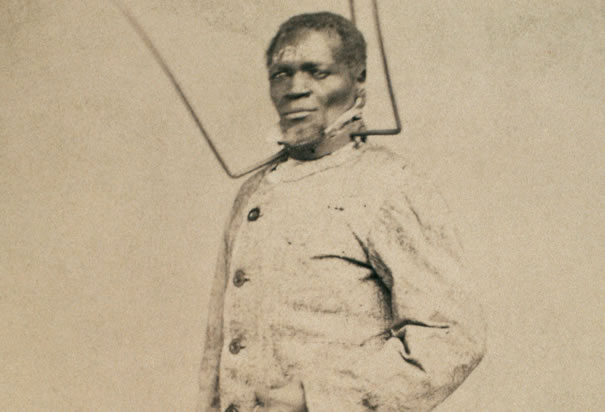
Black labor was integral to sugar and other agricultural production, as well as to the development of city utilities and facilities. The City Council established a chain gang in 1805, where black prisoners worked side by side with slave laborers to develop public works projects. Civic improvement was carried out by jailed and enslaved African Americans who kept up levees, erected public buildings, cleaned streets, and expanded the city’s boundaries. Huge amounts of uncompensated black labor modernized New Orleans, ushering in a new era of city prominence.7
We should acknowledge the humanity of the forgotten millions forced through the New Orleans slave markets. The city symbolized countless “social deaths” for those torn from families, communities, and histories. Few would ever see or hear from most family and friends again once sold through those slave markets.8 Yet, their stolen labor generated hundreds of billions (in current dollars) in wealth for a great many whites in various higher classes in the region.
Race and Class in Antebellum New Orleans
By 1840 there were 23,448 slaves in increasingly diverse New Orleans and nearly 20,000 free people of color.9 The first free blacks had become visible in the 1720s, many of them the manumitted children of white men and enslaved women. Many gained freedom through service, fighting in colonial militias, or self-purchase. Many others came from northern states or Haiti during its revolution.10
At the beginning of the Civil War, according to contemporary reports, most free blacks were mixed-race and/or light-skinned, whereas most of those enslaved were darker-skinned. To help themselves maintain control, New Orleans whites aggressively furthered the notion of a distinct “third caste” of people composed of free mixed-race people. Stringent color-class lines were accented to ensure that free blacks and slaves, the lighter-skinned and darker-skinned, often remained at odds.11 By law the lighter-skinned free person was barred from mingling with those enslaved.12 Whites encouraged the color-class distinctions to maintain firm white dominance of both African American groups.

The numerous free blacks in antebellum New Orleans, many holding reputable professions, made the city’s racial landscape uniquely diverse. Free people of color had some entitlements that distinguished their legal status above that of the enslaved, such as the right to marry and pass wealth to heirs. Free blacks often had private schools and segregated militias but their freedom was tenuous.13 They were expected to defer to whites, usually not allowed to vote, could not legally marry whites, and had to obtain the mayor’s permission before leaving the city. They were required to give service to the white community, serving as city police and slave patrollers. In addition, no blacks could expect to receive justice from police or courts.14 Firm segregation was enforced locally in New Orleans well before the advent of post-Reconstruction Jim Crow laws. Theaters, hospitals, streetcars, restaurants, hotels, and cemeteries excluded people of color or kept their facilities segregated.15

Well-off white men courted free black women at “quadroon balls,” and concubine-like relationships would often result.16 Perhaps most frequently occurring were white men’s unwanted sexual advances on enslaved women. This situation for black women was acknowledged by a Louisiana court in 1851 when it declared: “the female slave is peculiarly exposed to the seductions of an unprincipled master.”17 However, rape of enslaved women was more than an act of a few “unprincipled masters,” for over one-quarter of those enslaved in 1860 were officially counted as light-skinned or “mulatto.”18 By the time Reconstruction began, more people in both the “white” and the “black” populations had ancestors in the other racial group than in any other U.S. city. Yet despite the long history of white-black sexual linkages, interracial marriage was a wholly different matter to most whites, who opposed the practice vehemently.19

Race and Class during Reconstruction
During Reconstruction, from the late 1860s to the 1880s, newly emancipated African Americans saw some improvement in their access to U.S. and New Orleans’s politics, public accommodations, and education. However, most still faced harsh conditions, a type of “near slavery” without the chains. Morbidity and mortality rates were extremely high compared to whites, and life expectancies were ten years less. A few black professionals in New Orleans were able to advance, but most blacks were severely hampered from economic advancement because of recurring depressions in New Orleans’s economy, as well as pervasive racial discrimination. Unemployment was endemic and ensured that the few labor unions formed by black workers were weak.20

In public discourse whites almost unanimously favored complete racial segregation, while blacks desired integration in public facilities. Local white-owned newspapers were staunch defenders of white supremacy and frequently referred to African Americans as “niggers,” “darkies,” and “sambos.” In 1874 the New Orleans Bulletin boldly stated: “The white race rules the world—the white race rules America—and the white race will rule Louisiana—and the white race shall rule New Orleans.” Newspapers advocated violence as a means of maintaining the subordination of all blacks, no matter their class position.21
During the Reconstruction era, many African Americans argued for integrated schools, but most whites were violently opposed for the sake of maintaining white supremacy. A mass meeting of whites declared in September 1875 that “the compulsory admixture of children of all races, color and condition in the schools, in the same rooms and on the same benches, is opposed to the principles of humanity, repugnant to the instincts of both races, and is not required by any provision of the laws or constitution of this State.”22
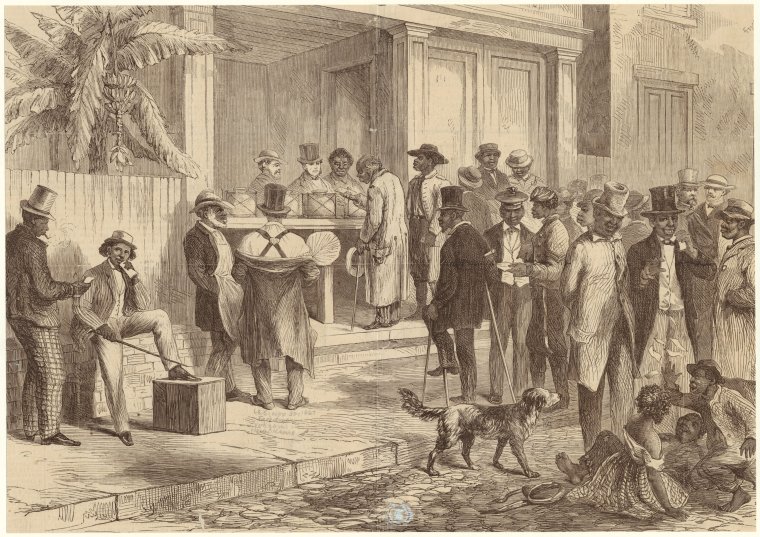
Racial equality and integration have been hotly contested throughout New Orleans’s history, and organized white violence in stopping it has been commonplace. For example, in 1874, Canal Street, still one of the city’s main thoroughfares, was the site of the largest street fight in U.S. history. Dubbed the “Battle of Liberty Place,” 3,500 armed, white supremacist White League members attacked the newly-elected Republican and black-led government, displacing them until federal troops were able to restore order. The insurgents got what they wanted three years later, when the national “Compromise of 1877” allowed Klan-type terrorist groups to restore the former slaveholding oligarchy back to power across the South.23
Throughout the South, white terrorist groups typically had the full support of this white elite. In 1891 the white New Orleans City Council even ordered a monument erected on Canal Street commemorating these successful white supremacist attacks. The monument became highly controversial as the city’s black constituency and political leadership grew over the next century. However, it took years of trying by the city’s first two black mayors, elected in 1978 and 1986, to get it removed. Unfortunately, a weak “compromise” was reached with white supremacists and preservationists to have the monument relocated to a less visible spot merely one block away.24 White supremacy trumped equality-and-justice values once again, as the city’s whites maintained their dominant position of economic and political power.

Jim Crow New Orleans
By 1890 formal “separate but equal” statutes were written into Louisiana state law. In the century following the end of Reconstruction, New Orleans was completely dominated by supremacist whites in wealth and power. White flight from Orleans Parish (city of New Orleans) to surrounding suburbs started after the Second World War. Post-war prosperity facilitated the draining of the Jefferson Parish swamp, land soon converted to suburbs. New neighborhoods quickly filled with middle-class and working-class whites, most from Orleans Parish. Blacks were barred from moving there by economic constraints and blatant discrimination from white realtors. By 2000 very few blacks lived in the East Bank Jefferson Parish area.25
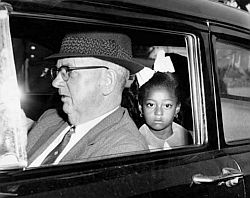
Decades of consistent white flight led to a major demographic shift. Between 1950 and 2000, the city of New Orleans lost almost two-thirds of its white population. Following national trends of white movement from cities to suburbs, between 1960 and 2000, the city went from 37 percent to 67 percent black. Some public housing projects had been white-occupied during legal segregation, but when housing segregation was outlawed, whites departed and blacks moved in.26
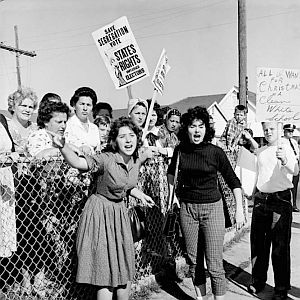
Sidewalk protest in New Orleans over school integration, November 15th,1960.
Even prior to school desegregation, public schools in southern Louisiana were underfunded because many Catholics sent their children to parochial schools and preferred not to pay public school taxes. Affluent white Protestants opened their own private schools. This private school system functioned as a gatekeeper for admission to the city’s ruling elite. The Brown v. Board of Education (1954) integration order solidified the plight of New Orleans public schools. National media covered angry white mobs in New Orleans reacting to federal-ordered desegregation in the late-1950s. Affluent whites with children in Orleans Parish public schools transferred them to private institutions or moved to whiter neighborhoods. Suburban Jefferson Parish developed a busing system that ensured a high white-black ratio in schools there.27
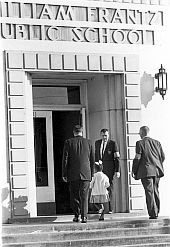
Much white flight was enacted so white children could attend white schools. Whites’ fear that New Orleans’s public schools would be ruined by desegregation turned into a structural reality because of their staunchly racist actions. In a city where many (especially white) residents have been so proud of its supposedly “good racial relations,” it is notable that New Orleans’s demographic shifts and violent white resistance to black progress mirrored other racially tumultuous cities. In terms of well-institutionalized, white-on-black racism, New Orleans has consistently shown itself to be a typical southern city.

Contemporary Pre-Katrina New Orleans
Many analysts have argued that, among New Orleans whites, racist attitudes have been milder than in the rest of the South because of the Creole heritage and earlier easygoing attitude of the French and Spanish residents toward racial mixing. Yet, this imagery is full of white fictions and misrepresentations. Economic and political power has always been held primarily by the white elite and a handful of their chosen lighter-skinned black colleagues. In the 1970s blacks were nearly half the city population, yet held less than five percent of the highest leadership positions.28 The elite circle of white power was very difficult to crack well into this century. In fact, in the 1990s civil rights activists had to press hard even to desegregate the secretive Mardi Gras krewes and social clubs, into which a few black millionaires were finally, and reluctantly, admitted.29

Substantially grounded in oil, petrochemical, and fishing industries between the 1940s and the 1980s, the economy of the New Orleans area turned to a more tourist-oriented industry after the oil bust of the 1980s and the related economic downturn. Oil executives moved and took offices and capital with them. New Orleans had few manufacturing jobs to take up the slack. Tax revenues plummeted and unemployment increased. The black poor felt the decline hardest; most were unable to leave for better work opportunities. By 1990 unemployment among black men was 11 percent—more than double the rate for whites—and those who were able to keep jobs were often poorly paid.30 Thirteen percent of residents were employed in the relatively low-wage food and accommodations industry, compared with 9 percent of all workers nationwide. Total service jobs represented 26 percent of all jobs and paid an average of only $8.30 per hour.31 Industries such as shipping and oil and gas extraction, which pay above-average wages, accounted for relatively little employment when Hurricane Katrina hit in summer 2005.32

New Orleans always had one of the highest proportions of African Americans of all large cities, but it had, until recent decades, been one of the least geographically segregated. By 2000, however, with yet more white flight, disinvestment in public schooling, and the outmigration of decent-paying jobs, the city became more segregated than ever, and the inequities between rich and poor were as extreme as at any time since slavery.33
Two-thirds of pre-Katrina New Orleans was black, while just 28 percent was white. It was the sixth-poorest large U.S. city, with more than one in four residents living below the official poverty line.34 Four in ten black families were in poverty, the highest rate for black urbanites nationwide. Graver still was the fact that the majority of the poor scraped by on incomes of less than half the official poverty level.35

The city’s public schools were in horrific shape, even in comparison to the rest of Louisiana, which ranks third lowest for teacher salaries in the country. The public school system served poor whites better than poor blacks; poor white children were less likely to attend schools in areas of concentrated poverty. High school drop-out rates were very high, and over half of black ninth graders were projected to not graduate in four years. Upon finishing or dropping out of school, many young black men wound up at Angola Prison, a correctional facility located, ironically, on a former slave plantation where inmates still perform manual farm labor like their enslaved ancestors—and where many eventually die.36

Structural Barriers to Rebuilding New Orleans
This was the state of New Orleans’s poor (who were primarily black) and African American (who were primarily poor) residents when devastating Hurricane Katrina made landfall on August 29, 2005. After one day, major levees were breached, and parts of the city lay under deep water. Thousands had been unable to evacuate. As commentators scrambled to offer explanations, much reaction consisted of aggressive finger pointing, most initially directed at local and state governments or at black residents themselves.
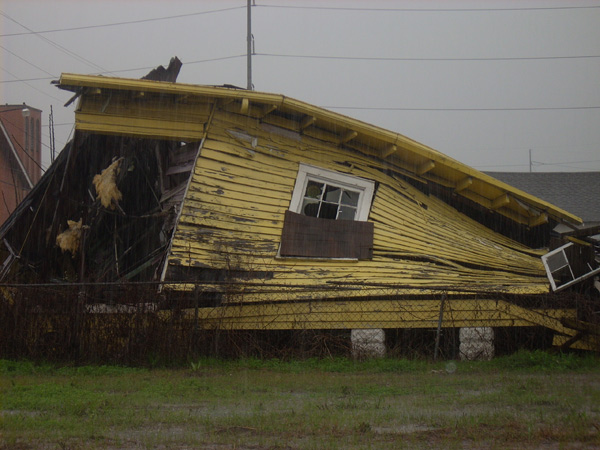
Despite many (mostly white) commentators’ and onlookers’ tendency to lay blame on residents’ character or intelligence for not abiding by the mandatory evacuation notice, race and class conditions linked to past racial oppression were major determining factors in whether people were able to evacuate. Comparisons between poor whites and poor blacks in New Orleans got little publicity but clearly showed that poor whites were much better off overall. For example, only 17 percent of poor whites lacked access to a car, while nearly 60 percent of poor blacks did.37 Evacuees themselves frequently said the reason they did not leave prior to the hurricane had to do with lacking resources, yet few white officials or media pundits valued their voices.38

The city of New Orleans had a population of over 478,000 in the 2000 Census. As of March 2006, New Orleans’s post-Hurricane-Katrina population stands at far less, about 155,000. Approximately 125,000 homes remain damaged and unoccupied. Many months have passed, and an estimated 80 percent of former black residents remain scattered across the country with no clear way home. Such a large proportion of the black population is gone that some radio stations are switching from funk and rap to soft rock.39 Commentators of various political persuasions predict that a smaller, whiter, more affluent New Orleans will be created in the future, with thousands of poor black residents who survived the flooding staying dispersed across the country.

Many former residents of the city will never return, simply because they do not have the resources to do so. A 2006 report by the Bring New Orleans Back Commission predicts that, by 2009, just over half of the city’s population will have returned, and even fewer from its disadvantaged population.40 However, polls indicate that the desire of residents to return to their home city is strong, but many simply do not have the resources to rebuild, or, because over 50 percent were renters, will be severely limited in their housing choices if they return.41 According to a Gallup poll, 53 percent of black residents reported they lost everything, compared with only 19 percent of whites.42 However, these numbers are likely much higher, especially for the poor black constituency, because the poll only contacted residents with an active New Orleans telephone number!

New Orleans residents who owned homes in the most devastated, usually black neighborhoods fear that their property will be taken and resold. A recent Supreme Court decision set a precedent for that. The 2005 Kelo vs. City of New London (Conn.) case upheld the right of city governments to seize land for private economic development. In a new form of “ethnic cleansing” local, mostly white, developers will likely gain former black land at very low prices and, in doing so, rid the city of many modest income neighborhoods, and thus modest income people, for many years to come.43

The Bring New Orleans Back commission report claimed that the “heart of the matter” regarding city revitalization was to rebuild neighborhoods, to bring people back, and to attract new residents, claiming, “The Committee wants everyone to return and new people to come.”44 However, behind its welcoming words to former residents are no strong assistance measures actually to get them back and help them rebuild. Instead, the report puts the onus on poor people to return and become financially stable, which the governing elite that wrote the report knows will not happen. Joseph Canizaro, wealthy developer and head of the Commission’s urban planning committee, has stated: “As a practical matter, these poor folks don’t have the resources to go back to our city just like they didn’t have the resources to get out of our city. So we won’t get all those folks back. That’s just a fact.”45 Further, various economic barriers have been put into place that hamper progress in rebuilding for the city’s moderate-income black residents. These include the rejection of a majority of loan applications from local businesses and homeowners by the Small Business Administration and government channeling of construction and service contracts to outsider businesses.46

Ideological Barriers to Rebuilding
Structurally, the reality of moving back and rebuilding neighborhoods and infrastructure seems grim and unlikely for a majority of the black former residents. Social death looms large once again for the black population. The loss of families, homes, and communities on such a large scale is reminiscent of the devastating effects that the antebellum New Orleans slave pens symbolized for African Americans. As sympathies wane across the country for these hurricane victims, their plight is increasingly uncertain. Home, in New Orleans neighborhoods, whether impoverished or not, provided a support network and a strong sense of community. Providing the labor of the economy and the lifeblood of the city, this core of moderate-income and poor black citizens fostered pride and spirit unique to the Big Easy that welcomed 10 million tourists each year.
However, many, primarily white, Americans have been unable or unwilling to empathize with these relatively poor black New Orleanians. This social distance became apparent at the onset of the disaster. An incident that occurred in the first days on a bridge connecting New Orleans with the community of Gretna is telling. Due to dwindling resources, New Orleans police had directed a group of about 200 evacuees to make the two-hour trek on foot across the bridge to Gretna, a white-majority suburb on the west bank. They were met by warning gunshots from Gretna police officers. The black evacuees explained that “we were told by the deputies…that [they] were not going to allow a Superdome to go into their side of the bridge….So to us, that reeks absolute racism, since our group that was trying to cross over was women, children, predominantly African American.”47

At a trip to a Houston arena shelter, Barbara Bush, the elder president Bush’s wife, made a comment that reflected a lack of empathy for the hardest-hit hurricane victims and the stark social distance separating whites from blacks generally: “So many of the people in the arena here, you know, were underprivileged anyway, so this—this (she chuckles slightly) is working very well for them.”48 Some out-of-touch whites convinced themselves that the poor, black evacuees, without even resources to afford a hotel room, were better off after the hurricane than before. This kind of flippant reaction to suffering by thousands reveals the deeper dynamic of alienating racist relations, where racist notions have for centuries impeded empathy, understanding, and solidarity across the great American color line.
To make matters worse, in the wake of the arguably most traumatic event in their lives, black hurricane victims faced racism in their personal treatment. Interviews with forty-six evacuees at Houston’s Reliant Park shelter showed that being black was central to evacuation experiences. Several evacuees reported being discriminated against by members of the primarily white police, support, and volunteer staffs. Significantly fewer reported having experienced what they perceived to be class discrimination, because of their poverty.49
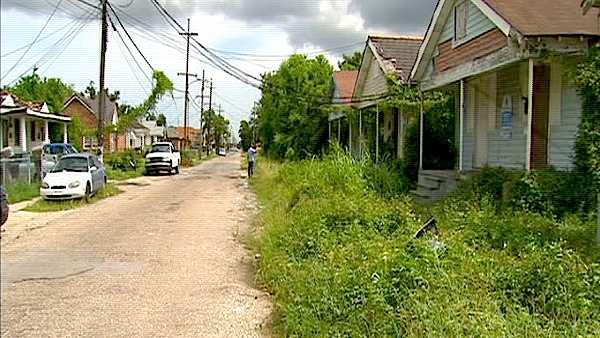
Thousands of survivors were homeless, many lost contact with family, and some were treated badly by white staff. Additionally, over 1,300 people died in Louisiana as a result of Katrina, most from flooding in New Orleans.50 Thousands more remain missing. The majority lived in Orleans Parish. However, at an early stage and even later, commentators and journalists were quick to deem the hurricane a race- and class-neutral force, asserting that badly flooded neighborhoods were not just black and poor, or that a disproportionate number of the identified bodies were white. Downplayed too was the fact that most of the hundreds of unidentified and unidentifiable bodies had been retrieved from poor, almost entirely black neighborhoods.51

Does Black New Orleans Have a Future?
As the months proceed, sympathies for displaced poor, black New Orleanians wane. A recent survey showed the sentiment of Houston residents toward the 150,000 Louisiana evacuees (the largest of any U.S. city) to have grown quite negative. The Houston Area Survey showed that nearly half the residents questioned in early 2006 thought that the impact of the evacuees had been a “bad thing” for Houston. Representative John Culbertson, a Republican, referred to New Orleans evacuees as “deadbeats” and summed up his constituency’s feelings: “If they can work, but won’t work, ship ’em back. If they cause problems in the schools, if they commit a crime, there ought to be a one-strike rule —ship ’em back.” As of March 2006, Culbertson was attempting to add such a provision to pending legislation.52
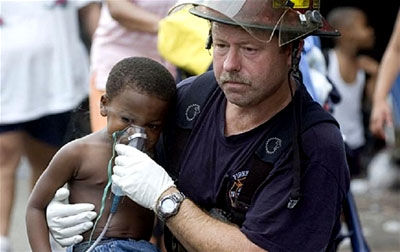
The Houston Area Survey showed that two-thirds of Houstonians thought Louisiana evacuees had caused a “major increase in violent crime.”53 The crime rate indeed increased following the hurricane, but only a little; and only a minor part of that increase could be attributed to the often desperately poor New Orleanians.54 Sweeping generalizations about a “criminal element” from New Orleans simply do not apply to the vast majority of evacuees. In Houston alone, there are major economic benefits brought by the new residents. These families have contributed to double-digit sales tax revenue increases, spurred the housing market, and brought $150 million in loans from the U.S. Small Business Administration.55

Mainstream media portrayed poor African Americans who did not evacuate New Orleans as criminals from the first days. Many media-fueled notions—such as rampant looting, shooting at rescuers, and countless rapes in the convention center—turned out to be unsubstantiated and false. Still, many media outlets continue, months after the hurricane, to vilify the displaced and characterize them generally as criminals or deviants. An article in City Journal, which touts itself as responsible journalism and “the nation’s premier urban-policy magazine,” titled one recent article “Katrina Refugees Shoot Up Houston.” The article refers to a “uniquely vicious New Orleans underclass culture of drugs, guns, and violent death,” explaining that “it’s bad news for cities like Houston, which inevitably must struggle with the overspill of New Orleans’s pre-Katrina plague of violence.”56

These grossly overstated, often inaccurate, representations play upon white notions of the combination of blackness and poverty being pathological—crime-for-crime’s-sake, inner-city, ruthless gang violence. Most of all, the white-washed images are of young black men dedicated to committing crimes against innocent bystanders and civilized (white) society generally. These images mask a long history of racial oppression and, disturbingly, mirror crazed white notions of black inferiority that have proliferated since Reconstruction.57

Conclusion
Even now, these powerful tools of white racism are used to justify racial inequality and perpetuate the still fundamental racist relations of the United States. Under the watchful eyes of white elites, New Orleans and the United States generally, have developed structurally over fifteen generations now to maintain these alienated and alienating racist-relations in major societal institutions. In this manner, white elites, as well as rank-and-file whites, have kept a large proportion of our African American citizens in unjust poverty—with chronically underfunded schools, diminished job opportunities, and limited housing choices. This unjust impoverishment takes place within a continuing framework of well-institutionalized racism, which provides most whites with the current benefits and privileges coming from many generations of unjust enrichment. In the history of most U.S. cities and rural areas, whites have imposed racial oppression so long and so often that it has long been a foundational and undergirding reality routinely shaping both the racial dynamics and the class dynamics of U.S. society.

Today, as in the past, systemic racism encompasses many negative realities, including the reality that the white majority has only rarely attended to the pained voices and racism-honed perspectives of black Americans. The Katrina catastrophe, at least for a short while, forced white America to hear and listen to some of those impassioned and insightful black voices. These voices often expressed views, albeit in the language of everyday survival, similar to those we develop here.

In the future, only by attending carefully to the perspectives of oppressed Americans can the United States ever expect to see improvement in the direction of real democracy. Attending well to those perspectives will enable us to understand that the survival of the United States, and indeed of humanity, requires us to see and act beyond the boundaries of our own racial group and social class interests. Just before his assassination by a white man, Dr. Martin Luther King Jr. wrote that all human beings live in a “great world house,” in which we must find a way to go beyond individual selfishness and group dominance: “From the time immemorial human beings have lived by the principle that ‘self-preservation is the first law of life.’ But this is a false assumption. I would say that other-preservation is the first law of life precisely because we cannot preserve self without being concerned about preserving other selves.”58 [source: Monthly Review, "Hurricane Katrina: The Race and Class Debate," by Kristen Lavelle and Joe Feagin ]