Wednesday, March 27, 2013

REDEMPTION: The Last Battle of the Civil War


As reviewed in the New York Times Sunday Book Review, "A Less Perfect Union," by Sean Wilentz, on 10 September 2006 -- Ten years after Appomattox, Northern support for the newly enfranchised ex-slaves and their white allies had faded. Recalcitrant Southern whites, whose Ku Klux Klan night-riding had been aggressively repressed by the federal government in the early 1870’s, regrouped under the political aegis of the Democratic Party. By mid-decade, most of the Reconstruction state governments had fallen at the ballot box to the forces of white supremacy, the self-proclaimed “redeemers.”

An 1866 engraving depicts an agent of the Freedmen’s Bureau making peace between blacks and whites.

Mississippi, with a large black voting majority, resisted longer than other states, but redemption finally came there too, in 1875, sealed by a new frenzy of paramilitary carnage and intimidation. Two years later, after a disputed national election, the Republican Rutherford B. Hayes finally won the White House by agreeing to remove from the South the last of the federal troops who had upheld Reconstruction at the points of their bayonets. The troubled effort to build a Southern interracial democracy out of the ashes of the Civil War was over.

The story of Reconstruction’s demise in Mississippi is familiar to historians, and Nicholas Lemann, in “Redemption,” retells it in all its terrible gore. His account squares with recent scholarship, which has challenged both the traditional “Birth of a Nation” view (of Reconstruction as a tragic era of black plunder and white degradation) and the skeptical scholarship of the 1960’s and after that questioned the reformers’ commitment. Lemann, the dean of the School of Journalism at Columbia and the author of “The Promised Land,” among other books, affirms Reconstruction as a noble, thwarted experiment, the nation’s “unfinished revolution,” in the words of the era’s current leading historian, Eric Foner. This book strives to burn that academic re-evaluation into the minds of nonacademic readers.
REDEMPTION: The Last Battle of the Civil War; By Nicholas Lemann

Written on a dramatic human scale, and leavened by some fresh research and analysis, it is an arresting piece of popular history. Lemann is a responsible writer who aims to convey what he calls “the feeling of history unfolding, not of history considered in retrospect.” But “Redemption” inevitably speaks to the present as well as about the past. In focusing on Reconstruction Mississippi, Lemann, a native of New Orleans, stirs living memories of the murderous Southern resistance to the civil rights movement 90 years later. And he writes at a time when neo-Confederate sympathies have cropped up again in Southern politics, amid reports about the suppression of minority voting throughout the country. We are still living with the consequences of what Lemann presents as the “last battle of the Civil War.”

The book opens not in Mississippi but with an extended prologue about the notorious 1873 massacre in Colfax, La., the bloodiest episode of racial violence during the Reconstruction era. The Colfax events — in which more than 70 mostly black militiamen were killed by white supremacists after a disputed election — sparked immediate Northern outrage but led three years later to the landmark Supreme Court ruling United States v. Cruikshank, which upheld states’ rights against federal authority to protect the freedmen from white terrorists.


These changing circumstances made the situation almost impossible for Lemann’s chief protagonist, Mississippi’s Reconstruction governor, Adelbert Ames. Ames was a paragon of Yankee gallantry who blended ambition and idealism, Lemann writes, “almost to the point of aspiring to sainthood.” The son of a sea captain from Rockland, Me., he had graduated from West Point just in time to fight courageously in numerous major Civil War battles, for which he received the Medal of Honor. In 1868, Ames was appointed provisional military governor of conquered Mississippi. Deeply moved by the plight of local blacks, he cast his lot with the state’s fledgling Republican Party. Elected by the Reconstruction legislature to the United States Senate in 1870, he ran for governor three years later on a biracial Republican slate and, with enthusiastic support from ex-slaves, easily defeated his more conservative rival. Although disparaged as a “carpetbagger” by anti-Reconstruction whites, Ames took pride in his conviction that, as he later wrote, he “had a Mission with a large M.” The new governor called for ambitious reforms, including the creation of a credible public school system, hoping to benefit all the state’s citizens while lifting the freedmen out of their abject poverty and illiteracy.

Lemann presents Ames’s political rise in counterpoint with his courtship of Blanche Butler of Massachusetts, whom he married in 1870. Their loving correspondence reveals to Lemann “a subtle dynamic of mutual adjustment.” But the Ameses’ marriage also had important political implications. Blanche’s father was the Radical Republican congressman Benjamin F. Butler, whose intransigent command of the Union Army occupation of New Orleans caused white Southerners to nickname him “Beast” Butler, and who now stood, Lemann writes, “at the very top of the South’s pantheon of resentment.” By the early 1870’s, Butler was a confidant of President Grant and one of his staunchest supporters on Capitol Hill, especially when it came to crushing Southern white resistance to Reconstruction. As Beast Butler’s son-in-law, Ames had a line to the highest levels of the federal government — and appeared all the more evil to Mississippi’s reorganizing white supremacists.


The counterrevolution began in Vicksburg during the summer of 1874. In anticipation of local elections, a group of whites infiltrated a Negro Republican Fourth of July celebration and began shooting, which touched off an anti-black rampage. At the end of the month, Ames sent Grant a long telegram, pleading for federal military intervention, but Grant, relying on an inconclusive report from his secretary of war, William W. Belknap, refused. In August, the Democrats swept the Vicksburg municipal elections, although Republican blacks, including Sheriff Peter Crosby, a Union Army veteran, still held key countywide positions. Only in September, after receiving horrifying letters from ordinary citizens, did Grant authorize sending troops wherever local officials were losing control.

Emboldened by the election returns, Mississippi’s white supremacists organized their own paramilitary group, the White Line. In Vicksburg, they forced the resignation of Sheriff Crosby, who countered by forming a temporary black militia, and the two sides squared off in armed battles. Ames once again alerted the president, who dispatched Gen. Philip Sheridan to restore order to the entire Gulf region.


Sheridan’s troops, as part of their general operations, returned Crosby to his elected office; and Sheridan sent a fierce telegram to Secretary Belknap, calling the white resisters “terrorists” and “banditti,” and bidding the president to denounce them as such. But Sheridan’s message struck most Northern Republicans as excessive, and now exhausted by the endless violence, they publicly deplored renewed federal intervention. Grant issued a proclamation strongly defending Sheridan, but the document hedged on the question of the limits of federal power. Reconstruction’s opponents, Lemann writes, “would not have been wrong in detecting a wobble” in the administration’s position.

The wobbling worsened over the following year. White Line violence against Republican gatherings and individual black political leaders reached a fever pitch. Efforts by stalwart pro-Reconstruction Republicans in Congress to pass tougher enforcement legislation failed, partly because of the machinations of a shrewd and articulate Mississippi Democrat, Congressman Lucius Quintus Cincinnatus Lamar. Grant’s recently appointed attorney general, the conservative Edwards Pierrepont, deftly muffled the president’s impulses to send additional military support.


The embittered Ames decided to reorganize, augment and activate Mississippi’s mostly black militia, and thereby forced a peace conference with the Democrats. In exchange for Ames’s order to send the militia home, the Democrats agreed to respect black voting rights in the fall elections. But the paramilitary White Liners would not be denied. After a brief pause, they resumed their intimidation, which culminated in a massive show of force on Election Day. Democrats did not hide their approval. In some heavily black districts, Republican totals dwindled almost to zero, and the Democrats took control of the state legislature. In January, the newly elected lawmakers assembled in Jackson, listened to Ames denounce the violence and, a few weeks later, geared up to impeach him.

At the end of March, Ames agreed to resign in exchange for the charges’ being dropped, and left Mississippi. A Senate select committee investigated over the summer and issued a damning report on the White Line outrages. But by then, a fresh round of terror and intimidation had begun around the presidential campaign that would ultimately end all of Reconstruction.


Lemann’s interpretation of the politics behind these events is uneven. By depicting Reconstruction as the final phase of the Civil War, he suggests that the Confederates actually won, which diminishes the epochal importance of emancipation and secession’s defeat. Lemann does write astutely about the white supremacists and their coordinated multi-track political strategy, whereby respectable conservative Democrats like Lamar kept to the high road (and attacked the Republicans as profligate tax-and-spenders) while leaving the dirty work to the White Line. But the black participants in the story remain mostly obscure, and often come across more as victims than as political actors militantly defending their rights. Lemann also slights the political shrewdness of local black politicians (who had engineered Ames’s run for the governorship in the first place), while failing to convey fully the governor’s political naïveté in dealing with his opponents.

Lemann shows far less indulgence toward Grant, who appears mainly as a confused, politically expedient sellout. In fact, the president, whose father had been strongly antislavery and who had crushed the Klan in 1871, risked considerable political capital on behalf of the ex-slaves. His stance concerning Reconstruction became politically untenable after 1874, when he faced opposition from the Supreme Court, a newly elected Democratic House and even his own cabinet — yet Grant still did the best he could more often than not. Lemann considers the extenuating circumstances but also describes Grant as, by turns, dour, cryptic, callous and malignly opportunistic — thus making it difficult to comprehend why his friend Frederick Douglass said that “in the matter of the protection of the freedman from violence his moral courage surpassed that of his party.”


Lemann’s accounts of the racial mayhem in Mississippi in some ways contradict his pitting of Ames the idealist against Grant the pol. Given the vicious hostility among Southern whites to Reconstruction, success would have required far more patience and willpower than the North possessed, and many more resources than the pro-Reconstruction Southerners could muster on their own, even in states with largely black populations. Numerous factors outside Grant’s direct control — including a devastating national economic panic in 1873; Republican bribery scandals; and the convulsive electoral realignment in 1874, which produced the Democratic House majority — tragically made matters even worse for the ex-slaves and their radical allies.

In reaching for the attention of general readers with a brief, highly concentrated narrative, “Redemption” simplifies too much. But it offers a vigorous, necessary reminder of how racist reaction bred an American terrorism that suppressed black political activity and crushed Reconstruction in the South. And it illuminates the often bloody fights over black voting rights that would recur for a century to come — and remain, even today, a source of partisan strife, albeit without paramilitary gunfire and with the party labels reversed. (source: The New York Times)

The Fall of the House of Dixie


As reviewed in the Wall Street Journal, "Uprooting the Plantations: Launched to preserve slavery, the Civil War destroyed it more quickly than the natural course of events would have," by Edward Kosner, on 18 January 2013  --  The slave-holding American South was a plutocracy built on a monstrosity.

A self-perpetuating elite that derived both its material worth and self-worth from its dominion over millions of stolen Africans, the planters conned themselves into believing that their flogged chattels were devoted to their benevolent masters and that their "peculiar institution" would survive any Yankee challenge. Slaves, proclaimed South Carolina planter James Henry Hammond in 1858, were "happy, content . . . and utterly incapable, from intellectual weakness, ever to give us any trouble by their aspirations."

Three years later, most of the slave states rebelled, the newborn Confederacy fired on Fort Sumter, igniting the Civil War, and their charmed dystopia was doomed.


Fall of the House of Dixie; By Bruce Levine

In his accomplished new book, Bruce Levine, a history professor at the University of Illinois, tells the story of the Civil War's inexorable destruction of slavery and the social order it sustained. An absorbing social history, "The Fall of the House of Dixie" is at its best when it is teasing out what Marxists like to call the "fatal contradictions" of Southern society. Karl Marx himself has a cameo with an astute analysis of Lincoln: The president, he observed, "never ventures a step before the tide of circumstances and the general call of public opinion forbid further delay."

Indeed, for readers whose Civil War bibliography runs to standard works by Bruce Catton and James McPherson—with an audio-visual assist from Steven Spielberg's "Lincoln"—Mr. Levine's book offers fresh insights into the complex reality of what most Northerners thought of as the solid South and the slow evolution of the Union crusade against slavery.


The scope of slavery at its crest in the decade before Fort Sumter was as vast as it was appalling. In 1858, writes Mr. Levine, there were nearly 60,000 Americans who owned at least 20 slaves. Three thousand men owned 100 or more, and one Georgia planter boasted 1,500 human chattels spread over several properties. In all, there were four million slaves in the states that would form the Confederacy and elsewhere in the Union and its territories. They were valued at the equivalent of $83 billion in today's dollars. The cotton they raised represented fully half of the exports of the young republic, mostly to Britain's "dark satanic mills."

The power of the slave interests was as much political as it was economic. Of the 15 presidents before Lincoln, all but three—the two Adamses and William Henry Harrison, who died after just a month in office—were slave owners or their enablers. Across the South, planters dominated state houses, local governments and congressional delegations.

But the grip of slavery on the slave holders went beyond economic and political power. The slave system, Mr. Levine writes, was "the unique basis of the particular outlook, assumptions, norms, habits and relationships to which masters as a social class had become deeply and reflexively attached. It defined their privileges and shaped their culture, their religion and even their personalities." The men of the South came from "a master race," proclaimed Georgia's Gov. George Fitzhugh in 1861. And many used their power, most conspicuously, to exercise sexual mastery over the slave women on their plantations.


From the beginning of the rebellion, slave interests called the shots. Of the 50 delegates from the deep South who met in Montgomery, Ala., in February 1861 to explore secession, 49 were slave owners, 21 of them planters. The millions of Southerners from the hill country and the border states who couldn't afford slave labor or had no need for it on their hardscrabble farms were unrepresented. This fundamental conflict of interest would undermine the Southern cause, shape the destiny of the rebel army and ultimately contribute as much to the fall of Dixie as Lincoln's blue host.

None of this was clear to most people at the start of the war. Southern aristocrats were certain that their slaves would stand with them and that their martial young men would obliterate the ragtag Northern armies poised on their borders—in a month or two at most. Initially, Lincoln's aim was simply to restore the union and bar the further spread of slavery. He was so concerned to keep slave-holding Kentucky in the Union as a base to attack the upper South that he muffled any talk of abolition.

A few knew better. The most prescient was Frederick Douglass, the vibrant ex-slave turned abolitionist orator. "The Negro is the key of the situation—the pivot upon which the whole rebellion turns," he said in 1861. "The inexorable logic of events," he predicted, would drive Lincoln to make the eradication of slavery the spear point of the war.


That is indeed what happened. Early Confederate victories at Bull Run in 1861 and 1862 and elsewhere forced Lincoln's hand. First, slaves were declared "contraband of war"—not freed but ruled to be enemy property eligible for seizure by Union forces. By July 1862, Congress had ordered that slaves of rebel owners "shall be deemed captives of war and shall be forever free." The president himself declared: "We must free the slaves or be ourselves subdued." Six months later, Union troops handed out a million copies of the Emancipation Proclamation throughout the South as thousands of blacks abandoned their masters and fled to the Union columns.

Helpless in the grip of their own self-delusion, the slave owners undermined their own cause. Even as their armies bent under fierce Union attack, they refused to lend their slaves to build defenses or toil behind the lines. Instead, they "refugeed" tens of thousands across the Mississippi to Texas, out of easy reach of Union forces. They allowed planters' sons to buy their way out of serving and resisted desperate measures by Jefferson Davis's government to raise food and other supplies from the plantations. To the end, they refused to give guns to their slaves and press them into combat, even after Lincoln armed the freed slaves and other blacks and formed them into effective regiments.

These actions only aggravated the class conflict between the slavocracy and the poor whites, who realized that they were fighting and dying to preserve the wealth and social order of the haughty rich. One man in the ditches of Georgia wrote that his comrades were "tired of fighting for this negro aristockracy [sic]." Another said: "I would not give my life for all the Blame negroes in the Confederacy." As the rebellion spiraled down, they fled the ranks. Some formed guerrilla bands and fought their ex-comrades. A plantation mistress confided to her diary, "we have almost as much to dread from our own demoralized mob as from the public enemy."

By the end of the war, a third to a half of the Confederate army had deserted, and more than 300,000 Southern whites were fighting for the Union. In Montgomery, the planters and their ladies danced on the lip of the volcano. "We eat, drink, laugh, dance in lightness of heart," one woman reported. A few months later, Robert E. Lee surrendered what remained of his Army of Northern Virginia to Ulysses S. Grant at Appomattox.


Mr. Levine calls the transformation of the South through the abolition of slavery "the second American revolution." It was, of course, incomplete. The impulse to give the freedmen confiscated plantation land so that they could establish economic independence to match their new liberty never got traction. Instead, slavery was replaced by serfdom in the guise of tenant farming that bound the ex-slaves to the land nearly as tightly as the master's chains. Within a generation, the remnants of the Southern white aristocracy found common cause with their poor white brethren to subjugate the blacks once more through Jim Crow laws that thwarted the newly liberated. It would take the better part of another century of struggle to make fresh progress in redeeming Lincoln's original promise.

An accomplished ironist, Mr. Levine recognizes how the South defeated itself more effectively than the zeal and industrial might of the Union. "A war launched to preserve slavery," he writes, "succeeded instead in abolishing that institution more rapidly and radically than would have occurred otherwise." Or, as South Carolina plantation mistress Mary Chesnut lamented: "Our world has gone to destruction."  [source: The Wall Street Journal —Mr. Kosner is the former editor of Newsweek, New York, Esquire and the New York Daily News.]


Bruce Levine, the author of "The Fall of the House of Dixie: The Civil War and the Social Revolution That Transformed the South" to our Union Theater for a discussion about his latest work.

Tuesday, March 26, 2013

Koreans Own the Black Beauty Supply Market


As reported in the Atlanta Post, "Why Do Koreans Own The Black Beauty Supply Business?" by Rahwa Asmerom, on 27 September 2010  --  It’s odd but no so odd at the same time. By now, many people expect to walk into a beauty supply store and see a Korean store owner manning the register. Whether you’re in the suburbs of Houston or on MLK Blvd in Anytown, USA, you know what to expect. And yet, walking down a street in a Black neighborhood with Black residents and Black customers buzzing about the retail shops, that image of the few Koreans in the neighborhood only existing behind the cash register of liquor, beauty supply and other retail shops is still perplexing.

But what can explain the seemingly random attraction of Black hair to Korean entrepreneurs? Is it that they love Black hair so much? Was there a plan amongst the first wave of Korean immigrants to hone in on the black hair care industry and dominate the beauty supply store market? From a business perspective, it was no coincidence.


The wig business and the explosion of the wig business in South Korea in the 1960s is instrumental to understanding the Korean ownership of beauty supply stores. According to the book “On My Own: Korean Businesses and Race Relations in America”, the rise of the YH Trade wig manufacturing company was significant. Founder Yung Ho Chang, conceived the idea of the company while working as the vice-director of Korean Trade Promotion Corporation in the U.S. Between 1965 and 1978, his company exported $100 million worth of wigs.

The wig business was doing so well, especially amongst African-American consumers that the Korean Wig Merchants pushed to corner the market. “In 1965, the Korean Wig merchants joined together and convinced the Korean government to outlaw the export of raw hair,” said Aron Ranen, a filmmaker who has documented the marginalization of African-American entrepreneurs in the hair care industry in the film Black Hair. “[This ban] made it so that one can only buy the pre-made wigs and extensions.” In other words, Korean hair could only be manufactured in Korea. “Six months later, the United States government created a ban on any wig that contains hair from China,” effectively putting South Korea in prime position to exploit the market.


The business structure helped set up many Korean entrepreneurs in the sale of wigs and over the past five decades, wig stores have evolved to become full fledged beauty supply stores where hair for weaves and extensions represent the top selling products. Since then, it’s been a chain reaction as one store beget another; family members and employees of one store owner duplicated the business. According to said Dr. Kyeyoung Park, associate professor of anthropology and Asian American Studies at UCLA, competition also played a role in the proliferation. “Korean immigrants are more concerned with peer competition,” she said. “If one is running a business so well, then another Korean will open up a similar business very quickly.”

Today, there are over 9,000 Korean-owned beauty supply stores serving a billion dollar market for Black hair. Between manufacturing, distributing and selling these hair care products, Korean entrepreneurs appear to control all major components. Ranen was inspired to make his documentary because of what he saw as the injustice of unfair business practices.


“It’s really about allowing black manufacturers to get inside the distribution channel,” he said. “‘I mean, if you ask me, ‘what is your vision for the future?’” Well, right away, it’s a 100 black-owned stores opening up right next to Korean stores – a boycott until the Korean stores accept at least 20% black-owned manufactured products. Then we are talking about money in the community.”

According Ranin, there are only four central distributors serving beauty supply stores in the country and these Korean owned distributors discriminate against Black store owners in order to maintain their monopoly in the market. Ranin interviewed Lucky White, the owner of Kizure Ironworks which specializes in making styling tools like curling irons, for his 2006 documentary. Ms. White claimed that distributors told her that her products were no longer in demand as an excuse to turn away her products in favor of knock-offs produced by Asian companies.


Devin Robinson, an economics professor and author of “How to Become a Successful Beauty Supply Store Owner”, organized a boycott last November against Non- Black Owned Beauty Supply stores. “The problem is with the distributors.” he has stated. “Distributors are mainly Non-Blacks and they handpick who they will distribute products to. This oftentimes leaves aspiring black owners disenfranchised.”

But Robert Cleary, a former director of the Dashing Diva [nail salon]franchising corporation , said that although he did witness discrimination in the Korean-dominated nail salon business, he doesn’t believe that the discrimination on a business level is exclusively race based.

“The central Korean distributors actively work to create barriers of entry to any group- even other Koreans to protect the status quo,” he said. “The Koreans used the [nail and hair industry] to get a foothold in this country. They were doing something, as many immigrants do, that the people who lived here didn’t want to do or didn’t have an interest in. They found a need, they found a niche and they made it their own. The concentration in these businesses promoted a shroud of secrecy and protectiveness that became hard to penetrate.”

The business methodology is highly cultural, said Cleary, only to be understood by many other Koreans who accept and conform to the way of doing things. Other elements of the business are highly controversial and susceptible to scrutiny to those who are not comfortable with the way things works. “The [nail] salons they distribute products to employ many illegal aliens and the distributors themselves often employ illegal workers as well,” he said. “This adds another layer of secrecy and motivation to keep things tightly controlled and quiet.” The issue of taxes and cheap labor also enforce the secrecy. “Many salons pay for their supplies with cash therefore a large part of the business at all levels is cash and rarely reported – just enough to fly under the IRS radar,” he said.


Regardless, this shroud of protectiveness fueled part of the tension between Korean business owners and the urban African-American community which famously erupted during the the 1992 Los Angeles riots. Korean entrepreneurs in the inner city usually maintain a separate existence, living outside of the urban communities in which they serve. Despite the fact that Koreans may be competitive even amongst one another, like many other ethnic groups, they have fostered a collaborative entrepreneurial spirit through establishing banks and business associations.

“In the 80s, they organized rotating credit associations,” said Dr. Park. “The way they formulate capital isn’t very different from other Americans.” Interestingly enough, Park says, what appears to be a strong relationship between entrepreneurship and Korean immigrants is not strong historically. “For a long time in South Korea, because of Confucianism, it was looked down upon to be a merchant,” she said. “These days, in South Korea, because of neo-liberal restructuring and other things [like lack of life long employment], Koreans are now thinking of opening up their own businesses. Until the 1980s and early 90s, opening up a small business was the last thing people would [want] to do.”


When Chris Rock’s “Good Hair” came out last year, it shed a lot of light on the origins of the hair used for weaves and the relationship between black women and their hair. But Ranen, who is a Jewish filmmaker, still believes that the powers that be in the African-American business community need to take a stronger stand in highlighting this issue.

“They’ve watched my movie but no one has done anything about it,” he said, revisiting his dream of seeing 100 black owned beauty supply stores open and establish a funnel to black-owned distributors and manufacturers. “There are people on Wall Street who can fix this in a minute and create some kind of dynamic kind of stock offering, completely above the board to open and fund the stores and give out shares.” It’s a vision that may not be wildly popular but one that addresses the passivity that hovers over the challenge of African-American empowerment by way of business and investing. (source: http://madamenoire.com/104753/why-do-koreans-own-the-black-beauty-supply-business/)


Henrietta Lacks, the Sequel

Henrietta Lacks

New York Times OPINION, "The Immortal Life of Henrietta Lacks, the Sequel," by Rebecca Skloot, on 23 March 2013 -- LAST week, scientists sequenced the genome of cells taken without consent from a woman named Henrietta Lacks. She was a black tobacco farmer and mother of five, and though she died in 1951, her cells, code-named HeLa, live on. They were used to help develop our most important vaccines and cancer medications, in vitro fertilization, gene mapping, cloning. Now they may finally help create laws to protect her family’s privacy — and yours.

The family has been through a lot with HeLa: they didn’t learn of the cells until 20 years after Lacks’s death, when scientists began using her children in research without their knowledge. Later their medical records were released to the press and published without consent. Because I wrote a book about Henrietta Lacks and her family, my in-box exploded when news of the genome broke. People wanted to know: did scientists get the family’s permission to publish her genetic information? The answer is no.

HeLa cell

Imagine if someone secretly sent samples of your DNA to one of many companies that promise to tell you what your genes say about you. That report would list the good news (you’ll probably live to be 100) and the not-so-good news (you’ll most likely develop Alzheimer’s, bipolar disorder and maybe alcoholism). Now imagine they posted your genetic information online, with your name on it. Some people may not mind. But I assure you, many do: genetic information can be stigmatizing, and while it’s illegal for employers or health insurance providers to discriminate based on that information, this is not true for life insurance, disability coverage or long-term care.

“That is private family information,” said Jeri Lacks-Whye, Lacks’s granddaughter. “It shouldn’t have been published without our consent.”

Some scientists agree: Jonathan Eisen, a genomics researcher at the University of California, Davis, tweeted, “A bit stunned that the people publishing the HeLa genome appear to not have gotten consent from the family.” Another said this was going to further damage public trust in science. A few argued that the cells had changed so much over time, they couldn’t accurately tell us anything about Lacks (to which a geneticist replied, “Your claim is so wrong that I don’t know where to start”). Several noted that consent wasn’t required to publish the HeLa genome (true). But over all, the scientific community was surprisingly silent on the issue.


On its own, the HeLa genome doesn’t say anything specific about Lacks: it’s a string of billions of letters that detail the genetic information that makes up a HeLa cell, which is useful for science. A news release from the European Molecular Biology Laboratory, where the HeLa genome was sequenced, said, “We cannot infer anything about Henrietta Lacks’s genome, or of her descendants, from the data generated in this study.”

But that’s not true. And a few scientists decided to prove it. One uploaded HeLa’s genome to a public Web site called SNPedia, a Wikipedia-like site for translating genetic information. Minutes later, it produced a report full of personal information about Henrietta Lacks, and her family. (The scientist kept that report confidential, sharing it only with me.) Until recently, few people had the ability to process raw genome data like this. Now anyone who can send an e-mail can do it. No one knows what we may someday learn about Lacks’s great-grandchildren from her genome, but we know this: the view we have today of genomes is like a world map, but Google Street View is coming very soon.


Scientifically speaking, that’s good news. There’s a lot of hope for using technology like this for affordable “personalized medicine.” But legally and ethically speaking, we’re not ready for it.

As Francis S. Collins, director of the National Institutes of Health, says: “This latest HeLa situation really shows us that our policy is lagging years and maybe decades behind the science. It’s time to catch up.” The regulations governing this sort of research were written in the 1970s, long before anyone imagined what you could learn from a bit of DNA. They are largely based on the now outdated belief that if samples are “anonymized” (i.e., your name is removed), there’s no need to get consent before using them in research.  [New York Times OPINION]

Sunday, March 24, 2013

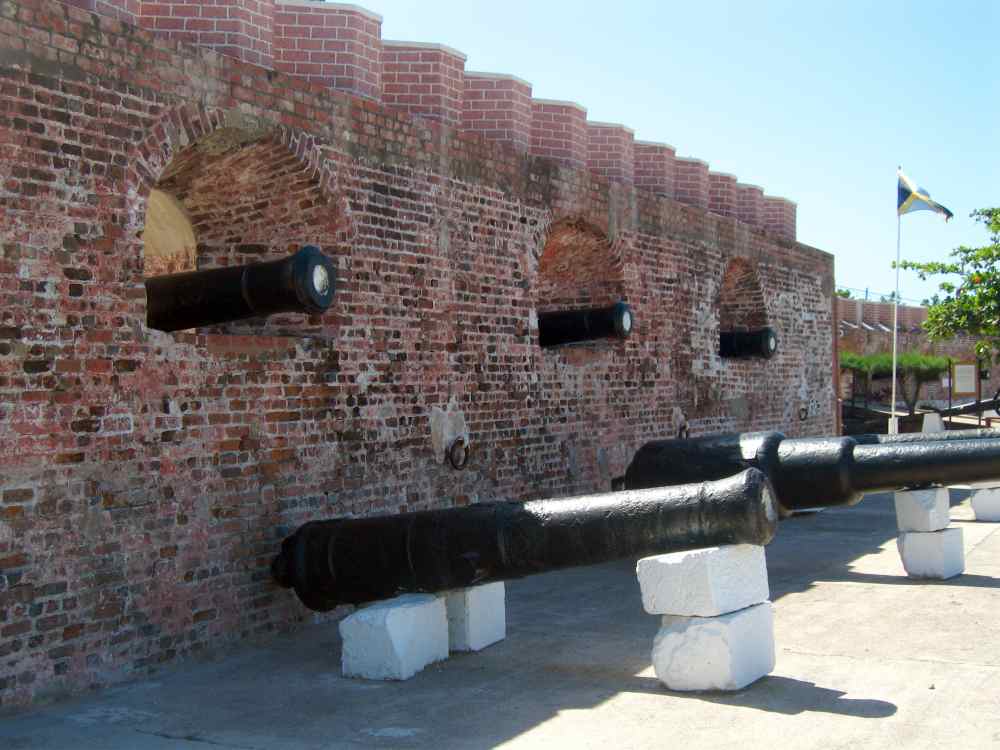
Port Royal, Jamaica

Port Royal, Jamaica

As reported by BBC News, Kingston, "Jamaica's 'wickedest city' Port Royal banks on heritage," By Nick Davis, on 25 July 2012  --  Port Royal in Jamaica was once known as the "wickedest city on earth", but it is hard to imagine that now.

Today it is a small sleepy fishing village located at the mouth of Kingston Harbour that wants to use its rich heritage to bring in tourists and improve its fortunes.


In the 17th Century, Port Royal was home to the real pirates of the Caribbean - it was a buccaneers' paradise with one in every four building said to be a bar or a brothel.

This provided pirates will ample opportunities to indulge.

More than 100 years later, Charles Leslie wrote of Port Royal in the 1660s: "Wine and women drained [pirates of their] wealth to such a degree that... some of them became reduced to beggary. They have been known to spend 2 or 3,000 pieces of eight in one night."


"They used to buy a pipe of wine, place it in the street, and oblige everyone that passed to drink," he wrote in his 1793 A New and Exact History of Jamaica.

The town also served as the headquarters of the Royal Navy in the Caribbean; a young officer by the name of Horatio Nelson was stationed here.

The Jamaican government hopes that the UN's cultural body, Unesco, will recognize its rich history and designate it a world heritage site, putting it on a par with Egypt's pyramids, Spain's Alhambra or Cambodia's Angkor Wat.

The glory days of Port Royal ended on 7 June 1692, when a massive earthquake and tsunami, described by the local clergy as God's punishment, sank much of the city into the sea, killing 2,000 people.

Much of the city is preserved just a few metres under water, along with several hundred sunken ships in the harbour.

It is one of the most important underwater sites in the world, according to Robert Grenier, a Canadian marine archaeologist who has worked closely with Unesco.

"This is the richest repository of historic shipwrecks anywhere, and Port Royal itself is part of that heritage," he says

'Fishing port'

Its heyday may have been more than 300 years ago, but Port Royal's history dates back to the island's earliest inhabitants, the Tainos.

"We know from the evidence that the Tainos used it as a fishing port," says Dorrick Gray from the Jamaica National Heritage Trust.

Much later, when Jamaica was claimed by the Spanish, Port Royal was used as a harbour, but "drastic change" came in the 1650s after the British captured it from the Spanish, Mr Gray says.

While the present Jamaican capital, Kingston, was little more than farmland, Port Royal became one of the richest places on Earth.

The buccaneers were invited to set up in the city to protect the new colony and use it as a base. They became state-sponsored privateers who plundered the Spanish colonies on behalf of the British king. Its location also made it a commercial centre as well; merchants traded slaves, sugar and logwood.

As it grew richer, so Port Royal's reputation for excess and debauchery grew, and it was called the Sodom of the New World.

'Lost city'

Work to rescue that rich history is ongoing.

At the Jamaica National Heritage Trust headquarters, a team of researchers from Texas A&M University in the US are poring over documents and old maps. Artefacts such as old clay pipes and onion-shape bottles are stacked in cardboard containers.

The rooms have musty smell that is made worse by the industrial fans that are on full blast because of the heat.

"It's just what you imagine for archaeologists, we're in the basement of an ancient dusty building looking for clues about a lost city," says John Albertson, one of the researchers.

Mr Albertson is looking for artefacts recovered from a wreck that he believes is that of The Ranger, a ship that belonged to Bartholomew Roberts, a pirate known as Black Bart.

Black Bart was one of the most successful pirates of his day, capturing hundreds of vessels before he was killed in Gabon. His boats were then sailed to Jamaica, where they were destroyed in a storm in the harbour in 1722.

The Ranger's location on the seabed is now being mapped with the help of the US Navy and the Jamaican Coastguard, using a remote-controlled mini-submarine that looks like a torpedo and which produces a 3D image of the sea bed.
But even without the hi-tech equipment, parts of the city can clearly be seen from just below the surface.
'Showpiece and authentic'

Previous teams have excavated paved streets, archways and even buildings, and they have done only a fraction of the work that is needed.

The base for the current researchers is at the Old Naval Hospital in Port Royal. The roof of the Georgian building has been destroyed by countless hurricanes and neglect, leaving behind just a shell.

The government hopes it could be restored to become the centerpiece of a renovated Port Royal - and a major tourist attraction.

"It's going to cost about $150m (£96m) to develop," says Phillip Paulwell, minister for science, technology, energy and mining, "but it's going to be a showpiece and authentic."

Many locals hope that after many years of talk, World Heritage status can revitalize this ramshackle outpost and bring back its once-famed wealth.

"This is part of our history," says Lolita Hylton, "and it's just rotting away." (source: BBC)

Wednesday, March 20, 2013

The Slaves’ Gamble: Choosing Sides in the War of 1812

Book review: ‘The Slaves’ Gamble: Choosing Sides in the War of 1812,’ by Gene Allen Smith

From the Dallas Morning News, "Book review: ‘The Slaves’ Gamble: Choosing Sides in the War of 1812,’ by Gene Allen Smith," reviewed by Dallas Morning News Special Contributor, Dale L. Walker, on 1 February 2013 -- America’s most confusing war, that of 1812, began in 1811 with a fight against Indians at Tippecanoe, a river in Indiana, followed by battles against British land and naval forces in Canada, Michigan, Ohio, Iowa, Illinois, Maryland, New York, Washington, D.C., the North and South Atlantic, Chesapeake Bay, Lakes Erie and Champlain, the coast of Brazil, and other disparate sites.

The War of 1812 ended in 1815 at a place called Chalmette Plantation, a few miles east of New Orleans, when Andrew Jackson’s 4,500 volunteers — a motley band of farmers, tradesmen, Choctaws, frontier sharpshooters and Gulf of Mexico pirates — routed a force of 7,500 well-drilled British redcoats.


Gene Allen Smith’s engrossing new history records that among the American defenders in almost all of these conflicts were contingents of black volunteers. As the result of the specific appeal by Andrew Jackson, a slave owner, for “free coloured inhabitants” of Louisiana to help stop the British invasion, several hundred black men answered the call. Elsewhere in the battlegrounds of 1812, slave and freemen alike sought the rewards the war might bring, no matter which belligerent uniform they wore.

“For free blacks,” says the author, a TCU history professor, the war only required “a decision to join the side which promised the best chance for freedom and advancement. Their choices ultimately defined their future.”


With 1812 substantially a maritime war, involving warships and privateers firing on merchant ships and the British navy blockading America’s Atlantic coast and staging raids and battles on the St. Lawrence River and along the Great Lakes, Smith’s exhaustive research reveals that black sailors played a significant if unheralded role in virtually all of the U.S. Navy’s successes.

In 1798 both the secretaries of war and the Navy banned black enlistments in the seagoing services, but by 1812 black enlistees made up 10 percent to 20 percent of naval and privateer crews. The author estimates the same percentage of black sailors served as crewmen with Commodore Oliver Hazard Perry in the Battle of Lake Erie in September 1813.


Even before Perry’s experience, Britain’s Royal Navy saw the potential in recruiting America’s slaves. After making a plunge into Chesapeake Bay in the spring of 1813, British commanders signed aboard their vessels a sizable number of runaway black men who had deserted their masters for the rewards and freedom they were offered. A few months later, Vice Admiral Alexander Cochrane issued a call urging all slaves to escape and serve with his or any British force. Cochrane even opened a training depot on captured Tangier Island in Chesapeake Bay expressly for slaves wishing to enlist in the war effort or to immigrate as freemen to England or any British possession in North America or the West Indies.

Many of these trainees later served in the defeat of the Americans at Bladensburg, Md., and the subsequent occupation and burning of Washington in August 1814. (Ironically, many black men, slaves and freemen alike, labored in building bulwarks and fortifications, and in manning defensive positions, in the vain effort to ward off the British attackers.)


The presence of blacks in the maritime world of 1812, the author states, “shaped the outcome of the war” but did not instantly liberate them from slavery — “an idyllic concept at best.” Just as idyllic, he says, was the idea that the institution of slavery was dealt a serious blow by so many black men opting to fight, even with the enemy, for their freedom.

Among the many illuminating concepts Smith advances are the consequences of the participation of slaves in the War of 1812. In the aftermath of the war, Smith describes “the greatest nineteenth century diaspora of blacks from the United States” as hundreds relocated to British colonies in Canada, Bermuda and the West Indies. Of even greater historical impact is the author’s finding that the slaves’ gamble in 1812 for freedom and a better life created a southern backlash that effectively halted the progress made to abolish slavery and contributed to strengthening the plantation system of the Old South.

This is an important, lucid, often startling work of scholarship.

[source:  Dallas Morning News; Dale L. Walker of El Paso is author of many historical and biographical books.]

Black Sailors and Soldiers in the War of 1812

Black Sailors and Soldiers in the War of 1812

From PBS WAR OF 1812  --  In 1813 Charles Ball, an escaped slave and self-declared “free man of color,” had a choice. He could row out to the British fleet moored in the Chesapeake Bay and offer his services to the King, or he could volunteer for the fledgling American navy and defend his country. Ball, whose dramatic bid for freedom is chronicled in The Life of Charles Ball, A Black Man, chose the latter and he was not alone.

Black Sailors during the War

When Ball enlisted, African Americans made up at least fifteen percent of U.S. naval corps. Although official U.S. policy at the start of the war forbade the recruitment of black sailors, a chronic shortage of manpower compelled the navy to accept any able-bodied man. These black sailors had a reputation for fierceness in battle. When Captain Oliver Hazard Perry complained about having blacks on his ship, Commodore Isaac Chauncey replied, “I have nearly fifty blacks on this boat and many of them are among the best of my men.” Perry soon had the chance to test Chauncey’s recommendation. At the Battle of Lake Erie, where Perry’s fleet thwarted the British, his black sailors performed so well that he wrote to the Secretary of the Navy, praising their courage.

Life at sea was, by necessity, an egalitarian existence. Living in small quarters, away from shore for months at a time, the men developed a camaraderie and mutual respect based on performance, not skin color. Black sailors made their mark on both official vessels and on the privateers, non-military ships sanctioned by the U.S. government to harass British merchant vessels. On some privateers more than half of the crew was black. These fast and heavily-armed raiders were frequently successful at seizing merchant ships, but just as frequently at being captured by the British. The sailors onboard, including the African Americans, were often sent to the infamous Dartmoor Prison, where the racial divisions they had left behind once again prevailed.

Fighting for Both Sides in the War

Charles Ball, as a free man, was lucky enough to have a choice. Besides the Navy and privateering, there were even a few black battalions in the American army. But for most American slaves, the options were limited to the British navy. When the British fleet arrived in the Chesapeake Bay in March 1813, entire families of slaves made their way by canoe to the enemy ships. The British commanders had orders to welcome these refugee slaves, but also to take care not to encourage an outright rebellion against their white masters. The British did not want insurrection among blacks to spread to their own slave-holding territories in the West Indies.

The slave owners, naturally, were furious at the loss of what they thought of as “property,” and sent delegations to the British demanding that the slaves be returned. Even Charles Ball, a former slave, tried to convince escaped slaves to come back to U.S. soil. He “went amongst them” he records in his memoir, “And talked to them a long time, on the subject of returning home; but found that their heads were full of notions of liberty and happiness in some of the West India islands’.”


Ball would soon be fighting against some of the very black men he had tried to convince. As a seaman and cook, he served in the Chesapeake Flotilla under Commodore Joshua Barney. After Barney ordered the flotilla sunk to keep the boats our of the hands of the invading British, Ball marched to Bladensburg with Barney and served in one of his cannon crews. His memoir describes what later came to be called the Bladensburg Races:
“I stood at my gun, until the Commodore was shot down, when he ordered us to retreat, as I was told by the officer who commanded our gun. If the militia regiments, that lay upon our right and left, could have been brought to charge the British, in close fight, as they crossed the bridge, we should have killed or taken the whole of them in a short time; but the militia ran like sheep chased by dogs.”
The British Promise of Freedom

Black soldiers and sailors were fighting valiantly on both sides of the war, but the British promise of freedom for slaves gave the British a distinct advantage in the competition for recruits. There was another advantage. One British admiral suggested that a "Black Force … could be managed and kept within bounds, and the Terror of a Revolution in the Southern States increased to produce a good effect in that quarter."

In April 1814 Vice-Admiral Sir Alexander Cochrane made the British position official: All those who may be disposed to emigrate from the United States, will, with their Families, be received on board of His Majesty's Ships…. They will have their choice of either entering into His Majesty's Forces, or of being sent as FREE Settlers to British possessions, … where they will meet with all due encouragement. Cochrane then ordered Rear-Admiral George Cockburn to form the Colonial Marines, fighting units made up of refugee slaves.


All told, more than 4000 people were freed from slavery – the largest emancipation that took place in the U.S. until the Civil War. Three companies of Colonial Marines were formed, and their presence did inspire hatred and fear among the Americans. The corps took part in the burning of Washington, fought in the Battle of Baltimore, and skirmished against American forces all along the coast. The British comman­der-in-chief said they were "infinitely more dreaded by the Americans than the British troops".

At the end of the war Americans demanded the either the return of ex-slaves or monetary reparations for the loss of property. With few exceptions, the British refused. According to custom, a slave arriving on British soil was free; a British ship at war had the status of British land itself.


The British offered the Colonial Marines farmland in Trinidad in February 1816, nearly a year after the end of the war, when the marines refused to be transferred out of naval service into the army as soldiers in the West India Regiments. Their descendants live in Trinidad still, in freedom, and call themselves "the Merikans." (source: PBS)


Watch Blacks in the War on PBS. See more from The War of 1812.

Tuesday, March 19, 2013

ARC OF JUSTICE: A Saga of Race, Civil Rights, and Murder in the Jazz Age, by Kevin Boyle


As reported in the Houston Chronicle, "'Arc of Justice' by Kevin Boyle: Hate's new house.   Historian's 1926 Detroit story captures depth of racial enmity," by Steve Weinberg, 5 September 2004  --  "The Past Is Prologue," say the words cut into the facade of the National Archives building in Washington, D.C. Those four words have inspired my historical writings for decades. But rarely do historians make the past jump off the page, much less show contemporary relevance compellingly.

Kevin Boyle is a welcome exception when it comes to the history of racial enmity in 20th-century America, told mostly through the lens of housing segregation in burgeoning Northern cities. Using one dramatic case to illuminate the bigger picture, Boyle has written a book that ought to become a standard text and might just become a classic of historical literature.

ARC OF JUSTICE: A Saga of Race, Civil Rights, and Murder in the Jazz Age, by Kevin Boyle


It is no secret that in 1925 impoverished Negroes (the common term then, as Boyle notes) migrated from Southern towns to Northern cities in large numbers. On the opening page of this compelling, depressing book, history professor Boyle uses railroad stations in towns throughout the South as his setting, mentioning how those trains passed through "the squalid lumber camps of East Texas" on the way to what might be a better life.

One of the most frequent destinations: Detroit, Boyle's native city. The migration resulted in lots of hardworking, inexpensive laborers to staff automobile factories and other industries. Unfortunately, the influx of dark-skinned Americans only a few generations removed from legally sanctioned slavery also led to racial tensions that ended in lynchings, stabbings, bombings and shootings.


In Detroit, much of the tension revolved around Negroes wanting nice housing, which usually could be found only in "white" neighborhoods and only rarely in "ghettos" such as Detroit's Black Bottom. One of the Negroes wanting a nice home with a yard for himself, his wife Gladys and their infant daughter was Ossian Sweet. Age 29 in 1925, Sweet had been born black and poor in Florida, had struggled to earn a bachelor's degree at all-black Wilberforce University in Ohio, then had completed a medical degree at all-black Howard University of Washington, D.C. He had moved to Detroit in 1921, married the Pittsburgh-bred Gladys, built a thriving medical practice in Black Bottom and helped establish a ghetto hospital.

Ossian and Gladys Sweet were not naive; they understood the hatred and violence they might encounter if they became the first Negro occupants of the bungalow on the northwest corner of Garland and Charlevoix, outside Black Bottom. But they refused to give up their dream because of hate-filled, ignorant Caucasians. So the Sweets made the purchase, after Detroit police promised protection during the move.

The police supervisor who would bear the brunt of the responsibility carried the name Norton Schuknecht, a 55-year-old lifelong Detroit resident. He did not welcome the assignment. He knew most if not all of his all-white crew hated Negroes; some of the cops belonged to the Ku Klux Klan. Yet they had been ordered by Mayor Johnny Smith to reduce racial violence before Detroit ended up with the muddied reputations of Chicago and Washington, D.C.

According to Boyle's research, Schuknecht faced what he viewed as a difficult choice. If violence visited the Sweets during the move, the mayor might fire him. But Schuknecht knew that his cops had joined the force to defend the sanctity of white neighborhoods, "not to stand down people just like themselves so a Negro could live in a place where he didn't belong."

When the Sweets' moving day arrived, Schuknecht stationed police officers near the house, as promised. He appears to have decided, however, to allow the inevitable white mob "to drive the coloreds out."


Dr. Sweet wanted to trust the police. He decided, though, that discretion would be the better part of valor. So he arranged for his two brothers, social friends and work colleagues to keep watch -- nine showed up on the fateful day-- and stocked the house with guns.

In the evening, with most of the furniture moved in, the white mob swelled to hundreds, maybe thousands, Boyle's research suggests. Stones pelted the house. Panicked, somebody inside fired shots. A white man lay dead on the street. Police arrested Ossian and Gladys Sweet, as well as the other nine men inside.


The arrests occur on Page 170. The second half of the book is devoted mainly to the trial (ending in a hung jury), the retrial (ending in an acquittal), the death of Gladys at age 27 due to disease, Ossian's downward spiral ending in his 1960 suicide -- two years after finally selling the bungalow. The second half is populated by now-famous individuals, especially defense attorney Clarence Darrow and future U.S. Supreme Court Justice Frank Murphy.

Despite the importance of such characters, racial hatred is the leading protagonist. Boyle, who teaches at Ohio State University, is masterful at placing every nuance of the Sweet case within a larger context, not only in Detroit but nationally. He closes the book in 1960. Since then, of course, many blacks have moved to nice housing in mostly white neighborhoods without encountering physical violence. Under the superficially pleasant surface, however, racial tension is rarely absent. Sad to say, Boyle's "historical" account is all too descriptive of life in 2004. [(source: ) Steve Weinberg has worked as a journalist in the racially tense cities of East St. Louis, Ill., and Washington, D.C. He currently lives in Columbia, Mo.]


Kevin Boyle - Arc of Justice - Part 1


HOME

HOME
Click here to return to the US Slave Home Page