Wednesday, March 6, 2013

Alabama Makes Reading by Slaves Illegal

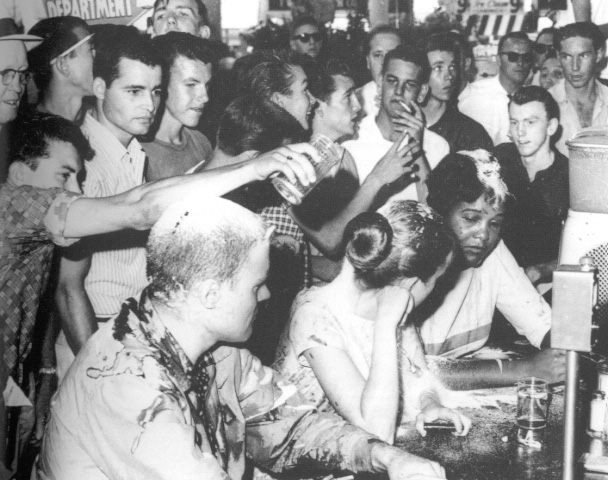
Alabama Governor George Wallace

Alabama Slavery Codes made teaching Mulatto, Indian and indentured slaves illegal.
  • Alabama, 1833, section 31 - "Any person or persons who attempt to teach any free person of color, or slave, to spell, read, or write, shall, upon conviction thereof by indictment, be fined in a sum not less than two hundred and fifty dollars, nor more than five hundred dollars."
  • Alabama, 1833, section 32 - "Any free person of color who shall write for any slave a pass or free paper, on conviction thereof, shall receive for every such offense, thirty-nine lashes on the bare back, and leave the state of Alabama within thirty days thereafter..."
  • Alabama, 1833, section 33 - "Any slave who shall write for any other slave, any pass or free-paper, upon conviction, shall receive, on his or her back, one hundred lashes for the first offence, and seven hundred lashes for every offence thereafter..

Tuesday, March 5, 2013

Florida Legislature Apologizes for State's History of Slavery


From NPR News, "Acknowledging Florida's History of Slavery," by Diane Roberts, on 6 April 2008 -- DIANE ROBERTS: Floridians like to pretend our state is not part of the South. Geographically, yes, we happen to hang off the end of Georgia and Alabama. But we're not Georgia, not Alabama, we're Mickey Mouse and Margaritaville, sunshine and sand, not a land haunted by slavery, Jim Crow, the Klan, lynching.

That sad history surely belongs to someone else. But Florida had plantations; Florida had slaves. By 1830, Florida's northern half produced cotton, corn and rice, worked by people brought down from plantations in Virginia or bought in the St. Augustine slave market.


Rich white folks gave their big houses fanciful names remembered from Scotland or taken from poems, Waverly Little Egypt. On the eve of the Civil War, Florida was one of the fastest growing slave states in the South and the third to secede after South Carolina and Mississippi.

After the war Florida government behaved just like their counterparts in Alabama or Louisiana. They set up an apartheid system designed to maintain white supremacy. In the 1940s and 50s the Ku Klux Klan paraded down palm-lined boulevards in Florida's cities.


After the U.S. Supreme Court Brown versus Board of Education decision in 1954, Florida's white leaders reaffirmed their commitment to segregation. In 1956, the Reverend C.K. Steele organized a bus boycott in Tallahassee. There were lunch counter sit-ins, demonstrations riots, cross burnings.

And when Dr. Martin Luther King Jr. was assassinated in Memphis, Florida cities erupted in grief and rage.


These days most Floridians come from somewhere else. In Jacksonville and Tampa, Ft. Lauderdale and Miami, visible reminders of our past are few. Maybe a name -the Dixie Highway - or a high school named after Robert E. Lee. We can trace the outlines of old plantation lands, though now they're subdivisions and golf courses. We can see the faces of people whose great-great-grandparents were slaves, people who sometimes still suffer from the old race curse of America.

So it's good that Florida's legislators have finally acknowledged the state's history of slavery and prejudice. It's good that we Floridians, with our short memories, understand where we came from. Florida was, and is, part of the South. As William Faulkner said, the place where the past is never dead. It's not even past.


The Florida Cracker Lifestyle


As Reported by the Orlando The Sentinel, "Historian Provides View Of The Cracker Lifestyle," by Jovida Fletcher, on 3 December 1995  --  When Florida ranchers gathered in Kissimmee recently to review the history of the cattle industry and to celebrate the past 150 years of Florida's cattle frontier, local historian Brenda Elliott lent a hand.

In addition to serving as consultant, committee member and co-editor of the proceedings, Elliott provided one of the 13 papers presented at the first Florida Cattle Frontier Symposium.

The symposium, sponsored by the Florida Cattlemen's Association and the Florida Cracker Cattle Breeders Association, provides a wealth of information on the cattle industry in Florida.

Elliott, who has lived in Kissimmee for four years, is a descendant of some of the country's earliest pioneers. Her ancestors came to America in the 1630s.

''They spent a century and half in Massachusetts before Vermont opened up for settlement around 1790,'' she said.


Her father's family, the Everett Merryfields, drove stage coaches around Windsor, Vt., and her great-grandfather had stages in Sandwich, N.H., in 1900.

''They drove on what was known as 'Down the Mass Road,' where they hauled tall timbers down to the coast to ship to England for ship building,'' she said.

Elliott's information for her paper, ''Florida Cracker Cattle Lore: The Florida WPA Files,'' came from information gathered in the

the 1930s by field workers in the Federal Writers' Program of the Works Progress Administration. Those workers found Florida's folklore fascinating as they wrote of the Florida Cracker's lifestyle.


She found that WPA field workers often did not believe the Florida Cracker was too eager to work in those days. One wrote: ''There is a complaint on the Florida farms of the scarcity of help, just as there is in other parts of the country. One farmer who tried to hire a native received this reply: 'What for should I work? Hit don't cost but $35 a year to live and I've got $40.'''

Another, she said, overheard a conversation in the Everglades: ''Sam, I want you to clean up my yard today. It needs mowin' and rakin' mighty bad.''

''Yessuh, boss. But how much is you gonna pay me?''

''You go ahead and do the work and I'll pay you whatever you're worth.''

''No, suh,'' said Sam. ''I can't afford to work for that little.''

One field worker found that in the 1930s Kissimmee did not have a ''modernly equipped laundry. Rather, practically every house had its blackened kettle resting on an iron tripod or a tottering support of broken bricks where the family laundry was done.''

Elliott learned that Cracker schools and churches were not held in high regard by the field workers. One reported that one Cracker father removed his children from school ''because their angry sire declared he 'warn't a-sending his young 'uns to no teacher that learned 'em to spell 'taters with a 'p' .''


The field wroker described the Crackers' ''little church'' as perhaps the best-kept of the neighborhood structures. Crackers, he wrote, attended church in large numbers, and revivals were frequent and well attended.

Field workers found that the Crackers' foodstuffs were of near royal quality and included bakin' 'taters - newly dug sweet potatoes sweetened by being buried in Florida sand for several weeks - Hoppin' Johns, a mixure of lima beans, rice and corn, or black-eyed peas and rice.

Crackers cooked outdoors most of the time. A fire was built between three stones that served as supports for the kettles.


Food and communal meals dominated the Florida Cracker's daily and social life. The ''cane-biling'' was held at the time of the sugar cane harvest.

Neighbors gathered at some house where there was a cane mill and boiling pots. At night, a large fire was built and the folks sat around the fire and sang, laughed and told stories.

The purlow party, also called a pileau-picnic, brought together friends and neighbors, and each family brought a chicken or other ingredients for the pileau. The women cooked large pots of rice and boiled the chickens. The rice and chicken eventually were cooked together and seasoned.

The dance or frolic took place mostly in the daytime, as was the case with most recreation for early settlers. Fish fries were a favorite of older citizens in Osceola County and were major social events.


On the day of the fish fry, one worker wrote, the older boys and men rose before daybreak and rode on horseback to the site where the fish fry was to take place. Using both rods and guns, they fished and hunted squirrels and rabbits. By the time the women, children and older men arrived, riding in light wagons drawn by small horses or ponies, the fires would have been built and the men had the game and fish prepared for cooking.

Dinner usually included succotash, grits, game meat, fish, coffee and palmetto ''swamp'' cabbage.

The party packed up about 3 p.m., and the families returned to their homes, as it was the custom then to always be home before dark.

Cracker houses in those days usually had a roofed-over opening between two parts of the house, known as a breezeway. Of the adjoining rooms, one usually was used for sleeping, the other for cooking and eating. The breezeway served as the sitting room.


One anecdote on the Florida Cracker's creativity in meeting his housing needs came from Tampa.

One worker wrote: ''William B. Hooker, the first cattle king of Florida, built the first large residence in Tampa. Soon after completion, his wife died and he married a Mrs. Cathcart from Ocala.

''Both had children who couldn't agree. To prevent friction, Hooker built two sets of stairs outside his big house, one on the west end, the other on the east end. The Cathcart children used the east stairs, the Hookers, the west, and Hooker and his wife used the inside stairs.''  (source: Orlando The Sentinel)

What's a Florida Cracker? - Part I


The Seminole House: The Chickee


As reported in The Orlando Sentinel, "Seminoles Build Profits With Chickee Heritage, by Michael Lafferty, on 18 July 1987  --  COCOA — Seminole Indian Joe Doctor has taken a piece of his heritage and turned it into a thriving business.

Doctor owns a Fort Lauderdale company that builds chickees, a simple, open shelter made from cypress and palm fronds that Seminole Indians used as dwellings for more than 100 years.

These days, chickees usually are found on sandy beaches at resorts, beside pools, at golf courses or in the back yards of homes.


Visitors to the Florida Keys might have watched a sunset while under a chickee at one of the islands' waterside ''tiki bars.''

Four chickees costing $10,500 are being built on the Cocoa campus of Brevard Community Collegeat the edge of Clear Lake near the student center. The structures, framed with cypress poles and roofed with about 8,000 palm fronds, should be completed this weekend.

Patrick Smith, director of college relations for BCC and author of several novels focusing on Seminole Indians, said the chickees will serve a dual purpose as shelters for picnic tables and for a Seminole festival the college plans to hold in October.


''This way anyone who wants to see what one looks like can come here,'' Smith said. ''This will be a typical Seminole village.''

Motioning toward one chickee, Bryan Cohen, a consultant to the Seminoles, said, ''That'll be here longer than you and I put together. The good thing about it is nobody else knows how to make them.''

Though declining to disclose sales figures for Big Cypress Chickee Builders, Cohen said it is a profitable business. At $8 a square foot, a 10- by-10 chickee would cost $800, he said. At BCC, the company is building three chickees that are 12 by 20 feet and one that is 26 by 30 feet.

Doctor incorporated the business about three years ago and said he has as much work as he can handle.


The business originally belonged to James Billie, now chairman of the Seminole Indian tribe. Doctor, Billie's cousin, took over the business after Billie became involved in tribal politics.

Big Cypress Chickee Builders has built hundreds of chickees, which means ''house'' in Seminole, most of them in South Florida, Cohen said. Earlier this year the Seminoles traveled to Osceola County to build a village for the county's centennial celebration. Later this year the company will build chickees on Bimini at the resort former presidential candidate Gary Hart visited during his famous trip with Donna Rice, Doctor said.


Doctor said he has no qualms about making money from a part of his heritage, asking, ''Isn't it kind of like buying a pizza from Italians?''

Smith, an expert on Seminole history, said chickees were first used about 130 years ago during the Seminole Indian wars when the Indians needed a shelter they could build quickly.

''We were getting chased around then,'' said Doctor.

Seminoles continued to live in chickees until several decades ago, when they began moving into cinderblock houses. Still, said Doctor's wife and partner, Jane, many Seminole homes have a chickee in the yard and families spend as much time there as in the house.


''You can go to a lot of houses and see most of their possessions outside in the chickee,'' said Jane Doctor, a Creek Indian.

But besides making money, the chickee construction business also passes on to young Seminoles a part of their heritage, Cohen said.

Doctor hires mostly young Indians who live on reservations in South Florida.

''Eventually, if they don't build these, it's an art that's going to die,'' Cohen said. (source: The Orlando Sentinel)


The chickee (from the Seminole word for "house") was developed during the early 1800s when the Seminoles were pursued by U.S. troops. The palmetto thatched roof on a frame of cypress logs met the Seminole's need for a fast, disposable shelter while on the run.

Under Color of Law: Julian Bond


As reported in the New York Times,  "Students’ Knowledge of Civil Rights History Has Deteriorated, Study Finds," by Sam Dillon, on 28 September 2011  --  When Julian Bond, the former Georgia lawmaker and civil rights activist, turned to teaching two decades ago, he often quizzed his college students to gauge their awareness of the civil rights movement. He did not want to underestimate their grasp of the topic or talk down to them, he said.

“My fears were misplaced,” Mr. Bond said. No student had heard of George Wallace, the segregationist governor of Alabama, he said. One student guessed that Mr. Wallace might have been a CBS newsman.

That ignorance by American students of the basic history of the civil rights movement has not changed — in fact, it has worsened, according to a new report by the Southern Poverty Law Center, on whose board Mr. Bond sits. The report says that states’ academic standards for public schools are one major cause of the problem.


“Across the country, state educational standards virtually ignore our civil rights history,” concludes the report, which is to be released on Wednesday.

The report assigns letter grades to each state based on how extensively its academic standards address the civil rights movement. Thirty-five states got an F because their standards require little or no mention of the movement, it says.

Eight of the 12 states earning A, B or C grades for their treatment of civil rights history are Southern states where there were major protests, boycotts or violence during the movement’s peak years in the 1950s and ’60s.


“Generally speaking, the farther away from the South — and the smaller the African-American population — the less attention paid to the civil rights movement,” the report says.

Alabama, Florida and New York were given A grades. Those states require relatively detailed teaching about the decade and a half of historic events, roughly bookended by the Supreme Court’s 1954 school desegregation ruling and the April 1968 assassination of the Rev. Dr. Martin Luther King Jr. and the enactment of the federal Civil Rights Act a week later.

Many states have turned Dr. King’s life into a fable, said Mr. Bond, who now teaches at American University and the University of Virginia. He said his students knew that “there used to be segregation until Martin Luther King came along, that he marched and protested, that he was killed, and that then everything was all right.”

Alabama, Florida and New York require teaching not only about Dr. King but also about others like James Meredith, who in 1962 became the first black student to enroll at the University of Mississippi; Medgar Evers, the rights organizer murdered the following year in Jackson, Miss.; and Malcolm X, the Muslim minister who challenged the movement’s predominantly integrationist goals.

Some experts in history education criticized the report’s methodology. Fritz Fischer, a professor at the University of Northern Colorado who is chairman of the National Council for History Education, said it was unfair to give Colorado and some other states an F because of vague state history standards, when they are required by state constitutions or laws to leave curriculum up to local districts.

“The grading system they came up with does a disservice in putting the focus on requirements that certain states are unable to meet and will never be able to meet,” Dr. Fischer said.


Even though Colorado’s standards barely mention the civil rights movement, some Colorado schools teach the civil rights movement thoroughly, he said. “I’ve been in classrooms and watched them teach about the sit-ins and about the controversies between Martin Luther King and Malcolm,” he said.

The report is by no means the first to sound an alarm about nationwide weaknesses in the teaching of American history.

Over the past decade, students have performed worse on federal history tests administered by the Department of Education than on tests in any other subject. On the history test last year, only 12 percent of high school seniors showed proficiency.


The law center’s report noted that on that federal test, the National Assessment of Educational Progress, seniors were asked to read a brief excerpt from the Supreme Court’s 1954 Brown v. Board of Education ruling, including the phrase, “Separate educational facilities are inherently unequal.” Only 2 percent of the seniors were able to state that the ruling had been prompted by a school segregation case.

“I appreciate that they are shining a light on this,” said Kathleen Porter-Magee, a senior director at the Fordham Institute, a conservative Washington research group that produced its own report card on states’ American history standards this year. “We found that U.S. history standards were generally mediocre to awful, and this report finds the same thing.”


Even in schools that try to teach history rigorously, the civil rights movement may get short shrift because in the traditional chronological presentation of United States history, teachers often run out of time to cover post-World War II America, said Maureen Costello, a director at the poverty law center who oversaw and edited the report, titled “Teaching the Movement: the State of Civil Rights Education in the United States 2011.”

One reason the center decided to produce the report now is that 2011 is the 50th anniversary of crucial 1961 events, including the freedom rides.  (source: The New York Times)

Under Color of Law

Skulls, Scalps and Seminoles


Exploration of the history of science in Florida during the decades before and after the beginning of U.S. governance in 1821. The lecture emphasizes the context of violence in Florida shaped scientific practices in the region as well as knowledge circulating throughout the United States of Florida's native peoples and natural history. The overlap between science and violence reached its climax during the Second Seminole War, when U.S. Army surgeons and other amateur naturalists were both the targets of Seminole attacks and the perpetrators of brutalities against Florida's Indians. Most notably, white naturalists in Florida collected, analyzed, mutilated, and exported the remains of Florida's Indian dead, particularly the skulls of both long-buried and recently killed Seminoles. Although they carried out their grisly work in an isolated region, the practices, specimens, and ideas of these skull collectors had a lasting influence on scientific approaches to Indian remains throughout the United States.

Speaker Biography: Cameron B. Strang was a resident scholar in the John W. Kluge Center of the Library of Congress.Uploaded on Sep 2, 2011

Skulls, Scalps and Seminoles: Science and Violence in Florida, 1800-1842

La Florida Cartoons

THE GRANDADDY  of FLORIDA LAND DEALS!

The Seminole Marched Toward The White Men 400 Strong.  After Each Verse Of Their Song, They Gave A Loud Scream.

And So Began In 1823, The Ceremony For The Treaty Of Moultrie Creek.

In The Treaty The Seminole Had To Give Up Most Of Florida, Some 28 Million Acres.

In Exchange They Received About $221,000.

That's Roughly 3/4 Cent Per Acre!

Visit The Ah-Tha-Thi-Ki Seminole Museum.

La Florida Explore It With A Friend!
(source: http://www.floridasromanticpast.com/)


SHE SET PEOPLE FREE

In 1805, Pensacola Was Part of Spanish Florida.
As A Free African American, Julee Panton Developed Keen Skills in Real Estate.

She Is Legendary In The Pensacola Black Community For Using Her Business Profits To Buy Slaves.  Then She Let Them Work To Payoff Their Slave Price.

With That Money She Bought More People To Set Free!
Visit Her Cottage in Historic Pensacola Village.
(source: http://www.floridasromanticpast.com/)

Monday, March 4, 2013

La Florida and the Spanish Empire


As reported in the AP Big Story, "Florida Celebrates Its Spanish Heritage In 2013," by Suzette Laboy, on 2 January 2013 --  MIAMI (AP) — When Juan Ponce de Leon searched for riches in Florida, he unknowingly helped turn the Sunshine State into the first travel destination in the United States.

In April 1513, the Spanish monarchy contracted the explorer to find another island off of Cuba that was rumored to have great riches. Instead he landed in Florida and named it "La Florida," after the "feast of the flowers" during Spain's Easter celebrations.


Five centuries later, the state is celebrating its Spanish heritage with a series of events throughout 2013.

"It was always seen as an exotic place," historian Dr. J Michael Francis said of Florida. "That's something that Florida tourism continues to market on some level."

Although Florida's history dates back more than 12,000 years with Native Americans, the statewide campaign "Viva Florida 500" will highlight the start of a new era with de Leon's adventurous voyage to the New World.

"He was the first visitor to the United States," said Will Seccombe, president and CEO of Visit Florida, the state's official tourism marketing corporation. "That's 500 years of explorers and they kept coming back."

Tourism is Florida's No. 1 industry, responsible for welcoming 87.3 million visitors in 2011, according to state official estimates.

Native American Tribes of Florida

Many visitors may know Florida mostly for its 825 miles (about 1,330 kilometers) of beaches or as the theme park capital of the world, but the "Viva Florida" campaign is designed to broaden their outlook, Seccombe said. The state will host 150 celebrations that "highlight cultural diversity and the art culture history that makes up the fabric of our communities."

After de Leon's visit, European settlers colonized in present-day St. Augustine, the nation's oldest city. Visitors to the city can find many references to the Spanish colonial era, from the massive Castillo de San Marcos fort that protected the city from attack, to the colorful Spanish architecture and narrow streets. (Full-scale replicas of Ponce de Leon's flagship will visit the city in April).

Slave Market, St. Augustine, Florida

De Leon probably wasn't the first European to set foot in Florida, and there is even debate on where he landed exactly: Melbourne Beach, St. Augustine or South Ponte Vedra Beach. But all of these suggested spots are based on fairly tenuous documentation.

"It's unlikely we will ever know the precise landing spot," said Francis, Hough Family Chair of Florida Studies at the University of South Florida in St. Petersburg, Fla. "There is no archaeological footprint. No logbook. And even if found, there's no guarantee we would even know from that."

The commemoration, he said, is not about pinpointing the Spanish legacy but about rediscovering "and maybe even discover for the first time Florida's colonial history."


Francis also wants to set the record straight about the search for eternal youth: There is no mention of the Fountain of Youth in de Leon's contracts with Spanish crowns or in his own writings, Francis said.

"Over time that story became more embellished," Francis said. "What started as a myth ended up in the writings of later historians and chroniclers as history."

But the legend lives on in Florida's 700 natural springs and with spas, health resorts and yoga retreats.

St. Augustine

Kicking off the 2013 celebration of European discovery was "La Gran Naranja" or the "Big Orange" drop — a 35-foot LED neon orange LCD descending from the side of a downtown Miami hotel on New Year's Eve. The word naranja comes from the sweet Valencia orange the Spanish introduced to America, later becoming Florida's official state fruit.

Throughout the year, 150 events across the state will mark the anniversary: Drive the Spanish Heritage Trail. Dive on historic shipwrecks. Tour a Spanish basilica and mission village. Visit orange groves and cattle ranches. Taste the flavors of Florida. Other events will include plenty of festivals with re-enactments and other things to do in addition to visiting the beaches and theme parks the state is famous for.  (source: http://bigstory.ap.org/article/florida-celebrates-its-spanish-heritage-2013)

Dr. J. Michael Francis, La Florida and the Spanish Empire: Sources, Contexts, and Controversies

Dr. J. Michael Francis, La Florida and the Spanish Empire: Sources, Contexts, and Controversies from New Mexico History Museum on Vimeo.

Bartolomé de las Casas


Bartolomé de las Casas, a Dominican friar, writer, and advocate for the humane treatment of the indigenous people of the Americas, was one of the most important religious figures of the 16th-century Spanish world. As Spain struggled to develop a policy regarding the peoples of the New World, Las Casas, spent years attempting to expose the abuses that the native population was subjected to under the encomienda system. He also devoted a great deal of energy trying to convince the Spanish Crown that its mission to spread the Christian faith in the Americas did not have to deprive indigenous people of their freedom, sovereignty, and property rights.

Las Casas's early years gave no indication he would become such a fierce advocate for indigenous rights. He was born in Seville at the cusp of Spain's age of exploration. His father, Pedro de Las Casas, sailed with Christopher Columbus's second expedition to the New World, returning to Spain in 1499 with little gold but a treasure trove of stories about the lands and people he had seen. At age 18, Las Casas sailed to the Caribbean with 2,500 men and women who planned to settle there permanently. On Hispaniola (now Haiti and the Dominican Republic) he found favor with the governor who soon granted the young man land and one hundred native laborers.


Las Casas returned to Spain a few years later and traveled to Italy where he was ordained a priest in 1507. Five years later, as the chaplain of a Spanish expedition, he arrived in Cuba. After witnessing a brutal massacre of indigenous Americans by the Spanish in 1514, he renounced his property and began to preach against the cruel subjugation of the native people in the Spanish colonies. Devoting his life to relieving their suffering and converting them to Christianity in a kind and loving way, he wrote that "everything perpetrated on the Indians in these Indies was unjust and tyrannical."


For several years, Las Casas unsuccessfully attempted to establish a colony of farm communities made up of Spaniards and indigenous Americans in what is now Venezuela, but his efforts were disrupted by saboteurs who stirred up violence against the natives. He returned again to Spain and focused his writings on his campaign for indigenous rights. His arguments influenced the New Laws of 1542, which prohibited the enslavement of indigenous people, called for the establishment of institutional mechanisms to protect native people from labor abuses, and promised the end the encomienda system. However, questions about how to incorporate the native people into the Spanish colonial order and legal system continued to be controversial, as larger forces conspired against Las Casas's ideas.

The cause by which the Christians have been driven to kill and destroy so many—such an infinite number of souls—has been simply to get the Indians' gold.


 Bartolomé de Las Casas  --  In 1550 at the request of King Charles V, Las Casas participated in a debate about the treatment of the indigenous people with Juan Ginés de Sepúlveda, a leading Spanish scholar, at the Council of Valladolid. The objective of debate was to discuss the intellectual and religious capacities of the native people, questions that were tied to the larger issue of the right that Spaniards had to make war upon them, rule over them, and to take over their properties. Sepúlveda argued that the Indians were "natural slaves" (an Aristotelian concept that posited that there are people who by their nature or lack of rational capacities are born to be ruled by others) and that it was therefore legitimate to reduce them to slavery or serfdom. His arguments were popular among the colonists and landowners who benefited from the system in Spanish America, while members of the monarchy and the Catholic Church tended to side with Las Casas, in part because they wanted to decrease the power of the encomenderos.

The debate, which lasted for five days, was declared a draw by the judges, and did not have a clear outcome or effect on the treatment of the native population. Las Casas's ideas, however, had already left their mark on the New Laws of 1542 and helped to bring about the decline of the encomienda system.

After the debate, Las Casas returned to writing and spent the rest of his life fighting for the rights of the indigenous peoples of the Americas. He inadvertently helped to ignite a propaganda campaign against Spain known as the "black legend" with his Short Account of the Destruction of the Indies (1552). This searing indictment of Spanish greed and brutality in the New World was used by the country's adversaries as evidence of Spanish ruthlessness. Historians from England, France, the Netherlands and elsewhere used the book not only to vilify Spain but to try to advance the interests of their countries in the New World. (source: PBS)

The Rise of the Spanish Empire, From Columbus to Magellan

RIVERS OF GOLD: The Rise of the Spanish Empire, From Columbus to Magellan. By Hugh Thomas.

As reviewed in the UK Guardian, "Spanish ties: Miranda France enjoys Hugh Thomas's new look at the conquistadors, Rivers of Gold," by Miranda France, on 6 February 2004  --  In 1992, the 500th anniversary of Columbus's first journey to the new world was celebrated with great fanfare in Spain, though across the Atlantic feelings were understandably more mixed. Not all Latin Americans cherish their continent's "discovery" by the conquistadors. Friends of mine even tried to boycott the date by calling the year 1991 + 1 - an effort that proved hard to sustain much beyond February.

Of course, Columbus never set out to find a new world. His plan was to sail west until he reached Asia, thus establishing a new trading route to the "Spice Islands" and conclusively proving the world to be round. He had to spend six years traipsing after the court of Fernando and Isabel, as it moved around Spain, before finally persuading the monarchs that this was a cause worth backing.


Rivers of Gold takes in the first 30 years of conquest, centered on the Caribbean, with incursions into the mainland, and finally Magellan's journey south to Patagonia. Hugh Thomas follows the conquistadors while tracking in Spain the evolution of a policy towards these new lands and peoples. Previous accounts have concentrated on the swashbuckling, but here the conquistadors are no more prominent than the bureaucrats, theologians, lawyers and philosophers who helped shape the new empire. This is not so much a blow-by-blow account, as one measured in committee meetings. It's a fascinating read, backed up by a meticulous index and notes.

There are some memorable portraits. Of Columbus, Thomas says he had "neither a sense of judgment nor of humour, and never joked about himself. He was pious and on Sundays did nothing except pray". He was also obsessed with the idea of liberating Jerusalem, and with the coming of the Anti-Christ.


His determination to reach Asia blinded Columbus to everything else. On his second voyage he even made his sailors sign a statement swearing they had seen the mainland of China - and they had to maintain that opinion or have their tongues cut off. Columbus believed it until he died, and it was left to a less experienced explorer to bestow his name on the continent. Amerigo Vespucci sailed down the coast of Brazil in 1501-2 and realized that it extended too far south to be India. He was the first to talk of a "new world".

Columbus apparently expected to be received by the shogun of Japan or the emperor of China, and was unprepared for the cheerful, semi-naked people who welcomed him and his men at the island he named La Española (now Haiti and the Dominican Republic). Regarding them as sinners, he was interested only in the ones who could lead him to gold, and it wasn't long before he was proposing shipping Indians back to Spain as slaves. But the Catholic kings had qualms - surprisingly, since there was a flourishing market in Spain for African slaves. They summoned a committee, which thought that, on the whole, it was not right. The monarchs ordered that, so long as the natives were "submissive", they should be treated well and educated. Each family should have its own house, and mixed marriages were to be encouraged.


That sounds laudable, but when gold was found, who was going to provide the back-breaking labor  It was expedient to find Indians who were not "submissive" - then you could argue that they were cannibals and deserved enslavement instead of protection.

Thomas is keen not to let compassion for the Indians obscure the accomplishments of the Spaniards, and much space is given to the defenders of the Indians' rights, notably Bartolomé de las Casas and the Dominican monk Fray Montesino, who so deplored the behavior of Spaniards on La Española that he refused to hear their confessions. But why did Las Casas, among others, think that the key to liberating the Indians was to enslave Africans and bring them to the Indies? Thomas does not really explain this paradox.


The conquistadors were instructed to read to any indigenous people they encountered a statement that briefly explained God, from the creation story to the pope's supremacy, before requiring listeners to opt for baptism and a civilized life under the Spanish crown. They could refuse, but "we emphasize that any deaths and losses that may arise from this are your fault" (Spanish bureaucrats again).

We can only imagine the bafflement of Indians who were read this document, sometimes without the benefit of translation, or from a ship moored out of earshot, or with nooses around their necks. In Cuba an Indian leader was offered a Christian death and burial if he converted. He is supposed to have said that if Christianity meant an eternity spent in the company of Spaniards, he would prefer not to be baptized. He was burned accordingly.


Thomas argues that the Spaniards were driven by a desire to spread Christianity, but it is hard to get beyond their lust for gold. One Indian leader described it to the conquistador Nuñez Balboa as "a thirst that torments you". This book's very title alludes to the greed of conquistadors who thought they would be able to fish for gold in rivers.

Even if he is not always persuasive, Thomas is very engaging. So many historians, even in print, seem to address the back of the lecture hall. Thomas speaks directly and doesn't make you feel stupid. His clear-eyed history of the Spanish civil war is now a standard text in Spain. Here, too, he writes clearly and enlivens the story with telling details. We hear about the books people were reading and what they ate, and of how Queen Isabel traveled around Spain, accompanied by 25 choristers and chests full of tapestries. We learn that the 80 men who sailed with Columbus on his first voyage took salted cod, bacon, flour, wine, olive oil and water to last a year. What is missing, presumably because they don't exist, are first-hand accounts from settlers. We know about the adventurers and the opportunists, but what of the men who married local women, raised families and put down roots in this new land?


Of all the advisers on policy in the Indies, one seems to have got to the heart of the matter. In 1518 Alonso Zuazo urged married couples to come to Spain "so that they could develop a real love of the land". It didn't really happen, and 500 years on the consequences are obvious. North America owes much to the vision of its early settlers, while Spain's legacy in Latin America is too many bureaucrats and not enough love.  (source: The Guardian; · Miranda France is author of Bad Times in Buenos Aires and Don Quixote's Delusions: Travels in Castilian Spain. )

CLICK HERE to watch Lord Thomas talk about his book Rivers of Gold: The Rise of the Spanish Empire, from Columbus to Magellan, on C-Span's BookTV.

HOME

HOME
Click here to return to the US Slave Home Page