Monday, October 22, 2012

Texas Prison Empire


From the Open Society Foundations, "Texas Tough: An Interview with Robert Perkinson," by Adam Culbreath, on 31 March 2010 --Your new book, Texas Tough: The Rise of a Prison Empire, paints a pretty dismal and disturbing picture of the history of incarceration in the state.

There’s not much happiness in the history of imprisonment—an inmate who had done forty-three years once wrote to me, “prison is always bad, sometimes worse”—but there is even less in Texas.


In the South, the ethic of rehabilitation never really took hold. Prisons were built not to educate or cure but to impose vengeance and extract labor. So even though good intentions have gone awry in Northern prisons, bad intentions have gone to even worse places in the South.

Most distressing is that Texas prisons have not overcome their history. The record is full of atrocities and miscarriages of justice: emancipated slaves convicted of petty offenses and sold off to the highest bidder; unpaid convict laborers worked to death in coal mines and sugar plantations; community lynchings and assembly-line executions; countless sexual exploitation scandals. Some of the most egregious abuses have faded with the passage of time, thanks to successive reform movements, but by many measures Texas is dispensing harsher justice today than it ever was. Twenty-first century inmates are less likely to get beaten up by guards or worked to exhaustion, but they’re more likely to spend their natural lives in prison, often in supermax storage facilities that wall them off from all human contact. In the prison business, chronology doesn't necessarily beget progress. (source: Open Society Foundations)


TEXAS TOUGH: The Rise of America’s Prison Empire, By Robert Perkinson

In the American popular imagination, Texas is a place of myth. Even people outside the state, who may never have set foot on Texas soil, have well-formed and detailed notions—however inaccurate—of what the state is, or at least what it represents. What role has the mythology of Texas played in the evolution of it penal system?

Texas is a Southern state masquerading as a Western state. Its myth stems from the violence of the frontier, and to a certain extent, the legacy of conquest has shaped the culture of law enforcement, particularly in the case of the revered (or feared) Texas Rangers. But the state’s prisons have grown out of alternate historical seedbeds that many Texans would just as soon forget: slavery and white supremacy.

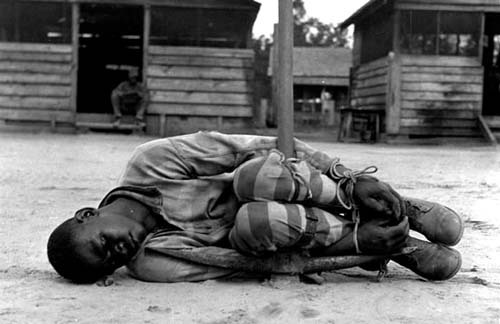
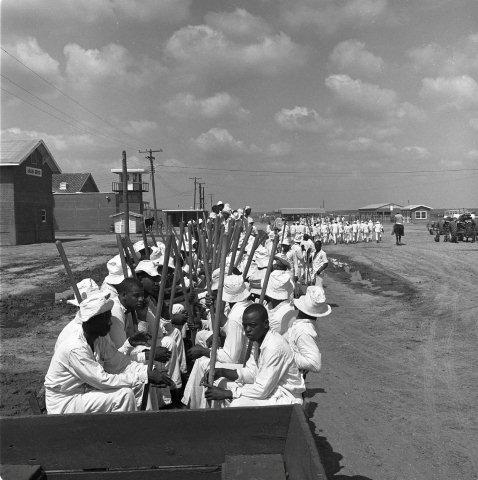
Until the 1980s, all of the state’s penal facilities were located in East Texas, the former slavery belt. Even now, gangs of unpaid convict laborers—disproportionally made up of African Americans—trudge out to the fields under the command of mounted overseers called “bosses.” Cotton and cane plantations like Ramsey, Wynne, and Eastham have operated continuously since the 1820s, but have never pulled in a crop with free labor. To a remarkable extent, Texas prisons have preserved the lifeways of slavery in carceral amber.


Through much of the nineteenth and twentieth centuries, Texas’s implacable style of punishment predicated on hard labor, corporal punishment, and racial debasement made the state a backwater in the eyes of progressive penologists. But as the country’s conservative counterrevolution gained strength in the post-civil rights period, Texas’s singular severity garnered outspoken admirers; the state’s prison system became not a blot on civilization but a model to emulate.

The punitive ethos that I’m calling “Texas tough” gets cast as no-nonsense justice passed down from hardscrabble pioneers, but in reality it represents the resurgence of Southern conservatism in American politics, the final revenge of the Confederacy on the Union. (source: Open Society Foundations)


Why is the American South so punitive?

It’s an under-appreciated fact that America’s exceptional prison boom ignited and reached greatest explosive force in the South. The region accounts for roughly a third of the U.S. population but houses almost half of state prisoners; Southern states are responsible for 83 percent of all executions in the United States since 1976.

There are a variety of factors implicated in Southern punitiveness: violent crime rates are higher, in both rural and urban areas; social welfare spending, which can help prevent crime, is more anemic; educational attainment lags; partisan politics remains rigidly polarized by race. All of this stems, I argue, from the history of slavery—the engine of economic growth and social formation in the South for more than a century before the Civil War—and Jim Crow, which governed the region for a century thereafter. Slavery and segregation fostered a political culture based on localism, anti-governmentalism, interpersonal retaliation, and suspicion of all things progressive, from science to rehabilitative penology. That political inheritance continues to have resonance, two generations after the victories of the civil rights movement; we see echoes of Dixiecratic demagoguery in the Tea Party movement, for instance. As Alexis de Tocqueville once remarked, “Although the law may abolish slavery, God alone can obliterate the traces of its existence.”


In Texas, the pronounced strain of racial violence that runs through the state’s history—not just against African Americans but Indians and Native Americans—adds punitive punch. Rather recently, by historical standards, the state played host to vicious and protracted warfare against the Comanche and other indigenous peoples; massacres and ethnic cleansing of Mexicans continued into the twentieth century. This volatile and divisive history gives the state’s political culture, and its criminal justice institutions, a razored edge. (source: Open Society Foundations)

Your book posits that race should be a more explicit and central part of the contemporary discussion around crime and incarceration. How does a heightened awareness of race change the dynamics—and potential outcomes—of the conversation?

Everyone recognizes that race is an important variable in criminal justice. The statistics are too stark to ignore. Black men in America are more likely to go to prison than earn a bachelor’s degree or serve in the armed forces.A recent study found that 1 in 4 African American children have a father in prison.Curiously, though, relatively few social scientists have made race a central category of analysis; it’s treated as an externality, not an engine. 


Because it’s difficult for us to think clearly about our own moment in time (we’re overwhelmed by complexity and can’t always discern meaningful patterns), I decided to step back and examine the role of race and racism in criminal justice over the longue durée, from the first epoch of American unfreedom, slavery, to our own, mass incarceration.

I found that race has always been a driving force in public policy debates, usually a malign one, from the birth of the republic forward. In particular, I argue that the watershed developments surrounding the Civil War can help us understand the punitive turn since the 1960s. In the nineteenth century, white conservatives lost on slavery, but by means both legal and nefarious were able to forge a new, similarly stratified social order based on de-jure discrimination, command labor relations, and convict leasing. In the twentieth century, white conservatives lost on integration but retreated to criminal justice, substituting, in effect, segregated drinking fountains for merciless sentencing statutes. Chased out of the free world, Jim Crow moved behind bars. (source: Open Society Foundations)
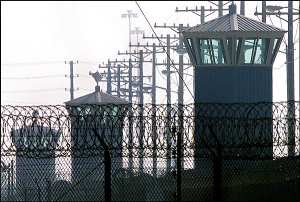

Is Texas a bellwether? If so, what trends are—or should be—ripe for export?

In the postwar period, California stood for the future, but Texas is the paradigmatic state of conservative counterrevolution. In criminal justice, the Lone Star State has led the way in prison privatization, mandatory sentencing, supermax confinement, and, of course, lethal injections. The result is a $3 billion behemoth, the Texas Department of Criminal Justice, that governs the lives of 705,000 prisoners, parolees, and probationers—equivalent to the population of Austin.

Very little of this merits export. On the other hand, some Texas lawmakers are starting to sober up from their prison binge. Over the initial objections of Governor Rick Perry, the legislature passed significant probation reforms in 2007 that are already starting to temper the pace of prison growth.Downsizing is what we need, but this is a step in the right direction. (source: Open Society Foundations)


Texas Tough is a work of history. But it also, I imagine, makes a case for why the past matters for the present and the future.

Looking at crime and punishment in a wide historical frame reveals just how exceptional this moment is. For most of the twentieth century (for as long as we have accurate records), the United States incarcerated about 1 out of every 100,000 people, but the rate has quintupled since the 1970s. Now the United States locks up about 1 of every 100 adults, for a total of 2.4 million.No other democracy has ever done anything like this.

One of the points I want to make clear in the book is that the rise of the U.S. prison state constitutes a momentous pivot in American history, comparable in scale (though with inverted effects) to the Progressive Era or the New Deal. To me, this means that a powerful, wide-ranging social movement will be necessary to change course. Criminal justice should be the civil rights arena of the twenty-first century. (source: Open Society Foundations)

As a student in the 1980s and 1990s, you led student delegations to El Salvador, Cuba, and Angola; established a free HIV-testing program at the University of Colorado; organized for graduate student unionization at Yale; and co-founded a criminal justice reform coalition in Connecticut. How has your student activism informed your work as a historian?

Enormously. In the book I examine a series of grassroots movements that tried, generally without success, to dislodge Texas’s penal system from its slaving foundation: opponents of convict leasing in the late nineteenth century, feminist humanitarians in the 1920s who proposed replacing the state’s prison plantations with a centralized criminal treatment facility, and prisoners’ rights radicals who challenged their keepers in federal court. Had I not been involved in so much community organizing myself, I think I would have had greater difficulty understanding my research subjects, their tactical choices, and the formidable challenges they faced.  (source: Open Society Foundations)

CLICK HERE TO WATCH Robert Perkinson, American studies professor at the University of Hawaii at Manoa, presents a history of America's prison system and examines its roots in Texas ON C-SPAN. 

Sunday, October 21, 2012

Louisiana: The Prison Capital of the World


From NPR, "How Louisiana Became The World's 'Prison Capital'" from Fresh Air from WHYY reported on 5 June 2012 -- In the past two decades, Louisiana's prison population has doubled. A new expose by The Times-Picayune of New Orleans calls Louisiana the "world's prison capital."

The state imprisons more people per capita than any other state or country in the world, with one out of every 86 adults behind bars. Its rate of incarceration is three times higher than Iran's and 10 times higher than Germany's.

How did Louisiana double its prison population in the past 20 years? And what differentiates it from other states?

Times-Picayune special projects reporter Cindy Chang

The difference, says Times-Picayune reporter Cindy Chang, is that more than half of the inmates in the state are housed in local prisons run by sheriffs, and the state's correction system has created financial incentives for those sheriffs to keep prisons full.

"In Louisiana, the system has grown so that sheriffs house a lot of inmates who are serving state sentences," Chang tells Fresh Air's Dave Davies. "And the reason the sheriffs are willing to do that is because they get money in return for doing that."

A majority of Louisiana's inmates are now housed in for-profit jails, which are run in many instances by parish sheriffs located in rural areas of the state. The sheriffs receive approximately $25 a day per inmate.


In some instances, sheriffs outsource the prisons to for-profit companies who then operate the prisons themselves. In exchange, the sheriffs receive cash for their department, which allows them to hire more employees.

"We went to Jackson Parish ... and what the sheriff there gets is a guaranteed $100,000 a year, whether the prison is making a profit or not," she says. "But what he really gets — and he was not shy about using this word — is the patronage. Because his department, prior to this, had 50 employees, and now it has 150 employees. In a place like that, 100 jobs with benefits is huge. And what he means by patronage, of course, is that he'll get re-elected if he keeps supporting these [prison] jobs."

Conditions at the rural sheriffs' prisons differ remarkably from those in larger state institutions, says Chang.


"They're usually dormitories, and there's typically 80 or 90 women or men sleeping in a large room in bunk beds," she says. "And the difference is that people are just lounging around that dorm. They will literally sit there day after day, year after year, until their sentence is over. Whereas in a state prison, which is where most states house almost all of their inmates, you're busy whether you like it or not — you have a job or you take classes or you're learning a trade that will help you get a job when you get out."

Each inmate is worth $24.39 a day in state money. Housing the inmates cheaply and providing few services means there's more money left over for the sheriff's department, says Chang.


"It's kind of a vicious cycle," she says. "If you can reduce the prison population, then hopefully you'll have more money to give the ones who are in the system more help. [But] the Sheriff's Association is one of the most powerful lobbies in the state. And they've consistently opposed any change that would reduce the prison population."

Louisiana's prison sentences are among the harshest in the country. The state leads the country in the percentage of inmates who are serving life without parole and exceeds the national average for the number of nonviolent offenders behind bars. Chang writes that a two-time car burglar can receive 24 years without parole. Three drug convictions can send a prisoner away for life.


Though the state's prison budget is $600 million, comparisons with other states are difficult, she says.

"Twenty-five dollars a day is incarceration on the cheap," she says. "In Louisiana state prisons they spend, on average, $55 an inmate, so the average in Louisiana comes out to $38 per day, per inmate, which is the lowest in the country. So if you look at the size of the budget, it's very misleading, because we're incarcerating two people to every one person in another state because we spend so little on them."  (source: NPRFresh Air from WHYY)

Thursday, October 18, 2012

Louisiana The Incarcerated

Jackson Parish Correctional Center
Jackson Parrish Correctional Center

From the New York Times, "Plantations, Prisons and Profits," by Charles Blow, on 25 May 2012  --  “Louisiana is the world’s prison capital. The state imprisons more of its people, per head, than any of its U.S. counterparts. First among Americans means first in the world. Louisiana’s incarceration rate is nearly triple Iran’s, seven times China’s and 10 times Germany’s.”

That paragraph opens a devastating eight-part series published this month by The Times-Picayune of New Orleans about how the state’s largely private prison system profits from high incarceration rates and tough sentencing, and how many with the power to curtail the system actually have a financial incentive to perpetuate it.

The picture that emerges is one of convicts as chattel and a legal system essentially based on human commodification.


First, some facts from the series:

• One in 86 Louisiana adults is in the prison system, which is nearly double the national average.

• More than 50 percent of Louisiana’s inmates are in local prisons, which is more than any other state. The next highest state is Kentucky at 33 percent. The national average is 5 percent.

• Louisiana leads the nation in the percentage of its prisoners serving life without parole.

• Louisiana spends less on local inmates than any other state.

• Nearly two-thirds of Louisiana’s prisoners are nonviolent offenders. The national average is less than half.


In the early 1990s, the state was under a federal court order to reduce overcrowding, but instead of releasing prisoners or loosening sentencing guidelines, the state incentivized the building of private prisons. But, in what the newspaper called “a uniquely Louisiana twist,” most of the prison entrepreneurs were actually rural sheriffs. They saw a way to make a profit and did.

It also was a chance to employ local people, especially failed farmers forced into bankruptcy court by a severe drop in the crop prices.

But in order for the local prisons to remain profitable, the beds, which one prison operator in the series distastefully refers to as “honey holes,” must remain full. That means that on almost a daily basis, local prison officials are on the phones bartering for prisoners with overcrowded jails in the big cities.

It also means that criminal sentences must remain stiff, which the sheriff’s association has supported. This has meant that Louisiana has some of the stiffest sentencing guidelines in the country. Writing bad checks in Louisiana can earn you up to 10 years in prison. In California, by comparison, jail time would be no more than a year.


There is another problem with this unsavory system: prisoners who wind up in these local for-profit jails, where many of the inmates are short-timers, get fewer rehabilitative services than those in state institutions, where many of the prisoners are lifers. That is because the per-diem per prisoner in local prisons is half that of state prisons.

In short, the system is completely backward.

Lifers at state prisons can learn to be welders, plumbers or auto mechanics — trades many will never practice as free men — while prisoners housed in local prisons, and are certain to be released, gain no skills and leave jail with nothing more than “$10 and a bus ticket.”


These ex-convicts, with almost no rehabilitation and little prospect for supporting themselves, return to the already-struggling communities that were rendered that way in part because so many men are being extracted on such a massive scale. There the cycle of crime often begins again, with innocent people caught in the middle and impressionable young eyes looking on.

According to The Times-Picayune: “In five years, about half of the state’s ex-convicts end up behind bars again.”

This suits the prison operators just fine. They need them to come back to the “honey holes.”

Furthermore, the more money the state spends on incarceration, the less it can spend on preventive measures like education. (According to Education Week’s State Report Cards, Louisiana was one of three states and the District of Columbia to receive an F for K-12 achievement in 2012, and, this year, the state, over all, is facing a $220 million deficit in its $25 billion budget.)


Louisiana is the starkest, most glaring example of how our prison policies have failed. It showcases how private prisons do not serve the public interest and how the mass incarceration as a form of job creation is an abomination of justice and civility and creates a long-term crisis by trying to create a short-term solution.

As the paper put it: “A prison system that leased its convicts as plantation labor in the 1800s has come full circle and is again a nexus for profit.” (source: New York Times)

One Dies, Get Another: Convict Leasing in the American South

Matthew J. Mancini. One Dies, Get Another: Convict Leasing in the American South, 1866-1928. Columbia, S.C.: University of South Carolina Press, 1996.


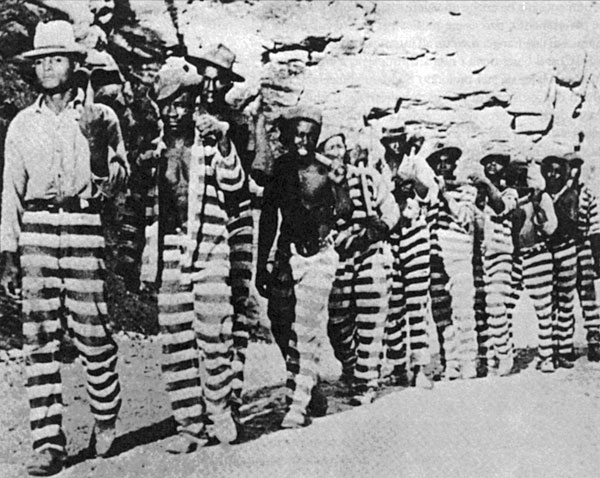
From H-Net, a book review by Garland Brinkley of the Department of Economics, School of Public Health at the University of California-Berkeley, on October, 1999 --  Several economic historians have asserted that African-Americans were better off in the aftermath of the Civil War. Ransom and Sutch's (1977) classic leisure for labor trade-off, for example, suggests that freedmen worked fewer hours and fewer days and that fewer members of the family spent time in the fields after the Civil War with the resultant higher utility (but lower income). What are noticeably absent from previous histories of the South, was the continuation of slavery under the even more brutal conditions driven by economic incentives. While most believe that the thirteenth Amendment abolished slavery and involuntary servitude, a loophole was opened that resulted in the widespread continuation of slavery in the Southern states of America -- slavery as punishment for a crime. According to the thirteenth amendment, "Neither slavery nor involuntary servitude, except as punishment for crime whereof the party shall have been duly convicted, shall exist within the United States, or any place subject to their jurisdiction." Matthew Mancini documents the widespread nature of post-civil war slavery in every state that composed the Confederacy except Virginia. His book is divided into three parts: part one addresses the convergence of forces (economic, racial, and political) that began the convict labor system and perpetuated the convict labor system; part two details the particular manifestation of the convict labor system in each southern state; and, part three explains the demise of the system that maintained African-Americans in slavery for a half century after the surrender by Lee at Appomattox.


This book details the darker side of our discipline when economic incentives prevail over simple humanity. Economically, when an asset is replaceable at no cost, money spent upon maintenance costs will lower profits. When the assets are human beings, duly convicted of (in many cases) racially motivated trumped up charges and obtained at low cost and through political machinations, the incentive is to work them as hard as possible and to spend little on food, shelter, clothing, medical care, etc., in order to maximize profits.


Georgia practiced the most undiluted and typical form of convict leasing of any of the southern states. However, political favoritism determined the issuance and bid price of convict leasing contracts and political pressures ensured no interference in the working and living conditions of the convicts. Average prison sentences lengthened dramatically during this period. Convicts were invariably leased to prominent and wealthy Georgian families who worked them on railroads and in coal mining. Even though reformers exposed the brutalities of the system in Georgia, the demise of convict labor in Georgia came about due to political reform and market forces when the bids that contractors had to pay for convict labor finally became equal to free wage rates.


Alabama used the convict labor system as an enormously successful revenue generating mechanism. Not only did convict leasing last longer in Alabama than in any other southern state, but it was also notable due to the extreme quantity of convicts in the system. Convict leasing began in Alabama in 1846 and lasted until July 1, 1928 when Herbert Hoover was vying for the White House. In 1883, 10 percent of Alabama's total revenue was derived form convict leasing while in 1898, 73 percent of total revenue came from this same source. Death rates among leased convicts were approximately ten times the death rates of prisoners in non-lease states. In 1873, for example, 25 percent of all black leased convicts died. Possibly the greatest impetus to the continuance of convict labor in Alabama was to depress the union movement.

Horse drawn metal cage is rectangular in shape.

Arkansas was notorious for the brutality of its convict leasing system resulting from the lack of official monitoring of convict laborers. Economically different from other southern states, Arkansas actually paid companies to work their prisoners for much of the time the system was in place. Arkansas' system of convict leasing was also quite political in terms of issuance of contracts and oversight or lack of oversight of convicts. No state official was empowered to oversee the plight of the prisoners and businesses had complete autonomy in the disposition and working conditions of convict laborers. Mines and plantations that used convict laborers commonly had secret graveyards containing the bodies of prisoners who had been beaten and/or tortured to death. Convicts would be made to fight each other, sometimes to the death, for the amusement of the guards and wardens.


Both Mississippi and Louisiana are extremely similar in terms of lack of oversight of their convict leasing population, almost exclusive use of convict leasing on agricultural plantations, and failure of the state to recoup any revenue from the system. Mississippi was noted as having epidemic death rates without an epidemic. Louisiana institutions seemed to be unable to distinguish between the terms 'slave,' 'Negro,' 'convict,' and 'farm work'. The lessees generally did not pay the full amount of the contract price to the state and usually paid nothing. Convicts were generally among the black population. For example, in Louisiana, a black social group consisting of thirty-eight members were convicted in a mock trial and sent to prison for contract labor.


Tennessee convict leasing lasted from 1871 to 1896 and was bitterly opposed by free miners from the beginning. The conflict between the huge Tennessee Coal, Iron, and Railway Company (TCI) and mining population was characterized by violence. This conflict resulted from the wage rate of the miners falling from $1.25 per ton of coal before convict leasing to just $0.50 wherever convict leasing was implemented. TCI admitted that the main reason it used convict labor was to break strikes and undermine union formation.

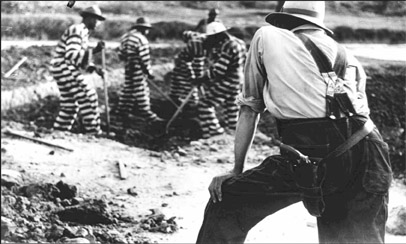
Old tractor pulls inmate standing on platform to level dirt on road

Texas, Florida, and the Carolinas each had their own unique features and economic issues with contract leasing of convicts. However, all were economically motivated and all were brutal, life shortening, and profitable for the lessees. Rarely did the state actually receive revenue but generally they did not experience a drain on the treasury. Texas convicts were concentrated mostly in sugar plantations, Florida's and the Carolinas' convicts were almost exclusively involved in railway building. Later in the century, the Carolinas shifted into state farms and county roads and out of railway building. Unlike the other southern states, only half of Texas inmates were black. However, the African-American convicts went to the sugar plantations while the white and Latino population were sent to less harsh and hazardous work.


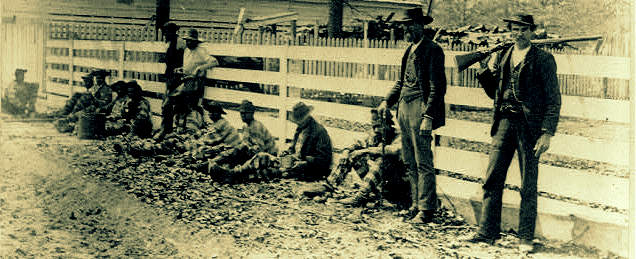
The convict labor leasing system came about mostly after the Civil War and in earnest after reconstruction due to the economic realities. The Southern States were generally broke and could not afford either the cost of building or maintaining prisons. The economic but morally weak and incorrect solution was to use convicts as a source of revenue or, at least, to prevent them from draining the fragile financial positions of the states. The abolition of the system was also motivated mostly by economic realities. While reformers brought the shocking truths and abuses of this notorious system before the eyes of the world, the real truth is far different. In every state, the evils of convict labor and abuses were in newspapers and journals within two years of implementation and were generally repeated during every election cycle. Mostly due to political reform, the process whereby convicts were obtained became market oriented. As a result, the costs to businesses rose until convict labor was comparable to free labor. Monopoly profits derived from rent seeking behavior no longer accrued to private firms ending the economic incentives of maintaining convict leasing. The convict leasing system was not abolished but merely transformed. Prisoners who labored for private companies and businesses increasing their profits now labored for the public sector. The chain gang replaced plantation labor. There was in truth little change in the lives of convicts themselves since life was still short and brutal but rather change occurred in the flow and distribution of money that spelled an end to the forced labor of postbellum "slaves."


This book is necessary for any serious student of the history of the postbellum South or any advocate of unfettered capitalism. The lessons to be drawn from this study can be applied to many of the policies proposed by the IMF or the World Bank fostered upon third world nations. While the circumstances surrounding the convict labor system in the aftermath of the Civil War can be considered unique, economic incentives and economic realities are unchanging and repeats of convict labor leasing are widespread today. (source: H-Net,)

The Reason Why the Colored American Is Not in the World's Columbian Exposition, by Ida B. Wells

The Convict Lease System

By Ida B. Wells Taken from the third chapter of "The Reason why the colored American is not in the World's Colombian Exposition," published in 1893.


The Convict Lease System and Lynch Law are twin infamies which flourish hand in hand in many of the United States. They are the two great outgrowths and results of the class legislation under which our people suffer to-day. Alabama, Arkansas, Florida, Georgia, Kentucky, Louisiana, Mississippi, Nebraska, North Carolina, South Carolina, Tennessee and Washington claim to be too poor to maintain state convicts within prison walls. Hence the convicts are leased out to work for railway contractors, mining companies and those who farm large plantations. These companies assume charge of the convicts, work them as cheap labor and pay the states a handsome revenue for their labor. Ninetenths of these convicts are Negroes. There are two reasons for this.


(1) The religious, moral and philanthropic forces of the country — all the agencies which tend to uplift and reclaim the degraded and ignorant, are in the hands of the Anglo-Saxon. Not only has very little effort been made by these forces to reclaim the Negro from the ignorance, immorality and shiftlessness with which he is charged, but he has always been and is now rigidly excluded from the enjoyment of those elevating influences toward which he felt voluntarily drawn. In communities where Negro population is largest and these counteracting influences most needed, the doors of churches, schools, concert halls, lecture rooms, Young Men's Christian Associations, and Women's Christian Temperance Unions, have always been and are now closed to the Negro who enters on his own responsibility. Only as a servant or inferior being placed in one corner is he admitted. The white Christian and moral influences have not only done little to prevent the Negro becoming a criminal, but they have deliberately shut him out of everything which tends to make for good citizenship.


To have Negro blood in the veins makes one unworthy of consideration, a social outcast, a leper, even in the church. Two Negro Baptist Ministers, Rev. John Frank, the pastor of the largest colored church in Louisville, Ky., and Rev. C. H. Parish, President of Extein Norton University at Cane Spring, Ky., were in the city of Nashville, Tennessee, in May when the Southern Baptist Convention was in session. They visited the meeting and took seats in the body of the church. At the request of the Association, a policeman was called and escorted these men out because they would not take the seats set apart for colored persons in the back part of the Tabernacle. Both these men are scholarly, of good moral character, and members of the Baptist denomination. But they were Negroes, and that eclipsed everything else. This spirit is even more rampant in the more remote, densely populated plantation districts. The Negro is shut out and ignored, left to grow up in ignorance and vice. Only in the gambling dens and saloons does he meet any sort of welcome. What wonder that he falls into crime?

(2) The second reason our race furnishes so large a share of the convicts is that the judges, juries and other officials of the courts are white men who share these prejudices. They also make the laws. It is wholly in their power to extend clemency to white criminals and mete severe punishment to black criminals for the same or lesser crimes. The Negro criminals are mostly ignorant, poor and friendless. Possessing neither money to employ lawyers nor influential friends, they are sentenced in large numbers to long terms of imprisonment for petty crimes. The People's Advocate, a Negro journal, of Atlanta, Georgia, has the following observation on the prison showing of that state for 1892. "It is an astounding fact that 90 per cent of the state's convicts are colored; 194 white males and 2 white females; 1,710 colored males and 44 colored females. Is it possible that Georgia is so color prejudiced that she won't convict her white law-breakers. Yes, it is just so, but we hope for a better day."

George W. Cable, author of The Grandissimes, Dr. Sevier, etc., in a paper on "The Convict Lease System," read before a Prison Congress in Kentucky says: "In the Georgia penitentiary in 1880, in a total of nearly 1200 convicts, only 22 prisoners were serving as low a term as one year, only 52 others as low as two years, only 76 others as low a term as three years; while those who were under sentences of ten years and over numbered 538, although ten years, as the rolls show, is the utmost length of time that a convict can be expected to remain alive in a Georgia penitentiary  Six men were under sentence for simple assault and battery — mere fisticuffing — one of two years, two of five years, one of six years, one of seven and one of eight. For larceny, three men were serving under sentence of twenty years, five were sentenced each for fifteen years; one for fourteen years, six for twelve years; thirty-five for ten years, and 172 from one year up to nine years. In other words, a large majority of these 1200 convicts had for simple stealing, without breaking in or violence, been virtually condemned to be worked and misused to death. One man was under a twenty years' sentence for hog-stealing.


Twelve men were sentenced to the South Carolina penitentiary on no other finding but a misdemeanor commonly atoned for by a fine of a few dollars, and which thousands of the state's inhabitants (white) are constantly committing with impunity — the carrying of concealed weapons. Fifteen others were sentenced for mere assault and battery. In Louisiana a man was sentenced to the penitentiary for 12 months for stealing five dollars worth of gunnysacks! Out of 2378 convicts in the Texas prison in 1882, only two were under sentence of less than two years length, and 509 of these were under twenty years of age. Mississippi's penitentiary roll for the same year showed 70 convicts between the ages of 12 and 18 years of age serving long terms. Tennessee showed 12 boys under 18 years of age, under sentences of more than a year; and the North Carolina penitentiary had 234 convicts under 20 years of age serving long terms."


Mr. Cable goes on to say in another part of his admirable paper: "In the Georgia convict force only 15 were whites among 215 who were under sentences of more than ten years." What is true of Georgia is true of the convict lease system everywhere. The details of vice, cruelty and death thus fostered by the states whose treasuries are enriched thereby, equals anything from Siberia. Men, women and children are herded together like cattle in the filthiest quarters and chained together while at work. The Chicago Inter-Ocean recently printed an interview with a young colored woman who was sentenced six months to the convict farm in Mississippi for fighting. The costs, etc., lengthened the time to 18 months. During her imprisonment she gave birth to two children, but lost the first one from premature confinement, caused by being tied up by the thumbs and punished for failure to do a full day's work. She and other women testified that they were forced to criminal intimacy with the guards and cook to get food to eat.

Correspondence to the Washington D.C. Evening Star dated Sept. 27, 1892, on this same subject has the following:
The fact that the system puts a large number of criminals afloat in the community from the numerous escapes is not its worst feature. The same report shows that the mortality is fearful in the camps. In one camp it is stated that the mortality is 10 per cent per month, and in another even more than that. In these camps men and women are found chained together, and from twenty to twenty-five children have been born in captivity in the convicts' camps.
 
Some further facts are cited with reference to the system in use in Tennessee. The testimony of a guard at the Coal Creek prison in Tennessee shows that prisoners, black and dirty from their work in the mines, were put into their rooms in the stockades without an opportunity to change their clothing or sufficient opportunity for cleanliness. Convicts were whipped, a man standing at the head and another at the feet, while a third applied the lash with both hands. Men who failed to perform their task of mining from two to four tons of coal per day were fastened to planks by the feet, then bent over a barrel and fastened by the hands on the other side, stripped and beaten with a strap. Out of the fifty convicts worked in the mines from one to eight were whipped per day in this manner. There was scarcely a day, according to the testimony of the witness, James Frazier, in which one or more were not flogged in this manner for failure to perform their day's task. The work in the mines was difficult and the air sometimes so bad that the men fell insensible and had to be hauled out. Their beds he described as "dirty, black and nasty looking." One of the convicts, testifying as to the kind of food given them, said that the pea soup was made from peas containing weevils and added: "I have got a spoonful of weevils off a cup of soup." In many cases convicts were forced to work in water six inches deep for weeks at a time getting out coal with one-fourth of the air necessary for a healthy man to live in, forced to drink water from stagnant pools when mountain springs were just outside of the stockades, and the reports of the prison officials showing large numbers killed in attempting to escape.
 
The defense of this prison is based wholly upon its economy to the state. It is argued that it would cost large sums of money to build penitentiaries in which to confine and work the prisoners as is done in the Northern States, while the lease system brings the state a revenue and relieves it of the cost of building and maintaining prisons. The fact that the convicts labor is in this way brought into direct competition with free labor does not seem to be taken into account. The contractors, who get these laborers for 30 or 40 cents per day, can drive out of the market the man who employs free labor at $1 a day.
This condition of affairs briefly alluded to in detail in Tennessee and Georgia exists in other Southern States. In North Carolina the same system exists, except that only able-bodied convicts are farmed out. The death rates among the convicts is reported as greater than the death rate of New Orleans in the greatest yellow fever epidemic ever known. In Alabama a new warden with his natural instincts unblunted by familiarity with the situation wrote of it: "The system is a better training school for criminals than any of the dens of iniquity in our large cities. The system is a disgrace to the state and the reproach of the civilization and Christian sentiment of the age."

Every Negro so sentenced not only means able-bodied men to swell the state's number of slaves, but every Negro so convicted is thereby disfranchised.

It has been shown that numbers of Negro youths are sentenced to these penitentiaries every year and there mingle with the hardened criminals of all ages and both sexes. The execution of law does not cease with the incarceration of those of tender years for petty crimes. In the state of South Carolina last year Mildred Brown, a little thirteen year old colored girl was found guilty of murder in the first degree on the charge of poisoning a little white infant that she nursed. She was sentenced to be hanged. The Governor refused to commute her sentence, and on October 7th, 1892, at Columbia, South Carolina, she was hanged on the gallows. This made the second colored female hanged in that state within one month. Although tried, and in rare cases convicted for murder and other crimes, no white girl in this country ever met the same fate. The state of Alabama in the same year hanged a ten year old Negro boy. He was charged with the murder of a peddler. ()


HOME

HOME
Click here to return to the US Slave Home Page