Tuesday, February 26, 2013

The Secessionist Ball


From the Washington Post, "At Charleston's Secession Ball, divided opinions on the spirit of S.C.," by Manuel Roig-Franzia, 22  December 2010  --  CHARLESTON, S.C.- "Dixie," that emotionally freighted and much-debated anthem of the old Confederacy, starts soft when it's done right, barely above a whisper. But each sotto voce syllable of the opening verse, each feather-light scrape of the fiddle strings, could be heard without straining when the ladies in the hoop skirts and the men in the frock coats rose in reverence to celebrate the 150th anniversary of South Carolina's secession.

"We are very proud of who we are," said Chip Limehouse, a South Carolina legislator who rented a historically accurate suit and vest for the formal ball celebrating the anniversary. "This is in our DNA."

Great-great-great-granddad fought the Yankees, lost his plantation, was bathed in glory, the men and women at the ball like to say. They're proud of their ancestors, they declare, and that's why they paid $100 apiece to take part in an event touted as a "joyous night of music, dancing, food and drink."

Stegelin's Cartoon: Secession Ball fashion tips

Outside Charleston's bulky concrete municipal auditorium, on an unseasonably chilly Southern night, some of the men and women in a crowd of about 100 were thinking about their own ancestors: slaves who picked the cotton for the forebears and allies of the men and women inside. "Disgusting," the Rev. Joseph A. Darby, vice president of the local NAACP chapter, said of the event inside.

On the street, they lifted protest signs; inside, they lifted drinks with names like "Rebel Yell." The stubborn inside-outside faceoff that throttled this jewel of a Southern city on Monday night hints at dramas to come, an unending series of Civil War anniversaries stretching from secession and the firing on Fort Sumter to the laying down of arms at Appomattox. For the next 41/2 years - the span of the bloodiest conflict in U.S. history - Americans black and white will have ample opportunities to wrestle with delicate, almost-impossible-to-resolve questions of legacy and history, of what to commemorate and what to condemn.


South Carolina was the first state to secede from the Union, but the commemoration will be followed by similar events in other states - parades and balls and speeches and plaques. The anniversaries will press current politicians to tiptoe through minefields of nuance. Charleston Mayor Joe Riley called the Secession Ball "unfortunate" and "the opposite of unifying," but several big-name lawmakers not only attended, but donned costumes to do so.

The emotions of the day were on display at a ceremony dedicating a historical marker about the secession. Someone in the audience yelled "You're a liar" when Riley told the crowd that South Carolinians were motivated to secede, in part, by a desire to preserve slavery. Riley has invited President Obama to narrate portions of Abraham Lincoln's greatest speeches in an observance of the firing on Fort Sumter; it's unclear whether he will accept.


When Lincoln's name was mentioned at the Secession Ball's theatrical performance, a reenactment of South Carolina's secession convention that drew from historical documents, the actors hissed. "Impeach," one of the actors called out. Lincoln and the North were responsible for "vulgar tyranny," the actors said. A narrator intoned that the 169 South Carolina men who voted unanimously to secede were "compelled by the same sublime courage" as the men who fought against Britain in the Revolutionary War the century before. Slavery was mentioned, but the main reasons for secession were portrayed as high tariffs and Northern states using Southern tax money to build their own infrastructure.

The star of the show, playing the convention president, is one of South Carolina's most powerful present-day politicians, state Senate President Pro Tempore Glenn McConnell, a Confederate heritage defender who has owned a Civil War memorabilia business. McConnell gets a kick out of reenacting battles and is known for firing his personal cannon, dubbed "Big Ray."


The guests, enthusiasts in tuxedos, flouncy skirts or militia uniforms, sashayed from the cavernous theater into a party room where images of huge Confederate battle flags were projected on the wall. Two African American police officers leaned glumly against a wall in the hallway as the predominantly white crowd filed past. Guests picked at ham and biscuits while a string band with a defiant name - Un-Reconstructed - played waltzes and the Virginia reel. A receiving line formed; women curtsied and men dramatically doffed their top hats. At times, it seemed like a dress-up party for grown-ups.

Many in the crowd are members of "secession camps," small groups of Civil War history buffs collected under the banner of the Sons of Confederate Veterans. And there were the battle reenactors - men whom Civil War tour guide Jack Thomson, a guest at the ball, calls "the bang-bang, shoot-'em-up types." Their intricate uniforms, with brass buttons and braid-draped epaulets, can cost upward of $1,000 each. On any given weekend in the South, someone slips into gray or blue to relive bygone battles, plotting counterattacks and flanking maneuvers. Limehouse's family once offered their plantation - Airy Hall - for a battle reenactment. "They were out there getting eaten up by no-see-ums," his wife, Sue, said of the true believers. "Torture. Pure torture."


Chip, a parking company owner who represents Berkeley and Charleston counties in the South Carolina House of Representatives, grinned when the subject of the protests came up. "They actually helped ticket sales," Limehouse said of the protestors. "We'd like to thank them. Without them, we wouldn't have made budget."

John B. Hines, a wealthy Texas oilman and cattle rancher, helped, too. He sent a $5,000 sponsorship for the affair because he loves the Old South: "They created a society far and above anything else on Earth." As for the NAACP demonstrators outside, Hines said, their arguments are "nonsense. The NAACP's just hard up for a reason to bitch at people."

The central argument both inside and outside the auditorium is the same one that enlivened the Charleston mayor's news conference earlier in the day: the role of slavery in the decision to secede. A favorite citation of the crowd at the ball comes from Charles Dickens. "He said, 'The Northern onslaught upon slavery was no more than a piece of specious humbug designed to conceal its desire for economic control of the Southern states,' " said John Zebelean, a retired U.S. Air Force lieutenant colonel from Baltimore who attended the ball. "It's all there! You can look it up."


Darby, the NAACP vice president, spent much of the day talking about documents drafted during the secession commission that mention slavery repeatedly and cite it as a prime motivating factor. But the point, he said, is not merely a matter of historical contention. Celebrating secession, he says, contributes to an atmosphere of inequality in present-day South Carolina, where fights over the quality of education and job opportunities for African Americans still simmer. Reminders of secession are everywhere. In Charleston, there's a Secessionville Road; in Beaufort, there's a Secession Golf Club.

Darby said that the day before the ball, he ran into a white man whose ancestor was one of the signers of the secession ordinance; the man was "distressed" about the ball and had no plans to attend. They got to talking about their bloodlines, and the man mentioned the name of the signer: Artemus Darby. In those days it was common for slaves to take the names of their masters. "I looked at him and said, 'Hello, cousin,' " Darby said.


Another ancestor of a secession ordinance signer was among the guests inside the Secession Ball. As he was leaving, David J. Rutledge - whose great-great-great-grandfather was the secession convention president played by McConnell - turned to a woman in a fur shawl and said: "You're going to be mad at me. . . . I believe it was about slavery."

Thomson, the tour guide, chimed in, parsing the debate. "Forgive me, I would say it's more about antislavery," he said. "People in the North who didn't own slaves getting involved."


Rutledge wasn't budging, despite the disapproving glances.

Hoop skirts and frock coats funneled past him toward the exits, disappearing from view as they summited the staircase. When Rutledge's great-great-great-grandfather signed the secession ordinance, there was an overflow crowd of more than 3,000 on hand to watch. When it came time to celebrate the signing's sesquicentennial, about 300 people came. Most of the seats in an auditorium that holds more than 2,700 were empty.  (source: The Washington Post)

Monday, February 25, 2013

Behind Africa’s Explorers


As reported in the Boston Globe, "Behind Africa’s explorers, Muslim empires on the make:How Tripoli, Egypt, and Zanzibar rode 19th-century European expeditions to profit," by Dane Kennedy, on 24 February 2013 -- IN JUNE 1857, the British explorers Richard Francis Burton and John Hanning Speke set out on what would become one of the legendary quests in the history of exploration: to find the source and map the course of Africa’s White Nile. Their point of departure was Bagamoyo, a coastal town in present-day Tanzania, then ruled by the island sultanate of Zanzibar. Over the next 21 months and a journey of hundreds of miles, they became the first Europeans to discover two of Africa’s great lakes: Lake Tanganyika, and Lake Victoria, which would prove to be the principal source of the Nile.

Burton and Speke’s expedition was just one of 19th-century Europe’s efforts to penetrate the African interior, efforts that left a lasting impression on the cultural memory of the West. Burton and Speke, like many ­explorers of their era, became heroes at home, remembered for promoting the spread of commerce and Christianity, filling in the blank spaces on the map, and exemplifying national greatness.


But to someone actually observing this storied British expedition, it would have been hard to tell precisely how “British” the effort was. Burton and Speke were accompanied on their journey by nearly a hundred guides, porters, and other personnel recruited in Zanzibar and supervised by an Arab official selected by Zanzibar’s sultan. The sultan also contributed eight of his soldiers to guard the expedition and supplied it with a letter of safe passage and access to credit from Arab traders in the interior. The two Englishmen may have been ostensibly in charge, but the caravan making its way across the plains of East Africa flew the red flag of Zanzibar. Was this a British expedition staffed with Zanzibari helpers, or a Zanzibari one that cleverly made use of British financing?

In conventional Western accounts of African exploration, Europeans stand at the center of the story. European explorers and their promoters tended to portray Africa as the Dark Continent (a phrase popularized by the Anglo-American explorer Henry Morton Stanley), a mysterious and savage land exposed to the light of civilization only through their own heroic efforts. Whether seen as heroes pushing the frontiers of knowledge and humanitarian values—or, as critics complain, as exploiters of African lands and people—those white explorers are still seen as the lead actors in the drama.


But it is also possible to see something else at work: competing empires in Africa using these expeditions for their own ends. Europeans were not the only ones with imperial ambitions in the continent. Some African states, especially the Muslim states of Zanzibar, Egypt, and Tripoli, had similar interests. Each was eager to expand its markets and authority in the African interior. And although they contributed their knowledge, power, and prestige to European expeditions, their own agendas have been all but ignored in popular Western accounts of African exploration—both because they tarnish the image of the explorer as the autonomous hero and because they challenge the notion that Europeans alone are responsible for opening Africa, for good or ill, to the outside world.

To see exploration this way, as a collaborative enterprise involving African states, gives us not only a better appreciation of how relations between the West and Africa unfolded in the 19th century, but a fuller understanding of events in Africa today. Some of the continent’s present conflicts, such as those in Sudan and Mali, can be attributed not only to the dysfunction of African states or the botched legacies of colonial rule, but to the ambitions and influence of vanished 19th-century African empires that strategically used Europeans and their money to further their own aims.


THE EARLY 19th century marked a major shift in Europe’s relations with Africa. After centuries of shipping millions of African slaves to the Americas, Britain abolished its slave trade in 1807, as did Holland, France, and other European countries soon thereafter. Meanwhile, as it industrialized, Europe began to look to Africa as a market for goods and a source of raw materials.

This required access to the African interior. Now Europeans sought the heart of the continent, initially focusing their sights on the fabled city of Timbuktu and the uncharted Niger River, which they hoped to use as an avenue of trade with the interior’s inhabitants. But the region was proving difficult to reach from their coastal trading enclaves due to the deadly toll of tropical diseases and the suspicions of local peoples.


A breakthrough came when they found help in the north. Tripoli, located in modern Libya, was a small but ambitious state whose lucrative Mediterranean pirate raids had been shut down by US Marines in the Barbary Wars. It turned its energies to the trans-Saharan trade in slaves and salt, and saw an opportunity in offering European expeditions a home base. In 1822, the British explorers Dixon Denham and Hugh Clapperton set out from Tripoli, using caravan routes across the Sahara to establish contact with the African emirates located in modern Chad, Niger, and northern Nigeria. Denham declared that their journey proved no more dangerous than the one from London to Edinburgh. Alexander Laing left Tripoli a few years later for an expedition that took him to Timbuktu, becoming the first European explorer to accomplish that feat, though he would be murdered soon after departing the city. Tripoli also served as the gateway for Europe’s greatest explorer of West Africa, the German Heinrich Barth.


The explorers gained fame from their journeys, but Tripoli’s ruler, Yusuf Karamanli, gained something else. The British government paid him £25,000 (equivalent to $2.2 million today) to permit Denham and Clapperton access to the interior and promise them safe passage. He spent much of that money on a military force ostensibly intended to escort the explorers, but actually used to capture slaves and project the power of Tripoli across the Sahara. Another hefty payment by British officials on Laing’s behalf served a similar purpose. European exploration, in effect, helped to fund Tripoli’s imperial expansion into West Africa.

Explorers found a second important African gateway in Egypt. Though notionally part of the Ottoman Empire, Egypt had a military governor, Muhammed Ali, who created his own semi-autonomous dynasty and began conquering neighboring territory, including present-day northern Sudan. His successors extended Egyptian power further south over the following decades. And, like Tripoli, Cairo opened its doors to Europeans.


Among the many explorers who traveled under the protection of Egyptian authorities in the mid-19th century was Samuel Baker, who won fame for his discovery that the White Nile passed through the great lake he christened Lake Albert. He carried an official firman (a kind of passport) from the ruler of Egypt that promised him safe passage and permitted him to obtain logistical assistance from ­Arab trade caravans. Several years later, Baker returned to the region as commander of an Egyptian army that subjugated the peoples of southern Sudan and annexed their lands to Egypt. This British explorer would serve as the first governor-general of the newly conquered province, appointed by Egypt’s ruler, Ismail Pasha.

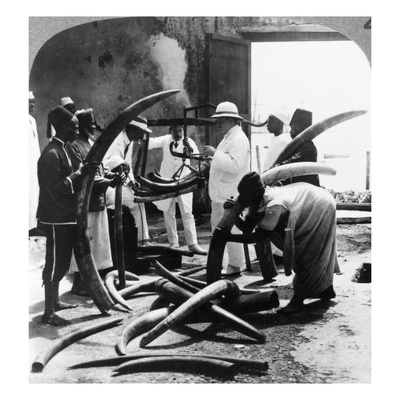
The most important gateway for the exploration of Africa in the second half of the 19th century, however, was Zanzibar. This sultanate was the hub of a wide-reaching trading empire that stretched along the East African coast from Mogadishu in the north to Cape Delgado in the south, and which extended hundreds of miles into the interior. Slaves, ivory, and other commodities flowed to Zanzibar through a network of trade routes. The British consul in Zanzibar echoed Dixon Denham’s comments about his trans-Saharan journey when he reported that travel was less dangerous between Zanzibar and Lake Tanganyika than it was in “the less frequented parts of Europe.” What made this possible was the political influence Zanzibar exerted across the region. When a German explorer was murdered on Lake Malawi’s northern shore in 1859, Zanzibari authorities forced the local chief to hand over the perpetrators, who were sent to the island capital for trial and execution.


Far from seeing European explorers as a threat from a more advanced society, Zanzibar embraced them and exploited their deep pockets and grand ambitions. The British explorer Verney Lovett Cameron, for example, spent £11,000 (equivalent to $1 million today) in Zanzibar just to outfit his transcontinental expedition. Explorers were also useful because of their training in identifying commercially valuable plants and minerals. Zanzibar’s Sultan Barghash even hired the British geologist-explorer Joseph Thomson to conduct a coal prospecting expedition on his behalf.

With the money and energy contributed by European explorers, Zanzibar’s commercial empire expanded and flourished. Henry Morton Stanley won great fame at home for his epic journey across the African continent from Zanzibar to the mouth of the Congo River in 1874-77. But the immediate material beneficiary of his achievement was the Zanzibari merchant Tippu Tip, who had supplied Stanley with porters as he pushed westward from the lakes region. Tippu Tip expanded his lucrative ivory and slave trading operations into the Congo River basin along the route that Stanley had helpfully opened up.


THIS SYMBIOTIC relationship between European explorers and African empires would collapse with the “Scramble for Africa.” Starting around 1880, European countries raced to grab a share of the African continent for themselves. Stanley returned to the Congo basin in 1879-80 to claim the region for King Leopold of Belgium’s murderous regime; Stanley’s final mad expedition of 1886-90 massacred countless Africans as it marched across central and eastern Africa. The great African empires themselves became victims of the scramble. Britain occupied Egypt in 1882 and asserted control over Sudan in the late 1890s. Zanzibar’s East African empire was partitioned between Germany and Britain in 1886, while Zanzibar itself became a British protectorate in 1890. The Italians wrestled Tripoli from Ottoman control in 1911.

Today, the African empires forged by Zanzibar, Egypt, and Tripoli are long gone, but their ambitions and influence can still be detected in the continent’s borders, networks, and tensions. The post-colonial merger of Tanganyika and Zanzibar in 1964, which produced the remarkably stable country of Tanzania, was in some respects a reconstitution of Zanzibar’s European-aided territorial dominion in the 19th century. The terrible violence that the Sudanese state has wreaked on the peoples of Darfur and South Sudan in recent years—the new country of South Sudan was established in 2011 to resolve the latter conflict—is largely a continuation of the clashes between Arabs and black Africans that occurred as the Egyptian empire imposed its authority over those regions, with the help of European explorers.

And the current crisis in Mali is not only the result of an Al Qaeda affiliate’s terrorist ambitions or a decrepit Malian government’s dependency on the French who once ruled the country. Its problems go back further than that—to ethnic tensions and competition for resources that can be traced at least in part to Tripoli’s former ambitions in the region. Illicit arms and ex-militiamen from Libya have played a crucial role in the Malian crisis, their destabilizing presence providing an unmistakable echo of Tripoli’s earlier impact on societies south of the Sahara.


When we look at Africa today, it is impossible to ignore the many ways Europeans transformed the continent, not least the political and economic problems they created and left Africans to sort out. But it would be a mistake to trace the roots of Africa’s current condition entirely to the European impact. This is especially apparent when we look at those pith-helmeted explorers who entered Africa as self-styled agents of European agendas. For all their heroism and hubristic claims of discovery, the signatures they left on the continent were not necessarily their own. (Boston Globe)

England's John Bull and the Civil War

John Bull and Civil War

John Bull and the Civil War

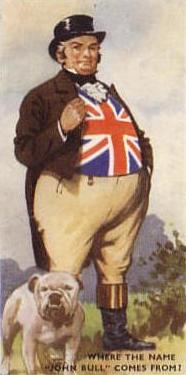
This is one of three similar prints published by Oliver Evans Woods, reflecting grave northern fears of British and French interference on behalf of the Confederacy in the Civil War. The controversy centered on the "Alabama" and other warships built and fitted out for the Confederates in England. French Emperor Napoleon III's military operations in Mexico in 1862 and 1863 were also perceived as dangerous to the North. The print actually appeared in the summer of 1863, when Southern diplomatic overtures to France and England threatened to result in international recognition for the Confederacy. In the center Jefferson Davis--here called "Secesh"--raises a club labeled "Pirate Alabama" over the head of a brawny Union soldier whose arms are constricted by the Constitution, and around whose waist and legs coils a poisonous snake. Davis tramples on an American flag. At right stands a leering John Bull, who holds a pile of clubs in reserve for Davis. Behind him is a prancing Napoleon III, also watching the contest. In the distance two ships burn on the ocean. Napoleon: "Whip him, Secesh, and when I get Mexico, I'll help you whip him again." John Bull: "Down with him, Secesh--burn his Ships--destroy his Commerce--England has plenty more such clubs for you." Secesh: "I'll fix him--I'll kill him." Soldier: "The flag of my country trampled under foot--the ships of my country burning on the ocean--while I stand here entangled in the coils of this foul Copperhead, and so bound up by Constitutional restraints, that I am unable to put forth my true strength in their behalf." The "restraints" mentioned may refer to opposition on constitutional grounds to Lincoln's use of what he considered valid presidential war powers. The cartoon may have been specifically occasioned by the Supreme Court's review in the "Prize Cases" of 1863 of the legality of the Union blockade. "Copperhead" was the derogatory term used for anti-Lincoln or anti-Republican advocates of a negotiated reconciliation with the South.  (source: Son of the South)

Conflict

A later, altered version of "The Pending Conflict" (no. 1863-10). Albeit more optimistic from the Northern point of view than its earlier counterpart, this version is equally critical of European abetment of the Confederate war effort and of the anti-Lincoln or pacifist movement in the North. The artist has made significant changes in composition and details. The positions of the central figures are reversed so that the secessionist figure is on the left, wearing a belt marked "Secession. The States shall be sovereign!" He still tramples on the American flag and wields a club marked "British pirate steamers, British Cannon, &c." Strewn about his feet are three broken clubs inscribed "Bermuda," "Fingal," and "alias Atlanta." John Bull and Napoleon III of France watch from the background left. The former holds a bundle of clubs wrapped in a band labeled "Neutrality." The clubs are labeled "Steam Rams" and "Blockades" and "Runners." The muscular figure representing the Union is now clearly the more dominant. He wears a belt labeled "Union. The people shall be sovereign!" and raises a club threatening Secession. With his other hand, he grasps a snake by the throat. In the background right, on the ocean, are three ships, two of which are aflame. (source: Son of the South)

Kentucky and the 13th Amendment


As reported in the Lexington Herald-Leader, by Greg Kocher, "Kentucky supported Lincoln's efforts to abolish slavery — 111 years late," on 23 February 2013  --  Here's an OMG fact for you: The Kentucky legislature didn't go on record against slavery until 1976 — 111 years after the 13th Amendment prohibiting involuntary servitude became the law of the land.

Lincoln, with 12 nominations at Sunday's Academy Awards ceremony, tells of the president's struggle to have Congress pass the amendment.

What isn't told is that Kentucky, Lincoln's birthplace, refused to ratify the amendment. Mississippi was another; more on that later.

The movie depicts only the first step of the process to add an amendment to the U.S. Constitution. Moviegoers see passage of the amendment in the House of Representatives in 1865. But the amendment's story didn't end there.

Before an amendment can be added to the U.S. Constitution, three-fourths of the states must pass or ratify it. That process wasn't finished and verified until December 1865, eight months after Lincoln's assassination.

To understand why Kentucky rejected ratification, some context is necessary.


Slavery had existed in Kentucky since before it achieved statehood in 1792. In 1790, slaves were a little more than 6 percent of the population. By 1830, they were 24 percent of the population. By 1860, the year before the start of the Civil War, Kentucky had 225,000 slaves; most lived in the Bluegrass region and in the corridor between Lexington and Louisville.

Kentucky's first constitution, written in 1792, protected the right to own slaves. Slave labor was used to grow hemp in the 1800s, and tobacco in the central and western regions of the state. By 1850, 28 percent of white families owned slaves, but the average slaveholder owned five slaves or fewer.


At the start of the Civil War, Lincoln had hoped to encourage border states like Kentucky to take the initiative in abolishing slavery themselves, according to historians Lowell Harrison and James Klotter. Lincoln tried several times to get Kentucky to adopt a plan of compensated emancipation. It would work like this: If a state committed itself to a definite date to end slavery, then Lincoln would recommend to Congress that owners receive $400 for each slave. The plan didn't fly.

When Lincoln decided that ending slavery would help win the war, he declared slaves free only in those areas controlled by the Confederacy. His Emancipation Proclamation of 1863 did not affect Kentucky. Even so, the proclamation attracted protest in the Bluegrass.

"Most Kentuckians supported the Union with the understanding that a state had the right to deal with slavery as a matter of state's rights," wrote James Ramage, a professor of history at Northern Kentucky University, in an email. "When President Lincoln issued the Emancipation Proclamation, most Kentucky Unionists felt betrayed and declared that they would never accept freeing the slaves."


Kentucky Gov. James F. Robinson denounced the Emancipation Proclamation in his message to the legislature in early January 1863. The legislature also denounced the proclamation "as unwise, unconstitutional and void," and there was talk in the state of recalling Kentucky troops from the Union army. Some even advocated that Kentucky secede from the Union.

Such talk embarrassed those who supported emancipation. Samuel Lusk wrote to a friend on Feb. 4, 1863: "If the president is resolved on going to hell and destroying the best government on earth, let him place himself under the control of Kentucky politicians and he will soon have accomplished his purpose."


Meanwhile, the feds were doing little to win the hearts and minds of many Kentuckians. Federal troops resorted to abrasive measures that were illegal or unconstitutional to maintain military control of the state. This included military interference with elections, such as prohibiting "disloyal" persons from voting.

By 1864, the Union army's ill treatment of civilians and Lincoln's inclusion of black freedom as a war aim "caused many formerly loyal Kentuckians to turn their sympathies against the federal government," writes Anne E. Marshall in Creating a Confederate Kentucky: The Lost Cause and Civil War Memory in a Border State.

Among those opposing federal policies was Brutus Clay, a U.S. congressman from Bourbon County, who was steadfastly against abolition and the enlistment of slaves into the Union army. (Brutus was brother to Cassius Marcellus Clay, who argued for emancipation and published an anti-slavery newspaper, The Lexington True American.)


During the debate on the 13th Amendment, Brutus Clay said: "If you take away from a man that which he considers to be justly his own, you make him desperate, and he will retaliate upon you. You can never by oppression make a man obey willingly the laws of his country. Act justly toward him, let him see he has a government which will protect him and he will love that government. But oppress and rob him, and he will despise and hate you."


Without Clay's vote, the 13th Amendment passed the U.S. House of Representatives in January 1865 — the climatic finale in Steven Spielberg's movie. The next month, the Kentucky legislature voted to reject it: 56-18 in the House and 23-10 in the Senate.

Slavery was still legal and visible in the commonwealth in 1865. One visitor traveling through the South that year noted that Louisville was the only place on the trip where slaves waited on him.

Nevertheless, the 13th Amendment was ratified by the necessary three-fourths majority of states and was officially adopted in December 1865. Kentucky, meanwhile, came to identify itself more with the Confederacy after the war than it did during the war. Between 1867 and 1894, Kentucky elected six governors who had been Confederates or Confederate sympathizers.


Kentucky did not move to ratify the 13th Amendment until state Rep. Mae Street Kidd, D-Louisville, one of three blacks then in the Kentucky legislature, filed a resolution to do so in 1976.

The resolution passed the Kentucky House by a 77-0 vote, and it passed the Kentucky Senate by a voice vote on March 18, 1976. The vote was symbolic — Kentucky's ratification wasn't needed for the amendment to be added to the U.S. Constitution — but it was a symbol with power.

Now, back to Mississippi. The Magnolia State ratified the 13th Amendment on March 16, 1995, but because the ratification document was never presented to the U.S. archivist, it was never considered official.


On Jan. 30 of this year, Mississippi finally sent a copy of its 1995 resolution to adopt and pass the 13th Amendment to the Office of the Federal Register.

A week later, Federal Register Director Charles Barth confirmed that he had received the paperwork, the Clarion-Ledger newspaper of Jackson, Miss., reported.

"With this action, the state of Mississippi has ratified the 13th Amendment to the Constitution of the United States," he wrote.  (By Greg Kocher — gkocher1@herald-leader.com)

The Globalization of Slavery


As reported in The Wall Street Journal, with the headline: "When the South Was Flat:  The brutal "slave-ocracy" along the Mississippi was far more integrated with the global economy than is often suggested, by Mark M. Smith, on 22 February -- Observers today speak breathlessly about the global economy and the flatness of the world's financial system as if those were recent trends. Such observations are at least a couple of centuries too late.

In the decades leading up to the American Civil War, the Mississippi Valley grew increasingly flat, physically as well as financially. Slaves there cut down a lot of trees. "Whole forests were literally dragged out by the roots," recalled one bondman. In the process of this radical deforestation, slaveholders literally flattened their world and, in a practical sense, accelerated a process of cotton production and capital accumulation that thoroughly embedded them in the transatlantic economy. The arduous work that slaves performed on the region's plantations, the cotton they grew and the capital they helped planters generate were intimately connected to the cotton traders (called "factors") in New Orleans, the merchant houses of New York and Liverpool, and the textile mills of Britain. As the planters surveyed their world from the banks of the mighty Mississippi, they understood fully their place in this Atlantic arc and began to dream of new connections, especially with Cuba and Nicaragua, links they hoped would secure the future of their slaveholding society.

River of Dark Dreams, By Walter Johnson (Harvard)

It was not supposed to happen this way. The Louisiana Purchase, all 828,000 square miles of it acquired in 1803 for a piddling $15 million, was supposed to protect and project liberty. Thomas Jefferson envisioned an empire populated with self-sufficient, non-commercial white men. In their stead, as Walter Johnson, a professor of history at Harvard University, shows in "River of Dark Dreams: Slavery and Empire in the Cotton Kingdom," came an exceptionally rapacious slaveocracy, which dominated the region's political economy and subordinated freedom to the irresistible imperatives of a robust, thriving and relentlessly exploitative system.

The Mississippi Valley (which runs through parts of Louisiana, Mississippi, Arkansas, Tennessee and Missouri) emerged, Mr. Johnson writes, as the "credit-importing, cotton-exporting leading edge of the global economy of the nineteenth century." A rabidly speculative spirit drove the process, and the flush times of the 1830s gave rise to booms in the region's powerful economic triptych: cotton, land and slaves. Into this maelstrom of unabashed acquisitiveness stepped the speculators: the land grabbers, the merchants, the slave traders. Riverboat operators also figured prominently, with steamboats able to move considerable freight upriver, melting away barriers of time and space. By the eve of the Civil War, steamboats carried over $200 million of trade, mainly in cotton, and were a leading sector in the region's economy.


In Mr. Johnson's telling, the antebellum Mississippi Valley is an unexpectedly modern place, more technologically advanced than the mills of Massachusetts or Manchester and certainly just as connected to and driven by the dictates of the world economy. The technology powering steamboats, for example, was new, designed to overcome the river's mighty flow, pushing goods and people upstream at an impressive if not always safe speed. The textile mills of the North and Britain, by contrast, still relied on an ancient, riparian technology, one hostage to the force of gravity. As Mr. Johnson notes: "A mere handful of the steamboats docked along the levee in New Orleans on any given day could have run the entire factory at Lowell."

A great deal of the capital underwriting this technology came directly from the North and Britain. New Orleans bankers managed the circulation of Northern and British capital in the region. With that capital, planters bought slaves, the human capital to cultivate cotton. The slave traders—there were as many as 20 establishments in New Orleans in the antebellum period whose sole business was the buying and selling of bondpeople—thus completed the dismal if highly profitable circuit in capital and labor.


The forces underwriting the region's feverish economic development were also making it a place where uncertainty prevailed. Numerous slaves in the Mississippi Valley were engaged in fomenting insurrection—hundreds of them, armed with axes and shovels, marched on New Orleans in 1811—or resisting the exploitation of their labor by running away or by taking from their masters the food and drink usually denied them. Paper currency could not always be trusted (it was frequently unbacked, and bills of exchange were often far removed from the original issuer). Steamboat travel was highly dangerous, and on land or river, no one was entirely sure of the true character or, indeed, the race of those they encountered in this booming region (was that a light-skinned slave or a free white man?). There was an imprecise, speculative air. But things got done, impressively if sordidly. By 1840, Mr. Johnson writes, there were "more millionaires per capita in the Mississippi Valley than anywhere else in the United States."

Mr. Johnson's appreciation of the global and imperial aspirations of Mississippi Valley slaveholders helps us to make sense of the events leading up to the Civil War. These "full-throttle capitalists" were filled with expansionist zeal. Valley planters and politicians made dedicated efforts to overthrow Cuba's Spanish colonial government in the 1850s. They feared what might happen if the anti-slavery British gained control of Cuba. Emancipation there might inspire slave insurrections and even race wars in their own part of the world. More optimistically, they thought Cuba could be the key to further economic success, valley-style. "It is sufficient to look over the extensive valley of the Mississippi," wrote one supporter of annexation, "to understand that the natural direction of its growth, the point of connection of its prodigious European commerce and of its rational defense, is Cuba." So, too, with Nicaragua. If Cuba functioned as the imperial slaveholders' transatlantic connection, Nicaragua, at least in the conviction of William Walker (who invaded the country in 1855, proclaimed himself president and promptly reinstituted slavery), represented the slaveholders' ambitions to link to the Pacific. (Walker was overthrown by local troops and shot in Honduras in 1860 after another attempt to establish a colony.)

Louisiana and Mississippi slaveholders were keen to reopen the African slave trade in the late 1850s, which, the thinking went, would allow more whites to own slaves and dilute the tensions from an emerging class of slaveless whites. (As slave prices spiked in the late antebellum period, fewer whites were able to move into the ranks of the small slaveholding class.) For the slaveholders and merchants of New Orleans and the Mississippi Valley, "the issues of Nicaragua and the Atlantic slave trade were more important than the question of Kansas (dismissed by many as a fight over a place where no real slaveholder would ever want to live anyway) and more important than what was happening in Congress."

The valley slaveholders do not fit the standard narrative of the coming of the Civil War, which tends to stress the centrality of expansion into western lands. Their sense of liberty was rooted less in expansion westward to places that seemed unlikely to support cotton culture and far more in efforts to repopulate the South with fresh slaves and to acquire territory outside of the United States where slavery would be more secure.

In this depiction, the coming of the Civil War assumes more of a regional flavor and less of a sectional one. Different imperatives operated in different regions of the South. Exporters of slaves in the upper South (roughly a million people were sold "down river" between 1820 and 1860) were reluctant to reopen the slave trade. Their overriding concern was maintaining their role as the South's exporter of slaves and, by extension, their own economic well-being. "Open the Slave Trade and what will our Negroes be worth?" asked one Virginia editor nervously.

Yet it is important to remember that Mr. Johnson is describing what did not happen rather than what did—what he calls "the history of alternative visions." The slave trade was not reopened, and expeditions in the Caribbean were largely bungled affairs involving relatively few people—more than half of whom, in the case of Walker's Nicaraguan adventure, were not from the valley or the South at all but were, rather, Northern adventurers. The fact that this particular vision of a pro-slavery future never came to pass only emphasizes that these same slaveholders did eventually secede and fight in a war, even if it was for what Mr. Johnson calls "a sort of lowest common dominator," a "politics of negation—of seceding from."


And more than the politics of negation may have linked the Mississippi Valley slaveholders with others elsewhere in the South. Pro-slavery political economists (whom Mr. Johnson examines in detail) were harsh critics of free wage labor and liberal capitalism, but so were the influential pro-slavery divines and theologians (whom Mr. Johnson slights). They saw liberal capitalism as a profound threat to the social hierarchy, which was rooted in self-serving claims about paternalism, the enduring value and desirability of organic social and economic relations, and the intimate connection between slaveholding society writ large and the integrity of individual, patriarchal white households. The arguments developed and circulated by the pro-slavery theologians resonated with slaveholders and non-slaveholders throughout the South.

Recognizing such features of Southern society, as well as acknowledging the tortured way in which paternalism braided together the lives of the enslaved and the enslavers, goes some way toward "unflattening" the world Mr. Johnson describes. Nonetheless, "River of Dark Dreams" is an important, arguably seminal, book. If sometimes dense, it is always trenchant and learned. And in highly compelling fashion, it helps us more fully appreciate how thoroughly the slaveholding South was part of the capitalist transatlantic world of the first half of the 19th century.  (source: The Wall Street Journal)

Compensated Emancipation: Britain's Colonial Shame


As reported in the UK Independent, "Britain's colonial shame: Slave-owners given huge payouts after abolition: David Cameron's ancestors were among the wealthy families who received generous reparation payments that would be worth millions of pounds in today's money," Sanchez Manning, 24 February 2013  --  The true scale of Britain's involvement in the slave trade has been laid bare in documents revealing how the country's wealthiest families received the modern equivalent of billions of pounds in compensation after slavery was abolished.

The previously unseen records show exactly who received what in payouts from the Government when slave ownership was abolished by Britain – much to the potential embarrassment of their descendants. Dr Nick Draper from University College London, who has studied the compensation papers, says as many as one-fifth of wealthy Victorian Britons derived all or part of their fortunes from the slave economy.
John Bull taking a Clear View of the Negro Slavery Question!!

As a result, there are now wealthy families all around the UK still indirectly enjoying the proceeds of slavery where it has been passed on to them. Dr Draper said: "There was a feeding frenzy around the compensation." A John Austin, for instance, owned 415 slaves, and got compensation of £20,511, a sum worth nearly £17m today. And there were many who received far more.


Academics from UCL, led by Dr Draper, spent three years drawing together 46,000 records of compensation given to British slave-owners into an internet database to be launched for public use on Wednesday. But he emphasised that the claims set to be unveiled were not just from rich families but included many "very ordinary men and women" and covered the entire spectrum of society.

Dr Draper added that the database's findings may have implications for the "reparations debate". Barbados is currently leading the way in calling for reparations from former colonial powers for the injustices suffered by slaves and their families.

Among those revealed to have benefited from slavery are ancestors of the Prime Minister, David Cameron, former minister Douglas Hogg, authors Graham Greene and George Orwell, poet Elizabeth Barrett Browning, and the new chairman of the Arts Council, Peter Bazalgette. Other prominent names which feature in the records include scions of one of the nation's oldest banking families, the Barings, and the second Earl of Harewood, Henry Lascelles, an ancestor of the Queen's cousin. Some families used the money to invest in the railways and other aspects of the industrial revolution; others bought or maintained their country houses, and some used the money for philanthropy. George Orwell's great-grandfather, Charles Blair, received £4,442, equal to £3m today, for the 218 slaves he owned.

The British government paid out £20m to compensate some 3,000 families that owned slaves for the loss of their "property" when slave-ownership was abolished in Britain's colonies in 1833. This figure represented a staggering 40 per cent of the Treasury's annual spending budget and, in today's terms, calculated as wage values, equates to around £16.5bn.

A total of £10m went to slave-owning families in the Caribbean and Africa, while the other half went to absentee owners living in Britain. The biggest single payout went to James Blair (no relation to Orwell), an MP who had homes in Marylebone, central London, and Scotland. He was awarded £83,530, the equivalent of £65m today, for 1,598 slaves he owned on the plantation he had inherited in British Guyana.

But this amount was dwarfed by the amount paid to John Gladstone, the father of 19th-century prime minister William Gladstone. He received £106,769 (modern equivalent £83m) for the 2,508 slaves he owned across nine plantations. His son, who served as prime minister four times during his 60-year career, was heavily involved in his father's claim.

Mr Cameron, too, is revealed to have slave owners in his family background on his father's side. The compensation records show that General Sir James Duff, an army officer and MP for Banffshire in Scotland during the late 1700s, was Mr Cameron's first cousin six times removed. Sir James, who was the son of one of Mr Cameron's great-grand-uncle's, the second Earl of Fife, was awarded £4,101, equal to more than £3m today, to compensate him for the 202 slaves he forfeited on the Grange Sugar Estate in Jamaica.


Another illustrious political family that it appears still carries the name of a major slave owner is the Hogg dynasty, which includes the former cabinet minister Douglas Hogg. They are the descendants of Charles McGarel, a merchant who made a fortune from slave ownership. Between 1835 and 1837 he received £129,464, about £101m in today's terms, for the 2,489 slaves he owned. McGarel later went on to bring his younger brother-in-law Quintin Hogg into his hugely successful sugar firm, which still used indentured labour on plantations in British Guyana established under slavery. And it was Quintin's descendants that continued to keep the family name in the limelight, with both his son, Douglas McGarel Hogg, and his grandson, Quintin McGarel Hogg, becoming Lord Chancellor.

Dr Draper said: "Seeing the names of the slave-owners repeated in 20th‑century family naming practices is a very stark reminder about where those families saw their origins being from. In this case I'm thinking about the Hogg family. To have two Lord Chancellors in Britain in the 20th century bearing the name of a slave-owner from British Guiana, who went penniless to British Guyana, came back a very wealthy man and contributed to the formation of this political dynasty, which incorporated his name into their children in recognition – it seems to me to be an illuminating story and a potent example."

Mr Hogg refused to comment yesterday, saying he "didn't know anything about it". Mr Cameron declined to comment after a request was made to the No 10 press office.

Another demonstration of the extent to which slavery links stretch into modern Britain is Evelyn Bazalgette, the uncle of one of the giants of Victorian engineering, Sir Joseph Bazalgette and ancestor of Arts Council boss Sir Peter Bazalgette. He was paid £7,352 (£5.7m in today's money) for 420 slaves from two estates in Jamaica. Sir Peter said yesterday: "It had always been rumoured that his father had some interests in the Caribbean and I suspect Evelyn inherited that. So I heard rumours but this confirms it, and guess it's the sort of thing wealthy people on the make did in the 1800s. He could have put his money elsewhere but regrettably he put it in the Caribbean."


The TV chef Ainsley Harriott, who had slave-owners in his family on his grandfather's side, said yesterday he was shocked by the amount paid out by the government to the slave-owners. "You would think the government would have given at least some money to the freed slaves who need to find homes and start new lives," he said. "It seems a bit barbaric. It's like the rich protecting the rich."

Cruel trade

Slavery on an industrial scale was a major source of the wealth of the British empire, being the exploitation upon which the West Indies sugar trade and cotton crop in North America was based. Those who made money from it were not only the slave-owners, but also the investors in those who transported Africans to enslavement. In the century to 1810, British ships carried about three million to a life of forced labour.


Campaigning against slavery began in the late 18th century as revulsion against the trade spread. This led, first, to the abolition of the trade in slaves, which came into law in 1808, and then, some 26 years later, to the Act of Parliament that would emancipate slaves. This legislation made provision for the staggering levels of compensation for slave-owners, but gave the former slaves not a penny in reparation.

More than that, it said that only children under six would be immediately free; the rest being regarded as "apprentices" who would, in exchange for free board and lodging, have to work for their "owners" 40 and a half hours for nothing until 1840. Several large disturbances meant that the deadline was brought forward and so, in 1838, 700,000 slaves in the West Indies, 40,000 in South Africa and 20,000 in Mauritius were finally liberated.  (source: UK Independent,)

Friday, February 22, 2013

PETA' Offends Humanity With Whale Slavery Lawsuit


As reported in the UK Guardian, "Whales not slaves because they are not people, judge in SeaWorld case rules: Animal rights group Peta loses case against theme park operator under US constitution's 13th amendment banning slavery," 9 February 2012 -- Kasatka, left, one of the SeaWorld whales that Peta says is a slave.

A US federal judge has thrown out an animal rights group's lawsuit accusing SeaWorld of enslaving captive killer whales, ruling that orcas have no standing to seek the same constitutional rights as people.
petamorons.jpg

People for the Ethical Treatment of Animals (Peta) had accused the chain of aquatic theme parks of violating the rights of whales under the 13th amendment of the US constitution, which abolished slavery.

The lawsuit, filed in the US district court of San Diego, listed as plaintiffs five performing orcas at SeaWorld's parks in California and Florida: Tilikum, Katina, Corky, Kasatka and Ulises.

"The only reasonable interpretation of the 13th amendment's plain language is that it applies to persons and not to non-persons such as orcas," US district judge Jeffrey Miller wrote in his ruling.


"Both historic and contemporary sources reveal that the term 'slavery' and 'involuntary servitude' refer only to persons."

The 13th amendment was enacted in 1865, the year the US civil war ended.

Legal experts previously denounced as frivolous the Peta lawsuit, which had sought a court order requiring SeaWorld to release the five killer whales to a "suitable habitat".


Miller noted in his ruling that animals did have legal rights under state and federal statutes, including criminal laws.

He added the "goal" of Peta attorneys who brought the lawsuit "to protect the welfare of orcas is laudable" even if the 13th Amendment was not the correct way to approach the case.

David Steinberg, a professor at the Thomas Jefferson School of Law in San Diego, told Reuters when the lawsuit was filed in October that it was "demeaning [to] the integrity and humanity of people who were owned as slaves".

Virginia-based Peta has staked out a number of controversial positions in the past in seeking to advance the cause of animal rights.


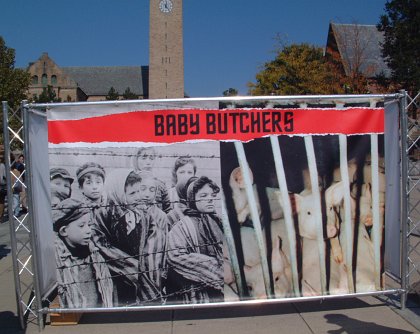
In 2003 the Anti-Defamation League accused Peta of trivialising the deaths of Jews in the second world war with a campaign that compared the meat industry to the Holocaust.

PETA WHALES

Colleen O'Brien, a spokeswoman for Peta, said in a statement that her organisation would regroup as a result of the dismissal of "this historic first case" on behalf of orcas.

"Today's decision does not change the fact that the orcas who once lived naturally wild and free are today kept as slaves by SeaWorld," O'Brien said. (source: UK Guardian)

HOME

HOME
Click here to return to the US Slave Home Page