Monday, August 26, 2013

THE TUSKEGEE SYPHILIS EXPERIMENT


As reported by the San Francisco Gate, "Revisiting a scientific horror story in art / Chilling work on infamous Tuskegee study," by David Bonetti, a Chronicle Art Critic, on 27 July 2001 -- The clean, earnest young man asks, "And you never had one single moment of moral doubt about what you did?" over and over again. Between each question,

the bow-tied doctor, the exemplar of disinterested science, equivocates. You had to understand the circumstances. Those men loved the attention. It was for the good of their entire race. And then the question, like a hammer, comes again: "And you never had one single moment of moral doubt about what you did?"

"Not really."

What the doctor did, and what from our point of view he should have doubted every morning he got out of bed, was participate in the infamous Tuskegee syphilis experiment, a medical study about which one doctor wrote in 1970, "Nothing learned in this study will prevent, find or cure a single case of syphilis."

That the subjects, human guinea pigs, were all uneducated African American males who were told neither that they suffered from syphilis nor the nature of the experiment is shameful. That the experiment continued decades after the discovery that penicillin cured syphilis arguably puts the episode into the same category as the experiments on Holocaust victims carried out by Dr. Josef Mengele.

The Tuskegee experiment has been made timely again by "The Greater Good," an installation by local photographer Tony Hooker at the San Francisco African American Historical and Cultural Society at Fort Mason. Hooker became interested in the story in 1997, when he heard President Clinton apologize to the survivors for the inhumane treatment they had received from the U.S. Public Health Service.

Hooker learned that 412 men with syphilis participated in the program from 1932 to 1972. It is known that 28 of them died of syphilis during their participation. Thirteen studies on the subject were published by the government, and of the hundreds of medical personnel who were aware of what was going on in Macon County, Ala., only one questioned in writing the ethics of the experiment.


The justification was that if a few had to suffer for the greater good, it was worth their sacrifice.

Hooker has mixed his own photographs of the abandoned hospital with archival images of the doctors and their victims. In some cases he has layered the imagery, creating a ghostly effect. The montages are punctuated with Hooker's color photographs of the hospital's blistered walls.

Even more chilling are the videotapes. More dismaying than the one of the self-justifying doctor is one about Nurse Rivers, the African American nurse who participated all through the experiment as a sort of unwitting angel of death. A staged enactment of her imagined thoughts, based on her words, it reveals her profound state of denial.

Rivers recounts how her father was beaten by the Klan because he was more successful than they felt a black should be. As a nurse, she provided service to poor blacks as no one had ever done before. It was because of the trust she had built up that the Public Health Service recruited her for the Tuskegee experiment.


"The study wouldn't have happened if it weren't for me, for my caring," she says. She tells how she counseled men not to ask for penicillin when they first heard about its miraculous ability to heal "because they were getting the best treatment as it was."

After her retirement, she received an award in Washington, D.C., for her service. "I cried, but I cried for my 400 men too."

In her actual words, she said, "Oh, we had a good time. We had a good time, really and truly when I was working with those people. . . ," she says. "That was the joy of my life." (source: The San Francisco Gate)

Bad Blood: The Tuskegee Syphilis Study


Article from Southern Changes. Volume 4, Number 6, 1982, "Bad Blood: The Tuskegee Syphilis Experiment By James H. Jones," by Bess Beatty, Vol. 4, No. 6, 1982, pp. 17-19 -- In 1972 the Associated Press broke the story of the Tuskegee experiment, a forty-year study of the effect of syphilis on six hundred Macon County, Alabama, black men. Nine years later James Jones published Bad Blood, a history of what he describes as "The scandalous story of the Tuskegee experiment--when government doctors played God and science went mad." Jones' book is a thoroughly researched and dispassionate, although indicting, account of this experiment.

The story has a background imbeded in centuries of "racial medicine." By the twentieth century syphilis had come to be considered by many physicians as "the quintessential black disease," and, despite the insights of modern medicine, some continued to believe that it affected blacks differently than whites. Ironically the Tuskegee study grew out of changing attitudes, at least among public health officials, toward black health generally and syphilis particularly. By the 1920s contempt and neglect were beginning to give way to realization that scientific and medical insights should be applied equally to all races.
Bad Blood: The Tuskegee Syphilis Study, by James H. Jones

In 1929 the Julius Rosenwald Fund, renowned for its efforts on behalf of black education, began funding Public Health Service programs for blacks. The pilot program, planned to demonstrate control of venereal disease in five Southern rural counties, included Macon County, Alabama, which was eighty-two percent black and which had, despite the presence of famed Tuskegee Institute, the highest syphilis rate uncovered by the study. Although of short duration, the Rosenwald program eventually inspired a nationwide campaign to test and treat syphilis--an effort that excluded six hundred Macon County men who were involved in the original study.

The Tuskegee experiment, in which they were now involved, grew out of frustration at the termination of Rosenwald funding. Director Taliaferro Clark, who "would have preferred to . . . treat rather than to study syphilitic blacks," settled for a less expensive project, The Tuskegee Study of Untreated Syphilis in the Negro Male, which was to become "the longest nontherapeutic experiment on human beings in medical history." Dr. Clark planned to study empirically the long held notion that syphilis affected blacks differently than whites by comparing his findings to a study of untreated syphilis in white males in Oslo, Norway. Clark expressed no ethical qualms as he prepared for the "unparalleled opportunity," but neither did he envision that the men would go untreated longer than the six months he expected the experiment to last. To assure local black support, the Tuskegee Institute was made partner of the Public Health Service and its name was applied to the study. Dr. Raymond Vonderlehr was selected to be in charge of field work and Eunice Rivers, a black nurse, was appointed to assist him. Initially some minimal treatment was included which would eventually evoke the scientific criticism that the experiment was invalid as a study of untreated syphilis.


But it was the ethical dimension that would eventually condemn the Tuskegee study as the most infamous episode in the history of government medicine in the United States. The program was couched in deceit from the beginning. Patients were told that they had "bad blood," not that they suffered from a particular disease that was contagious and transmitted sexually. Those brought in for painful and dangerous lumbar punctures which were strictly diagnostic were told that they were receiving "special treatment."

When Dr. Vonderlehr, who was making a career out of the Tuskegee work, was named to replace Clark, the decision was made to continue the study indefinitely. His plan entailed low-cost examination of each man, facilitated by Nurse River's personal contact, until each could be "brought to autopsy." Their efforts to keep the men involved in the study were facilitated by continued deceit, non-effective medication such as aspirin, burial stipends, and occasional certificates and cash awards. The support- of the Tuskegee Institute and area physicians, both eager to participate in a national scientific study, assured the experiment's survival. Although poor blacks in Macon County could rarely afford to see a doctor, the cooperation of area physicians was still profoundly significant because men who were "potential patients" were made "perpetual subjects . . . placed beneath a microscope for scientific observation." How callous the Public Health Service became toward these subjects is indicated by a letter from Dr. John Heller, field director of the study, complaining of the availability of Civil Works Administration jobs for blacks because it "disrupted the Ethiopian population as regards staying in one place very long." Heller later recalled, "No one questioned whether the experiment was ethical; no one even came close to doing so."


Initially, denial of treatment was rationalized (by those who bothered to rationalize at all) on the grounds that the treatment available for syphilis could be as hazardous as the disease. This justification was rendered more difficult in the 1940s when the discovery of penicillin offered a safe, effective syphilis treatment, but by then the study had acquired a bureaucratic momentum, a self-perpetuation, that made it immune from challenge. Leadership continued to come from within, and no one involved considered ending the work.

It was not until 1966 that Peter Buxton, a venereal disease interviewer in San Francisco, learned about the study and protested. Officials, still convinced of the experiment's scientific merit and moral integrity, rejected Buxton's criticism and vowed to continue. Finally in 1972 they were overruled when the Associated Press, prodded by Buxton, told the story. A nine-member and it was disbanded. Out of court settlement awarded the surviving syphilitics $37,500, with lesser amounts to their heirs and to those in the control group.


Beyond the specific appalling story it tells, Jones' book is important for offering insight into power relationships in American society. Despite the repeated denials of the officials involved, the experiment serves as an example of the power of racism and elitism and as an indictment of the limits to the paternalism and liberalism which have allegedly served to temper these prejudices. Jones describes the health officials who originated the study as paternalistic compared to "the real black-baiters of the day." They were of the progressive or liberal wing in American society which counseled government sponsored improvement of the environment for blacks and the poor. But the book reveals the stark limits to a liberalism and paternalism which views the dispossessed as more subject than human.

Bad Blood also demonstrates the dangerous potential of a science without ethics. The Tuskegee experiment had almost complete support from scientists within the Public Health Service, and was not challenged from within even after the Nuremberg trials sensitized the world to the potential of science gone mad. When the study was uncovered in 1972, the scientific community was most vocal in its defense.

This example of "moral astigmatism" within the medical and science professions make a strong case for closer government supervision of medical activity, but the question remains--who will supervise the government? Most appalling to many people was the revelation that a federal agency had conducted the experiment. It was, the Providence Sunday Journal charged, "flagrant immorality . . . under the auspices of the United States Government."


Jones also questions why none of the hundreds of individuals involved protested. Sidney Milgram, in his study Obedience to Authority, claims that "Pure moral autonomy in the form of lone resistance to an apparently benign authority is very rare." His conclusion is upheld by the example of scores of people who could have protested medical experimentation but did not. Jones makes the frightening comparison of the Public Health bureaucracy to the military hierarchy of Nazi Germany which "reduced the sense of personal responsibility and ethical concern." He is particularly interested in why so many blacks cooperated with the Tuskegee work and conjectures that black professionals were responding to "the dilemma of black middle-class professionals who wanted to succeed in a society dominated by whites." This was clearly true of Nurse Rivers, the most poignant figure in the book and the one official involved who had genuine concern for the welfare of the men involved. She was bound by forces of race and class as well as a professional hierarchy that demanded obedience to doctors and sex roles that "reinforced her ethical passivity."

Jones' book can be criticized for leaving the men involved as lifeless as they were considered by the experimenters. Nevertheless, he has told their story well: "a forty-year saga of lies and deceit, of unlettered men who had trusted and been betrayed by educated men." As the major indictment of "the scandalous story of the Tuskegee experiment," this important book deserves to be widely read. (source:  Southern Changes. Bess Beatty is an assistant professor of history at Shorter College, Rome, Georgia.)

Unnatural Causes - When the Bough Breaks


Unnatural Causes - When the Bough Breaks -- EPISODE TWO, 29 MINS

The number of infants who die before their first birthday is much higher in the U.S. than in other countries. And for African Americans the rate is nearly twice as high as for white Americans. Even well-educated Black women have birth outcomes worse than white women who haven't finished high school. Why?

We meet Kim Anderson, a successful Atlanta lawyer, executive and mother. When Kim was pregnant with her first child in 1990, she, like so many others, did her best to ensure a healthy baby: she ate right, exercised, abstained from alcohol and smoking and received good prenatal care. Yet two and a half months before her due date, she went into labor unexpectedly. Her newborn weighed less than three pounds. Kim and her husband were devastated. How could this have happened?

We know that in general health follows wealth: on average, the higher on the socioeconomic ladder you are, the lower your risk of cancer, heart disease, diabetes, infant death and preterm deliveries. For highly educated African American women like Kim, the advantages of income and status do make a difference for her health, but there's still something else at play: racism.


Neonatologists James Collins and Richard David believe that African American women are at increased risk during pregnancy, not because of something innate to their biology, but because of the cumulative impact of racism they experience over their lifetime - an impact that can outweigh even the benefits of higher social and class status.

To demonstrate their theory, Drs. Collins and David showed that African immigrants to the U.S. and U.S.-born white women had similar birth outcomes, yet African American women tended to have babies that weighed significantly less. Moreover, they showed that the results changed over time: outcomes for the African-born group worsened within one generation and became comparable to the African American group.


So how does racism get "under the skin" and affect pregnancy? Researchers like Michael Lu believe that chronic stress is the culprit: unequal treatment causes anxiety and the release of stress hormones, which over a lifetime of constant activation not only creates wear and tear on the body's organs and systems, but can trigger premature labor. As Dr. Camara Jones of the CDC points out, for most people of color, racism isn't an occasional problem but a subtle, everyday stressor that is added onto all the other stressors in a person's life.

Anthropologist Fleda Jackson, sociologist Mona Phillips and epidemiologist Carol Hogue are working to help us measure and better understand racism's impact. Through focus groups and programs that provide family support, they and others are helping African American women find the resources they need to cope. Yet for all of us, the challenge remains to tackle the harmful conditions that surround and negatively impact African American women and babies in the first place - so that everyone can have a good start for a healthy life. [http://www.unnaturalcauses.org/episode_descriptions.php?page=2]


Unnatural Causes - When the Bough Breaks from Center for Equal Health on Vimeo.

Unnatural Causes - In Sickness and In Wealth

Unnatural Causes - In Sickness and In Wealth Segment  --  EPISODE ONE, 56 MINS

What are the connections between healthy bodies, healthy bank accounts and skin color? Our opening episode travels to Louisville, Kentucky, not to explore whether medical care cures us but to see why we get sick in the first place, and why patterns of health and illness reflect underlying patterns of class and racial inequities.

The lives of a CEO, a lab supervisor, a janitor, and an unemployed mother illustrate how class shapes opportunities for good health. Those on the top have the most access to power, resources and opportunity – and thus the best health. Those on the bottom are faced with more stressors – unpaid bills, jobs that don’t pay enough, unsafe living conditions, exposure to environmental hazards, lack of control over work and schedule, worries over children – and the fewest resources available to help them cope.

The net effect is a health-wealth gradient, in which every descending rung of the socioeconomic ladder corresponds to worse health. And it’s not just the poorest among us who are suffering, but the middle classes too. Louisville Metro Public Health Department data maps reveal 5- and 10-year gaps in life expectancy between the city’s rich, middle and working-class neighborhoods. We also see how racial inequality imposes an additional burden on people of color.


But how do racism and class get under the skin? Experiments with monkeys and humans shed light on chronic stress as one culprit. Like gunning the engine of a car, constant activation of the stress response wears down the body’s system, resulting in higher rates of disease and early death.

Compared to other countries, the U.S. has the greatest income inequality – and the worst health. Today, the top one percent of Americans owns more wealth than the bottom 90% combined. Economic inequality is greater than at any time since the 1920s. One out of every 5 children in the U.S. lives in poverty (21%) compared with approximately 4% of Sweden. Social spending makes up most of the difference: in Sweden, social spending reduces child poverty by 70%, while in the U.S. it reduces child poverty only 5%, down from 26%.

Solutions being pursued in Louisville and elsewhere focus not on more pills but on more equitable social policies. Louisville’s new Center for Health Equity is the first of its kind: a collaboration between community members, local government, private business and health care organizations focusing on the social conditions that underlie our opportunities for health and well-being. 
[http://www.unnaturalcauses.org/episode_descriptions.php]


Unnatural Causes - In Sickness and In Wealth Segment from Center for Equal Health on Vimeo.

Wednesday, August 21, 2013

The Formation of Philadelphia's Black Community


From the Los Angeles Times, "Philadelphia Brothers : FORGING FREEDOM The Formation of Philadelphia's Black Community, 1720-1840 by Gary B. Nash (Harvard University Press)," by Joseph Boskin , on 2 October 1988 -- No other dream, no other issue in American society has rattled us, has refused to allow us to live in harmony with democratic images as has race. It has reached into every aching aspect of our culture and forced a constant re-evaluation of the historical past in an attempt to comprehend the wrenching relationship that exists between blacks and whites at this very moment.

Now comes this superbly written book by Gary Nash, one of the prolific scholars on the subject, on the early history of the races at a particularly crucial juncture that occurred in the city of Philadelphia that sheds insight into the entire process.


The City of Brotherly Love was no ordinary urban community in the years that he is writing about. For several generations following the Revolution, it was the largest and most vibrant center of free black life in the country. If ever there was an opportunity to work out the broad lines of a biracial society that could serve as model for the future, he observes, it was in this place, at this time.

Nash observes that it all began auspiciously. Philadelphia was refuge to free blacks because of its renown as an area of mixed ethnic and religious groups and by its focus on the abolition of slavery. Yet, as blacks from the South moved into the city over the decades, regardless of their low numbers, white began to perceive and exaggerate them as a threat to their well-being. By 1830, the proportion of blacks actually amounted to less than 10% of the population.

Hostility mounted as reports of slave rebellions and black rebelliousness circulated in newspapers. Anti-black literature increased, discriminatory legislation was introduced and vicious graphic caricatures ridiculing middle- and upper-class blacks began to appear on the walls of the city's genteel white citizens.


Black Sawyers Working in Front ot the Bank of Pennsylvania, Philadelphia John Lewis Krimmel

The emerging stereotype, an image that would take hold under the derogatory name of Sambo, was a pronounced sign of negative white attitudes. A race riot initiated by whites in 1834 destroyed churches and businesses, and in violence instructive of inner feelings focused on the more prosperous blacks. By the end of the decade, a color line had been firmly established, a demarcation that Nash laments as "a dream deferred."

What of the black community during these tumultuous, turnaround years? Nash turns his attention to the response of the emerging culture during these trying decades. A particular strength of his work lies in his detailing of the resiliency and creativity of black culture in the city.

Black People's Prayer Meeting - John Lewis Krimmel

"Not despairing passivity, though disillusionment and a sense of futility must have overcome nearly everyone at many moments," he writes, yet in its wake, there was intense activity to build their own society. Blacks laid the foundations of multidenominational churches, educational facilities, benevolent organizations, fraternal societies and newspapers. In sum, representations of a growing sense of their own autonomy.

An expanded urban consciousness filled the community. Black Philadelphia became a focal point for debating issues vital to their concerns: the sensitive problem of African colonization, the struggle for abolition, the nature of education. It is small wonder that the first annual Negro convention met in the city in 1830.
 Pepper-Pot Woman at the Philadelphia Market - John Lewis Krimmel
Pepper-Pot Woman at a Philadelphia Market, 1811

In this way, Nash's work neatly complements many of the recent studies that have delved into Afro-American reaction and affirmation to their slave and segregated circumstances. Certain salient black characteristics that evolved during these feverish activities became beacons for future generations. At the center of the subculture, Nash observes, was a "penchant for conviviality, an unrestrained display of emotions and a desire to present oneself as individualistically as possible, as if to obliterate the drudgery and submission required under slavery or later, in the cities, the poverty and blasted ambitions of many free blacks."

A century later, the black urban migrants in the West and Midwest developed identical responses in their struggles with racist attitudes and practices.

As has been the case with black culture over the centuries, however, this "maturing of the black community" in Philadelphia received scant attention at the time. The author writes bluntly about the consequences of the terrible disparity between white image and black reality: "This mental limitation was formed by the compulsion of a sprawling, democratizing society to reinstitute order and hierarchy through racial stratification and by the economic advantages white Philadelphians derived from keeping black Americans in a servile position."

Wordly Folk Questioning Chimney Sweeps and Their Master Before Christ Church in Philadelphia - Artist: John Lewis Krimmel, 1813

Nash sharply labels this epoch as one of "tragedy and triumph," a phrase that personifies much of American racial history. As he aptly observes, not until the contemporary period would society resume what racially sensitive Philadelphians had begun several centuries ago, that is, "perceiving the possibility of a society undivided by race."

It is in these terms that the Philadelphia story has meaning for the next moment in history: whether this possibility will be again seized upon to achieve what has thus far eluded us.  (source: Los Angeles Times)

The Ledger of a Deadly Business: The Slave Trade

\
THE LEDGER OF A DEADLY BUSINESS: THE SLAVE TRADE

From Business Week, "The Ledger of a Deadly Business: The Slave Trade," by Hardy Green, on 24 November 1997  --    To Spain's conquistadores, the New World meant gold. But it was sugar as much as any other resource that tied Europe to the Americas. Sugarcane was introduced into the Caribbean before 1500--perhaps by Christopher Columbus. By the 1600s, even Europe's poor had found in sugar a source of calories and dietary variety, and by the late 1700s, it was an essential foodstuff. It stimulated debate in Parisian coffeehouses and wit in the drawing rooms of Versailles. In Britain and France, it became the most valuable single import, with the bulk coming from the West Indies and Brazil. And the production of sugar depended, of course, upon the trade of that other precious commodity, the African slave.

In fact, writes Hugh Thomas in his masterly and mammoth new book, The Slave Trade: The Story of the Atlantic Slave Trade, 1440-1870, ''most of the great enterprises of the first four hundred years of colonization owed much to African slaves.''

The Story of the Atlantic Slave Trade: 1440-1870; By Hugh Thomas

Thomas is a big-book man. The very simplicity of this British ex-professor's previous titles--World History, say, or The Spanish Civil War--indicates that they are offered as the last word on their subjects. The topic of slavery has, of course, received much prior attention, and Thomas particularly cites the works of historians Philip Curtin and David Brion Davis. But in this book, the focus is on the intricacies of the transatlantic commerce--its origins, methods, key players, and economics. With its uncompromising show of erudition drawn from a wealth of original and secondary sources, The Slave Trade is an indispensable account of a repugnant institution.

The story to which Thomas devotes 908 pages is as follows: Slavery is an ancient practice, integral to empires from the Egyptians to the Aztecs. But by the 11th century, for reasons that remain obscure, it had almost died out in Northern Europe. Slavery lived on, though, in all countries bordering the Mediterranean. And when Portuguese sailors began exploring the African coast in the mid-1400s, they returned home with enslaved Africans.


The idea of making slaves of prisoners was hardly original: Most recently, it had been a custom of both Christians and Moors during Iberian peninsula wars. Before long, though, the Portuguese began to buy slaves, setting up a model of trade that would last for centuries. African nobles or rulers, such as the King of Congo or the royal family of Dahomey, bartered humans they had kidnapped or captured in war for horses and European wares including cloth, metals, muskets, and alcohol.

Soon, the rest of Europe joined in: Spain, Holland, France, Scandinavia--and England, which by the early 1700s had become the preeminent slaver. By century's end, the trade ''seemed an essential part of the economies of all advanced countries,'' Thomas says, with 750,000 slaves being transported in one peak decade. Fueling the action was the New World's demand for labor--workers for Peruvian and Mexican mines, for Caribbean and Brazilian sugar and coffee plantations, and ultimately for North American rice, tobacco, and cotton fields.


Thomas is no moralist, and he keeps the finger-pointing to a minimum. Nevertheless, The Slave Trade answers many questions about individual and group involvement: Members of royal families from England to Spain to Benin were participants, and investors included such worthies as philosopher John Locke and Sir Isaac Newton. Although four popes condemned slavery, Catholic countries remained active, and the Jesuits were ''as deeply implicated as anyone.'' By the mid-1700s, the Quakers were becoming active opponents--perhaps the group most responsible for the trade's ultimate suppression. Few Northern European Jews participated, but much of the 16th and 17th century Portuguese and Spanish trade was financed, says the author, by converted Jews, or conversos.

Thomas even offers evidence for the superiority of free markets over state management. ''The Atlantic slave trade was, for much of its long life, a governmental enterprise,'' explains the author. States encouraged the establishment of companies that were then given or sold licenses to trade in slaves in Africa and to carry them to the New World. All such outfits, ''directed by half bureaucrats, half entrepreneurs,'' sought to fix the number of slaves to be carried along with the prices thereof. Governments collected taxes on the sales. But again and again, these monopolies proved financial failures. And ''in the end, it was recognized almost everywhere that private enterprise, with as few restrictions as possible, brought the best results''--a model pioneered by the U.S.


At times, though, Thomas goes too far. Frequent, sometimes conflicting tabulations of slaves transported may tire and confuse even careful readers. Knowing references to obscure figures abound: There's Juan de la Pezuela, for example, a captain-general of Cuba whose ''lifeless translation of the Divine Comedy had given him the nickname of 'El Danticida.''' Showy flashes of untranslated Latin and French are irksome.

Thomas concludes with a lengthy section on the rise of abolitionist sentiment and Britain's transformation from the world's most active slave trader to global antislavery policeman. In the 18th century, Bristol and Liverpool had been key slave-trading cities, and one-third of Manchester's manufactures had gone to Africa, principally as barter for slaves. By the 1780s, around 70,000 slaves a year were being transported from Africa, half of them in British ships. Nevertheless, ethical considerations--and a number of bloody slave uprisings--began to turn public opinion. Although the trade remained profitable, both the British Parliament and the U.S. Congress voted in 1807 to outlaw the transatlantic traffic, and France followed in 1818. (An internal market continued in the U.S. until the 1860s.)

Diplomacy and the work of the Royal Navy finally ended the international trade. British hauteur was much on display: Naval captains showed little regard for the sovereignty or property rights of others--boarding and searching ships on the high seas, attacking and destroying slave camps on the coast of Africa, and seizing and burning ships in Brazilian national waters. Explained Foreign Secretary Lord Palmerston: ''These half-civilised governments all require a dressing down every eight or ten years to keep them in order.'' In 1850, Brazil capitulated; Cuba, which by 1840 had become the richest colony in the world, producing twice as much sugar as Brazil, followed suit in 1870. But, the author tells us, slavery continued in both lands until the end of the 19th century.


What sustained Britain's crusade to stamp out the slave trade? At the time, many thought it a pretext for consolidating command of the seas. Thomas argues against this, attributing the policy's endurance to the political power of well-organized abolitionist committees and that of influential individuals, including Prime Minister William Pitt. And, it should be noted, the campaign never enjoyed universal support in Britain: In Parliament, free traders, among others, called it hypocritical, given Britain's commercial dependence on slave-harvested cotton and sugar. Nor did it prevent conservatives in government from cozying up to ''the cotton-producing and aristocratic South'' during the American Civil War.

In the 400-odd years of the trade, more than 11 million Africans had been enslaved and transported. Up to 20% died on the crossings, which lasted anywhere from one to nine months, and crews often fared no better. But, particularly in the 17th and 18th centuries, owners won fabulous profits, as much as 135% in one case cited by the author. For the slavers, ''sitting in their fine counting houses...men who never saw slaves'' or experienced their appalling ordeal, it was a sweet harvest indeed.  (source: Business Week)

Black Africans in Renaissance Europe

Black Africans in Renaissance Europe

From the Institute of Historical Research at the University of London, Reviewed by Professor Francisco Bethencourt of King's College London, on December 2009  --  This book might come as a surprise for non-specialists, since black Africans are identified with slave trade to the Americas, while the Renaissance is regarded as a purely European phenomenon, centred on a largely homogeneous ethnicity. Neither of these assertions is true, and this excellent book helps to deconstruct such historical stereotypes. Europe received black Africans regularly and in significant numbers from the mid-fifteenth century onwards. The Mediterranean was a cross-cultural and inter-ethnic space even before Classical Greece. The Renaissance reflected not only the rediscovery of classical culture, but also the influx of techniques and ideas brought by the Arabs. Intercontinental navigation revealed simultaneous processes of cultural renovation, which helped to reshape Europe.

At the outset of the volume, Kate Lowe defines the editors’ key question: how were the main stereotypes concerning black people established in this period? She provides several examples relating to the main set of prejudices: the African was generally identified as a naked person who would mutilate his/her face and body with scarification, piercings, and tattoos; he/she would be considered as carefree and characterized by immoderate laughter, unaware of his/her condition, lazy and sexually promiscuous, physically strong, a good musician or dancer. Lowe recognizes the existence of noble or ennobled black men in European courts, but she stresses the role of black people as a necessary counter-image in the construction of European whiteness and ‘civilization’ (a notion coined in the eighteenth century). This is a necessary starting point, although some of the chapters develop a more nuanced vision of race relations in this period.


Anne Marie Jordan, for instance, has a fine chapter on slaves in the Lisbon court of Queen Catherine of Austria, where mainly women and children of different ethnic origins were used as musicians, cooks, pastry chefs, housekeepers, pages, or servants in royal apothecaries, kitchens, gardens, and stables. Jordan points out how white Moorish slaves were favoured because of skin colour prejudices, but black slaves were considered trustworthy for religious reasons. The black slaves were a sign of social prestige and distinction in a cosmopolitan court: this feature explains why Catherine spent so much money clothing and offering them as exotic gifts to her favourite ladies and relatives in other European courts. The representation of small black slaves in the portraits of Iberian princesses, as in the painting of Juana de Austria by Cristóvão de Morais, reinforced their image as symbols of empire building.

Jorge Fonseca presents the results of his research on sixteenth-century Southern Portugal, where he estimates a total of six to seven per cent of blacks in the population, mainly in urban areas, in contrast with the Northern region, where blacks were scarce. His analysis of the perceptions of black people by Nicholas Cleynaerts, a Flemish scholar who taught in Louvain, Paris, and Salamanca, spending several years in Portugal as tutor of infant Henry (the future cardinal and General Inquisitor), is less convincing. The scholar is presented as an ‘exotic visitor’, which is misplaced, since he belonged to the international Renaissance elite who circulated between different European countries. Cleynaerts bought young slaves and taught them as assistants. His observation that they were like ‘monkeys’ (meaning capable of imitating but not of creating) is considered by Fonseca as a sign of the contrast between two societies, the Flemish and the Portuguese, the first unaware of black people, the second used to them. It is disputable that Cleynaerts’ classification of the young slaves as ‘monkeys’ was his own, and not influenced by the Portuguese, but the implicit assumption that the Portuguese were less ‘racist’ than the Flemish is questionable.


Didier Lahon proposes an interesting analysis of the mixed confraternity of Nossa Senhora do Rosário in Lisbon, which split into two branches of white and black members. The conflict that existed between them for more than one century, and the final victory of the white branch in 1646, is interpreted as a shift from a relatively tolerant society, open to manumission (one of the privileges of the confraternity) and to intervention against bad treatment of slaves, to a more rigid and intolerant society in the seventeenth century. The implementation of the obligatory baptism of slaves throughout the second half of the sixteenth century is also reconstituted in detail. The analysis of the impact of the notion of blood purity in Portugal is much less convincing, with a deficient chronology and huge gaps, while comprehensive studies are ignored. The idea that the Iberian Peninsula dealt with the presence of Moors, Jews, and New Christians as an anomaly from 1350 onwards is simply wrong, as Maria José Ferro Tavares and Maria Filomena Lopes de Barros have demonstrated.

Thomas Earle focuses his study on the work of Afonso Álvares, a mulatto poet and playwright, cautiously alerting the reader to the lack of evidence to prove that they were one and the same person. Álvares is one of the few mixed-race intellectuals in Europe in the sixteenth century. He wrote satirical poems and four plays based on saints’ lives, commissioned by the Augustinian canons of São Vicente de Fora in Lisbon. Earle discusses the quality of the plays and convincingly refuses the historical devaluation of the writer, who has been seen as a minor disciple of Gil Vicente. A particularly interesting section concerns the polemic in satirical redondilhas between Afonso Álvares and another poet, António Ribeiro Chiado. Álvares accused Chiado of low birth and immorality. Chiado insulted Álvares in racist terms, accusing him of being a mulatto, son of a black woman, a slave freed by marriage. Álvares underlined the nobility of his father—whose identity was never disclosed; it might have been Dom Afonso de Portugal, bishop of Évora, in whose household Álvares was educated. In his plays, Álvares reflects the dominant anti-Semitic mood. There is sufficient material here for a deeper reflection on the racial prejudices of the Portuguese Renaissance society and on the conflicting mechanisms of social promotion among subaltern groups.


Jeremy Lawrence presents a very good overview of the Black Africans in Spanish literature, identifying the main ideas: dehumanization of slaves as chattels, defined by bestiality, nakedness, lascivious vulgarity, burlesque behaviour, pidgin language. He focuses his study on the ‘habla de negros’ enlarging the already significant bibliography on the subject (the crucial study by Paul Teyssier on Gil Vicente could have been mentioned). The author selects less known texts and provides two excellent critical editions of pliegos in the appendix. The originality and subversive meaning of the poems is brought out clearly in this chapter, since they staged strong black characters with unconventional relations with white women. Baltasar Fra-Molinero is another author who has extensively written on blacks in Spanish literature, and has contributed to changing the field. He has shown how this marginal and neglected topic played an important role in the sixteenth and seventeenth centuries. Here he concentrates on Juan Latino, the only black Latinist, scholar, and writer in the European Renaissance, who lived in Granada. He has previously pointed out how Juan Latino reflected on the black condition and refused a social hierarchy based on skin colour prejudices. Fra-Molinero analyses now the poem Austrias Carmen, dedicated by Juan Latino to Juan de Austria after his victory over Morisco insurrection in Granada, known as the War of the Alpujarras (1568–1572). In the text, Latino searched to establish the dignity of all black Africans, relating them to biblical Ethiopia and refusing the idea of natural slavery. He imagines white people subordinated in Ethiopia (a reversed irony) and exalts blackness in the final verses.

Debra Blumenthal addresses a very interesting issue: the role of a black African confraternity in Valencia founded in 1472 by forty black freedmen that collected alms and negotiated contracts of manumission on behalf of their fellows in captivity. She knows the context of slave trade in Valencia well, the variety of the black community in the town, and the functions of the confraternity (‘casa dels negres’) as shelter, hospice, and hospital. She analyses two cases of manumission, concerning Ursola and Johana, in which all the financial, juridical, and social difficulties are analysed, as well as the subsequent barriers to full integration.


Aurelia Marín Casares, who has written a very good book on slavery in Granada, presents here part of her enquiry into free and freed black Africans in the region. She has identified most of their occupations: men were stable workers, esparto workers, smelters and casters in foundries, carriers and vendors of water or firewood, bakers, butchers, hod carriers, builders, diggers, pavers; women were housewives, farmers, embroiders, maids, taverns and inns employees, sorceresses. The author details the confraternities created by blacks and mulattos in Granada. The notion of blackness and the different types of black people do not become clear in this article, however, since in many cases Moriscos were considered black by the Christian population.

The ‘Italian section’ is one of the most interesting in the book. Paul Kaplan argues that Isabella d’Este and Andrea Mantegna created a new iconographic type: the black attendant to a white European protagonist. In his opinion, Judith’s servant was depicted as black for the first time by Mantegna in a drawing from 1492. As the author points out, this idea of displaying black servants to suggest the universal reach of imperial power had already been coined by Frederick II. Kaplan stresses the diffusion of this idea among European rulers, namely the Aragonese kings of Naples or the ruling houses of Ferrara, Mantua, and Milan, in which black servants were used as human accessories and depicted as such. The only problem in this stimulating chapter is the uniform definition of ‘blackness’, while in several paintings (see for example the Allegory of Virtue by Correggio) there is a gradation of skin colour from black to brown.


John Brakett suggests that Alessandro de’ Medici, the first duke of Florence (1529–1537) was of mixed race, an illegitimate son of Lorenzo de’ Medici, duke of Nemours and ruler of Urbino (and a direct descendent of Lorenzo ‘il Magnifico’ and Cosimo ‘il Vecchio’) and a peasant woman, a freed slave, generally considered as a ‘Moor’, but now depicted as a Black African. The argument is based not on new documents but on the analysis of the set of images of Alessandro de’ Medici. The problem lies in the final conclusion: the author considers that there was no intellectual racism in the sixteenth century, since the duke was murdered under the accusation of being a tyrant, but his racial status was not used in political debate or in denigration of his memory, which proves the supremacy of the innate quality of princes. This is an open issue: as the author mentions in his text, the duke was nicknamed ‘the Moor’ and ‘the mule’ of the Medici in his lifetime, which suggests a more complicated picture.

Sergio Tognetti concentrates on the trade in black African slaves in fifteenth-century Florence. The percentage of East European slaves in North Italian cities was quite important by the end of the fourteenth century, mainly in Genoa (nearly ten per cent) due to the Genoese trading communities in the Black Sea, but the fall of Contantinople in 1453 ended this commercial exchange. The slave trade in black Africans spread throughout the fifteenth century, replacing the previous trade. Networks also changed, from Arab merchants to Portuguese ones. This careful research, based on the account books of the Cambini bank, shows the value of slaves (proving also how whiter skin was more appreciated than darker skin) and the overwhelming control of the market from Lisbon, confirming the role of Bartolomeo Marchionni as the biggest slave trader in those days.


The pastoral care of black Africans in Renaissance Italy is the subject of Nelson Minnich’s chapter. The zigzag policies of the Popes from Martin V to Paul III is well documented, with successive bulls prohibiting the African slave trade (1425) and black slavery (1462), then allowing the trade with captive people (1455, 1456, 1493), and finally condemning the enslavement of native American people (1537), while the citizens of Rome were authorized to hold slaves (1548). The creation of black confraternities in Naples, Palermo, and Messina was a result of the activity of different religious orders among slaves and freedmen. The access of black people (slaves and freedmen) to the sacraments of penance, communion, and marriage is well documented, while the ordination of black priests was very rare—one Ethiopian and one Congolese bishop, suggested by the Portuguese king in 1513, were exceptional cases.

Anu Korhonen addresses the crucial proverb ‘washing the Ethiopian white’ in Renaissance England. It became a metaphor for everything considered useless, irrational, and impossible. It was widespread in England, although the relatively frequent literary references to black people in literature were brief and stereotyped. Africans were explicitly related to apes, defined by unruly sexuality, a lack of reason, violence, and ugliness (English is the only language in which the same term, fair, is used for beauty and blondness). Although Korhonen quotes an impressive range of sources, some of them from a very early period, it would have been interesting to establish the turning point of the process of construction and diffusion of the stereotype.


Lorenz Seelig studies the fascinating case of the ‘Moor’s Head’ produced circa 1600 by the Nuremberg goldsmith Christoph Jamnitzer. It shows the features of a young African with full lips, broad nose, and curled hair, with a headband chased with eight ‘T’s. It as a heraldic work of art representing the armorial bearings of the Florentine Pucci family, coupled with the coat of arms of the Florentine Strozzi family. This splendid object, made of silver and rock crystal, is also a drinking vessel: the upper part of the head can be taken off, like a cover. Seelig relates the object to the German tradition of drinking vessels, the double sense of the word kopf and the practice of drinking from human skulls (relics of saints), which is documented until the late-eighteenth century. He points out that, outside of the ecclesiastical sphere, profane drinking vessels were considered signs of moral decadence such as in the tradition of fools’ head cups. Cups, jugs, or oil lamps were represented as black Africans (Seelig indicates an early example from the workshop of Andrea Ricci, circa 1500, with deformed face, open mouth, and protruding jaw to hold the wick). But on the other hand, Seelig points to the statues or cameos of the black Venus and black Diana, or the dignified sculptures of black prisoners and ambassadors (namely by Pietro Tacca, Pietro Francavilla, Francesco Bordoni, Nicolas Cordier, Francesco Caporale), relating to a notion of a rich Africa which contradicts the ideas of savagery and poverty. The only slippery moment in the article comes when Seelig points out a contradiction between the role of Roberto Pucci as commander of the order of Santo Stefano, responsible for chasing African pirates, and the attractive representation of the African head in his coat of arms. This is exactly the origin of the fashionable heraldry of African heads in many medieval coats of arms in Europe, following the crusades and the naval conflicts in Mediterranean.

Jean-Michel Massing writes a fascinating article on the representation of lip-plated Africans in Pierre Descelier’s world map of 1550. In his typical manner of detective research (perhaps inspired by the paradigma indiziario founded by Giovanni Morelli), Massing shows the crucial meaning of two figures of black men with enlarged lips, placed in central Africa, sitting opposite each other, probably bartering a gold nugget for a flowery plant. He reconstitutes the first accounts of the enlarged lips found in different parts of Africa, namely by Isidore of Seville, Rabanus Maurus, Vincent of Beauvis, and Alvise da Mosto. He traces the original image of the bartering scene, a woodcut from a Strasbourg edition of Ptolemy’s Geography published in 1522. He rightly interprets the scene as an expression of the notion that ‘such people’ have no idea of the true value of things. But it is at the beginning of the article, when Massing defines the circle of cartographers in Dieppe and the powerful ship-owners like Jean Ango, who created huge friezes in his house and his chapel representing peoples of different continents, that the most interesting hypothesis of the book is produced. Massing sustains that Northern Europeans recorded in their drawings the features and material culture of other peoples of the world (Africans, Indians, or Americans) with greater care than the southern Europeans, namely the Italians, who were looking for aesthetic solutions and became relatively blind to the rich variety of non-European people. This hypothesis requires further enquiry, but it raises a very interesting issue, related to the idea of the art of describing studied by Svetlana Alpers for a later period, in seventeenth century Dutch Art.

Book: Black Africans in Renaissance Europe; edited by: Thomas F. Earle, Kate J. P. Lowe
Cambridge, Cambridge University Press, 2005

The only problem of this book is the unbalanced space dedicated to Southern and Northern Europe. We have thirteen chapters concerning Southern Europe (Portugal, Spain, and Italy), and three about the rest of Europe (England, France, and Germany). We already have a significant number of books and PhDs on black slaves and freedmen in Portugal and Spain (Saunders, Tinhorão, Lahon, Fonseca, Stella, Martín). We needed to have more information on Northern Europe to understand how black Africans circulated and stereotypes in this area developed. This would enable us to answer better the following questions: why was the theory of races born in Northern Europe from the 1730s to the 1850s (Linnæus, Camper, Cuvier, Gobineau)? What were the precedents of that theory, not only from a colonial point of view, but also through an internal European dynamic of contact with African people?

But we have to be fair with the editors of the volume: the books published on black Africans in Portugal and Spain have not been translated into English and some of their main authors were invited to participate; the final result is a truly excellent, well illustrated set of chapters, which raise new issues and provide much information and analysis.  (source: http://www.history.ac.uk/reviews/review/619)

The Caribbean Sugar Trade


As reported by the Economist, "The sugar trade: Sweet and rich," on 13 August 2011  --  IT IS no exaggeration to say that the foundations of the modern globalised world were made of sugar. In the 15th century Europeans first encountered its sweet delights. Within a couple of hundred years the coming of sea power, and with it the means to create empires across the oceans, resulted in large tracts of land in South America and the Caribbean being seized. Much of it was used in the production of sugar, which was steadily evolving from being a scarce luxury to a daily necessity.


The English were late starters. Rather than compete directly with the Spanish and the Portuguese for territory on the South American mainland, they concentrated on gaining control of islands in the West Indies, first Barbados and then Jamaica and less important acquisitions, such as Antigua. Matthew Parker's narrative account of the sugar trade and the formidable families who were behind it, in particular the Draxes, the Codringtons and William Beckford of Fonthill (pictured) and his forebears, is a tumultuous rollercoaster of a book.

The Sugar Barons: Family, Corruption, Empire, and War in the West Indies. By Matthew Parker

The wealth that came from sugar was extraordinary. In late 17th-century Barbados, the income from a 200-acre (81-hectare) cane plantation and the processing factory that went with it was enough to support the lifestyle of a duke in England. A hundred years later, the trade flowing from Jamaica alone—sugar, slaves and rum, which was made from molasses—was worth more than all the traffic with North America. No wonder the French chose their sugar islands over Canada and Britain's attempt to hold onto its American colonies was so half-hearted. But while the “plantocracy” accumulated massive fortunes (which were usually turned into noble estates at home at the first opportunity), there was a terrible downside to the whole enterprise.

The British and other Europeans who went out to the West Indies to get rich usually died first. The climate and the mosquito-infested swamps, combined with consuming copious quantities of rum, took an appalling toll. In Kingston, the biggest town in Jamaica, about 20% of the white population succumbed to fatal diseases each year, mainly yellow fever. During the so-called War of Jenkins's Ear (after Spanish coastguards cut off the ear of Robert Jenkins, a captain of a British merchant ship), the British sent a huge amphibious force to attack the Spanish in Santiago de Cuba. Of 28,000 men, 22,000 were dead within a year, only 1,000 of them perishing in combat. Even if you were one of the very few with the constitution to survive, there was a good chance that a raid by the French or marauding buccaneers would get you instead. There was also no shortage of natural disasters preparing to strike at any time, from hurricanes to earthquakes.


West Africans were thought to have a greater resistance to the heat and the tropical diseases so slaves began to replace indentured white labour in the plantations. But their life expectancy was hardly better. Weakened by the dreadful conditions on the slave ships sailing the notorious Middle Passage and worked to exhaustion by cruel overseers, they too died in huge numbers. The whole vile business went into decline in the early 19th century through a combination of the moral and social decay in the islands, growing revulsion against the slave trade in Britain and an understandable preference among the successors of the founding plantation families for flaunting their wealth at home rather than managing their West Indian estates.

Matthew Parker's 2008 book, “Panama Fever” (which was published in America as “Hell's Gorge”), introduced readers to the West Indian labourers who found work on the Panama canal. “The Sugar Barons” explains why they migrated to the isthmus. The book suffers from opening chapters that hop about between time and place a bit too much, and what will strike many readers as a slightly too hurried end. But for the most part, Mr Parker tells an extraordinary, neglected and shameful story with gusto and a keen eye for the telling contemporary quotation.  (source: Economist)

The Wicked Slave Trader


As reviewed in the Washington Post, "The Myth of the Wicked Slave Trader," by Edwin M. Yoder Jr., on 22 May 2005 --  Harriet Beecher Stowe was hardly the first novelist to contribute a stereotype to American historical memory. But when she fashioned not only the saintly Uncle Tom but also Haley, the slave trader, she gave us a stock figure of unusual durability -- and usefulness.

Unlike Uncle Tom's original master, a genteel Kentuckian, Haley is coarse in feature and manner, speaks ungrammatically, dresses with flashy vulgarity and wears rather more rings on his fingers than a gentleman should: a sure mark of underbreeding. Yet Haley's historical utility is undeniable. He reflects our tendency to adjust the unpalatable features of the past to fit our self-regarding myths of virtue and innocence.

Carry Me Back is a determined assault on the myth of the wicked slave trader, or at any rate on the widespread belief that slaves traders were a tribe apart, conducting a nefarious traffic that good people shunned. On the contrary, from the advent of the cotton gin in the 1790s to the outbreak of the Civil War, a steady flow of "surplus" slaves from the upper South (George Washington once estimated that there were too many slaves "by a moiety" for profitable farming in Virginia) was a key concomitant of Southern agricultural prosperity. And their transfer required agents, lots of them.

Carry Me Back: The Domestic Slave Trade in American Life, By Steven Deyle.

This seems an undeniable given. What the trade's corollary vices were is more debatable. The new Southwest's booming market for slaves encouraged some slave-sellers to advertise some women as "good breeders," and it may have acted as an incentive for the kidnapping of freed blacks.

Deyle depicts this busy commerce in slaves as a Dixified version of the "market economy" that was developing in other regions in the same period. The Deyle thesis, as it might be called, departs substantially from the view of Eugene Genovese and other senior historians of slavery that the Old South's plantation economy yielded a very different, less commercial mindset. But, assuredly, there was big money to be made, fast.


Deyle seems to relish naming the big slave dealers and even informing us that so distinguished a Southern institution as the University of the South at Sewanee, Tenn., was, at the outset, substantially financed by slave-trading fortunes. Otherwise, the author has been unable to document the existence of that bugaboo of the wilder abolitionist imagination, the stud farm where bondsmen were bred like domestic animals. Thus slave traders were needed and were too numerous to be outcasts. Yet there can be no doubt of the tenacity of the stereotype. Even reasonably well-informed students of the history of slavery have internalized the wicked slave trader cliché. I recall being shown a cache of family documents by a close friend, only to realize with a shudder that her archive documented a traffic in selling slaves "south." When I first studied slavery, we were taught that nice people didn't sell slaves unless they were unruly -- the excuse that self-regarding slaveholders usually offered, at least officially, for putting their slaves on the market. But it seems they did, not infrequently and to considerable profit. If he establishes nothing else, the author of Carry Me Back demolishes the notion that the slave labor for the southwestward-thrusting cotton boom was immaculately conceived, leaving all well-manicured hands untainted by the trade.

Deyle pays obsessive attention to the horrors of the interstate slave trade -- its pitiful coffles of shackled people being moved long distances, its terrors of family division, its coarse advertising that linked the sale of human beings with that of cattle and horses. Certainly these images were prime tinder for abolitionism. And yet, having initially emphasized the interstate traffic, the author admits that, after all, the slave trade was overwhelmingly local, and as such often governed by comparatively humane and personalized standards: "The overwhelming majority of enslaved people who were sold never passed through the hands of a professional slave trader nor spent a day in a . . . slave depot. They were sold locally by one owner to another." In fact, similar inconsistencies haunt this book from front to back. Perhaps because the evidence is often anecdotal and ambiguous, Deyle takes back on one page what he has firmly asserted on another. Typically he finds it hard to decide just what he believes about "paternalism," the term traditionally used to describe a supposedly benevolent "family" relationship between slaveholders and their "servants." Sometimes Deyle calls paternalism an "ideal" and concedes its sincerity; at other times, echoing an attenuated Marxism, he calls it an "ideology" and implies that it involved false consciousness and self-deception.


An historian more inclined toward psychological analysis might speculate that paternalism was an essential defense for people of ordinary morality who must have known, subliminally, that treating fellow human beings as commodities was wrong. Most slaveholders called themselves Christians; and while most were aware (and probably thankful) that no less than St. Paul had admonished slaves to obey their masters, slavery and the slave trade were hard to square with the Golden Rule. At the very least, the paternalist code shielded conscientious slaveholders against feelings of heartlessness. The myth of the wicked slave trader was obviously a corollary and buttress; it implied that the "man-stealing" brokers in human flesh constituted a distinct class, morally inferior to their customers. The record shows this to be an untenable superstition.

The author of Carry Me Back has ventured boldly into an under-visited terrain, and his book is of pioneering importance and interest. Unfortunately, like so many revised doctoral theses, it needed more careful editing. It is awkwardly structured (the early chapters could have been condensed or cut with little or no loss), at times drearily repetitious, and its professorial prose is thronged with more stylistic solecisms than a freshman theme. ·  (source: Washington Post)

Samuel Wood: What the Unhappy Children of Africa Endure from Those Who Call Themselves Christians

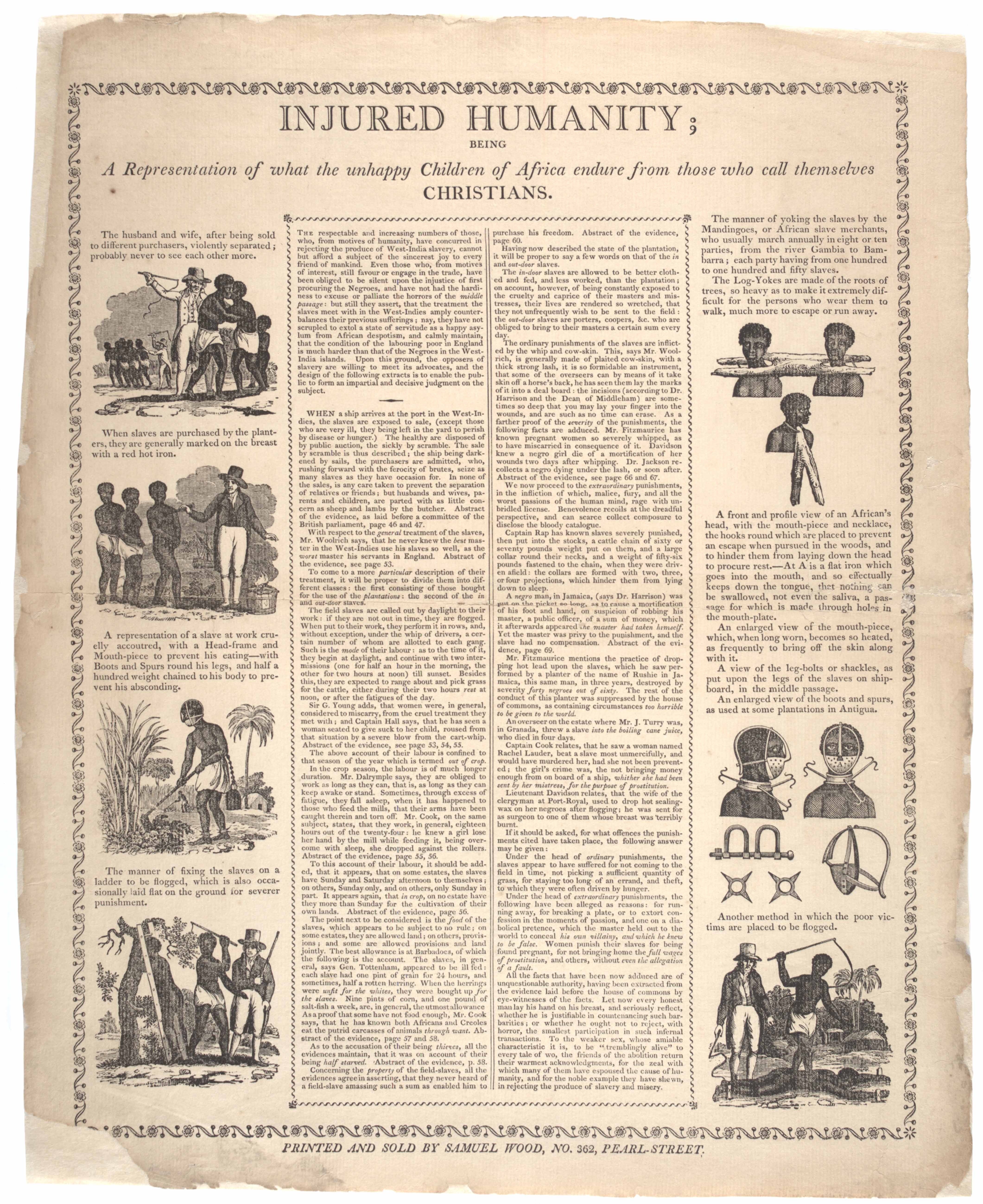
Samuel Wood, Injured Humanity; Being A Representation of What the Unhappy Children of Africa Endure from Those Who Call Themselves Christians, 1805. (Gilder Lehrman Collection)

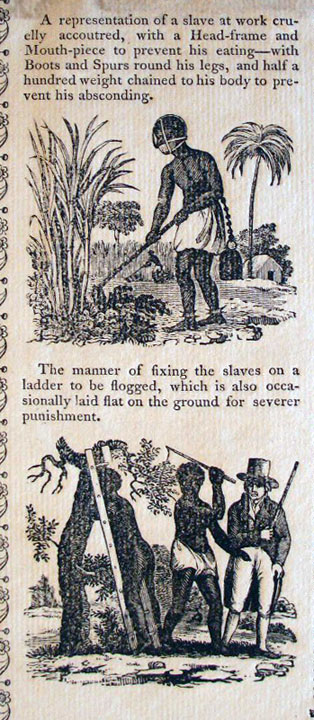
From the Gilder Lehrman Center at Yale University, "The horrors of slavery, 1805: by Samuel Wood" -- Originally circulated in 1805 to educate the public about the treatment of slaves, this broadside, entitled “Injured Humanity,” continues to inform twenty-first-century audiences of the true horrors of slavery. As evidenced by this document, early abolitionists decried the slave trade before it was abolished by an 1807 act of Congress. “Injured Humanity” was intended to shock readers and called on the conscience of citizens to “reject, with horror, the smallest participation in such infernal transactions.” This broadside was printed in New York City by Samuel Wood, a prolific Quaker-reformist printer. The text refers to a the publication of An Abstract of the Evidence Delivered before a Select Committee of the House of Commons in the Years 1790 and 1791; on the Part of the Petitioners for the Abolition of the Slave-Trade (London: James Phillips, 1791). The descriptions of the slave trade and treatment of slaves are brought to life by seven strikingly vivid vignettes depicting slaves being whipped, sold, tortured, and separated from their families.  (Gilder Lehrman Collection)

Injured Humanity; Being A Representation of What the Unhappy Children of Africa Endure from Those Who Call Themselves Christians, Published by Samuel Wood. New York, New York, 1805. Broadside, 1 page.

INJURED HUMANITY ; BEING A Representation of what the unhappy Children of Africa endure from those who call themselves CHRISTIANS.

THE respectable and increasing numbers of those, who, from motives of humanity, have concurred in rejecting the produce of West-India slavery, cannot but afford a subject of the sincerest joy to every friend of mankind. Even those who, from motives of interest, still favour or engage in the trade, have been obliged to be silent upon the injustice of first procuring the Negroes, and have not had the hardiness to excuse or palliate the horrors of the middle passage: but still they assert, that the treatment the slaves meet with in the West-Indies amply counterbalances their previous sufferings; nay, they have not scrupled to extol a state of servitude as a happy asylum from African despotism, and calmly maintain, that the condition of the labouring poor in England is much harder than that of the Negroes in the West-India islands. Upon this ground, the opposers of slavery are willing to meet its advocates, and the design of the following extracts is to enable the public to form an impartial and decisive judgment on the subject.  (Gilder Lehrman Collection)
––––––
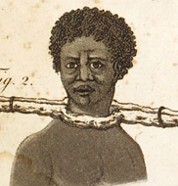
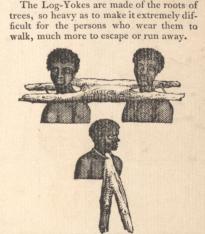
Samuel Wood, Injured Humanity, Log Yokes (Gilder Lehrman Collection)
Caption reads: "The Log-Yokes are made of the roots of trees, so heavy as to make it extremely difficult for the persons who wear them to walk, much more to escape or run away.

 WHEN a ship arrives at the port in the West-Indies, the slaves are exposed to sale, (except those who are very ill, they being left in the yard to perish by disease or hunger.) The healthy are disposed of by public auction, the sickly by scramble. The sale by scramble is thus described; the ship being darkened by sails, the purchasers are admitted, who, rushing forward with the ferocity of brutes, seize as many slaves as they have occasion for. In none of the sales, is any care taken to prevent the separation of relatives or friends; but husbands and wives, parents and children, are parted with as little concern as sheep and lambs by the butcher. Abstract of the evidence, as laid before a committee of the British parliament, page 45 and 47., 

With respect to the general treatment of the slaves, Mr. Woolrich says, that he never knew the best master in the West-Indies use his slaves so well, as the worst master his servants in England. Abstract of the evidence, see page 53., 

To come to a more particular description of their treatment, it will be proper to divide them into different classes: the first consisting of those bought for the use of the plantations : the second of the in and out-door slaves. ,  (Gilder Lehrman Collection)

Caption reads: An  enlarged view of the mouthpiece.  Which, when long worn, becomes so heated, as frequently to bring off the skin along with it.  A view of the leg-bolts or shackles, as put upon the legs of the slaves on shipboard, in the middle passage.  An enlarged view of he boots and spurs to be used at some of the plantations in Antigua.

The field slaves are called out by daylight to their work : if they are not out in time, they are flogged. When put to their work, they perform it in rows, and, without exception, under the whip of drivers, a certain number of whom are allotted to each gang. Such is the mode of their labour : as to the time of it, they begin at daylight, and continue with two intermissions (one for half an hour in the morning, the other for two hours at noon) till sunset. Besides this, they are expected to range about and pick grass for the cattle, either during their two hours rest at noon, or after the fatigues of the day. , 

Sir G. Young adds, that women were, in general, considered to miscarry, from the cruel treatment they met with ; and Captain Hall says, that he has seen a woman seated to give suck to her child, roused from that situation by a severe blow from the cart-whip.  Abstract of the evidence, see page 53, 54, 55.,  (Gilder Lehrman Collection)


The husband and wife, after being sold to different purchasers, violently separated; probably never to see each other more.

The above account of their labour is confined to that season of the year which is termed out of crop., 

In the crop season, the labour is of much longer duration. Mr. Dalrymple says, they are obliged to work as long as they can, that is, as long as they can keep awake or stand. Sometimes, through excess of fatigue, they fall asleep, when it has happened to those who feed the mills, that their arms have been caught therein and torn off. Mr. Cook, on the same subject, states, that they work, in general, eighteen hours out of the twenty-four : he knew a girl lost her hand by the mill while feeding it, being overcome with sleep, she dropped against the rollers.  Abstract of the evidence, page 55, 56. , 

To this account of their labour, it should be added, that it appears, that on some estates, the slaves have Sunday and Saturday afternoon to themselves; on others, Sunday only, and on others, only Sunday in part. It appears again, that in crop, on no estate have they more than Sunday for the cultivation of their own lands. Abstract of the evidence, page 56. ,

 The point next to be considered is the food of the slaves, which appears to be subject to no rule ; on some estates, they are allowed land ; on others, provisions ; and some are allowed provisions and land jointly. The best allowance is at Barbados, of which the following is the account. The slaves, in general, says Gen. Tottenham, appeared to be ill fed: each slave had one pint of grain for 24 hours, and sometimes, half a rotten herring. When the herrings were unfit for the whites, they were bought up for the slaves. Nine pints of corn, and one pound of salt-fish a week, are, in general, the utmost allowance As a proof that some have not food enough, Mr. Cook says, that he has known both Africans and Creoles eat the putrid carcasses of animals through want.  Abstract of the evidence, page 57 and 58.,  (Gilder Lehrman Collection)


As to the accusation of their being thieves, all the evidences maintain, that it was on the account of their being half starved. Abstract of the evidence, p.58., 

Concerning the property of the field-slaves, all the evidences agree in asserting, that they never heard of a field-slave amassing such a sum as enabled him to purchase his freedom. Abstract of the evidence, page 60. , 

The in-door slaves are allowed to be better clothed and fed, and less worked, than the plantation ; on account, however, of being constantly exposed to the cruelty and caprice of their masters and mistresses, their lives are rendered so wretched, that they not unfrequently wish to be sent to the field : the out-door slaves are porters, coopers, &c. who are obliged to bring to their masters a certain sum every day. , 


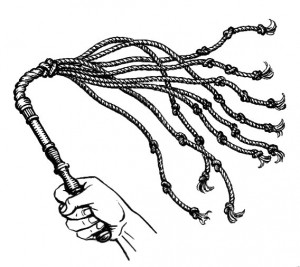
The ordinary punishments of the slaves are inflicted by the whip and cow-skin. This, says Mr. Woolrich, is generally made of plaited cow-skin, with a thick strong lash, it is so formidable an instrument, that some of the overseers can by means of it take skin off a horse’s back, he has seen them lay the marks of it into a deal board : the incisions (according to Dr. Harrison and the Dean of Middleham) are sometimes so deep that you can lay your finger into the wounds, and are such as no time can erase. As a farther proof of the severity of the punishments, the following facts are adduced. Mr. Fitzmaurice has known pregnant women so severely whipped, as to have miscarried in consequence of it. Davidson knew a negro girl die of a mortification of her wounds two days after whipping. Dr. Jackson recollects a negro dying under the lash, or soon after. Abstract of the evidence, see page 66 and 67.  (Gilder Lehrman Collection)

We now proceed to the extraordinary punishments, in the infliction of which malice, fury, and all the worst passions of the human mind, rage with unbridled license. Benevolence recoils at the dreadful perspective, and can scarce collect composure to disclose the bloody catalogue. , 

Captain Rap has known slaves severely punished, then put into the stocks, a cattle chain of sixty or seventy pounds weight put on them, and a large collar round their necks, and a weight of fifty-six pounds fastened to the chain, when they were driven afield : the collars are formed with two, three, or four projections, which hinder them from lying down to sleep. , 

A negro man, in Jamaica, (says Dr. Harrison) was put on the picket so long, as to cause a mortification of his foot and hand, on suspicion of robbing his master, a public officer, of a sum of money, which it afterwards appeared the master had taken himself. Yet the master was privy to the punishment, and the slave had no compensation.(Gilder Lehrman Collection)


Abstract of the evidence, page 69., Mr. Fitzmaurice mentions the practice of dropping hot lead upon the slaves, which he saw performed by a planter of the name of Rushie in Jamaica, this same man, in three years, destroyed by severity of forty negroes out of sixty. The rest of the conduct of this planter was suppressed by the house of commons, as containing circumstances too horrible to be given to the world. 

An overseer on the estate where Mr. J. Turry was, in Granada, threw a slave into the boiling cane juice, who died in four days. , Captain Cook relates, that he saw a women named, Rachel Lauder, beat a slave most ummercifully, and would have murdered her, had she not been prevented ; the girl’s crime was, the not bringing money enough from on board of a ship, whither she had been sent by her mistress, for the purpose of prostitution.

Lieutenant Davidson relates, that the wife of the clergyman at Port-Royal, used to drop hot sealing-wax on her negroes after flogging; he was sent for as surgeon to one of them whose breast was terribly burnt. , 

If it should be asked, for what offences the punishments cited have taken place, the following answer may be given : 

Under the head of ordinary punishments, the slaves appear to have suffered for not coming to the field in time, not picking a sufficient quantity of grass, for staying too long of an errand, and theft, to which they were often driven by hunger., (Gilder Lehrman Collection)


Under the head of extraordinary punishments, the following have been alleged as reasons: for running away, for breaking a plate, or to extort confession in the moments of passion, and one on a diabolical pretence, which the master held out to the world to conceal his own villainy, and which he knew to be false. 

Women punish their slaves for being found pregnant, for not bringing home the full wages of prostitution, and others without even the allegation of a fault. , 

All the facts that have been now adduced are of unquestionable authority having been extracted from the evidence laid before the house of commons by eye-witnesses of the facts. Let now every honest man lay his hand on his breast, and seriously reflect, whether he is justifiable in countenancing such barbarities; or whether he ought not to reject, with horror, the smallest participation in such infernal transactions. To the weaker sex, whose amiable characteristic it is, to be ”tremblingly alive” to every tale of wo, the friends of the abolition return their warmest acknowledgments, for the zeal with which many of them have espoused the cause of humanity, and for the noble example they have shewn, in rejecting the produce of slavery and misery. , ,(Gilder Lehrman Collection)

HOME

HOME
Click here to return to the US Slave Home Page