Thursday, May 26, 2011

The First Memorial Day in Charleston, South Carolina

For the Newark Star Ledger, "The First Decoration Day," David W. Blight, Yale University  --  Yale Professor David Blight writes, Americans understand that Memorial Day, or "Decoration Day," as my parents called it, has something to do with honoring the nation's war dead. It is also a day devoted to picnics, road races, commencements, and double-headers. But where did it begin, who created it, and why?

As a nation we are at war now, but for most Americans the scale of death and suffering in this seemingly endless wartime belongs to other people far away, or to people in other neighborhoods. Collectively, we are not even allowed to see our war dead today. That was not the case in 1865.


At the end of the Civil War the dead were everywhere, some in half buried coffins and some visible only as unidentified bones strewn on the killing fields of Virginia or Georgia. Americans, north and south, faced an enormous spiritual and logistical challenge of memorialization. The dead were visible by their massive absence. Approximately 620,000 soldiers died in the war. American deaths in all other wars combined through the Korean conflict totaled 606,000. If the same number of Americans per capita had died in Vietnam as died in the Civil War, 4 million names would be on the Vietnam Memorial. The most immediate legacy of the Civil War was its slaughter and how remember it.

War kills people and destroys human creation; but as though mocking war's devastation, flowers inevitably bloom through its ruins. After a long siege, a prolonged bombardment for months from all around the harbor, and numerous fires, the beautiful port city of Charleston, South Carolina, where the war had begun in April, 1861, lay in ruin by the spring of 1865. The city was largely abandoned by white residents by late February. Among the first troops to enter and march up Meeting Street singing liberation songs was the Twenty First U. S. Colored Infantry; their commander accepted the formal surrender of the city.


Thousands of black Charlestonians, most former slaves, remained in the city and conducted a series of commemorations to declare their sense of the meaning of the war. The largest of these events, and unknown until some extraordinary luck in my recent research, took place on May 1, 1865. During the final year of the war, the Confederates had converted the planters' horse track, the Washington Race Course and Jockey Club, into an outdoor prison. Union soldiers were kept in horrible conditions in the interior of the track; at least 257 died of exposure and disease and were hastily buried in a mass grave behind the grandstand. Some twenty-eight black workmen went to the site, re-buried the Union dead properly, and built a high fence around the cemetery. They whitewashed the fence and built an archway over an entrance on which they inscribed the words, "Martyrs of the Race Course."

Then, black Charlestonians in cooperation with white missionaries and teachers, staged an unforgettable parade of 10,000 people on the slaveholders' race course. The symbolic power of the low-country planter aristocracy's horse track (where they had displayed their wealth, leisure, and influence) was not lost on the freedpeople. A New York Tribune correspondent witnessed the event, describing "a procession of friends and mourners as South Carolina and the United States never saw before."


At 9 am on May 1, the procession stepped off led by three thousand black schoolchildren carrying arm loads of roses and singing "John Brown's Body." The children were followed by several hundred black women with baskets of flowers, wreaths and crosses. Then came black men marching in cadence, followed by contingents of Union infantry and other black and white citizens. As many as possible gathering in the cemetery enclosure; a childrens' choir sang "We'll Rally around the Flag," the "Star-Spangled Banner," and several spirituals before several black ministers read from scripture. No record survives of which biblical passages rung out in the warm spring air, but the spirit of Leviticus 25 was surely present at those burial rites: "for it is the jubilee; it shall be holy unto you… in the year of this jubilee he shall return every man unto his own possession."

Following the solemn dedication the crowd dispersed into the infield and did what many of us do on Memorial Day: they enjoyed picnics, listened to speeches, and watched soldiers drill. Among the full brigade of Union infantry participating was the famous 54th Massachusetts and the 34th and 104th U.S. Colored Troops, who performed a special double-columned march around the gravesite. The war was over, and Decoration Day had been founded by African Americans in a ritual of remembrance and consecration. The war, they had boldly announced, had been all about the triumph of their emancipation over a slaveholders' republic, and not about state rights, defense of home, nor merely soldiers' valor and sacrifice.


According to a reminiscence written long after the fact, "several slight disturbances" occurred during the ceremonies on this first Decoration Day, as well as "much harsh talk about the event locally afterward." But a measure of how white Charlestonians suppressed from memory this founding in favor of their own creation of the practice later came fifty-one years afterward, when the president of the Ladies Memorial Association of Charleston received an inquiry about the May 1, 1865 parade. A United Daughters of the Confederacy official from New Orleans wanted to know if it was true that blacks had engaged in such a burial rite. Mrs. S. C. Beckwith responded tersely: "I regret that I was unable to gather any official information in answer to this." In the struggle over memory and meaning in any society, some stories just get lost while others attain mainstream dominance.

Officially, as a national holiday, Memorial Day emerged in 1868 when General John A. Logan, commander-in-chief of the Grand Army of the Republic, the Union veterans organization, called on all former northern soldiers and their communities to conduct ceremonies and decorate graves of their dead comrades. On May 30, 1868, when flowers were plentiful, funereal ceremonies were attended by thousands of people in 183 cemeteries in twenty-seven states. The following year, some 336 cities and towns in thirty-one states, including the South, arranged parades and orations. The observance grew manifold with time. In the South Confederate Memorial Day took shape on three different dates: on April 26 in many deep South states, the anniversary of General Joseph Johnston's final surrender to General William T. Sherman; on May 10 in South and North Carolina, the birthday of Stonewall Jackson; and on June 3 in Virginia, the birthday of Jefferson Davis.


Over time several American towns, north and south, claimed to be the birthplace of Memorial Day. But all of them commemorate cemetery decoration events from 1866. Pride of place as the first large scale ritual of Decoration Day, therefore, goes to African Americans in Charleston. By their labor, their words, their songs, and their solemn parade of flowers and marching feet on their former owners' race course, they created for themselves, and for us, the Independence Day of the Second American Revolution.

The old race track is still there — an oval roadway in Hampton Park in Charleston, named for Wade Hampton, former Confederate general and the white supremacist Redeemer governor of South Carolina after the end of Reconstruction. The lovely park sits adjacent to the Citadel, the military academy of South Carolina, and cadets can be seen jogging on the old track any day of the week. The old gravesite dedicated to the "Martyrs of the Race Course" is gone; those Union dead were reinterred in the 1880s to a national cemetery in Beaufort, South Carolina. Some stories endure, some disappear, some are rediscovered in dusty archives, the pages of old newspapers, and in oral history. All such stories as the First Decoration Day are but prelude to future reckonings. All memory is prelude.


[David W. Blight teaches American History at Yale University where he is the director of the Gilder Lehrman Center for the Study of Slavery, Resistance, and Abolition, the author of the Bancroft prize-winning Race and Reunion: The Civil War in American Memory, and the forthcoming A Slave No More: Two Men Who Escaped to Freedom, Including Their Narratives of Emancipation. (source: David Blight)]

Tuskegee Syphilis Remix in Guatemala


The New York Times reports on October 1, 2010, "U.S. Apologizes for Syphilis Tests in Guatemala, by Donald G. McNeil Jr.:


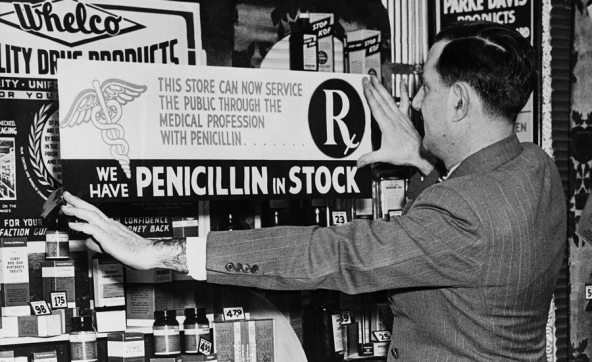
From 1946 to 1948, American public health doctors deliberately infected nearly 700 Guatemalans — prison inmates, mental patients and soldiers — with venereal diseases in what was meant as an effort to test the effectiveness of penicillin.

American tax dollars, through the National Institutes of Health, even paid for syphilis-infected prostitutes to sleep with prisoners, since Guatemalan prisons allowed such visits. When the prostitutes did not succeed in infecting the men, some prisoners had the bacteria poured onto scrapes made on their penises, faces or arms, and in some cases it was injected by spinal puncture.


If the subjects contracted the disease, they were given antibiotics.

“However, whether everyone was then cured is not clear,” said Susan M. Reverby, the professor at Wellesley College who brought the experiments to light in a research paper that prompted American health officials to investigate.

The revelations were made public on Friday, when Secretary of State Hillary Rodham Clinton and Health and Human Services Secretary Kathleen Sebelius apologized to the government of Guatemala and the survivors and descendants of those infected. They called the experiments “clearly unethical.”


“Although these events occurred more than 64 years ago, we are outraged that such reprehensible research could have occurred under the guise of public health,” the secretaries said in a statement. “We deeply regret that it happened, and we apologize to all the individuals who were affected by such abhorrent research practices.”

In a twist to the revelation, the public health doctor who led the experiment, John C. Cutler, would later have an important role in the Tuskegee study in which black American men with syphilis were deliberately left untreated for decades. Late in his own life, Dr. Cutler continued to defend the Tuskegee work.

His unpublished Guatemala work was unearthed recently in the archives of the University of Pittsburgh by Professor Reverby, a medical historian who has written two books about Tuskegee.


President Álvaro Colom of Guatemala, who first learned of the experiments on Thursday in a phone call from Mrs. Clinton, called them “hair-raising” and “crimes against humanity.” His government said it would cooperate with the American investigation and do its own.

The experiments are “a dark chapter in the history of medicine,” said Dr. Francis S. Collins, director of the National Institutes of Health. Modern rules for federally financed research “absolutely prohibit” infecting people without their informed consent, Dr. Collins said.

Professor Reverby presented her findings about the Guatemalan experiments at a conference in January, but nobody took notice, she said in a telephone interview Friday. In June, she sent a draft of an article she was preparing for the January 2011 issue of the Journal of Policy History to Dr. David J. Sencer, a former director of the Centers for Disease Control. He prodded the government to investigate.

In the 1940s, Professor Reverby said, the United States Public Health Service “was deeply interested in whether penicillin could be used to prevent, not just cure, early syphilis infection, whether better blood tests for the disease could be established, what dosages of penicillin actually cured infection, and to understand the process of re-infection after cures.”

It had difficulties growing syphilis in the laboratory, and its tests on rabbits and chimpanzees told it little about how penicillin worked in humans.

In 1944, it injected prison “volunteers” at the Terre Haute Federal Penitentiary in Indiana with lab-grown gonorrhea, but found it hard to infect people that way.


In 1946, Dr. Cutler was asked to lead the Guatemala mission, which ended two years later, partly because of medical “gossip” about the work, Professor Reverby said, and partly because he was using so much penicillin, which was costly and in short supply.

Dr. Cutler would later join the study in Tuskegee, Ala., which had begun relatively innocuously in 1932 as an observation of how syphilis progressed in black male sharecroppers. In 1972, it was revealed that, even when early antibiotics were invented, doctors hid that fact from the men in order to keep studying them. Dr. Cutler, who died in 2003, defended the Tuskegee experiment in a 1993 documentary.

Deception was also used in Guatemala, Professor Reverby said. Dr. Thomas Parran, the former surgeon general who oversaw the start of Tuskegee, acknowledged that the Guatemala work could not be done domestically, and details were hidden from Guatemalan officials.

Professor Reverby said she found some of Dr. Cutler’s papers at the University of Pittsburgh, where he taught until 1985, while she was researching Dr. Parran.

“I’m sifting through them, and I find ‘Guatemala ... inoculation ...’ and I think ‘What the heck is this?’ And then it was ‘Oh my god, oh my god, oh my god.’ My partner was with me, and I told him, ‘You aren’t going to believe this.’ ”

Fernando de la Cerda, minister counselor at the Guatemalan Embassy in Washington, said that Mrs. Clinton apologized to President Colom in her Thursday phone call. “We thank the United States for its transparency in telling us the facts,” he said.


Asked about the possibility of reparations for survivors or descendants, Mr. de la Cerda said that was still unclear.

The public response on the Web sites of Guatemalan news outlets was furious. One commenter, Cesar Duran, on the site of Prensa Libre wrote: “APOLOGIES ... please ... this is what has come to light, but what is still hidden? They should pay an indemnity to the state of Guatemala, not just apologize.”


Dr. Mark Siegler, director of the Maclean Center for Clinical Medical Ethics at the University of Chicago’s medical school, said he was stunned. “This is shocking,” Dr. Siegler said. “This is much worse than Tuskegee — at least those men were infected by natural means.”


He added: “It’s ironic — no, it’s worse than that, it’s appalling — that, at the same time as the United States was prosecuting Nazi doctors for crimes against humanity, the U.S. government was supporting research that placed human subjects at enormous risk.”

The Nuremberg trials of Nazi doctors who experimented on concentration camp inmates and prisoners led to a code of ethics, though it had no force of law. In the 1964 Helsinki Declaration, the medical associations of many countries adopted a code.

The Tuskegee scandal and the hearings into it conducted by Senator Edward M. Kennedy became the basis for the 1981 American laws governing research on human subjects, Dr. Siegler said.

It was preceded by other domestic scandals. From 1963 to 1966, researchers at the Willowbrook State School on Staten Island infected retarded children with hepatitis to test gamma globulin against it. And in 1963, elderly patients at the Brooklyn Jewish Chronic Disease Hospital were injected with live cancer cells to see if they caused tumors.


Researcher 'Floored' by Discovery of Intentional Infections in Guatemala

Examining Tuskegee


Since 1972, "Tuskegee" has become a word that stands for an infamous research study: a forty year endeavor on the part of the United States Public Health Service (PHS) to not treat African American men with late stage and presumably non-infectious syphilis, while promising them the aspirins, tonics and diagnostic spinal taps were treatment. The Study turned into a long effort (1932-72) to track nearly 400 men (the subjects) assumed to have the disease and nearly 200 men (the controls) assumed to be disease free in the countryside surrounding the city of Tuskegee in Macon County, Alabama. Despite the publication of a dozen research studies about the Study in medical journals over the years, there was major outrage when a newspaper reporter exposed it to the wider public in July 1972. Senate hearings, a federal investigative commission, a lawsuit, and new rules for medical and scientific research followed. Susan M. Reverby's new book, Examining Tuskegee: The Infamous Syphilis Study and its Legacy (Chapel Hill: University of North Carolina Press, 2009) brings the stories of this extraordinary study up to the present day.

In the early 1930s, syphilis — a sexually transmitted disease full of moral stigma and dangerous health effects — was a widespread public health problem in many communities across the country. As part of its effort to reach out to underserved rural black communities in particular, the Rosenwald Foundation and the PHS set up a demonstration project in six southern states to track and treat the disease. When the funds dried up in the Depression, the PHS's idea was to study in one county what happened without treatment to those assumed to no longer be contagious and in the disease's last and latent stage.

For the next forty years, the PHS came back into Macon County for more tests of the men, tried to follow up those who had left, and promised families money for burial in exchange for the right to autopsy those who died. None of the men were injected with syphilis, as it is often rumored. Not all of the men died of the disease. The doctors were supposed to choose only those not contagious, but some of the men did pass on the disease to their wives and sexual partners, and then possibly on to a fetus in utero. Despite the discovery of penicillin in the 1940s (which might have still helped some, but not all, of the men), despite a civil rights movement that engulfed the Tuskegee area, despite debates over the power of physicians, despite questions of morality of this research raised in the 1950s, the Study continued.

Moving away from seeing the men as just hapless victims and the doctors as racist monsters, Reverby captures the experiences of individuals in the Study. She finds examples of how the men might have gotten to treatment, despite the PHS's efforts. She raises questions about the kinds of medicines available for syphilis in its latent stages and what type of medical uncertainty the Study was supposed to explore. She separates out the concepts of supposed biological difference based on "race" and the practices of institutional racism.

In 1997, after much organizing from citizens and politicians, then president Bill Clinton apologized to the six remaining men from the Study and to all African Americans. Nearly forty years after the Study ended and ten years after the formal apology, "Tuskegee" is still invoked to explain the anger and fears of some black Americans over the betrayals of the federal government, the institutional racism in health care, and why medical research has to be reviewed and monitored.

In her book, Susan M. Reverby traces both what happened during those forty years, how differing individuals experienced and explained their participation, and how the Study has been remembered and evoked over the decades. She examines the Study's life in history, memory, bioethics, fiction, and political argument, exploring why evoking "Tuskegee" may not be a solution to treating racism in medicine and public health.
(http://www.examiningtuskegee.com/)

Escaping Melodramas: Reflections on Historical Events, Government Apologies and Public Outcries

Wednesday, May 25, 2011

Dr. J. Marion Sims Medical Experiments on Enslaved Women and Children

In an essay entitled, "Father Butcher, " one of Columbia, South Carolina's activist and artist, Wendy Brinker is pens a well researched, pointed account of the life and times of the celebrated "father of gynecology," J. Marion Sims and his medical experiments with enslaved women and children.
Wendy Brinker writes: It was customary for pharaohs coming into power to order that all portraits and mentions of any rival predecessor be erased or destroyed. This would cleanse the land, as they believed if a person’s name or likeness existed somewhere, that person could influence matters of the world from the afterlife. Today we are not as esoteric in our practices, but routinely commission sculptures and monoliths to immortalize people or events we deem worthy of homage and for future generations to ponder. On the shady northwest corner of the statehouse grounds in Columbia, South Carolina, a place wrought with controversy over its harsh, shameful tributes to slavery, sits a monument dedicated to James Marion Sims.

The monument honoring the South Carolinian from Lancaster County curiously dubbed "The Father of Gynecology" is one of the largest on the site. In front of a large cement archway sits a bronze bust of Sims, looking down with crooked brow and a fatherly grin. Directly beneath his image is a quote from Hippocrates, "Where the love of man is, there is also the love of art." Etched in a panel to the left, an inscription touts, "The first surgeon of the ages in ministry to women, treating alike empress and slave." On the panel to the right, the inscription continues, "He founded the science of gynecology, was honored in all lands and died with the benediction of mankind."
Historians from South Carolina proudly proclaim that Dr. Sims innovated techniques and developed instruments that changed the landscape of women's reproductive health. Outside accounts portray him quite differently. What is not in dispute is that between 1845 and 1849, in a makeshift hospital he built in his backyard, Sims inaugurated a long, drawn-out series of excruciating, experimental gynecological operations on countless enslaved African women. This was all done without the benefit of anesthesia or before any type of antiseptic was used. Many lost their lives to infection. It is their story that history has failed to tell and their legacy of courage and endurance that should be honored, not their captor's. ...
In October of 1835, immediately after the death of the two infants, John Sims took his son to Alabama. It is unclear why the young doctor left Lancaster, but his reputation could not have been favorable. After three weeks by wagon, they made it as far as Mt. Meigs, Alabama, where he apprenticed under two doctors, Dr. Lucas and Dr. Childers. Lucas was a politician and had made his fortune from cotton. Sims was impressed that Lucas owned two to three hundred slaves and had influence and power in the community. Childers was an old-fashioned country doctor that allowed Sims to accompany him on his house calls. After witnessing Childers "bleed" a patient to death, one of his favorite cure-alls, Sims admitted, "I knew nothing about medicine, but I had sense enough to see that doctors were killing their patients; that medicine was not an exact science; that it was wholly empirical, and that it would be better to trust entirely to Nature than to the hazardous skills of the doctors."

A month after arriving, Sims bought out Childers' practice for a two hundred-dollar promissory note. His first patient came while Lucas was away in Tuscaloosa on legislative business. Sims was summoned 40 miles away to the home of a cotton farmer whose sister was running a high fever after delivering. The attending doctor was present, but obviously drunk. Sims refused to take over the care of the woman - again, having no idea what treatment to administer. He returned to Mt. Meigs and the woman died a day after he departed. A month later, with Lucas still away, a request for a doctor came on behalf of an ailing slave overseer. Sims reluctantly departed to examine the man. He found a lump inside his abdomen and explained, "This is matter here and it must come out or this man will die." He was granted permission to operate and described the procedure as such, "We went in to the room - it was before the days of anesthetics - and, pulling out a bistoury (scalpel), I plunged it into his belly. I think it was one of the most happiest moments of my life when I saw the matter flow and come welling up opposite the bistoury." Miraculously, the man eventually made a full recovery. Such was the nature of Sims' first surgical experience as he began to practice medicine.
...
Acting primarily as a plantation physician, Sims became known for operations on clubfeet, cleft palates and crossed eyes. He began to treat enslaved babies suffering from what he called "trismus nascentium,” now known as neonatal tetanus. Tetanus originates in horse manure, and it’s probable the proximity of the slave quarters to the horse stables was the direct cause of the high rate of tetanus in enslaved babies. In an article published by Sims on the subject, he comes to quite another conclusion that offers us a glimpse into his personal views. "Whenever there are poverty, and filth, and laziness, or where the intellectual capacity is cramped, the moral and social feelings blunted, there it will be oftener found. Wealth, a cultivated intellect, a refined mind, an affectionate heart, are comparatively exempt from the ravages of this unmercifully fatal malady. But expose this class to the same physical causes, and they become equal sufferers with the first." Since he attributed the cause of the disease to the moral weakness of the enslaved Africans, he never suggested the need to improve their living conditions.
Sims also argued that the movement of the skull bones during a protracted birth contributed to trismus. Clearly designating patients by class and race, Sims began to exercise his freedom to experiment on the enslaved infants. He took custody of them and with a shoemaker's awl, a pointed tool used for making holes in leather, tried to pry the bones of their skulls into proper alignment. According to his published articles, this procedure was only practiced on enslaved African babies. Because he "owned" these poor, innocent children, he had free access to their bodies for autopsies, which he usually performed immediately after death. Sims routinely blamed "slave mothers and nurses for infant suffering, especially through their ignorance."

Enslaved African midwives were numerous throughout the South. For hundreds of years, childbirth was not considered a "sickness" and for the most part, physicians did not attend births. But in the mid-nineteenth century, the attitude of the white male medical practitioners towards midwifery was changing. Male-dominated medicine was now challenging female-governed childbirth. The African midwife’s spiritual traditions and knowledge of rituals and herbs handed down orally through generations earned her honor and respect among the enslaved. Just as the Southern physician was at the core of his social web, the midwife enjoyed the equivalent status. This could have fueled the white master's need to remove them from positions of prominence. The early obstetricians chose to exclude midwives from their research and utterly dismissed their collective knowledge. Reminiscent of witch-hunts, persecution of midwives by white males was beginning to play out again on southern plantations.

Women were pivotal in slavery’s very definition. Enslavement was perpetuated through the status of the mother. If she was a slave, so were her children. They were frequently the objects of aggressive sexual rapes from those who held power over them. The economy of slavery imposed the role of "breeder" on these women and their ability to reproduce was equated with their worth as property. They never received enhanced diets or lower workloads while pregnant and often endured great hardships during childbirth. Reasons for prolonged labor among African women were probably related to their diet. In a relatively high percentage of Africans, dairy products not only fail to yield calcium in digestion, but can also cause sickness. Calcium deficiencies during childhood often result in rickets. This condition isn't fatal, however it causes skeletal deformities, among them a contracted pelvis that would result in a prolonged delivery. Not surprisingly, a condition known as vesico-vaginal fistulas, or vaginal tears, was prevalent among enslaved women.

One spring afternoon in 1845, Sims was summoned to the Westcott plantation about a mile out of Montgomery. A young, enslaved woman named Anarcha, one of seventy-five Africans held captive there, had been in labor for three days without delivering. Sims tried to aid the birth by applying forceps to the impacted head of the fetus. He recalled having little experience using the instrument. The baby was born - no record if it lived or died - and the mother sustained several fistulas, resulting in incontinence. It is unclear whether Sims inflicted the damage himself while using the unfamiliar forceps or they occurred as a result of the prolonged birth. Several days after Anarcha delivered, she was sent to Sims in hopes he could repair the damage. Sims found her condition repugnant. Her value diminished considerably, and Sims obliged to her master, he attempted to repair Anarcha's badly damaged body.

Sims showed an uncommon willingness to break cultural barriers in his treatment of female disorders. Most physicians in the Victorian period shunned the impropriety of visually examining a woman internally. They generally relied on the use of touch as a more genteel method. Earlier in his career, Sims treated a female patient who had been thrown off a pony. He placed her on her hands and knees and fashioned a crude tool from a pewter spoon to expand the walls of the vagina. This spoon was the first prototype for the speculum, now called the Sims speculum. The patient's relief was immediate, since the change in air pressure successfully relocated her uterus to its proper position. Sims described the moment as if he had a spiritual epiphany. "I cannot, nor is it needful for me to describe, my emotions when the air rushed in and dilated the vagina to its greatest capacity whereby its whole surface was seen at one view, for the first time by any mortal man." His success with this single procedure now convinced Sims he could find a surgical remedy for vesico-vaginal fistulas. Finally, he could make a name for himself.
Eager to devote the rest of his life to this condition, he built a crude sixteen-bed hospital in his backyard. To aid him in his experiments, he fashioned over 71 surgical instruments. Sims sent for as many cases as he could find. Plantation owners were happy to turn their incontinent, damaged female slaves over to Sims for experimentation. They were of little use to their masters in their present condition. Between January 1846 and June 1849, he experimented surgically on as many as eleven patients at one time. Two enslaved women in addition to Anarcha - Betsy and Lucy - were also young women who contracted fistulas giving birth for the first time. Together, these three women endured repeated operations and were patients of Sims for the duration of the hospital's existence. Anarcha is believed to have undergone over thirty operations.

Sims subscribed to a commonly held belief that Africans had a specific physiological tolerance for pain, unknown by whites. He never felt the need to anesthetize his black patients in Montgomery. The white women, who came to him after the surgery was an accepted form of treatment, were unable to withstand the same operation without anesthesia according to Sims. While he never administered anesthesia during the experiments, he did include opium in his postoperative treatment. Opium kept the patients still, aiding the healing process, and Sims found the accompanying constipation a necessity in the aftermath of surgery. He also emphasized giving the patient minimal food and water for a two-week period after surgery.

In the first months of the original surgeries, Sims would invite his colleagues to witness the operations. As the number of operations grew and the failures mounted, Sims soon found himself operating alone. The hospital was "off limits" to Sims’ family so he had to rely on the assistance of the enslaved victims themselves. After a couple of years of repeated surgeries and failures, his wife's brother, Dr. Rush Jones from the neighboring county of Lowndes, implored him to stop his experiments. "We have watched you, and sympathized with you; but your friends here have seen that of late you are doing too much work, and that you are breaking down. And, besides, I must tell you frankly that with your young and growing family, it is unjust to them to continue in this way, and carry on this series of experiments." Sims replied, "I am going on … to the end. It matters not what it costs, if it costs me my life." To those close to Sims, it appeared his preoccupation with the experiments had become an obsession.
Sims had been suturing the vaginal tears with materials common to that era, mostly silk and catgut, which absorbed bodily fluid. This caused inflammation around the wounds, promoting horrible infections that would never heal. It is unclear what prompted Sims to have his jeweler fashion some fine silver wire for suturing wounds. He used it on one of Anarcha's fistulas at the base of her bladder. Days later, when Sims found no infection, he declared that silver sutures were the key to mending vesico-vaginal fistulas. He quickly utilized the metal sutures on all of his captives and claimed to have cured them all, but there is no outside evidence to support his claim. He declared, "I had made, perhaps, one of the most important discoveries of the age for the relief of suffering humanity." Sims never recorded if he was able to heal Anarcha of her other fistulas and to this day, physicians debate the type of suture to use in the operation, although the condition is rarely seen anymore. Sims' success remains unsubstantiated by all medical standards.


In the fall of 1849, Sims was stricken with an intestinal illness and spent several years moving from place to place in search of relief. In 1853, he moved to the cooler climate of New York. While Sims maintained a strong commitment to the morality of owning slaves and held a strong allegiance to the South, he began to revise and moderate his tone for the different political climate he found on Madison Avenue. Sims evaded the issue of slavery and race and never admitted publicly that he experimented on patients who did not own their own bodies. In his use of woodcuts accompanying his lectures, he portrayed his earlier female patients as white. Now that he chose to practice among white women of the upper and middle classes, he stated of his surgeries, "I though only of relieving the loveliest of all God's creation." It seems he'd forgotten his distaste for Anarcha, Betsy and Lucy and all of the other enslaved women he had mutilated or killed over the years.

J. Marion Sims went on to convince a group of philanthropic women of the old New York's elite class that his motives were sincere and his methods proven. He garnered enough enthusiasm and financial support to set up a woman's charity hospital in May of 1855. Sims was once again in business to perform his operations, this time, on poor Irish immigrant women. He is honored with a statue on the corner of 103rd Street and Fifth Avenue for his contributions. He traveled extensively to Europe and enjoyed the reputation of being a famous American doctor. While abroad in 1863, he was asked to examine Empress Eugenie of France. This is how the inscription came to read, "treating alike empress and slave," although he employed very different methods of treatment depending on the patient's social status. He faithfully sent money to support the confederacy, but never returned to the south. He died in New York in 1883.

The success of J. Marion Sims as "the father of gynecology" in the United States solely resulted from the personal sacrifices of the enslaved African women he experimented on from 1845 to 1849. Had they not been his property, giving him carte blanche to cut them open and sew them back up as he saw fit, he could never have devised the surgical technique that brought him international recognition. He never expressed any interest in the cause of vesico-vaginal fistulas or in the health of the women themselves. Nor did he concern himself with the extent of recovery made by the patients. And never did he express moral uncertainty over keeping women captive for the expressed purpose of painful surgical experimentation.

Undeniably, nineteenth century medical practices were crude and painful, but Sims' contemporaries felt him unnecessarily cruel. Since it was illegal for enslaved Africans to read or write, an offense punishable by death, Anarcha, Betsy and Lucy left no account of their ordeal. We can only imagine what they endured at the hands of Sims. All over the world, Sims has been honored and memorialized with statues and plaques. Buildings, hospitals, foundations, schools and streets bare his name. While it is impossible to negate the historical context of his racial, class and gender biases, shouldn't we agree to apply some basic standard of humanity to those we choose to honor?


The Human Pain of Medical Advancement


WASHINGTON -- Could this be the year of unlikely associations? In recent weeks, several intriguing pairings have arisen to capture our attention: Pixar and Disney, Shaq & Kobe, stem-cell research and the Holocaust. What's that you say? Not so fast?

Michael Steele, the earnest but bumbling Republican candidate for Senate in Maryland, likened stem-cell research to Nazi atrocities when speaking to the Baltimore Jewish Council earlier this month.
"You, of all folks, know what happens when people decide they want to experiment on human beings, when they want to take your life and use it as a tool," Steele told the group. "I know that as well in my community, out of our experience with slavery, and so I'm very cautious when people say this is the best new thing, this is going to save lives."

Amid mounting condemnation from Jewish groups and others, a chastened Steele apologized for his remarks. Later he reversed himself and said he supports stem-cell research, especially when cells can be extracted without destroying the embryo.

Lost in the hubbub was Steele's comment comparing slavery to stem-cell research. That part of his speech seems to have drawn little reaction beyond an obligatory slap from Kweisi Mfume, who happens to be one of the Democrats vying to run against Steele. But, said Mfume, "Any further comparison to equate slavery to stem-cell research is a reach that I and others who are the descendants of slaves don't understand." As a descendant of slaves who picked cotton in Mississippi and broke horses in Missouri, I can comfortably say that Mfume doesn't speak for me. I do understand.

As with many Americans, explanations of stem-cell research leave me equal parts concerned and confused. I am clear, however, that much of the controversy revolves around whether one thinks of an embryo as a person. Similarly, scientists often questioned the humanity of slaves, and some even theorized that the African captives living among them were little more than monkeys. In "The Descent of Man," for example, Charles Darwin suggested that blacks and chimpanzees were "intermediate" species between Caucasians and gorillas.

Unsurprisingly, the scientific establishment's confusion about slaves' humanity led to practices that would not be tolerated today. In "Ar'n't I A Woman," historian Deborah Gray White wrote that enslaved women "had experimental gynecological operations and cesarean sections performed on them." Like fertilized egg cells in modern laboratories, they were unable to speak for themselves.

In most instances, slaves who were subjected to medical experiments died in obscurity, their involuntary contributions to medical advancement lost to history.

Then there is the case of Anarcha, Lucy and Betsy. They were among a group of slave women in Alabama who ended up under the knife of J. Marion Sims, a founder of modern gynecology whose statue stands in New York's Central Park.


Sims' major breakthroughs included the invention of tools used in pelvic examinations and devising a way to repair vesicovaginal fistula, a dangerous condition that sometimes develops after childbirth. His pioneering techniques came at the expense of women such as Anarcha, Lucy and Betsy, each of whom he operated on several times between 1845 and 1849. Anarcha, according to Sims' own records, underwent surgery 30 times. Not once did she or any of Sims' other subjects benefit from anesthesia, despite the introduction of ether and nitrous oxide that same decade.

In a 1985 paper on Sims, former Spellman College professor Diana E. Axelsen noted that he praised his subjects' apparent willingness to endure pain. But she also points out that the women "were in no position to demand that he search for an effective anesthetic." In another relevant observation, Axelsen determined that "Sims failed utterly to recognize his patients as autonomous persons."

I wondered how Sims' experiments on slave women -- and the ethical questions surrounding them -- were addressed in contemporary medical schools. If historically black institutions are any indication, his deplorable record gets a free pass.

Carla Richardson-Lambert, an obstetrician-gynecologist in Washington, D.C., told me that Sims' experiments on slave women "were not discussed at all" when she was training at Howard University's medical school. I got the same response from Marie C. Smith, an Atlanta-based ob-gyn who attended Meharry Medical College. Both women are African-American.
What would Anarcha, Lucy and Betsy think of black women doctors? Did they even imagine such a possibility while suffering their countless unnameable agonies? What would they think of the stem-cell debate?

Perhaps I'll ponder those questions while visiting Sims' monument in New York or the one in his home state of South Carolina. And another question as well: where is the monument to Anarcha, Lucy and Betsy? (The Washington Post)

The Tuskegee Experiment

Epidemics in Western Society Since 1600 (HIST 234)

The Tuskegee Syphilis Study, carried out in Macon, Alabama, from 1932 to 1972, is a notorious episode in the checkered history of medical experimentation. In one of the most economically disadvantaged parts of the U.S., researchers deceived a group of 399 black male syphilitics into participating in a study with no therapeutic value. These "volunteers" were not treated as patients, but rather as experimental subjects, or walking cadavers. Even after the development of penicillin, the Tuskegee group was denied effective treatment. Despite regularly published scholarly articles, forty years passed before there was any protest in the medical community. The aftereffects of the study, along with the suffering of its victims, include a series of congressional investigations, the drafting of medical ethics guidelines, and the establishment of independent review boards.

21. The Tuskegee Experiment

NOVA--The Deadly Deception: Tuskegee Syphilis Experiment

For four decades, 400 African American men from Macon, Alabama were unwitting participants in a government study of untreated syphilis. NOVA tells the story of this notorious human experiment. George Strait, ABC News Medical Correspondent, hosts.

Original broadcast date: 01/26/93


Deadly Deception

Deadly Deception

RZ media | Myspace Video

Unequal Treatment: How African Americans have often been the unwitting victims of medical experiments

Washington Post, "Unequal Treatment: How African Americans have often been the unwitting victims of medical experiments," reviewed by Alondra Nelson, 7 January 2007:

The Tuskegee Syphilis Study remains an ignominious milestone in the intertwined histories of race and medical science in U.S. society. Initiated in 1932, this tragic 40-year long public health project resulted in almost 400 impoverished and unwitting African American men in Macon County, Ala., being left untreated for syphilis. Researchers wanted to observe how the disease progressed differently in blacks in its late stages and to examine its devastating effects with postmortem dissection.

A fresh account of the Tuskegee study, including new information about the internal politics of the panel charged by the Department of Health, Education and Welfare with investigating it in 1972, lies at the center of Harriet A. Washington's courageous and poignant book. The balance of Medical Apartheid reveals, with arresting detail, that this scandal was neither the first chapter nor the last in the exploitation of black subjects in U.S. medical research. Tuskegee was, in the author's words, "the longest and most infamous -- but hardly the worst -- experimental abuse of African Americans. It has been eclipsed in both numbers and egregiousness by other abusive medical studies."


Although medical experimentation with human subjects has historically involved vulnerable groups, including children, the poor and the institutionalized, Washington enumerates how black Americans have disproportionately borne the burden of the most invasive, inhumane and perilous medical investigations, from the era of slavery to the present day. (This burden has become global in the last few decades.) In 1855, John "Fed" Brown, an escaped slave, recalled that the doctor to whom he was indentured produced painful blisters on his body in order to observe "how deep my black skin went." This study had no therapeutic value. Rather, fascination with the outward appearance of African Americans, whose differences from whites were thought to be more than skin deep, was a significant impulse driving such medical trials.

Shielding whites from excruciating experimental procedures also proved a powerful motivation. J. Marion Sims, a leading 19th-century physician and former president of the American Medical Association, developed many of his gynecological treatments through experiments on slave women who were not granted the comfort of anesthesia. Sims's legacy is Janus-faced; he was pitiless with non-consenting research subjects, yet he was among the first doctors of the modern era to emphasize women's health. Other researchers were more guilty of blind ambition than racist intent. Several African Americans, including such as Eunice Rivers, the nurse-steward of the Tuskegee study, served as liaisons between scientists and research subjects.

The infringement of black Americans' rights to their own bodies in the name of medical science continued throughout the 20th century. In 1945, Ebb Cade, an African American trucker being treated for injuries received in an accident in Tennessee, was surreptitiously placed without his consent into a radiation experiment sponsored by the U.S. Atomic Energy Commission. Black Floridians were deliberately exposed to swarms of mosquitoes carrying yellow fever and other diseases in experiments conducted by the Army and the CIA in the early 1950s. Throughout the 1950s and '60s, black inmates at Philadelphia's Holmesburg Prison were used as research subjects by a University of Pennsylvania dermatologist testing pharmaceuticals and personal hygiene products; some of these subjects report pain and disfiguration even now. During the 1960s and '70s, black boys were subjected to sometimes paralyzing neurosurgery by a University of Mississippi researcher who believed brain pathology to be the root of the children's supposed hyperactive behavior. In the 1990s, African American youths in New York were injected with Fenfluramine -- half of the deadly, discontinued weight loss drug Fen-Phen -- by Columbia researchers investigating a hypothesis about the genetic origins of violence.

Washington's litany of experimental misdeeds done to African Americans is more extensive than can be described here. With such damning evidence, one wonders why she felt it necessary to include examples that, while clearly offensive, do not rise to the threshold of medical experimentation. For instance, supporters of slavery, to justify the peculiar institution, cited data from the 1840 census showing that free African Americans had poorer mental and physical health than enslaved blacks. Nonetheless, taking ideological liberties with questionable statistics is not, in and of itself, an example of medical experimentation, nor was circus impresario P.T. Barnum's display of black Americans as entertainment. While demonstrating the widespread exploitation of blacks, it confuses the thrust of Washington's argument.
But Washington also sheds light on how our understanding of what constitutes medical research requires broadening in the face of new developments in genetic science. Federal and state forensic DNA databases contain a disproportionate number of samples from African Americans, for example. Because genetic samples collected for this purpose carry information about a subject's health, blacks are particularly vulnerable to the exposure of sensitive medical information. And although experimentation with human subjects is less invasive than it once was, Washington cautions that it is no less injurious. Researchers still need to be mindful of the rights of their subjects.

Given the history presented in Medical Apartheid, it is no surprise that some African Americans continue to regard the medical system with apprehension, despite more stringent safeguards enacted by the federal government in the 1970s. Washington attributes this outlook, which she calls iatrophobia, to the seeds of distrust sown in black communities by the Tuskegee scandal and a history of lesser-known mistreatment.

Washington, a visiting fellow at Chicago's DePaul University, intends that Medical Apartheid serve a socially therapeutic -- if not cathartic -- function. Laying bare these atrocities, her logic goes, will foster healing and frank but necessary conversation. Clearing the air may encourage a better informed African American public to participate in clinical trials.

Despite the author's best intentions, the scale and persistence of the "dark history" she delineates may well preclude such a development. Precisely because Washington's account of racially stratified medical exploitation is so gripping, it may be difficult for the public to muster enthusiasm to enter clinical trials, no matter their cultural background. And with the experimental research burden shifting from Americans of African descent to Africa itself (which Washington calls a "continent of subjects"), Asia, and Latin America, where some cavalier researchers are seeking more plentiful and pliant subjects, readers may be more convinced than ever of the durability of the medical color line. ·

Alondra Nelson, an assistant professor of African American studies and sociology at Yale University, is writing a book, "Body and Soul: The Black Panther Party and the Politics of Health and Race." (Washington Post)


MEDICAL APARTHEID

The Dark History of Medical Experimentation on Black Americans From Colonial Times to the Present

By Harriet A. Washington

Doubleday. 501 pp. $27.95

Bureaucrat ripped hole in tapestry of Virginia's Indian history

From the Virginia Pilot, "Bureaucrat ripped hole in tapestry of Virginia's Indian history," by Joanne Kimberlin:
Tall and thin, with a neat mustache and white hair, Plecker was Virginia’s registrar of vital statistics from 1912 to 1946. He was the gatekeeper of birth, marriage and death records during the era of eugenics – a movement that combined bans on interracial marriage with the mandatory sterilization of the mentally ill.

The plan was to improve the human race by reducing what was viewed as defective breeding. Virginia was far from alone in its support of the “science”: In the early 1900s, interracial marriage was illegal in 30 of the then 48 states. Nazi Germany’s lethal persecution policies had roots in eugenics.

Virginia, however, had the distinction of being the first to outlaw interracial marriage – a law enacted in 1691 forbidding blacks and whites to marry.

The state’s 1924 Racial Integrity Act reinforced the old prohibitions and sought to clarify the dividing line. Anyone not matching the act’s definition of “white,” with “no trace whatsoever of any blood other than Caucasian,” was classified as “colored” – including the Indians.

Plecker, an icily efficient man who rarely smiled, carried out a campaign to make sure the vital records of Indians across the state reflected their new racial category.

Indians who refused the change risked a year in jail. Hospitals detained native newborns until parents signed birth certificates designating their child as black.

Natives say Plecker’s “paper genocide” created a gap in their history that makes it nearly impossible for them to prove that their tribes have existed “continuously” – one of the requirements of federal recognition.

Chief Walter D. “Red Hawk” Brown, III. The Cheroenhaka (Nottoway) Indian Tribe, Southampton County Virginia is an Iroquoian-speaking Tribe
But R. Lee Fleming, a director at the Bureau of Indian Affairs, says Virginia tribes aren’t as short on records as they say. Contrary to popular belief, Fleming says, Plecker did not entirely obliterate their bloodline.

Fleming has a file that contains 16 Indian birth, death or marriage certificates from the Plecker era where the race was not altered.

“I just scratched the surface and found these,” he said. “I was certainly surprised. That’s not at all what I’d been hearing.”

Steve Adkins, chief of the Chickahominy, wasn’t shocked to hear that some records escaped Plecker’s purge, but he doesn’t think there are enough to clear federal hurdles: “You can find 16 vital records in any tribe that weren’t changed, but you’ll find 150 to 200 that had the wrong documentation.”

(source: The Virginian-Pilot, 10 June 2009, by Joanne Kimberlin)

Tuesday, May 24, 2011

Ben Tillman rode a legacy of race murder into the U.S. Senate

On May 21, 2000, the New York Times Book Review's article, "Tightening the Noose: Ben Tillman rode a legacy of race murder into the U.S. Senate," by Charles B. Dew:
Ben Tillman and the Reconstruction of White Supremacy
By STEPHEN KANTROWITZ
The University of North Carolina Press

Benjamin RYAN TILLMAN came of age in 1876, Stephen Kantrowitz writes in this thoughtful biography. As the commander of Edgefield County's Sweetwater Sabre Club, a paramilitary unit dedicated to terrorizing Republican officeholders and restoring white rule in South Carolina, the 29-year-old Tillman, with his red-shirted troopers, participated in the Hamburg Riot on July 8, an occasion marked by the coldblooded murder of a number of black militiamen who had had the effrontery to conduct a celebratory parade through the mostly black town of Hamburg, S.C., four days earlier on the Fourth of July. As Tillman himself would later put it, ''The leading white men of Edgefield'' had decided ''to seize the first opportunity that the Negroes might offer them to provoke a riot and teach the Negroes a lesson'' by ''having the whites demonstrate their superiority by killing as many of them as was justifiable.'' None of the perpetrators of the Hamburg murders were ever brought to justice.


Tillman's role in the Hamburg Riot established him as a leader of men in that time and that place. His involvement, about which he boasted constantly in future years, was the cornerstone upon which he would build a remarkable political career, first as governor of South Carolina and then, for 24 years, as a United States senator.


How could these execution-style murders of 1876 serve as the springboard for such extraordinary political advancement -- and a legacy of racism that would keep Tillman's name alive as Pitchfork Ben well into the 20th century? The explanation lies, Kantrowitz believes, in the determination of white men in the post-Civil War South to reclaim what they had lost through emancipation and the experience of Reconstruction: their sense of independent, unfettered manhood. ''Tillman sought to transform the slogan 'white supremacy' into a description of social reality, reconstructing white male authority in every sphere from the individual household to national politics,'' Kantrowitz, who teaches American history at the University of Wisconsin, Madison, writes. Tillman's constituents responded to his leadership because they too believed that the end of slavery and the enfranchising of blacks had set loose a threat to white society that had to be checked by whatever means necessary. It took a man like Tillman -- an ideologue, an organizer and a terrorist'' -- to give voice to their fears and to translate their determination into physical and political action.


Tillman proved to be a master at pillorying his well-bred political opponents -- white Negroes,'' he called them, or effete urban ''dudes'' produced by aristocratic institutions of higher learning like the Citadel or the University of South Carolina. When it came to reforms that might actually help to relieve the farmer's economic plight, however, Tillman offered precious little: an agricultural college for white men (Clemson), a new school for white women (Winthrop College) and a state-run dispensary system to regulate liquor sales. Almost everything else he proposed had a single goal: the suppression of the state's black population to a position of permanent inferiority.

In 1892, a group of Tillman's supporters in Abbeville, S.C., prepared a banner anointing the governor the ''Champion of White Men's Rule and Woman's Virtue.'' Earlier that year, Tillman had coupled a statement opposing lynching with a declaration that he would ''willingly lead a mob in lynching a Negro who had committed an assault upon a white woman.'' His ''lynching pledge,'' as this promise became known, was never personally carried out, but it reveals a great deal about Tillman's rhetorical and political strategy. The black man, in Tillman's words, ''must remain subordinate or be exterminated.'' An epidemic of mob killings broke out in South Carolina in the 1890's, and in the upcountry counties of Abbeville, Edgefield, Laurens and Newberry, lynchings outnumbered legal executions during that decade.

Ben Tillman shaking hands with Woodrow Wilson

When Tillman went to Washington, his message went with him. Now known as Pitchfork Ben -- in 1892 he had threatened to stick a pitchfork in that ''bag of beef'' Grover Cleveland -- Tillman became the ''resident wild man'' of the Senate. His record was a model of negative consistency. He opposed woman suffrage (the vote would ''rub the bloom off of the peach,'' he said). He opposed American overseas expansion (building an empire comprising nonwhite peoples he looked upon as a form of insanity). And he opposed any exercise of federal authority that would allow the national government to intrude in a state's ''domestic affairs.'' This ensured his opposition to any measure that might actually provide some economic relief for the farmers back home.

Tillman also became a star on the national lecture circuit. His lecture on ''the race problem'' was by far the most popular, aiming to preach ''the gospel of white supremacy straight from the shoulder,'' and preach he did, year after year, from one end of the country to the other. He offered up a witches' brew of bare-knuckled, no-holds-barred racism and earned a handsome annual income from these performances.

When the 70-year-old Tillman died in 1918, he left behind a political legacy almost totally devoid of positive achievement. But, Kantrowitz reminds us, he left a powerful and tenacious legacy of another sort. In South Carolina, Tillman and his political allies ''fatally undermined the possibility of the development of a race-neutral language of manhood and citizenship.'' The consequences of this perversion of democratic doctrine would burden the South deep into the 20th century.

''Tillman's true legacy lives on wherever Americans continue to shore up the battered foundations of white supremacy,'' Kantrowitz notes at the end of this thoroughly researched, brilliantly argued book. ''It lives on wherever dissent is met with violence, wherever white men are the only first-class citizens, wherever 'populism' is reduced to what one contemporary called Tillman's 'gospel of discontent.' ''


''Ben Tillman and the Reconstruction of White Supremacy'' is a rich and insightful dissection of the rise of American racism in the late 19th and early 20th centuries. Kantrowitz has given us the best study we have of Benjamin Tillman, but he has also given us a way to understand how racism took hold in the post-Civil War South and gradually spread its tentacles to the rest of the country. ''White supremacy was hard work,'' he observes, and no one worked harder at it than Pitchfork Ben Tillman. (source: The New York Times)

--------
Charles B. Dew teaches Southern history at Williams College and has recently completed a study of the Southern secession commissioners and the causes of the Civil War.

HOME

HOME
Click here to return to the US Slave Home Page